
Pellet heat built to keep up with Stearns County winters.
From St. Cloud to the farm townships around Melrose and Paynesville, Stearns County logs some of the longest heating seasons in the Midwest. Find the right pellet stove or insert, and get matched with a trusted local dealer who can size it, vent it, and install it correctly.
Every Project Starts From One of These Five Situations
Automated, consistent heat for a county with a long, hard winter heating season.
Stearns County stretches from the Mississippi River corridor at St. Cloud and Sartell out through dairy country toward Melrose, Albany, Paynesville, and Holdingford. Winters here average 3°F on the cold nights and add up to a heating load closer to Duluth or International Falls than to the Twin Cities just down I-94. Between the university crowd in St. Cloud, working farms on the county's western edge, and everything in between, heating needs vary widely, but the season itself doesn't let up until well into April.
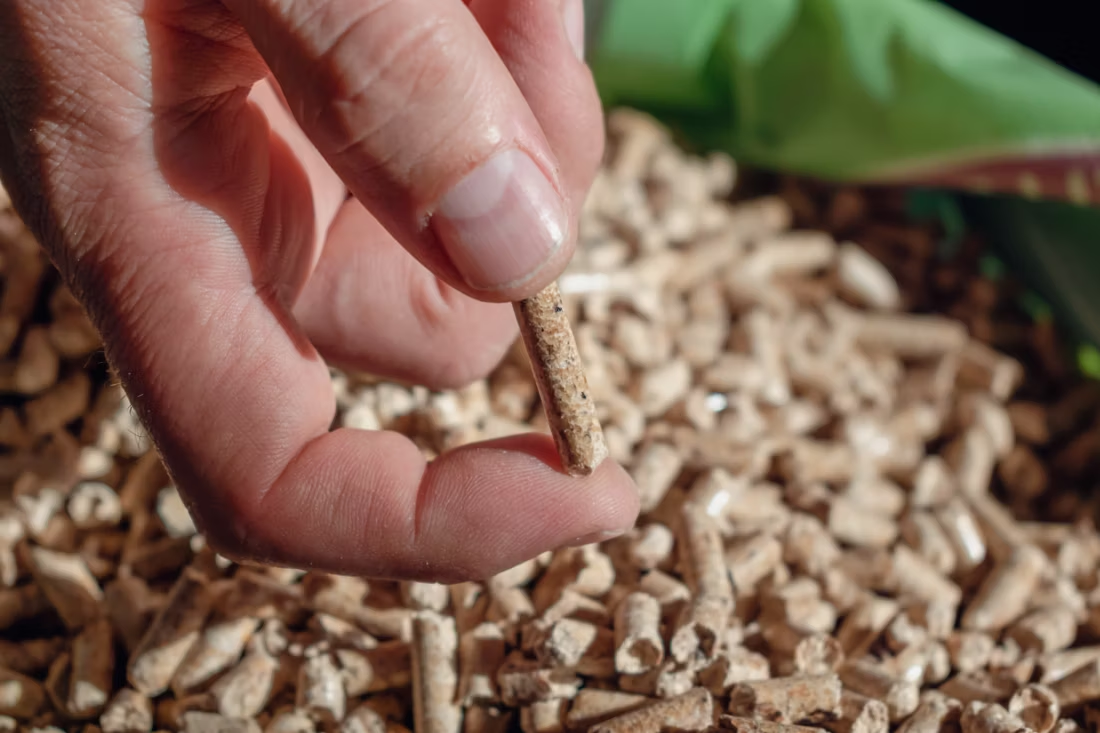
Pellet stoves and inserts have earned a solid place in that mix because they combine the radiant, real-fire feel homeowners want with a thermostat-controlled, hopper-fed burn that doesn't require splitting or stacking cordwood—a real advantage for in-town homes in St. Cloud or Waite Park without a woodlot out back. Regional pellet producers including Indeck Energy Services, Lignetics, and Somerset Pellet Fuel keep supply local and reasonably priced through the county's long burning season, and with no regional air quality restrictions on wood-burning appliances, pellet units run here without the curtailment concerns some western states impose. A properly sized unit, installed by a certified local dealer, gives you steady zone heat through a Stearns County winter without the daily labor of tending cordwood—though plenty of rural households still keep a wood stove as backup for outages.
Three steps. No salesperson until you're ready.
Tell us about your project
Your zip code, your situation, and the fuel you're leaning toward—or let the answers point you to one.
See what's actually available
The brands dealers within 100 miles genuinely carry—real options, never a catalog mirage.
Get your dealer & Project Guide
A trusted local dealer, plus the free Project Guide & Parts List that names every component of the job.
Frequently Asked Questions
How much does a pellet stove or insert installation cost in Stearns County?
Across central Minnesota, a freestanding pellet stove installation typically runs $3,000 to $6,000, while a pellet insert going into an existing masonry fireplace usually falls between $3,500 and $6,500 once venting and a hearth pad upgrade are factored in. Rural properties around Melrose, Albany, or Holdingford sometimes see a modest travel charge added by installers based in St. Cloud or Sartell. Because pellet units vent through a wall with a simple 3- or 4-inch pipe rather than a full masonry chimney, installation costs tend to run lower than a comparable wood stove setup—a local dealer can give you a firm number after seeing your home.
Where can I buy pellets locally, and what do they cost?
Stearns County sits within reach of several regional pellet producers, including Indeck Energy Services, Lignetics, and Somerset Pellet Fuel, all of which supply hardware and farm stores throughout central Minnesota. Buying from a regional producer rather than a nationally trucked-in brand generally keeps per-ton pricing lower and more stable through a long heating season. Most households burn 2 to 3 tons per winter for a single stove used as primary heat, more if you're heating an older farmhouse near Paynesville or Cold Spring with limited insulation. Buying a full season's supply early, before cold weather drives up demand, is common practice among longtime pellet burners in the area.
What size pellet stove do I need for a Stearns County home?
Sizing depends on square footage, insulation, and whether the stove is primary or supplemental heat—but Stearns County's long, cold winter season pushes sizing toward the larger end of most manufacturers' charts. A small unit (up to 1,000 sq ft) suits a single room or a tight in-town home in Waite Park; medium units (1,000–2,000 sq ft) cover most St. Cloud and Sartell living areas; larger units are usually the right call for older, less-insulated farmhouses out toward Melrose or Holdingford where heat loss is higher. A local dealer will walk through your floor plan and insulation before recommending a model—undersizing is the most common mistake homeowners make in a climate this cold.
Do I need a permit to install a pellet stove in Stearns County?
Yes—pellet stove and insert installations typically require a building permit, whether you're inside St. Cloud, Sartell, Sauk Rapids, or an unincorporated township handled directly by Stearns County. The permit process confirms proper clearances, venting through the wall, and hearth pad requirements. Most certified local dealers include permitting as part of the installation quote, so homeowners rarely have to navigate it themselves—but it's worth confirming with your dealer before work begins, since inspection timing can affect your installation schedule.
Pellet stove vs. wood stove—which makes more sense in Stearns County?
Both are common here, and the choice usually comes down to convenience versus self-sufficiency. Wood stoves burn local oak, maple, birch, or aspen—all readily available from farm woodlots and regional firewood dealers—and keep working during a power outage, which matters on rural lines around Albany or Paynesville where ice storms can knock out power for days. Pellet stoves are easier to run day to day: load the hopper, set the thermostat, and let it go, with far less ash and no splitting or stacking. The tradeoff is that pellet stoves need electricity to run the auger and igniter, so they go dark in an outage unless paired with a battery backup or generator. Many Stearns County households split the difference—pellet for daily convenience in the main living space, a wood stove or fireplace elsewhere as storm backup.
How much maintenance does a pellet stove need?
Pellet stoves need more frequent light attention than a wood stove but far less deep cleaning. Plan to empty the ash pan every few days during heavy winter use, clean the burn pot and glass weekly, and have the unit professionally serviced once a year—typically late summer before the heating season starts—to clean the exhaust venting, check the auger motor, and inspect the gaskets. Skipping the annual service is the most common reason pellet stoves lose efficiency or start jamming mid-winter, right when you need them most in a county with a heating season as long as Stearns County's.
What venting does a pellet stove require, and can it go anywhere in my home?
Pellet stoves use a sealed, direct-vent pipe—usually 3 or 4 inches in diameter—that runs horizontally through an exterior wall rather than requiring a full vertical chimney. That flexibility makes pellet stoves easier to place than wood stoves in homes without an existing masonry chimney, which is common in newer construction around Sartell and Waite Park. The vent still needs proper clearance from combustibles and correct termination height above grade and snow line—a real consideration in a county that regularly sees deep snowpack. A local certified installer will confirm the run length and wall placement meet manufacturer specs and code.
Should I get a freestanding pellet stove or a pellet insert?
If you already have a masonry fireplace—common in older homes in St. Cloud and St. Joseph—a pellet insert fits into that existing opening and uses a liner run up through the chimney, giving you a clean look and efficient heat without altering the room. If you don't have an existing fireplace, or you're heating a space like a converted porch or farmhouse addition without one, a freestanding stove is the simpler and often less expensive option since it just needs wall venting rather than chimney access. Either option is available through local dealers carrying pellet-specific lines suited to the region's brands and supply chain.
Are there rebates or efficiency incentives for pellet stoves in Minnesota?
Efficiency incentives for pellet appliances change from year to year at the state and utility level, and availability can depend on your specific utility provider in Stearns County. Some pellet stoves also qualify for the federal biomass stove tax credit when they meet a minimum efficiency threshold—worth checking against the specific model you're considering. A local dealer who installs pellet units regularly will typically know which current programs apply and can help you confirm eligibility before you buy, rather than leaving you to sort through incentive paperwork after the fact.
How often does a pellet stove need cleaning?
A clean pellet stove is a happy pellet stove. Plan on cleaning the burn pot about once a week when you're burning regularly—ash and clinkers gum up the air holes just like a pellet barbecue. Most pellet stove problems trace back to skipped cleaning that nobody explained up front. Some designs make it easy with a trapdoor burn pot: pull a lever and the gunk drops into the ash pan.
Why is my open fireplace making my house colder?
Open fireplaces suck—literally. As the fire burns, it consumes air your furnace already paid to heat and pulls it out through the chimney, so the house is actually colder after the fire goes out than before you lit it. An insert fixes this: it seals the chimney, puts fixed glass across the front, and turns that hole in your house into a real heat source.
Does a fireplace add value to my home?
On average, a fireplace adds back to the home about the same amount you spent installing it. Add the monthly savings from heating the rooms you actually use instead of the whole house—often hundreds of dollars a year—and the value case is strong before you even count what a fire does for how your family uses the room.
Can a fireplace actually lower my heating bill?
Yes—by creating a comfort zone. A furnace heats every square foot of the house just to warm the one room you're in; a gas fireplace on low burns roughly a sixth of the gas a typical furnace does. Set the furnace around 55–60 degrees as a baseline, then heat the rooms your family actually uses. Families who heat this way commonly save $20–$60 a month.
Stove and Fireplace Dealers in Stearns County
Pellet Brands Stocked Around Stearns County
Manufacturers will point you to the nearest stocking dealer.
Find your pellet stove in Stearns County.
Tell us a bit about your home and we'll put together a free Project Guide & Parts List—the right pellet stove or insert, the vent kit it needs, and a trusted local dealer in Stearns County who can install it.
Find Your Fireplace →