
Keep Your Family Warm and Safe—No Matter What
With 8,436 heating degree days and winter lows that average around 2°F, wood heat is a working necessity across Olivia, Renville, Fairfax, Bird Island, Hector, and the rest of the county. Find the right stove or insert and get matched with a trusted local dealer.
Every Project Starts From One of These Five Situations
Prairie winters call for serious heat.
Renville County sits on the flat, wide-open farmland of south-central Minnesota, and the winters here are unforgiving in the way that Fargo, ND winters are unforgiving—8,436 heating degree days a year and an average winter low around 2°F, with wind driving off the fields making it feel colder still. For farm families and small-town households from Olivia to Fairfax to Bird Island, a wood stove or insert isn't a lifestyle accessory. It's backup heat when an ice storm takes down power lines across open county roads, and it's a way to cut propane and electric bills during the long stretch from November through March.
There's no national forest in Renville County, so most local firewood doesn't come from public land permits—it comes from windbreak thinning, storm-damaged shade trees, and farm woodlots, with oak, maple, birch, and aspen as the species you'll most often see split and stacked in a Renville County yard. The county has no non-attainment or winter-inversion concerns, so there are no curtailment periods or burn restrictions to plan around here—just straightforward permitting and a wood stove that runs whenever you need it. The right unit turns a drafty older farmhouse into a genuinely warm one, and it keeps the house heated even when the grid goes down.
Three steps. No salesperson until you're ready.
Tell us about your project
Your zip code, your situation, and the fuel you're leaning toward—or let the answers point you to one.
See what's actually available
The brands dealers within 100 miles genuinely carry—real options, never a catalog mirage.
Get your dealer & Project Guide
A trusted local dealer, plus the free Project Guide & Parts List that names every component of the job.
Frequently Asked Questions
How much does a wood stove installation cost in Renville County?
Most wood stove installations in Renville County run in the $3,500 to $8,500 range, depending on the stove itself, whether you're venting through an existing masonry chimney or need new Class A pipe run through a wall or roof, and whether the hearth pad needs upgrading for code clearance. Homes without an existing chimney—common in this area's older farmhouses and postwar homes—tend to land on the higher end once full venting is factored in. Because Renville County has a small population and few dealers within the county itself, expect some installers to travel in from Hutchinson, Willmar, or the Redwood Falls area; that travel is usually built into the quote rather than charged separately.
What size wood stove do I need for a Renville County farmhouse?
Sizing depends on square footage, ceiling height, and how well the house is insulated—and older farmhouses in this county are often larger and leakier than newer builds, which pushes sizing up. As a rough guide: small stoves (up to 1,000 sq ft) suit a single main-floor living area, medium stoves (1,000–2,000 sq ft) handle most farmhouse main floors, and large stoves (2,000+ sq ft) are needed for homes trying to heat a full two-story house through a Renville County winter. Given the county's 8,436 heating degree days, undersizing is the more common mistake—a stove that can't keep up on a 2°F night will run hot and still fall short. A local dealer will size your home for free during an in-home visit.
Where can I find certified wood stove installers near me?
Look for NFI (National Fireplace Institute) or CSIA (Chimney Safety Institute of America) certification—both indicate real training in wood-burning venting and clearances, not just general contracting experience. Given Renville County's population of under 10,000, dealers with certified installers often serve the whole county from a base in Olivia or Renville, or travel in from larger hearth shops in Hutchinson or Willmar. Ask whether the same company handles both the sale and the installation—that keeps warranty coverage and code compliance in one place, and avoids the venting mistakes that come with a general handyman install.
What's the difference between a wood stove and a wood insert?
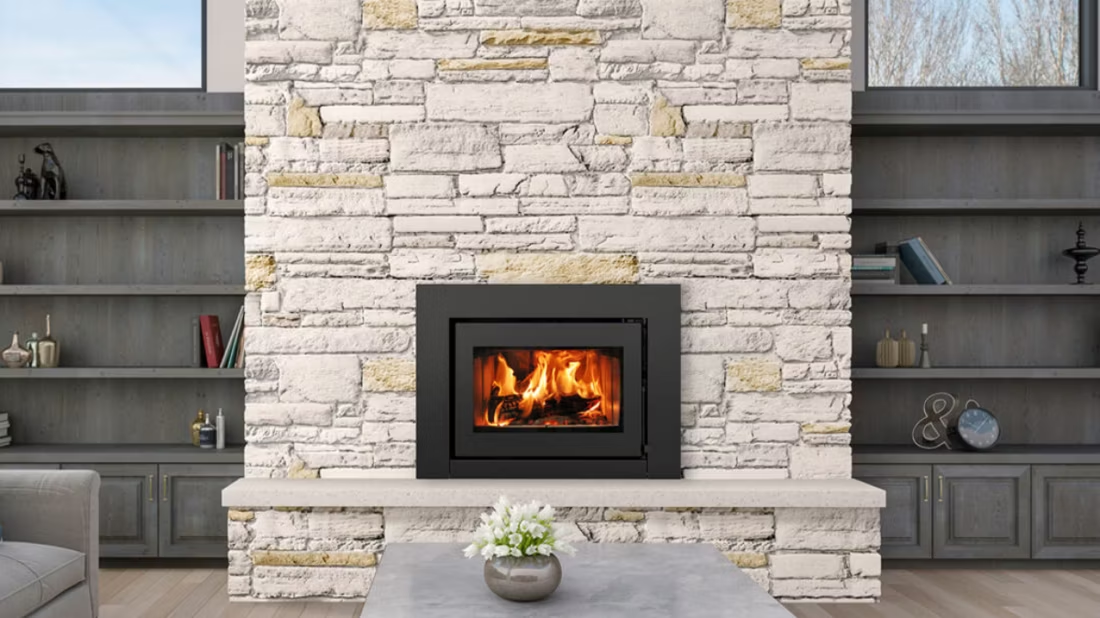
A wood stove is a freestanding unit on its own hearth pad, vented through a chimney, and it can go almost anywhere in the house with the right clearances. A wood insert slides into an existing masonry fireplace and converts a drafty open hearth into a sealed, high-efficiency heater. Many older homes around Olivia and Fairfax still have the original open masonry fireplace from decades ago—for those, an insert is usually the better upgrade because it reuses the existing chimney and dramatically improves the actual heat output. Homes without an existing fireplace are better suited to a freestanding stove.
Do I need a permit to install a wood stove in Renville County?
Yes—new wood stove installations require a building permit through the Renville County building/zoning office, and the unit needs to meet current EPA emissions standards. Most local dealers handle the permit paperwork as part of the install, so it's rarely something you have to manage yourself. Unlike counties with winter inversion problems or non-attainment status, Renville County has no seasonal burn restrictions or curtailment periods to work around—once the stove is permitted and installed, you can burn it whenever the temperature calls for it.
What's the best wood stove for Renville County's climate?
With winter lows averaging around 2°F and over 8,400 heating degree days a year, a catalytic stove built for long, steady burns is worth the extra cost here. Catalytic models from Blaze King are designed to hold a fire 20+ hours on a single load—genuinely useful on the nights when a prairie wind is pushing the wind chill well below zero. For smaller homes, a supplemental unit, or households that don't need overnight burn times, non-catalytic stoves from Pacific Energy or Lopi are simpler to run and still perform well on the oak, maple, and birch that's common firewood in this county. A local dealer can match stove output to your home's square footage and insulation.
How often should my chimney be inspected and cleaned?
The CSIA recommends an annual inspection for any wood-burning stove or insert. In Renville County, where many households burn wood as a genuine supplement to propane or electric heat through a long winter, plan on a full sweep before the burning season starts each fall—typically September or October. Households running a stove hard through the whole heating season on oak and maple sometimes need a mid-winter check if creosote builds up faster than expected. Skipping inspections is the leading cause of chimney fires, which matters even more in rural parts of the county where a fire department response takes longer than it would in town.
Where does firewood in Renville County come from?
There's no national forest in Renville County, so firewood here mostly comes from private sources rather than public-land cutting permits: farm woodlots, windbreak thinning, storm-damaged shade trees, and tree services clearing dead ash or elm. Oak, maple, birch, and aspen are the species you'll most commonly find split and seasoned locally—oak and maple burn longer and hotter, while birch and aspen are common for quick, hot fires or kindling. If you're buying rather than cutting your own, expect local sellers to price by the cord, with oak and maple commanding a premium over aspen. Ask any local hearth dealer for a referral—most keep a running list of area firewood sellers.
Wood stove vs. pellet stove—which is right for me?
Wood stoves burn cordwood, work without electricity, and pair naturally with the oak and maple already available around Renville County farms and woodlots—that matters here, since rural power outages during ice storms and blizzards are a real possibility. Pellet stoves burn bagged pellets from brands like Indeck Energy Services, Lignetics, or Somerset Pellet Fuel, and they're easier to run day to day—load the hopper, set the thermostat, less ash to manage. The tradeoff is that pellet stoves need electricity to run the auger and blower, so they go dark in the same outage a wood stove would power right through. For a farmhouse relying on backup heat, wood usually wins; for a household in town prioritizing convenience with reliable power, pellet is a strong option.
Why is a fireplace insert so efficient?
An insert does two things: it seals the chimney completely, so you stop losing air you already paid to heat, and it radiates warmth into the room through the firebox and glass. Most add a heat-exchange fan that pulls cool room air underneath, wraps it around the hot firebox, and pushes it back out warm. Your home is more efficient before you've even lit the first fire.
Why is my open fireplace making my house colder?
Open fireplaces suck—literally. As the fire burns, it consumes air your furnace already paid to heat and pulls it out through the chimney, so the house is actually colder after the fire goes out than before you lit it. An insert fixes this: it seals the chimney, puts fixed glass across the front, and turns that hole in your house into a real heat source.
Can a fireplace actually lower my heating bill?
Yes—by creating a comfort zone. A furnace heats every square foot of the house just to warm the one room you're in; a gas fireplace on low burns roughly a sixth of the gas a typical furnace does. Set the furnace around 55–60 degrees as a baseline, then heat the rooms your family actually uses. Families who heat this way commonly save $20–$60 a month.
What is an in-home preview and do I need one?
It's a visit where a hearth professional measures your space, confirms the model you picked actually works in your home, and walks the specs—framing, gas line, venting, finish work—before anything is ordered. Some details you just can't know until you see the house. Never make a down payment without one; it's the single most-skipped step that burns buyers.
Find your wood stove in Renville County.
Tell us about your home and we'll put together a free Project Guide & Parts List—the right stove or insert, the vent kit it needs, and a trusted local dealer near Olivia, Renville, or wherever you are in the county.
Find Your Fireplace →