
Thermostat-controlled heat for a Zone 7 winter.
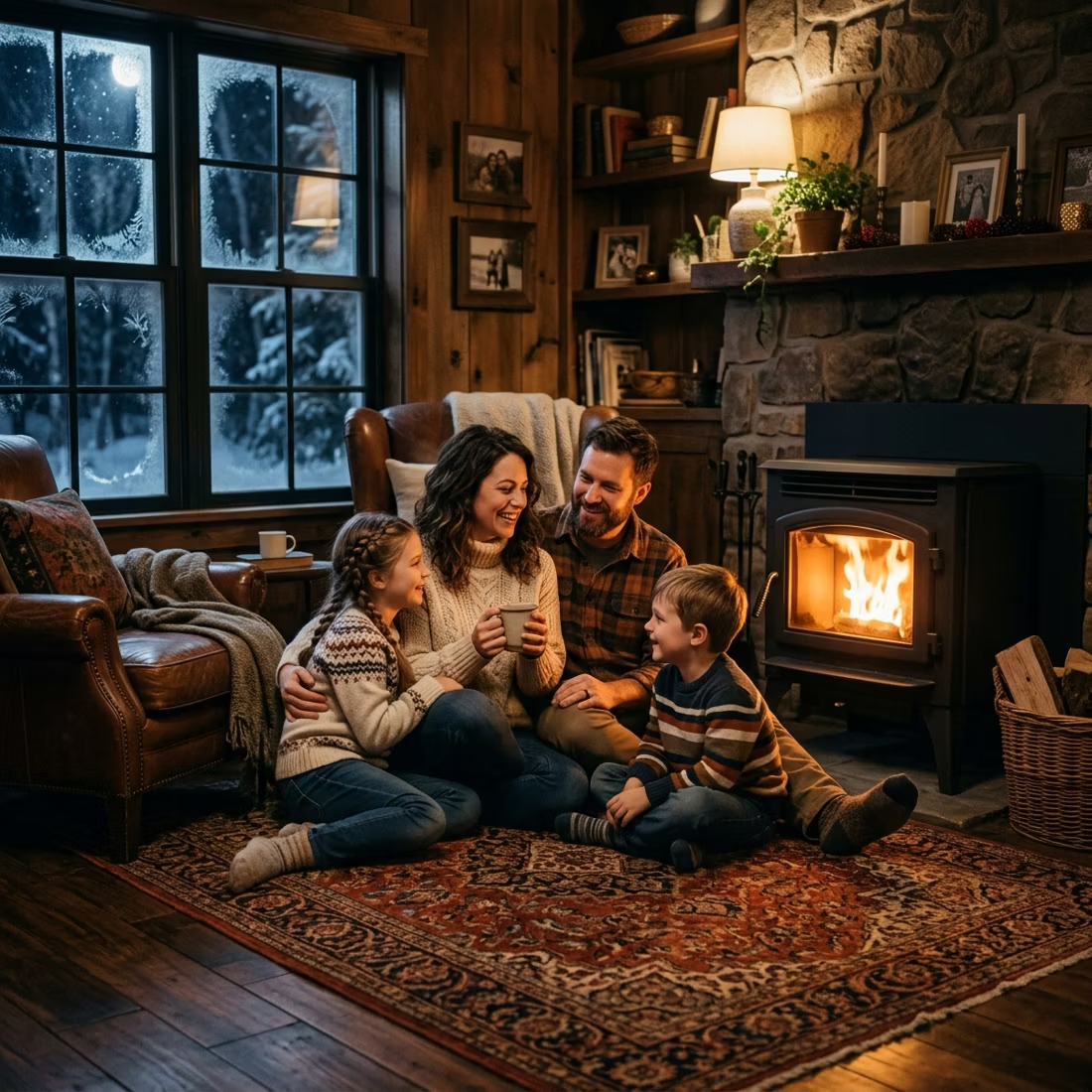
Red Lake County sits in climate zone 7, one of the harshest heating zones in the Lower 48, with a farm economy spread across Red Lake Falls, Plummer, Oklee, and Brooks. A pellet stove gives you set-it-and-forget-it heat without splitting or stacking cordwood. I'll match you with a trusted local dealer who knows what actually installs and vents well out here.
Every Project Starts From One of These Five Situations
Consistent heat without the wood pile.
Red Lake County is home to just over 2,100 people spread across roughly 430 square miles of farmland along the Red Lake River in far northwestern Minnesota. It's a place where oak, maple, birch, and aspen are all cut and burned locally, and plenty of households still heat with wood. But between planting, harvest, and running equipment through a climate zone 7 winter, a lot of farm families want a heat source that doesn't demand daily hauling and splitting. That's the appeal of pellet: load the hopper, set the thermostat, and let an auger feed the fire on its own schedule for a day or more at a stretch.
Red Lake County has no listed air quality concerns and isn't in a non-attainment area, so there are no seasonal burn curtailments to plan around here the way there are in some western counties—a pellet stove can run whenever the thermometer calls for it. Regional pellet supply is solid too, with mills like Indeck Energy Services, Lignetics, and Somerset Pellet Fuel serving the upper Midwest, so bulk-buying a season's worth of bags before the first snow isn't hard to arrange. With much of the county unincorporated and outside any municipal gas footprint, many homes already run on propane or fuel oil as a backup, and pellet heat is a way to cut that delivery dependence for the shop, the farmhouse, or both.
Three steps. No salesperson until you're ready.
Tell us about your project
Your zip code, your situation, and the fuel you're leaning toward—or let the answers point you to one.
See what's actually available
The brands dealers within 100 miles genuinely carry—real options, never a catalog mirage.
Get your dealer & Project Guide
A trusted local dealer, plus the free Project Guide & Parts List that names every component of the job.
Frequently Asked Questions
How much does a pellet stove installation cost in Red Lake County?
A freestanding pellet stove typically runs $3,000 to $6,500 installed, while a pellet insert going into an existing masonry fireplace runs a bit higher, often $4,000 to $7,500, once a liner and hopper access are accounted for. The biggest local cost swing isn't the venting—pellet stoves use a simple through-wall vent rather than a full masonry chimney—it's the electrical work. Most rural Red Lake County homes and outbuildings need a dedicated circuit for the auger motor and combustion blower, and older farmhouses sometimes need panel work to support it.
What size pellet stove do I need for a farmhouse or shop in Red Lake County?
Climate zone 7 means longer, colder heating seasons than most of the country, so sizing here tends to run a notch above a stove's rated square footage on the box. A stove rated for 1,500 square feet is a reasonable fit for a well-insulated main living space in Red Lake Falls or Plummer, but an older, less-insulated farmhouse or an insulated shop with high ceilings usually calls for the next size up, along with a bigger hopper so it can run through a long overnight burn without a refill. A local dealer sizing the job in person, not off a chart, is the safest way to get this right.
Do I need a permit to install a pellet stove in Red Lake County?
Most new solid-fuel appliance installations require a building permit, and since so much of Red Lake County is unincorporated, that typically means going through the county's planning and zoning office rather than a city hall. If you're inside Red Lake Falls or one of the other incorporated towns, check with that city directly first. A full-service local dealer will usually handle the permit application as part of the installation rather than leaving it to the homeowner.
Where do I buy pellets in Red Lake County, and how much should I store?
Regional mills including Indeck Energy Services, Lignetics, and Somerset Pellet Fuel supply much of the upper Midwest, and local hardware and farm supply dealers in the area typically stock or can order bags by the pallet. Given the length of a zone 7 heating season, plan to buy in bulk before the first hard freeze rather than restocking bag by bag through winter—a season's supply for a stove running as primary heat can add up to several tons. Store pellets somewhere dry; humidity swings in an unheated pole barn can cause bags to swell and pellets to break down before they ever reach the hopper.
Will my pellet stove still work if the power goes out?
No, not without backup power. Pellet stoves depend on electricity to run the auger that feeds fuel and the blower that moves combustion air, so a power outage shuts the stove down even with a full hopper. That's worth planning around in rural Red Lake County, where ice and wind can knock out lines along the county roads for a stretch. Many households here pair a pellet stove with a small backup generator or battery inverter sized just to keep the stove running, and some keep a wood stove as a true off-grid fallback in the same house or shop.
Pellet stove vs. wood stove—which makes more sense in Red Lake County?
Wood is the traditional choice here, and with oak, maple, birch, and aspen all common on local land, fuel is often free or cheap for anyone with acreage and a chainsaw. Wood also keeps working through a power outage, which matters given how exposed rural lines are to winter storms. Pellet trades that self-sufficiency for convenience and steadier heat output: no splitting, no stacking, and a burn rate you set with a dial instead of judging by eye. A lot of farm households in the county end up running both—wood in a shop or as backup heat, pellet in the main living space for day-to-day comfort.
How often does a pellet stove need to be cleaned and serviced?
Plan to empty and vacuum the ash pot every few days during heavy winter use, and have the burn pot, hopper, and venting professionally cleaned at least once a year—ideally in late summer before the county's long heating season starts. Pellet stoves running as a primary heat source through a zone 7 winter put in a lot of hours, and skipping the annual service is the most common reason for auger jams or a stove that won't hold a consistent flame by February.
What's the best pellet stove for a Red Lake County winter?
Look for a model with a large hopper capacity—60 to 80 pounds or more—so it can run overnight or through a full workday without a refill, which matters when you're managing chores or off at the elevator during the coldest stretch of the season. A higher maximum BTU output also helps, since climate zone 7 doesn't leave much margin on the hardest nights. Brands vary by what local dealers stock and service, so lean on a dealer who can also get parts and warranty support locally rather than ordering online, especially given how far some Red Lake County addresses sit from the nearest hearth shop.
Are there rebates or tax credits for installing a pellet stove?
Yes. Pellet stoves with a thermal efficiency rating of 75% or higher generally qualify for the federal biomass stove tax credit under Section 25C, worth up to $2,000 for qualifying equipment and installation costs. Keep your dealer's efficiency documentation and receipts for tax filing. A trusted local dealer will know which models in stock currently qualify, since not every stove on the market clears the efficiency threshold.
What's the difference between an insert and a zero-clearance fireplace?
An insert is a fireplace that slides into a pre-existing wood-burning fireplace—if you don't have one, there's nothing to insert it into. A zero-clearance fireplace is built into a framed wall, which makes it the answer for remodels and new construction. Simple test: existing masonry fireplace means insert; blank or framed wall means zero-clearance.
Can a pellet stove heat a whole house?
It genuinely can. I burned a pellet stove as my only heat source for years after a furnace died, and it kept the entire house warm. Pellets feed automatically from a hopper, so you get wood-heat economics with thermostat-style control. Two honest caveats: it needs weekly cleaning during the season, and most models need electricity to run—ask about battery backup if outages are a concern.
Can I install a fireplace myself?
If you're putting a fire in your house on purpose, it's best to work with an expert. Unless you're genuinely experienced in framing, gas line, vent pipe, and the national code on clearances to combustibles, have a professional do it—and ideally the same company that sells you the fireplace, so warranty, service, and liability all live under one roof.
Does a fireplace add value to my home?
On average, a fireplace adds back to the home about the same amount you spent installing it. Add the monthly savings from heating the rooms you actually use instead of the whole house—often hundreds of dollars a year—and the value case is strong before you even count what a fire does for how your family uses the room.
Pellet Brands Stocked Around Red Lake County
Manufacturers will point you to the nearest stocking dealer.
Get your free Project Guide & Parts List for a pellet stove in Red Lake County.
Tell me about your home or shop, how you plan to use the stove, and how you'd handle a power outage, and I'll match you with a trusted local dealer and send a free Project Guide & Parts List—the exact equipment, vent kit, and recommended installer for your pellet heat project in Red Lake County.
Find Your Fireplace →