
Warm, efficient heat for Pope County's coldest nights.
West-central Minnesota winters push well below zero around Glenwood, Starbuck, and Lake Minnewaska. A properly sized pellet stove delivers steady, thermostat-controlled heat without a woodpile to manage—I'll match you with a local dealer who knows the fuel supply and the county's permit process.
Every Project Starts From One of These Five Situations
Efficient, hands-off heat built for west-central Minnesota's harsh winters.
Pope County sits in Minnesota's glacial lakes region, with roughly 5,200 residents spread across farmland, small towns, and lake country around Glenwood, Starbuck, Villard, and Cyrus. It's climate zone 6A, with an average winter low near 2°F and about 8,360 heating degree days a year—a load in the same range as Fargo, North Dakota, and well above what most furnace and stove equipment sold nationally is designed for. Many homes here run on propane or fuel oil as a primary system, and a pellet stove or insert is a common way to add real, controllable heat to a living room or lower level without hauling and splitting cordwood every fall.
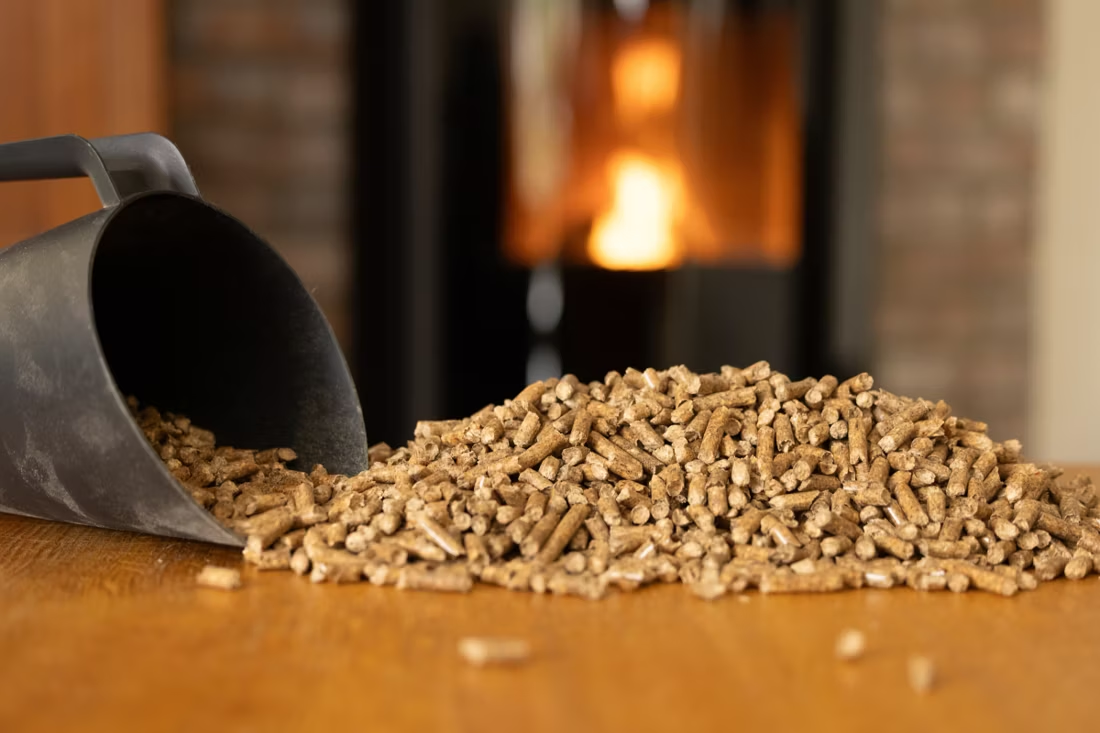
Pope County has no non-attainment status and no local burn restrictions, so pellet appliances run without the seasonal curtailment concerns that some other regions deal with. Fuel supply is solid, too—regional brands including Lignetics, Somerset Pellet Fuel, and Indeck Energy Services serve Minnesota dealers, and the hardwood feedstock (oak, maple, birch, aspen) mirrors what already grows across the county's woodlots. A pellet stove trades the physical work of wood heat for a hopper you fill every day or two and a thermostat that holds a set temperature through the coldest overnight stretch—a real advantage during a January cold snap.
Three steps. No salesperson until you're ready.
Tell us about your project
Your zip code, your situation, and the fuel you're leaning toward—or let the answers point you to one.
See what's actually available
The brands dealers within 100 miles genuinely carry—real options, never a catalog mirage.
Get your dealer & Project Guide
A trusted local dealer, plus the free Project Guide & Parts List that names every component of the job.
Frequently Asked Questions
How much does a pellet stove installation cost in Pope County?
Most pellet stove and insert installations run in the $3,000 to $6,500 range nationally, and Pope County jobs generally fall within that band—the low end covers a freestanding stove with a straightforward through-wall vent, the high end covers an insert into an existing masonry fireplace with a full liner kit and any hearth pad work needed for clearance. Rural properties around Villard or Cyrus with a longer driveway or older wiring for the venting fan may run slightly higher due to travel and electrical work. A local dealer will give you a firm number after seeing the install location.
What size pellet stove do I need for Pope County's climate?
With roughly 8,360 heating degree days and winter lows regularly near or below zero, Pope County sits at the upper end of the cold-climate range—similar territory to Fargo or International Falls. For supplemental heat in a single living area, a stove in the 40,000–50,000 BTU range covers most rooms up to about 1,500 square feet. If you're leaning on the pellet stove as a primary heat source for an older farmhouse or a home with lower insulation values, sizing up and planning for higher hopper capacity (so you're not refilling every few hours on the coldest nights) matters more here than it would in a milder Minnesota county. A dealer walk-through of your square footage and insulation will settle the exact model.
Where can I buy pellet fuel in Pope County?
Regional brands like Lignetics and Somerset Pellet Fuel are widely stocked at hearth dealers and farm supply stores across west-central Minnesota, and Indeck Energy Services supplies bulk biomass fuel to the broader region as well. Pellets are sold by the 40-pound bag or by the ton (roughly fifty bags), and buying a season's supply in one delivery—typically in late summer before demand picks up—is the most reliable way to avoid a scramble in December. Your local dealer can usually point you to the closest stocking retailer or set up a standing seasonal order.
Do I need a permit to install a pellet stove in Pope County?
Yes—a building permit is generally required for a new pellet stove installation, including the vent penetration through an exterior wall or roof, and it's handled through the Pope County Planning & Zoning office for properties outside city limits, or through the local city building department if you're inside Glenwood or one of the other incorporated towns. Most hearth dealers pull the permit and coordinate the inspection as part of the installation, so you generally don't have to manage that process yourself.
Will a pellet stove work if the power goes out?
Not without help—this is worth knowing before you buy. Pellet stoves rely on an electric auger to feed fuel and a blower to move heat into the room, so a power outage stops the stove. That matters in Pope County, where winter ice storms and high winds off the open farmland can knock out rural electric service for hours or longer. Some owners pair a pellet stove with a small backup power source (a battery unit or generator sized for the stove's low wattage draw) specifically for that scenario. If uninterrupted heat during outages is the priority, a wood stove that needs no electricity is worth discussing with your dealer as an alternative or a companion unit.
What's the difference between a pellet stove and a pellet insert?
A pellet stove is a freestanding unit that vents through an exterior wall or existing chimney and can go almost anywhere in a room with the right clearances. A pellet insert is built to slide into an existing masonry fireplace opening, using the chimney cavity to house the vent pipe while sealing off the old open hearth. For Pope County homes with an existing wood fireplace that's rarely used, an insert is often the more efficient upgrade—you keep the existing opening but gain thermostat-controlled, high-efficiency heat instead of a fireplace that mostly lost heat up the flue.
How often does a pellet stove need cleaning and maintenance?
Plan on emptying the ash pan every few days during heavy winter use and a deeper cleaning of the burn pot and heat exchanger tubes roughly every two to three weeks. A full annual service—cleaning the venting, checking the auger motor, and inspecting gaskets—is worth scheduling in late summer before the heating season starts, the same way you'd schedule furnace maintenance. Pellet appliances run cleaner than wood stoves, but skipping the burn-pot cleaning is the most common reason owners see poor ignition or reduced heat output partway through a Minnesota winter.
Pellet stove vs. wood stove—which makes more sense in Pope County?
Wood stoves burn cordwood—often local oak, maple, birch, or aspen—and work without electricity, which matters during rural power outages. They also demand more physical work: splitting, stacking, and hauling wood, plus more frequent chimney cleaning. Pellet stoves trade that labor for a hopper you fill daily and a thermostat that holds a steady temperature automatically, but they need continuous power to run the auger and blower. In a county with 8,360 heating degree days and real ice-storm risk, some homeowners choose wood specifically for outage resilience, while others prioritize the convenience of pellet heat for daily use and accept the electrical dependency. A number of Pope County homes end up with both.
What's the best pellet stove for Pope County's cold winters?
Look for a model with a large hopper capacity—60 to 80 pounds—so you're not refilling multiple times a day when temperatures sit near zero for stretches, which happens regularly here. Higher-BTU units with a strong convection blower will do a better job holding a room's temperature through an overnight cold snap than an entry-level model sized for a milder climate. Brands commonly stocked by Minnesota hearth dealers include units built specifically for extended burn times on a single load, which matters most in a county where the heating season runs from October well into April. A dealer familiar with local homes can match hopper size and BTU output to your specific square footage and insulation level.
Why is my open fireplace making my house colder?
Open fireplaces suck—literally. As the fire burns, it consumes air your furnace already paid to heat and pulls it out through the chimney, so the house is actually colder after the fire goes out than before you lit it. An insert fixes this: it seals the chimney, puts fixed glass across the front, and turns that hole in your house into a real heat source.
What's the difference between an insert and a zero-clearance fireplace?
An insert is a fireplace that slides into a pre-existing wood-burning fireplace—if you don't have one, there's nothing to insert it into. A zero-clearance fireplace is built into a framed wall, which makes it the answer for remodels and new construction. Simple test: existing masonry fireplace means insert; blank or framed wall means zero-clearance.
What is an in-home preview and do I need one?
It's a visit where a hearth professional measures your space, confirms the model you picked actually works in your home, and walks the specs—framing, gas line, venting, finish work—before anything is ordered. Some details you just can't know until you see the house. Never make a down payment without one; it's the single most-skipped step that burns buyers.
Can I install a fireplace myself?
If you're putting a fire in your house on purpose, it's best to work with an expert. Unless you're genuinely experienced in framing, gas line, vent pipe, and the national code on clearances to combustibles, have a professional do it—and ideally the same company that sells you the fireplace, so warranty, service, and liability all live under one roof.
Pellet Brands Stocked Around Pope County
Manufacturers will point you to the nearest stocking dealer.
Find your pellet stove in Pope County.
Tell me a bit about your home and I'll match you with a trusted local dealer and send over a free Project Guide & Parts List—the exact equipment, vent kit, and installation plan for your pellet project in Pope County.
Find Your Fireplace →