
Find a pellet stove built for Pine County's 9,000-degree-day winters.
From Pine City to Hinckley to Sandstone, Pine County winters push heating systems hard. Find the right pellet stove or insert, and get matched with a trusted local dealer.
Every Project Starts From One of These Five Situations
Clean, hands-off heat for one of Minnesota's coldest counties.
Pine County sits in east-central Minnesota along the St. Croix River, a rural stretch of North Woods forest and small towns—Pine City, Hinckley, Sandstone, Askov, Rutledge, Willow River—with a total population under 11,000. The county's climate zone 7 rating and 9,192 heating degree days put it in the same company as International Falls for sheer heating demand, and average winter lows around -1°F are common from December through February. That's a long, hard season for any heating system to carry, and it's the reason so many households here run a secondary or primary heat source alongside a furnace.
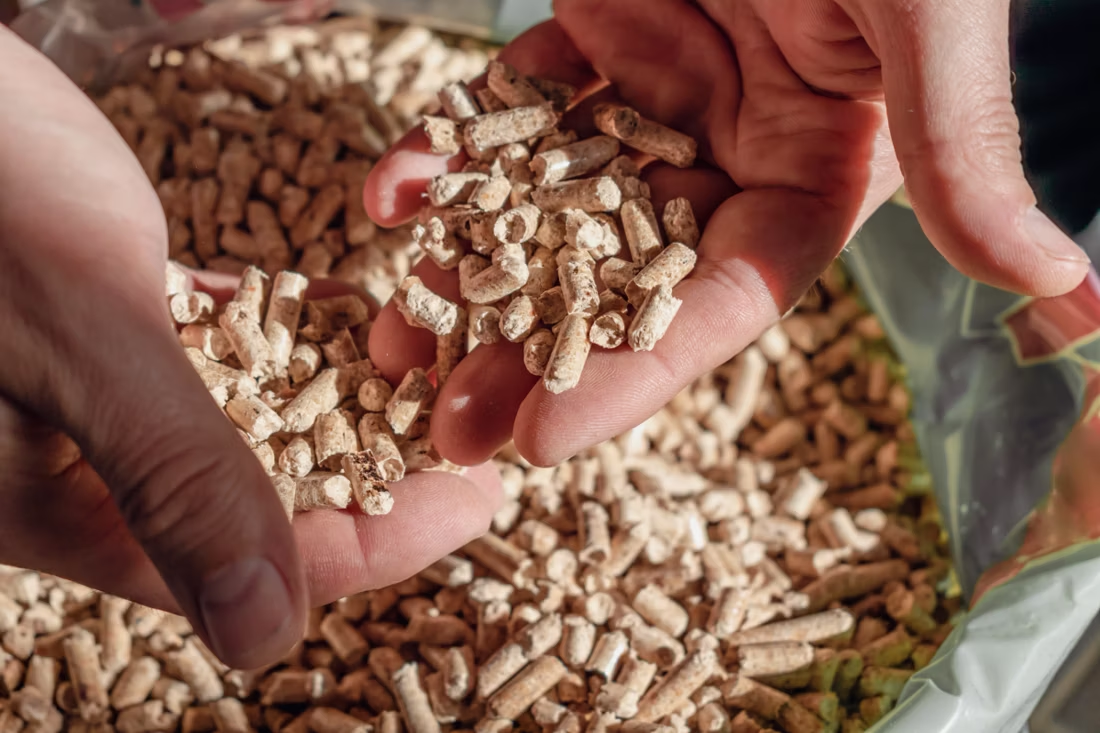
Pellet stoves have earned a place in a lot of Pine County homes because they combine the radiant, real-fire feel of wood with a load-it-and-forget-it hopper system—no splitting, no stacking, no daily tending. With no air quality non-attainment concerns in the county, there's no curtailment or burn-ban complication to work around, which isn't the case everywhere pellet stoves are sold. Fuel logistics are also easier here than in a lot of the country: regional pellet producers like Lignetics and Somerset Pellet Fuel, along with Indeck Energy Services, supply the Upper Midwest, so bagged pellets don't have to travel far to reach a farm co-op or hardware store near you. One honest tradeoff worth knowing up front: pellet stoves need electricity to run the auger and blower, so in a county where winter storms can knock out power for hours or days, a lot of homeowners either pair a pellet stove with a small battery backup or keep a wood-burning appliance as a no-power fallback.
Three steps. No salesperson until you're ready.
Tell us about your project
Your zip code, your situation, and the fuel you're leaning toward—or let the answers point you to one.
See what's actually available
The brands dealers within 100 miles genuinely carry—real options, never a catalog mirage.
Get your dealer & Project Guide
A trusted local dealer, plus the free Project Guide & Parts List that names every component of the job.
Frequently Asked Questions
How much does a pellet stove installation cost in Pine County?
Costs vary by dealer and by the specifics of your install, but a straightforward freestanding pellet stove—unit, vent kit, hearth pad, and labor—typically lands in the $3,000 to $6,000 range across Minnesota. Converting an existing wood-burning fireplace to a pellet insert often runs a bit higher once a liner and adapter kit are factored in. Homes farther out from Pine City, Hinckley, or Sandstone may see a small travel charge added if the installer is coming from a larger service area. A local dealer will give you a firm number after seeing your chimney or wall situation in person.
What size pellet stove do I need for a Pine County home?
With 9,192 heating degree days and average winter lows around -1°F, Pine County sits at the harsher end of what pellet stoves are built for, so sizing matters more here than in a milder climate. Look for units rated for higher maximum BTU output (many cold-climate installs land in the 42,000-60,000 BTU range) and a larger hopper—40 to 60 pounds—so you're not refilling every few hours on the coldest nights. Poorly insulated older farmhouses common in the county will need to size up compared to a newer, tightly built home of the same square footage. Any local dealer will size the unit to your home during an in-home visit rather than guessing off square footage alone.
Where can I find certified pellet stove installers near me in Pine County?
Look for NFI (National Fireplace Institute)-certified installers, which indicates specific training on venting and clearance requirements for pellet appliances. Because Pine County is rural and spread out—Pine City, Hinckley, Sandstone, Askov, and Rutledge are miles apart—expect installers based in one town to add a modest travel fee for jobs elsewhere in the county. Working with a dealer who both sells and installs the unit is worth the small premium: it keeps warranty coverage intact and means the same company is accountable for both the equipment and the vent work.
What's the difference between a pellet stove and a pellet insert?
A pellet stove is a freestanding unit that sits on a hearth pad and vents through a wall or existing chimney chase—it can go almost anywhere with the right clearances. A pellet insert is built to slide into an existing masonry fireplace opening, which is common in older Pine County farmhouses that still have an open wood-burning fireplace nobody uses anymore. For those homes, an insert is usually the more practical choice since it reuses the chimney cavity and dramatically improves on the heat output (and heat loss) of an open masonry hearth. New construction or rooms without an existing fireplace are better suited to a freestanding stove.
Do I need a permit to install a pellet stove in Pine County?
Yes—a new solid-fuel heating appliance installation typically requires a building permit through the county, and most local dealers handle that paperwork as part of the install so you're not chasing it down yourself. One advantage of pellet appliances here: because Pine County has no non-attainment or wood-smoke curtailment restrictions, there's no burn-ban complication layered on top of the standard permit and inspection process the way there can be in some Western counties.
What's the best pellet stove for Pine County's climate?
For a climate zone 7 county with winter lows near -1°F, the priority is a unit with a genuinely high max BTU rating and a hopper large enough to get you through a long overnight burn without a 2 a.m. refill. Ask any local dealer specifically about cold-climate performance ratings—not every pellet stove on a showroom floor is built to run at full output for weeks at a time the way Pine County winters demand. Smaller, lower-output units are fine as supplemental heat in a well-insulated space, but for primary heat in an older or larger farmhouse, size up rather than down.
How often does a pellet stove need maintenance in Pine County?
Plan on emptying the ash pan every few days during heavy winter use and cleaning the burn pot and auger area weekly to keep the stove burning efficiently—pellet stoves are lower-maintenance than wood but not maintenance-free. An annual professional service, ideally before the season starts in the fall, should include a full cleaning of the exhaust fan, venting, and hopper, plus a check of the auger motor and igniter. Given how many months of the year a Pine County pellet stove is likely to run given the 9,192 heating degree days here, staying ahead of maintenance matters more than in a milder climate.
Where can I buy pellet fuel in Pine County?
Regional pellet producers including Lignetics, Somerset Pellet Fuel, and Indeck Energy Services supply much of the Upper Midwest, and bagged pellets from these brands are typically available through local hardware stores and farm co-ops rather than needing to be shipped in from farther away. Given how long the heating season runs here, most Pine County households buy several tons at once in late summer or early fall before demand (and price) rises—buying early also protects against the supply tightness that can hit pellet retailers during an unusually cold stretch.
Pellet stove vs. wood stove—which is right for my Pine County home?
Pine County has plenty of oak, maple, birch, and aspen for anyone who wants to self-cut or buy cordwood, and wood stoves have the advantage of running with zero electricity—a real consideration in a county where winter storms occasionally take down power for hours or days. Pellet stoves trade that off-grid reliability for convenience: no splitting or stacking, a cleaner burn, and steadier heat output, but the auger and blower need electricity to run, so a pellet stove alone isn't a storm-proof backup heat source. Some households here split the difference—pellet for daily convenience, with a wood stove or fireplace kept as the no-power fallback.
Why is my open fireplace making my house colder?
Open fireplaces suck—literally. As the fire burns, it consumes air your furnace already paid to heat and pulls it out through the chimney, so the house is actually colder after the fire goes out than before you lit it. An insert fixes this: it seals the chimney, puts fixed glass across the front, and turns that hole in your house into a real heat source.
Why is a fireplace insert so efficient?
An insert does two things: it seals the chimney completely, so you stop losing air you already paid to heat, and it radiates warmth into the room through the firebox and glass. Most add a heat-exchange fan that pulls cool room air underneath, wraps it around the hot firebox, and pushes it back out warm. Your home is more efficient before you've even lit the first fire.
Can I install a fireplace myself?
If you're putting a fire in your house on purpose, it's best to work with an expert. Unless you're genuinely experienced in framing, gas line, vent pipe, and the national code on clearances to combustibles, have a professional do it—and ideally the same company that sells you the fireplace, so warranty, service, and liability all live under one roof.
Can a fireplace actually lower my heating bill?
Yes—by creating a comfort zone. A furnace heats every square foot of the house just to warm the one room you're in; a gas fireplace on low burns roughly a sixth of the gas a typical furnace does. Set the furnace around 55–60 degrees as a baseline, then heat the rooms your family actually uses. Families who heat this way commonly save $20–$60 a month.
Pellet Brands Stocked Around Pine County
Manufacturers will point you to the nearest stocking dealer.
Find your pellet stove in Pine County.
Tell us about your home and we'll match you with the right pellet stove or insert for a Pine County winter, plus a free Project Guide & Parts List—the exact parts, including the vent kit, and your recommended local dealer.
Find Your Fireplace →