
Find the right pellet stove for Olmsted County winters.
With winters averaging 7°F and a heating season on par with Fargo, North Dakota, Olmsted County homes need heat that runs clean and steady for months. Get matched with a trusted local dealer who can size and install the right unit.
Every Project Starts From One of These Five Situations
Consistent, low-maintenance heat for a long Minnesota winter.
Olmsted County sits in climate zone 6A, with a long, cold heating season and winter lows that average around 7°F—a heating season on par with Fargo, North Dakota, that typically stretches from October into April. Rochester's growth as a Mayo Clinic hub has brought a steady wave of newer construction, and many of those homes are built with prefabricated fireplace boxes or open floor plans that suit a freestanding pellet stove or zero-clearance pellet insert without a major remodel.
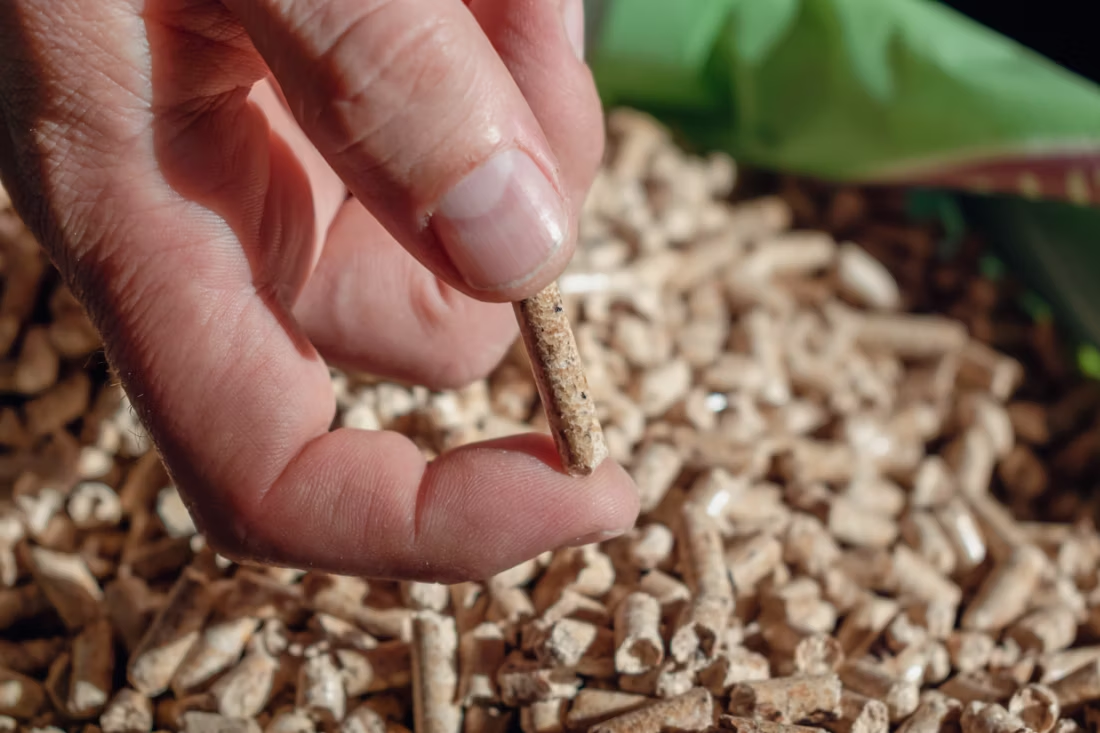
Unlike traditional wood stoves, pellet units run on compressed hardwood pellets—often sourced from regional producers like Indeck Energy Services, Lignetics, and Somerset Pellet Fuel, which draw on the same oak, maple, birch, and aspen forests that supply the area's firewood. Olmsted County has no air quality non-attainment designations or burn-curtailment concerns, so there's no seasonal restriction on running a pellet appliance. The trade-off for that convenience is a dependence on electricity to run the auger and blower—worth planning around given how often Minnesota winter storms knock out power.
Three steps. No salesperson until you're ready.
Tell us about your project
Your zip code, your situation, and the fuel you're leaning toward—or let the answers point you to one.
See what's actually available
The brands dealers within 100 miles genuinely carry—real options, never a catalog mirage.
Get your dealer & Project Guide
A trusted local dealer, plus the free Project Guide & Parts List that names every component of the job.
Frequently Asked Questions
How much does a pellet stove installation cost in Olmsted County?
Most pellet stove and insert installations in Olmsted County run in the $3,000 to $6,500 range, depending on the unit, whether you're installing into an existing masonry fireplace or building a new hearth, and how much venting work is involved. Pellet appliances vent through a smaller-diameter pipe than wood stoves, which usually keeps installation labor lower than a comparable wood or gas project. Homes in newer Rochester subdivisions with a prefab fireplace box already in place tend to land on the lower end; rural homes around Oronoco or Chatfield needing new venting runs can push toward the higher end. A local dealer can give a firm number after seeing your space.
What size pellet stove do I need for an Olmsted County home?
With winter lows averaging 7°F and a heating season comparable to Fargo, North Dakota, Olmsted County homes generally need to size up from what a warmer-climate chart would suggest. A stove rated for 1,500 to 2,000 square feet in a milder region may only comfortably heat 1,000 to 1,300 square feet here as a primary heat source. Most homeowners use a pellet stove for supplemental or zone heat alongside a furnace, in which case a mid-size unit covering the main living area is usually enough. A dealer walking through your home's insulation, layout, and how many hours a day you'll run it will get you a more precise number than any chart.
Where can I buy pellet fuel in Olmsted County?
Pellet fuel is widely available in and around Rochester through hearth retailers and farm supply stores, with regional brands like Lignetics, Somerset Pellet Fuel, and Indeck Energy Services commonly stocked. Pellets are sold by the 40-pound bag or by the ton (roughly fifty bags), and buying by the pallet or ton ahead of the season is the standard way to lock in a lower per-bag price before winter demand pushes it up. Look for premium hardwood pellets with low ash content—under 1% ash—since Olmsted County's mix of oak, maple, and birch feedstock generally produces a clean-burning, low-clinker pellet that's easier on the stove's burn pot.
What's the difference between a pellet stove and a pellet insert?
A pellet stove is a freestanding unit that sits on its own hearth pad and vents out through a wall or existing chimney—it can go almost anywhere in a room with the right clearances. A pellet insert is built to slide into an existing masonry or factory-built fireplace opening, converting an old wood-burning fireplace into a much more efficient, thermostat-controlled heat source. For Olmsted County's newer housing stock, which often includes prefab metal fireplace boxes from the 1990s and 2000s, an insert is frequently the simplest retrofit since it reuses the existing opening and much of the chimney chase.
Do I need a permit to install a pellet stove in Olmsted County?
Yes—a building permit is typically required for a new pellet stove or insert installation in Rochester and throughout Olmsted County, covering the appliance clearances, hearth pad, and venting termination. Most established hearth dealers pull the permit as part of the installation and schedule the required inspection, so homeowners rarely have to deal with the paperwork directly. Because pellet appliances vent horizontally through a sidewall in many installations, the permit review also confirms the vent termination meets minimum clearances from windows, doors, and property lines.
What's the best pellet stove for Olmsted County's climate?
For a heating season with lows near 7°F and a long, demanding winter like Fargo's, look for a pellet stove with a large hopper capacity—60 to 80 pounds—so it can run through a cold overnight stretch without a refill, and a firebox rated for continuous operation rather than intermittent use. Brands with automatic ignition and thermostat control hold steady output better during multi-day cold snaps than manually adjusted models. Because pellet stoves depend on electricity for the auger and combustion blower, it's also worth asking a local dealer about battery backup options—Minnesota's ice storms and high winds are a real cause of multi-hour outages during the heating season.
How much maintenance does a pellet stove need?
Pellet stoves need more frequent, hands-on attention than a gas unit but far less than a wood stove. Plan on emptying the ash pan every few days during regular use, cleaning the burn pot weekly to keep airflow to the fire clear, and a full professional service annually to clean the exhaust fan, gaskets, and venting. Olmsted County's lack of air-quality burn restrictions means there's no seasonal curtailment to plan around, but running higher-ash pellets or letting the burn pot clog will noticeably reduce efficiency and can trigger the stove's safety shutoff. Local hearth shops typically offer an annual service visit for $150 to $250.
Will my pellet stove work during a power outage?
Not without a backup power source. Pellet stoves rely on electricity to run the hopper auger, combustion blower, and igniter, so a standard unit shuts down the moment the power goes out—a real consideration in Olmsted County where winter ice storms and high winds cause periodic multi-hour outages. Homeowners who want heating redundancy often pair a pellet stove with a small battery backup system or a generator sized to run the stove's low electrical draw (most units use well under 500 watts). If uninterrupted heat during outages is the priority, a wood stove that needs no electricity is worth discussing with a local dealer as a complementary option.
Pellet stove vs. wood stove—which is right for my home?
Wood stoves burn cordwood cut from local oak, maple, birch, or aspen, need no electricity, and can run indefinitely during a power outage—a genuine advantage during Minnesota's winter storms. Pellet stoves trade that off for real convenience: load the hopper, set the thermostat, and the stove self-regulates for a day or more without tending, with far less ash and no chimney creosote buildup to manage. For Rochester-area homes where daily convenience and consistent, hands-off heat matter more than off-grid backup, pellet is usually the better fit. For rural properties or anyone prioritizing storm-proof heat, wood is worth a closer look. A local dealer can walk through both options side by side.
Why is a fireplace insert so efficient?
An insert does two things: it seals the chimney completely, so you stop losing air you already paid to heat, and it radiates warmth into the room through the firebox and glass. Most add a heat-exchange fan that pulls cool room air underneath, wraps it around the hot firebox, and pushes it back out warm. Your home is more efficient before you've even lit the first fire.
What does it take to replace an existing fireplace?
Fireplaces are like icebergs—bigger behind the wall than in front of it. Replacement means removing the surrounding tile or stone (the finish material laps onto the fireplace face), pulling the old unit, setting the new one in the same enclosure, and re-finishing the wall. A hearth professional can determine what's behind your wall without demolition during an in-home preview.
Can I install a fireplace myself?
If you're putting a fire in your house on purpose, it's best to work with an expert. Unless you're genuinely experienced in framing, gas line, vent pipe, and the national code on clearances to combustibles, have a professional do it—and ideally the same company that sells you the fireplace, so warranty, service, and liability all live under one roof.
What is an in-home preview and do I need one?
It's a visit where a hearth professional measures your space, confirms the model you picked actually works in your home, and walks the specs—framing, gas line, venting, finish work—before anything is ordered. Some details you just can't know until you see the house. Never make a down payment without one; it's the single most-skipped step that burns buyers.
Stove and Fireplace Dealers in Olmsted County
Pellet Brands Stocked Around Olmsted County
Manufacturers will point you to the nearest stocking dealer.
Get matched with a pellet stove dealer in Olmsted County.
Tell us about your home and heating goals, and we'll match you with a trusted local dealer and send over a free Project Guide & Parts List—the exact parts, vent kit, and recommended installer for your Olmsted County pellet project.
Find Your Fireplace →