
Pellet heat built for Red River Valley winters.
With winter lows averaging -4°F and one of the longest, coldest heating seasons around, Norman County asks a lot of any heating appliance. A properly sized pellet stove delivers steady, thermostatically controlled heat from Ada to Twin Valley to Halstad—and I'll connect you with a trusted local dealer who can size and install it right.
Every Project Starts From One of These Five Situations
Consistent heat for one of the coldest corners of Minnesota.
Norman County sits in the flat, wind-exposed farmland of Minnesota's Red River Valley, just across the river from Fargo, ND—and the winters here are every bit as punishing. With one of the longest, coldest heating seasons around and a Climate Zone 7 designation, Norman County ranks among the coldest counties in the Minnesota's non-arctic heating map, with winter lows averaging -4°F across the county's small towns—Ada, Twin Valley, Gary, Halstad, Shelly, and the farms and homesteads spread between them. With a population of just over 4,000 spread across a large agricultural county, many households rely on a mix of a central furnace and a supplemental stove to keep specific rooms—a farmhouse living room, a heated shop, a converted porch—comfortable through the long heating season.
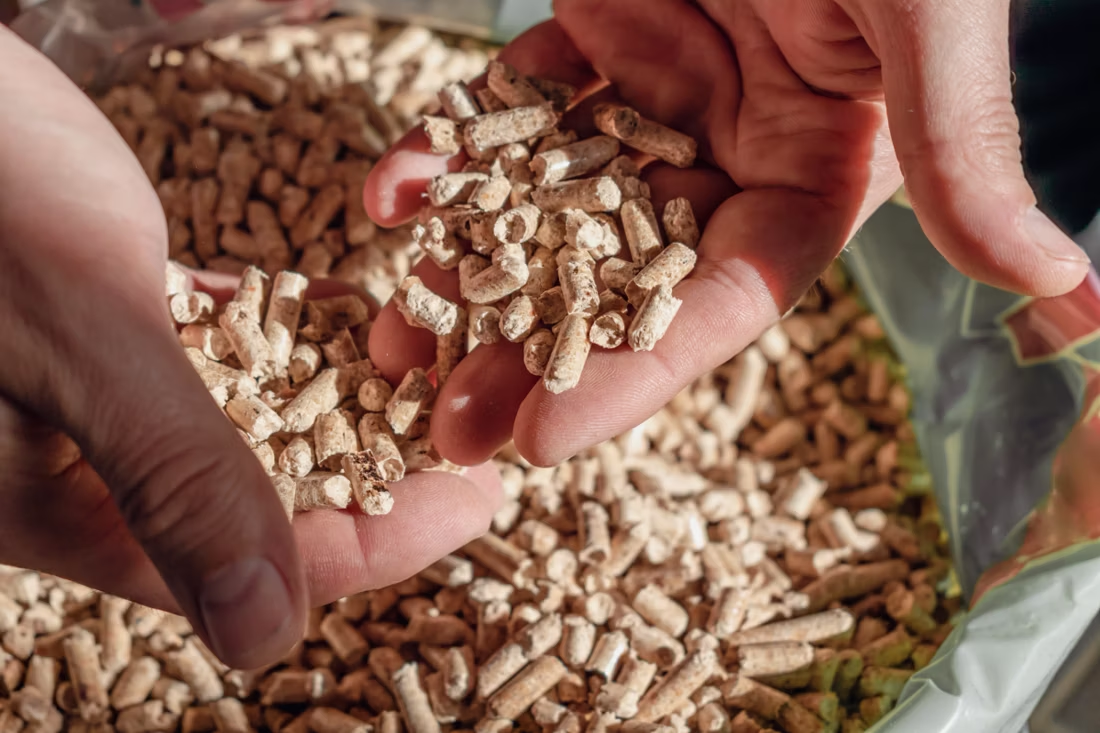
Pellet stoves fit that role well. They run on a thermostat, hold a consistent burn without the tending a wood stove requires during a February blizzard, and burn clean regardless of local air quality rules—Norman County has no non-attainment designation, so the appeal here is convenience and efficiency rather than regulation. Regional pellet suppliers including Indeck Energy Services, Lignetics, and Somerset Pellet Fuel keep the Upper Midwest well stocked, milling pellets from the same hardwood base—oak, maple, birch, and aspen—that has heated homes in this part of Minnesota for generations. For a county this rural, having pellets sourced and trucked regionally rather than shipped long-distance matters when a January storm makes the roads unreliable.
Three steps. No salesperson until you're ready.
Tell us about your project
Your zip code, your situation, and the fuel you're leaning toward—or let the answers point you to one.
See what's actually available
The brands dealers within 100 miles genuinely carry—real options, never a catalog mirage.
Get your dealer & Project Guide
A trusted local dealer, plus the free Project Guide & Parts List that names every component of the job.
Frequently Asked Questions
How much does a pellet stove installation cost in Norman County?
A freestanding pellet stove installation typically runs $3,000 to $6,000 in Norman County, depending on the model, whether a new hearth pad is needed, and the length of vent pipe run through an exterior wall. A pellet insert into an existing masonry fireplace usually runs a bit higher, $4,000 to $8,000, since it involves fitting the unit to the existing firebox and running a liner. Rural properties outside Ada, Twin Valley, or Halstad may see a modest travel charge added by installers coming from Fargo-Moorhead or Grand Forks, since Norman County itself has limited hearth retail presence.
What size pellet stove do I need for a Norman County home?
With average winter lows of -4°F and one of the longest, coldest heating seasons around, Norman County homes need more heating capacity than a mild-climate sizing chart would suggest. A stove rated for 1,000 to 1,500 square feet in a place like Fargo, ND runs about right here as well, but older farmhouses with limited insulation or high ceilings should size up. If the goal is supplemental zone heat for one room—a common setup on rural properties where a propane furnace handles the rest of the house—a smaller hopper and lower BTU output is fine. A local dealer will walk your specific floor plan and insulation before recommending a model.
Where can I find a certified pellet stove installer near me?
Norman County's small population means hearth retail is thin on the ground locally, and most certified installers cover the county from Fargo-Moorhead, Grand Forks, or other regional hubs. Look for NFI (National Fireplace Institute) certification, which indicates formal training on venting, clearances, and appliance-specific installation. Because pellet stoves vent through a wall rather than a full masonry chimney, installation is generally more straightforward than wood—but venting still needs to be sized and pitched correctly, and a poorly installed vent run is the most common source of callbacks.
What's the difference between a pellet stove and a pellet insert?
A pellet stove is a freestanding unit that sits on a hearth pad and vents through a wall or existing chimney—it can go almost anywhere in a room with the right clearances, which makes it a common choice for farm shops, additions, or homes without an existing fireplace. A pellet insert is built to slide into an existing masonry firebox, turning an old wood fireplace into an automated, thermostatically controlled heat source using the existing chimney as a vent path. For the handful of older homes in Ada or Twin Valley with an existing brick fireplace, an insert is usually the better fit; for newer construction or shop spaces, a freestanding stove makes more sense.
Do I need a permit to install a pellet stove in Norman County?
Most pellet stove installations require a building permit through the local jurisdiction, and any new electrical circuit for the stove's auger and blower may need an electrical permit as well. Requirements can vary between incorporated towns like Ada and unincorporated township land, so check with your local building office before work begins. Most established installers handle this paperwork as part of the job, which is one advantage of using a dealer over a DIY install.
What's the best pellet stove for Norman County's climate?
Look for a stove with a strong convection blower and a hopper capacity of at least 40-60 pounds, which gets you through more of an overnight burn during the coldest stretches—useful when temperatures sit well below zero for days at a time, as they routinely do here. One honest caveat worth planning around: pellet stoves need electricity to run the auger and combustion blower, so they won't provide heat during a power outage unless paired with a battery backup or generator. In a county where winter storms can knock out rural power lines, that's worth discussing with your dealer, especially if the pellet stove is meant to be a primary heat source rather than a supplemental one.
Where can I buy pellet fuel in Norman County?
Regional producers including Indeck Energy Services, Lignetics, and Somerset Pellet Fuel supply the Upper Midwest, and bags or bulk totes are typically available through farm supply stores and hearth dealers serving the Fargo-Moorhead and Grand Forks trade areas. Pellets in this region typically run in the $220-$280 per ton range, though prices shift with hardwood supply. Buying a season's worth in late summer, before demand and hauling costs climb with the first cold snap, is common practice among rural Minnesota pellet stove owners.
How often does a pellet stove need to be cleaned and serviced?
Plan on cleaning the burn pot and ash pan weekly during heavy winter use, and a full service—including exhaust venting, auger, and glass—once a year, typically before the heating season starts in the fall. Pellet stoves used as a primary heat source through a full Norman County winter will accumulate ash faster than a supplemental unit, so heavy users should check the manual's recommended cleaning interval and stick to it. Skipping annual service is the most common cause of reduced heat output and premature auger motor wear.
Pellet stove vs. wood stove—which makes more sense in Norman County?
Wood stoves work without electricity, which matters in a rural county where winter storms can take down power lines, and local hardwoods—oak, maple, birch, aspen—are widely available and familiar to most households here. Pellet stoves trade that off-grid resilience for convenience: load the hopper, set the thermostat, and walk away, with less ash and no need to split or stack wood. For a primary heat source on an isolated farm property, many Norman County homeowners still lean wood or keep a wood stove as backup. For a lower-maintenance zone-heat setup in town, pellet is often the easier daily choice. Talk through both with a local dealer who knows your specific property and power reliability.
How often does a pellet stove need cleaning?
A clean pellet stove is a happy pellet stove. Plan on cleaning the burn pot about once a week when you're burning regularly—ash and clinkers gum up the air holes just like a pellet barbecue. Most pellet stove problems trace back to skipped cleaning that nobody explained up front. Some designs make it easy with a trapdoor burn pot: pull a lever and the gunk drops into the ash pan.
Why is a fireplace insert so efficient?
An insert does two things: it seals the chimney completely, so you stop losing air you already paid to heat, and it radiates warmth into the room through the firebox and glass. Most add a heat-exchange fan that pulls cool room air underneath, wraps it around the hot firebox, and pushes it back out warm. Your home is more efficient before you've even lit the first fire.
Can I install a fireplace myself?
If you're putting a fire in your house on purpose, it's best to work with an expert. Unless you're genuinely experienced in framing, gas line, vent pipe, and the national code on clearances to combustibles, have a professional do it—and ideally the same company that sells you the fireplace, so warranty, service, and liability all live under one roof.
How much should I budget for a fireplace?
For an average home—covering the fireplace, the vent pipe, and basic installation—a budget between $3,900 and $5,500 gives you a lot of options across wood, gas, and pellet. By the time you add finish work, gas line, and electrical, the average complete installation lands between $5,000 and $12,000 all-in. In a remodel or new build, a good rule is to put about 2.5% of the total project cost toward the fireplace.
Pellet Brands Stocked Around Norman County
Manufacturers will point you to the nearest stocking dealer.
Find your pellet stove in Norman County.
Tell us about your home and heating goals, and we'll match you with a trusted local dealer and put together a free Project Guide & Parts List—sized for Norman County's winters, with the exact parts, vent kit, and recommended installer for your project.
Find Your Fireplace →