
Steady, automated heat for Martin County's 7,600-degree-day winters.
From Fairmont's chain of lakes to Sherburn, Trimont, Truman, and Welcome, Martin County winters run long and cold. Find the right pellet stove or insert, and get matched with a trusted local dealer who can size and install it correctly.
Every Project Starts From One of These Five Situations
Set-and-forget heat for a county that runs on self-sufficiency.
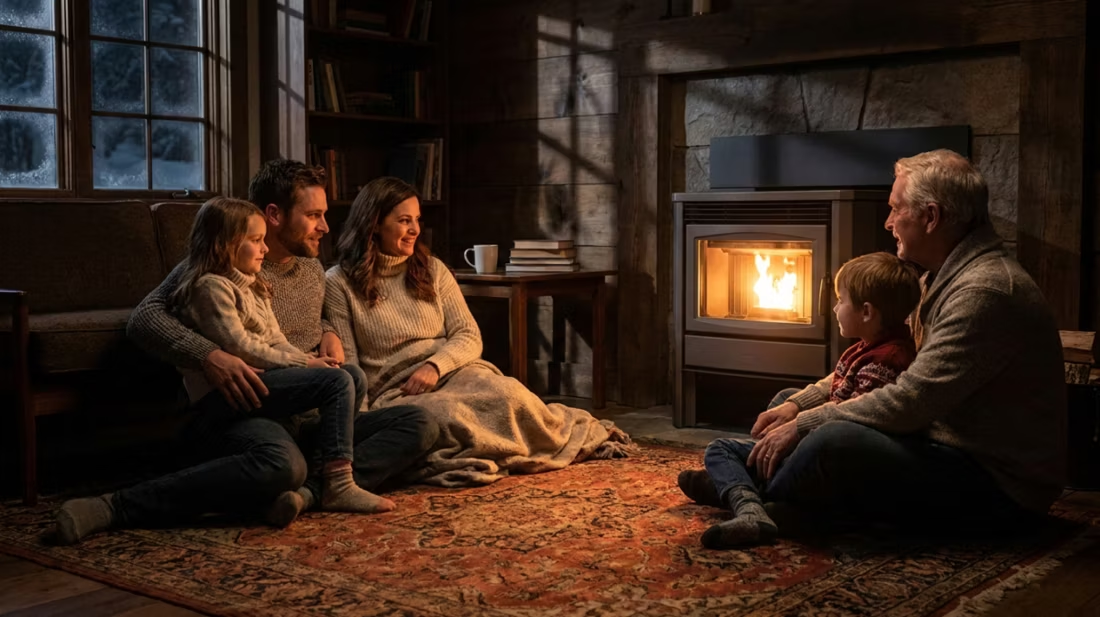
Martin County sits on the open prairie of south-central Minnesota, right along the Iowa border, with Fairmont and its chain of lakes at the center and Sherburn, Trimont, Truman, Welcome, Ceylon, Granada, Dunnell, Northrop, Elmore, and Twin Lakes spread across the surrounding farmland. This is a 6A cold climate—winter lows average around 7°F, with arctic fronts off the open prairie pushing well below zero, and the county has a heating load in the same range as Minneapolis, a couple hours north. Wind across flat, unbroken farmland makes the felt cold worse than the thermometer alone suggests, and heating season here runs from October well into April.
Martin County has no non-attainment status and no winter inversion or wildfire smoke concerns, so there's no burn-ban culture limiting solid-fuel heat here the way there is in parts of the West—pellet stoves run largely unrestricted. What draws farm-country homeowners to pellet heat specifically is the convenience: a hopper you load once a day or two instead of splitting and stacking cordwood from the county's oak, maple, birch, and aspen woodlots. Bagged fuel from regional producers like Indeck Energy Services, Lignetics, and Somerset Pellet Fuel is stocked at farm and hardware stores throughout the region, so restocking doesn't mean a special trip. For homes looking for supplemental heat that's cleaner and more hands-off than a wood stove but still works when a rural electric co-op line goes down for a few hours on a battery backup, pellet fits Martin County's practical, self-reliant streak.
Three steps. No salesperson until you're ready.
Tell us about your project
Your zip code, your situation, and the fuel you're leaning toward—or let the answers point you to one.
See what's actually available
The brands dealers within 100 miles genuinely carry—real options, never a catalog mirage.
Get your dealer & Project Guide
A trusted local dealer, plus the free Project Guide & Parts List that names every component of the job.
Frequently Asked Questions
How much does a pellet stove installation cost in Martin County?
A freestanding pellet stove installation typically runs $3,000 to $6,500 in Martin County, depending on the unit, whether new venting is needed through an exterior wall, and any hearth pad work required for clearance. A pellet insert going into an existing masonry fireplace usually falls in the $3,500 to $7,000 range, since it reuses your existing chimney chase with a smaller-diameter liner rather than requiring all-new venting. Rural properties around Sherburn, Trimont, or Truman may see a modest travel charge added to quotes from Fairmont-based installers. A local dealer will give you a firm number after seeing your home and current venting situation.
What size pellet stove do I need for my Martin County home?
Sizing depends on square footage, insulation, and whether the stove is your primary heat or a supplement to a furnace. In a 6A climate with lows regularly near or below zero, older farmhouses around Martin County's rural townships often need a larger hopper capacity and higher BTU output than the same square footage would require farther south—undersizing shows up fast on the coldest nights. As a general guide, small units (up to roughly 1,000 sq ft) suit a single room or a smaller ranch home, mid-size units (1,000–2,000 sq ft) cover most main living areas, and larger units handle open-concept or less-insulated whole homes. A local dealer will walk your space and size it based on your actual insulation and layout rather than square footage alone.
Where can I find certified pellet stove installers near me?
Look for installers with NFI (National Fireplace Institute) certification, which covers proper venting, clearances, and hopper/auger setup specific to pellet appliances. Dealers based in and around Fairmont typically cover the full county, including Sherburn, Trimont, Truman, Welcome, and the smaller townships, sometimes with a small travel fee for the outer edges of the county. Because pellet stoves rely on an electric auger, blower, and igniter, proper setup and a clean power supply matter as much as the venting—this isn't a project suited to a general handyman install.
What's the difference between a pellet stove and a pellet insert?
A pellet stove is a freestanding unit that sits on a hearth pad and vents through a wall or existing chimney chase—it can go almost anywhere with the right clearances, which makes it a good fit for homes without an existing fireplace. A pellet insert is built to slide into an existing masonry fireplace opening, using a smaller stainless liner run up through your current chimney. For Martin County homes with an older fireplace that's mostly decorative, an insert is often the better upgrade since it reuses infrastructure you already have. Homes without a fireplace, or newer construction, usually go with a freestanding stove instead.
Do I need a permit to install a pellet stove in Martin County?
Most new pellet stove and insert installations require a building permit, since the appliance involves new venting through a wall or chimney and often an added electrical circuit for the auger and blower. Requirements and fees vary by whether you're inside Fairmont city limits or in unincorporated Martin County, so it's worth checking with your local building department before work starts. The good news for this county specifically: with no non-attainment status or winter inversion issues on record here, there's no seasonal burn-curtailment period to navigate the way homeowners in some Western states deal with—once it's installed and inspected, you run it as you like.
What's the best pellet stove for Martin County's climate?
For a 6A climate with regular sub-zero nights, look at pellet stoves rated for continuous cold-weather use with a larger hopper capacity—brands like Harman and Quadra-Fire are common recommendations in the Upper Midwest for exactly this reason, since a bigger hopper means fewer overnight reloads during an extended cold snap. Whatever model you choose, confirm it's rated to run reliably at the low end of Martin County's winter temperatures, and ask your local dealer about hopper size relative to your square footage—running low on pellets at 2 a.m. in January isn't a mistake you want to make twice.
How much maintenance does a pellet stove need?
Pellet stoves need less chimney maintenance than a wood stove but more routine attention day-to-day. Plan on emptying the ash pan every few days during regular use, wiping the glass weekly, and cleaning the burn pot and heat exchanger tubes roughly every one to two weeks depending on how much you run it. A full annual service—checking the auger, igniter, blower motor, and venting—is recommended before each heating season, similar to a furnace tune-up. Given how long and cold Martin County winters run, a stove that's running daily for six months benefits from that yearly once-over.
Where can I buy pellet fuel in Martin County?
Bagged pellets from regional producers including Indeck Energy Services, Lignetics, and Somerset Pellet Fuel are commonly stocked at farm supply and hardware stores across south-central Minnesota, and your local hearth dealer can usually point you to the closest reliable source or set up a standing order before winter. Buying a season's supply early—before the first hard freeze—is standard practice in Martin County, since demand and pricing both tighten up once cold weather actually arrives.
Pellet stove vs. wood stove—which is right for my Martin County home?
Wood stoves burn cordwood from the county's oak, maple, birch, and aspen, work without any electricity, and are the better choice as true emergency backup heat if a rural electric co-op line goes down in an ice storm. Pellet stoves are more hands-off day to day—load the hopper, set the thermostat, less ash, no splitting or stacking—but they need continuous electricity to run the auger and blower, so they're not a standalone option during an extended outage unless paired with a battery backup or generator. Many Martin County households end up with a practical split: pellet for daily convenience in the main living space, and a wood-burning option somewhere in the house as a true backup. A local dealer can walk you through both given your home's setup.
Why is my open fireplace making my house colder?
Open fireplaces suck—literally. As the fire burns, it consumes air your furnace already paid to heat and pulls it out through the chimney, so the house is actually colder after the fire goes out than before you lit it. An insert fixes this: it seals the chimney, puts fixed glass across the front, and turns that hole in your house into a real heat source.
What's the difference between an insert and a zero-clearance fireplace?
An insert is a fireplace that slides into a pre-existing wood-burning fireplace—if you don't have one, there's nothing to insert it into. A zero-clearance fireplace is built into a framed wall, which makes it the answer for remodels and new construction. Simple test: existing masonry fireplace means insert; blank or framed wall means zero-clearance.
Does a fireplace add value to my home?
On average, a fireplace adds back to the home about the same amount you spent installing it. Add the monthly savings from heating the rooms you actually use instead of the whole house—often hundreds of dollars a year—and the value case is strong before you even count what a fire does for how your family uses the room.
What is an in-home preview and do I need one?
It's a visit where a hearth professional measures your space, confirms the model you picked actually works in your home, and walks the specs—framing, gas line, venting, finish work—before anything is ordered. Some details you just can't know until you see the house. Never make a down payment without one; it's the single most-skipped step that burns buyers.
Stove and Fireplace Dealers in Martin County
Pellet Brands Stocked Around Martin County
Manufacturers will point you to the nearest stocking dealer.
Find your pellet stove in Martin County.
Tell us about your home and heating goals, and we'll match you with a trusted local dealer and send over a free Project Guide & Parts List—a plan for your pellet project in Martin County, with the exact parts, vent kit, and recommended installer.
Find Your Fireplace →