
Steady heat for Mahnomen County's coldest stretches.
Zone 7 winters mean long stretches below zero across Mahnomen, Waubun, and the White Earth Nation. A thermostatically controlled pellet stove holds a room's temperature through the worst of it. Find the right unit and connect with a trusted local dealer.
Every Project Starts From One of These Five Situations
Consistent, low-maintenance heat for a hard climate.
Mahnomen County sits in climate zone 7, among the coldest heating zones in the continental United States—winters here run comparable to Fargo or International Falls, with stretches of sub-zero air that settle in for days at a time. With just under 2,800 residents spread across the county, including Mahnomen, Naytahwaush, and Waubun, homes here tend to be rural, and many rely on wood as their heritage fuel given the oak, maple, birch, and aspen that grow throughout the region. Pellet stoves fit naturally alongside that tradition—they burn a manufactured, consistent fuel rather than cut cordwood, and they hold a set temperature automatically rather than requiring someone to feed a firebox every few hours.
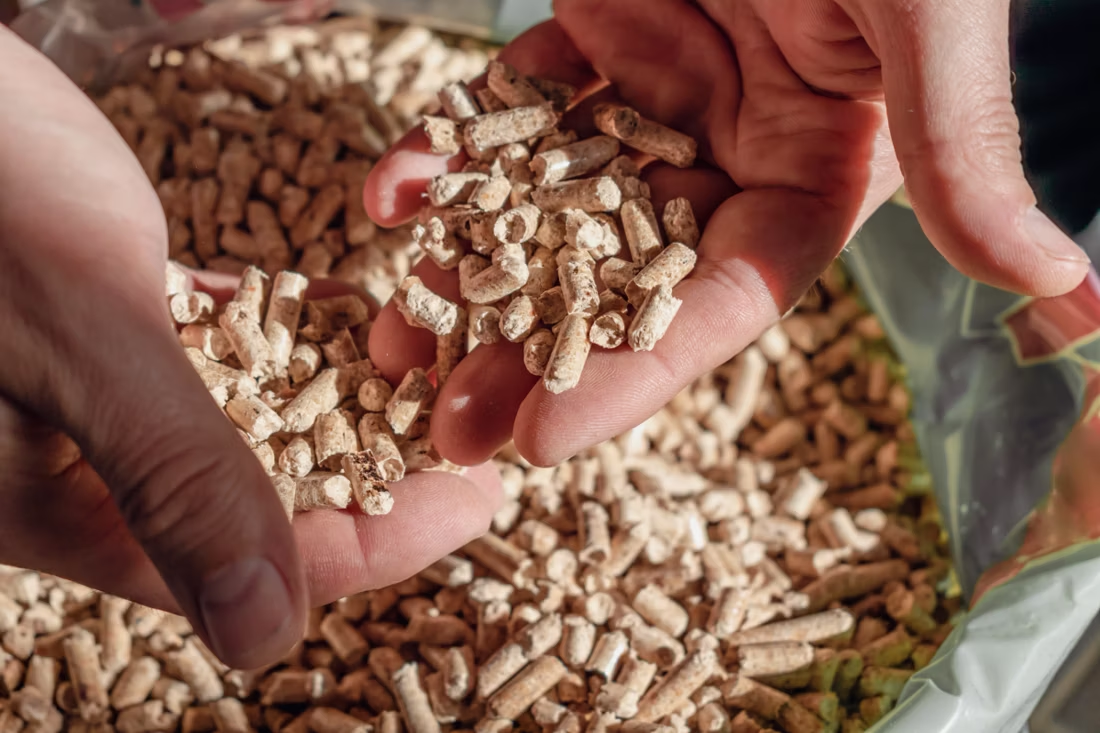
There's no air quality non-attainment designation in Mahnomen County, so pellet appliances aren't competing with wood-smoke restrictions the way they might in a western basin community—the appeal here is practical rather than regulatory. Regional suppliers including Indeck Energy Services, Lignetics, and Somerset Pellet Fuel keep bagged pellets reasonably accessible in this part of Minnesota, which matters in a county where the nearest big-box hearth retailer may be an hour's drive away. A properly sized pellet stove gives a rural Mahnomen County home a hopper that can run 24 to 60 hours unattended, a thermostat that holds the room steady overnight, and a fuel source that stores cleanly in a garage or mudroom without the bark, bugs, and bulk of a woodpile.
Three steps. No salesperson until you're ready.
Tell us about your project
Your zip code, your situation, and the fuel you're leaning toward—or let the answers point you to one.
See what's actually available
The brands dealers within 100 miles genuinely carry—real options, never a catalog mirage.
Get your dealer & Project Guide
A trusted local dealer, plus the free Project Guide & Parts List that names every component of the job.
Frequently Asked Questions
How much does a pellet stove installation cost in Mahnomen County?
Pellet stove and insert installations in this part of Minnesota typically run in the $4,500 to $7,500 range, depending on the unit size, whether it's a freestanding stove or an insert going into an existing masonry fireplace, and the venting path required. Freestanding stoves usually need a 3-inch or 4-inch PL venting run through an exterior wall, which is generally simpler and less expensive than a full chimney liner insert install. Homes without an existing 120V outlet near the install location may see a modest added cost for electrical work, since every pellet stove requires power to run the auger and combustion blower.
Will a pellet stove work if my home loses power during a winter storm?
No—this is the most important thing to understand before choosing pellet over wood in Mahnomen County. Pellet stoves require continuous electricity to run the auger motor, igniter, and combustion blower, so a power outage shuts the unit down completely, even with a full hopper of fuel. In a zone 7 climate with occasional multi-day outages from ice or wind events, that's a real consideration. Some homeowners pair a pellet stove with a small battery backup or generator sized for the stove's low draw (typically under 500 watts), which keeps it running through most outages. If backup heat during outages is the top priority, a wood stove burning local oak or birch is worth comparing before you commit to pellet.
What size pellet stove do I need for a rural Mahnomen County home?
Sizing depends on square footage, insulation, and how exposed the home is to wind—a common factor for the open farmland and prairie-edge properties typical of this county. As a general guide, smaller units (under 1,000 sq ft) suit a single large room or cabin, while mid-size stoves (1,000 to 2,000 sq ft) handle most main living areas in an older farmhouse. Given the zone 7 heating load here, it's common for local homeowners to size up one notch compared to what a stove's rated square footage suggests, especially in homes with lower insulation levels typical of older rural housing stock. A local dealer will size the unit correctly during an in-home visit rather than relying on a generic square-footage chart.
Where can I buy bagged pellets near Mahnomen County?
Regional pellet manufacturers including Indeck Energy Services, Lignetics, and Somerset Pellet Fuel supply bagged hardwood and softwood pellets that are distributed through farm supply stores, hardware stores, and hearth dealers across northern Minnesota. Because Mahnomen County is rural, it's worth confirming with your dealer where the closest reliable pellet supply point is and buying a season's worth (typically 1 to 3 tons for a primary-heat home) before the first cold snap, since local stock can run low during the coldest stretches of January and February.
How does a pellet stove compare to burning wood, given the oak and birch available locally?
Wood is deeply available in Mahnomen County—oak, maple, birch, and aspen are all common locally, and many rural households already have access to a woodlot or a neighbor selling cordwood. Wood stoves burn that fuel directly, work without electricity, and are the better choice for true off-grid backup heat. Pellet stoves trade that self-sufficiency for convenience: no splitting, stacking, or hauling cordwood, a cleaner burn with far less ash, and a thermostat that holds a steady room temperature without tending. For a primary residence with reliable power, pellet is often the lower-effort choice. For a hunting shack, off-grid cabin, or anyone prioritizing storm resilience, wood remains the more dependable option in this climate.
Do I need a permit to install a pellet stove in Mahnomen County?
Most pellet stove installations require a building permit, and jurisdiction depends on whether the home sits within a city (Mahnomen or Waubun) or in unincorporated township land, including areas within the White Earth Nation. A local dealer or installer will typically confirm the correct permitting office for your address and handle the paperwork as part of the install, since venting placement and clearances need to meet current fire code either way.
How often does a pellet stove need maintenance?
Pellet stoves need more frequent, lighter maintenance than wood stoves. Plan on emptying the ash pan every few days during heavy winter use, cleaning the burn pot weekly to keep the flame consistent, and scheduling a full professional cleaning of the venting, hopper, and auger mechanism once a year—ideally before the first cold snap in late fall. Homes running a pellet stove as primary heat through a full zone 7 winter should expect to burn through components like igniters and blower motors faster than occasional-use households, so keeping spare parts on hand isn't a bad idea given how far the nearest service technician may need to travel in this county.
What's the difference between a pellet stove and a pellet insert?
A pellet stove is a freestanding unit that sits on the floor and vents through a wall or existing chimney chase—it can go almost anywhere with the right clearances. A pellet insert is built to slide into an existing masonry fireplace opening, converting an old wood-burning fireplace into an automated, thermostat-controlled heat source using the same chimney. For the older farmhouses common in Mahnomen County that already have a masonry fireplace, an insert is often the simpler retrofit since it reuses existing venting infrastructure rather than requiring new wall penetration.
Are there rebates available for pellet stove installations in Minnesota?
Minnesota has periodically offered incentives tied to biomass heating efficiency, and some pellet stove models that meet current EPA emissions standards can qualify for federal tax credits under the biomass stove tax credit program. Availability and terms change from year to year, so it's worth asking your local dealer which specific models currently qualify—they typically track this closely since it affects which units they recommend to customers in a cold, rural county like this one where heating costs are a real factor in the decision.
Why is my open fireplace making my house colder?
Open fireplaces suck—literally. As the fire burns, it consumes air your furnace already paid to heat and pulls it out through the chimney, so the house is actually colder after the fire goes out than before you lit it. An insert fixes this: it seals the chimney, puts fixed glass across the front, and turns that hole in your house into a real heat source.
Why is a fireplace insert so efficient?
An insert does two things: it seals the chimney completely, so you stop losing air you already paid to heat, and it radiates warmth into the room through the firebox and glass. Most add a heat-exchange fan that pulls cool room air underneath, wraps it around the hot firebox, and pushes it back out warm. Your home is more efficient before you've even lit the first fire.
How much should I budget for a fireplace?
For an average home—covering the fireplace, the vent pipe, and basic installation—a budget between $3,900 and $5,500 gives you a lot of options across wood, gas, and pellet. By the time you add finish work, gas line, and electrical, the average complete installation lands between $5,000 and $12,000 all-in. In a remodel or new build, a good rule is to put about 2.5% of the total project cost toward the fireplace.
Can a fireplace actually lower my heating bill?
Yes—by creating a comfort zone. A furnace heats every square foot of the house just to warm the one room you're in; a gas fireplace on low burns roughly a sixth of the gas a typical furnace does. Set the furnace around 55–60 degrees as a baseline, then heat the rooms your family actually uses. Families who heat this way commonly save $20–$60 a month.
Pellet Brands Stocked Around Mahnomen County
Manufacturers will point you to the nearest stocking dealer.
Find your pellet stove in Mahnomen County.
Tell us a bit about your home and we'll match you with the right pellet stove or insert, plus a free Project Guide & Parts List with the exact vent kit and parts your local dealer will need—and connect you with a trusted installer near you.
Find Your Fireplace →