
Bring clean, instant heat to your Lake of the Woods County cabin.
No chimney, no gas line, no ash—just flip a switch. Find the right electric fireplace or insert for your lake home, and get matched with a local dealer who actually services this stretch of the Minnesota border.
Every Project Starts From One of These Five Situations
Zone heat that works without a chimney.
Lake of the Woods County sits at the very top of Minnesota, tucked against the Canadian border and the Rainy River, with a year-round population of about 1,390 spread across Baudette, Williams, and a scatter of unincorporated townships. It's Zone 7 country—one of the coldest climate zones in the Lower 48, on par with International Falls just to the west. Most of the housing stock here is lake cabins and seasonal homes clustered around Lake of the Woods and its resorts, plus a smaller core of year-round residences. Wood heat (oak, maple, birch, aspen are all cut locally) and propane still do most of the heavy lifting through a winter that regularly sees weeks below zero, but electric fireplaces have become a common addition—not as a replacement for the woodstove, but as easy supplemental heat in a bedroom, sunroom, or cabin addition that never had a chimney to begin with.
North Star Electric Cooperative serves most of the county, and its rural distribution network is exactly why electric fireplaces make sense here in a limited role: a plug-in or hardwired unit gives you instant zone heat and real ambiance in a lake home without running new gas line or masonry work, which matters when your nearest full-service hearth dealer may be an hour away in Warroad or International Falls. The honest tradeoff, worth saying plainly: in a county where winter power outages do happen and can last a while in the more remote townships, an electric fireplace goes dark right along with everything else—it's a comfort and convenience upgrade, not a storm-proof backup like a wood stove. For that reason, most local homes that install one are pairing it with wood or propane as their real cold-weather backbone.
Three steps. No salesperson until you're ready.
Tell us about your project
Your zip code, your situation, and the fuel you're leaning toward—or let the answers point you to one.
See what's actually available
The brands dealers within 100 miles genuinely carry—real options, never a catalog mirage.
Get your dealer & Project Guide
A trusted local dealer, plus the free Project Guide & Parts List that names every component of the job.
Frequently Asked Questions
How much does an electric fireplace installation cost in Lake of the Woods County?
Costs vary widely because electric units span such a range of complexity. A plug-in freestanding or wall-mount electric fireplace can run $300 to $900 installed, since many just need a standard 120V outlet and no permit. A built-in electric insert or a linear wall unit that requires a dedicated circuit, in-wall wiring, or a finish carpentry surround typically runs $1,200 to $2,500 once a licensed electrician is involved. Because Lake of the Woods County is so sparsely populated, expect a modest trip charge from installers based out of Baudette, Warroad, or International Falls if your cabin is farther out along Highway 11 or Highway 172.
What size electric fireplace or insert do I need?
Electric fireplaces are rated for supplemental zone heat, not whole-home heating, so sizing is more about the room than the whole cabin. A 1,000-1,500 BTU/hr unit (the typical output of most 750-1,500 watt inserts) comfortably takes the edge off a bedroom, den, or three-season porch that's been winterized. For open-concept lake homes with vaulted ceilings, bigger linear units or two smaller units placed in separate zones work better than trying to oversize one fireplace. Given how cold Zone 7 winters run here, don't expect any electric unit to substitute for your primary wood stove or propane furnace on a sub-zero night—it's there for comfort in the room you're actually sitting in.
Do I need a licensed electrician to install an electric fireplace?
It depends on the unit. A plug-in electric fireplace that runs off a standard outlet doesn't require an electrician or a permit. A built-in insert or a unit that needs a new dedicated circuit does require a licensed electrician, and any new circuit work should be pulled through Lake of the Woods County Planning & Zoning, which handles building and electrical permitting for the county. Given how few full-time hearth and electrical contractors serve this remote a county, most homeowners coordinate through a local dealer who either has an electrician on staff or a trusted subcontractor they use regularly for lake-home installs.
What's the difference between an electric insert, a wall-mount, and a freestanding electric stove?
An electric insert is built to drop into an existing masonry fireplace opening, giving an old wood-burning fireplace a clean, no-maintenance flame effect and real supplemental heat without touching the chimney. A wall-mount or linear unit is designed to hang on a wall like a piece of art, popular in newer cabin builds and additions that never had a fireplace at all. A freestanding electric stove looks like a traditional cast-iron wood stove but plugs in—a good fit for cabins that want the wood-stove aesthetic in a spare bedroom or bunkhouse without adding a second chimney. All three are available from local dealers; which one fits depends on whether you're retrofitting an old fireplace or adding heat to a room that's never had one.
Do I need a permit for an electric fireplace in Lake of the Woods County?
A simple plug-in unit generally doesn't require a permit. A built-in or hardwired installation that adds a new electrical circuit does require an electrical permit through Lake of the Woods County Planning & Zoning, and most local installers handle that paperwork as part of the job. There's no combustion involved, so none of the air-quality or venting rules that apply to wood or gas installations come into play here—one of the simpler paths to a permit in the county, if a permit is even needed.
What's the best electric fireplace for a Lake of the Woods County cabin?
For a Zone 7 lake cabin, look for a unit with a strong secondary infrared or fan-forced heater rather than one marketed purely for flame effect—brands like Dimplex and Napoleon make linear and insert models with real 4,000-5,000 BTU heat output that can noticeably warm a closed-off bedroom or den. If the cabin sits empty for stretches during the week, as many do around the lake's resort communities, a model with a remote thermostat that can be set before you arrive is worth the small upcharge. Because electric heat won't carry you through a hard winter here on its own, most local buyers are pairing it with an existing wood stove or propane system rather than treating it as their primary heat source.
Will my electric fireplace still work during a power outage?
No—and this is worth being direct about. An electric fireplace runs entirely on grid power, so if North Star Electric Cooperative lines go down in a winter storm, the unit goes dark along with your lights. In a county this remote, outages in outlying townships can take longer to restore than in town. That's the main reason most homeowners here treat an electric fireplace as a comfort and convenience add-on rather than emergency heat, and keep a wood stove, propane heater, or generator as their actual cold-weather backup plan.
How much maintenance does an electric fireplace need?
Very little compared to wood or gas. There's no chimney to sweep, no gas lines to inspect, and no combustion byproducts to worry about. Maintenance is mostly dusting the heating element and fan vents once or twice a year and occasionally replacing an LED light strip on older units—a task most owners handle themselves. If a unit stops heating but the flame effect still runs, that usually points to the fan-forced heater element, which a local dealer or electrician can typically swap without replacing the whole unit.
Electric vs. wood or propane—which is right for my Lake of the Woods County home?
Wood, cut locally from oak, maple, birch, and aspen, and propane remain the backbone of heating in this county because they keep working through power outages and can carry a home through a genuine Zone 7 winter on their own. Electric fireplaces don't compete on that front—but they win on convenience: no wood handling, no ash, no tank refills, and an install that can go into a room with zero existing infrastructure in an afternoon. Most lake homes and cabins around Lake of the Woods end up using both—wood or propane for real heat through the season, and an electric unit for the room where you actually want a low-fuss fire on a Tuesday night in October before the cold really sets in.
Can I put a TV above my fireplace?
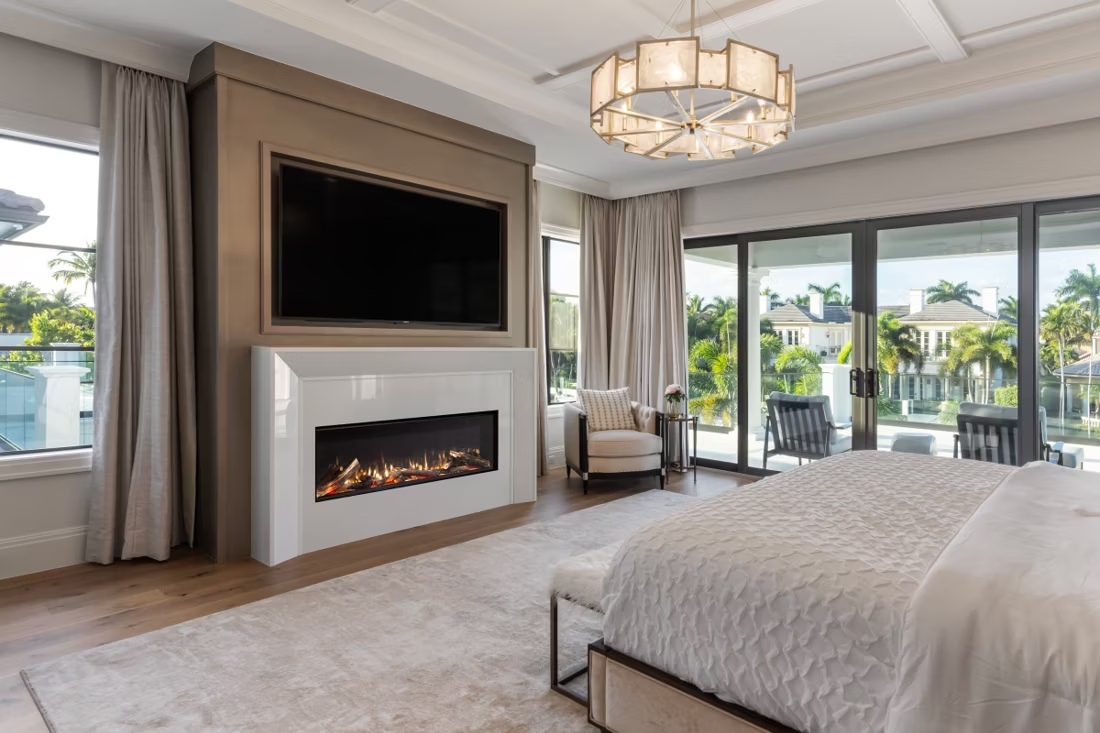
Yes—with an asterisk. Fireplaces are hot and TVs don't like heat. Either put a mantel between them to deflect rising warmth, or choose a fireplace with heat-management technology that creates a cool zone on the wall above—the wall stays around 125 degrees, barely warm, while the room still gets full heat. If you like clean lines and don't want a mantel, heat management is the answer.
Does an electric fireplace need a vent or chimney?
No—that's its superpower. An electric fireplace needs a wall and an outlet, period. No vent pipe, no gas line, no clearances to design around, which is why it works in bedrooms, offices, apartments, and walls where venting a gas or wood unit would be impractical or impossible. Installation is typically the simplest and least expensive of any fireplace type.
Can a fireplace actually lower my heating bill?
Yes—by creating a comfort zone. A furnace heats every square foot of the house just to warm the one room you're in; a gas fireplace on low burns roughly a sixth of the gas a typical furnace does. Set the furnace around 55–60 degrees as a baseline, then heat the rooms your family actually uses. Families who heat this way commonly save $20–$60 a month.
Can I install a fireplace myself?
If you're putting a fire in your house on purpose, it's best to work with an expert. Unless you're genuinely experienced in framing, gas line, vent pipe, and the national code on clearances to combustibles, have a professional do it—and ideally the same company that sells you the fireplace, so warranty, service, and liability all live under one roof.
Find your electric fireplace in Lake of the Woods County.
Tell us about your cabin or home and we'll match you with a trusted local dealer, plus a free Project Guide & Parts List for your electric fireplace project in Lake of the Woods County—the right unit, the exact parts, and the installer who can actually get out to your part of the county.'
Find Your Fireplace →