
Instant heat and ambiance for Kittson County's coldest nights.
No chimney, no gas line, no venting—just plug-in or hardwired warmth for farmhouses, additions, and modular homes from Hallock to Karlstad. Find the right unit and connect with a trusted local dealer.
Every Project Starts From One of These Five Situations
Supplemental warmth without the wood pile or the gas line.
Kittson County sits in the far northwest corner of Minnesota, bordering Manitoba and North Dakota, with a population of just over 2,290 spread across farm towns like Hallock, Kennedy, Karlstad, Lake Bronson, and Halma. It's Climate Zone 7—one of the coldest zones in the Lower 48, with winters that rival International Falls and Fargo for sustained sub-zero stretches and wind chills that can sit at 30 below for days. With little natural gas infrastructure this far out, most homes lean on propane furnaces, wood stoves burning local oak, maple, birch, and aspen, or electric baseboard and heat pump systems—often some combination of the three.
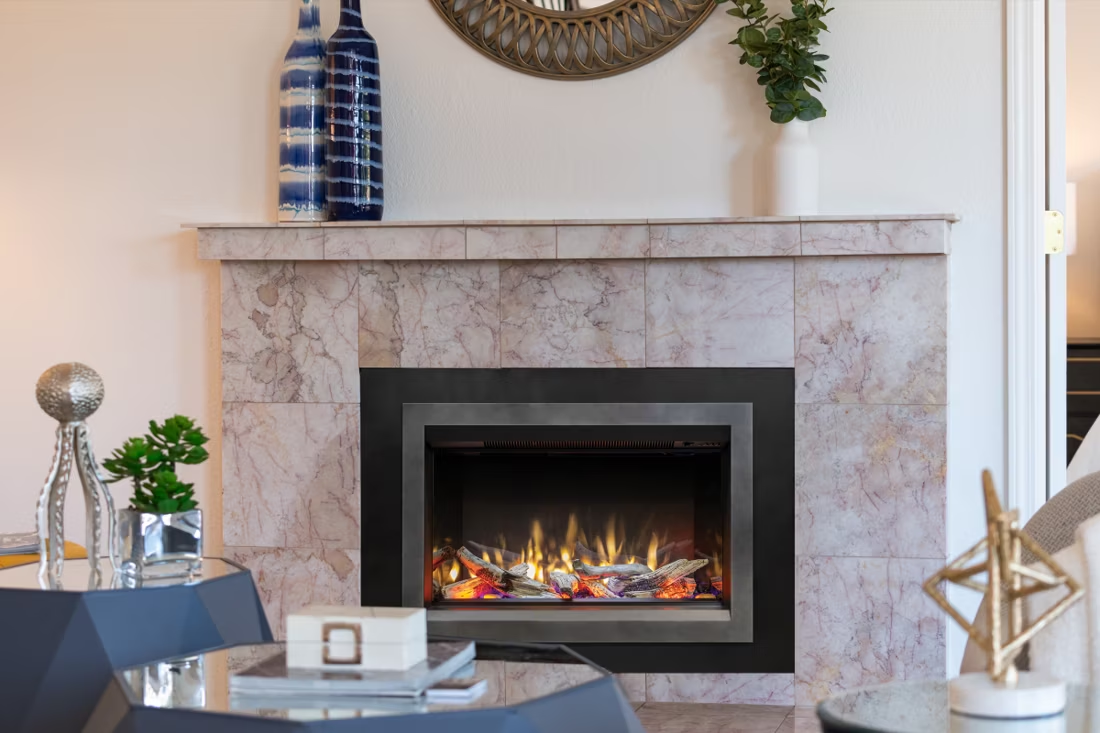
An electric fireplace or insert doesn't replace a Kittson County furnace, but it fills a real gap: zone heat for a converted porch or sunroom, ambiance and supplemental warmth in the main living room while the propane furnace idles back, or a clean, no-venting option for the manufactured and modular homes common on county farmsteads. Because there's no chimney, no gas line, and often no more than a standard outlet involved, installs are fast and inexpensive relative to wood or gas—and PKM Electric Cooperative, which serves most of the county, has no trouble supporting the modest additional load a fireplace insert draws.
Three steps. No salesperson until you're ready.
Tell us about your project
Your zip code, your situation, and the fuel you're leaning toward—or let the answers point you to one.
See what's actually available
The brands dealers within 100 miles genuinely carry—real options, never a catalog mirage.
Get your dealer & Project Guide
A trusted local dealer, plus the free Project Guide & Parts List that names every component of the job.
Frequently Asked Questions
How much does an electric fireplace installation cost in Kittson County?
Most electric fireplace installs in Kittson County run between $400 and $2,000. A plug-in insert or wall-mount unit that uses a standard 120V outlet sits at the low end—often a same-day install. Built-in units, larger wall-mounted models drawing more amperage, or installs requiring a dedicated 20-amp circuit run higher, especially if the electrician has to run new wire from the panel in an older farmhouse. Given the distances between towns in the county, expect a modest trip charge if you're out toward Halma or the edges of the county away from Hallock and Karlstad.
Will an electric fireplace actually heat a room during a Kittson County winter?
It will take the edge off a room, but it's not a substitute for your furnace on the coldest nights. Most electric fireplace inserts put out 4,000 to 9,000 BTU on the heat setting—enough to comfortably warm a bedroom, sunroom, or den, but not enough to carry a whole house when wind chill drops toward 30 below, which happens with some regularity here. Think of it as zone heat: it lets you turn the thermostat back a few degrees in the room where you spend your evenings, while the propane furnace or wood stove keeps the rest of the house at a safe baseline.
Do I need an electrician or permit to install an electric fireplace?
A plug-in unit on a standard 120V outlet typically doesn't require any permit—it's no different than plugging in a space heater. A built-in or wall-mounted unit that needs a new dedicated circuit does require licensed electrical work. Minnesota electrical permits are handled through the state electrical inspection program rather than a county building department, since Kittson County doesn't run its own electrical inspection office. Any licensed electrician working in the PKM Electric Cooperative service area can pull the permit and handle the inspection as part of the job.
Electric fireplace vs. wood stove—which makes more sense out here?
Wood stoves burning local oak, birch, or aspen remain the practical choice for backup heat in Kittson County, since they keep working when the power goes out—a real concern during winter storms this far north. Electric fireplaces can't do that; they go dark the moment the grid does. Where electric wins is convenience and cleanliness: no wood to split and stack, no chimney to sweep, and instant on-off operation for a room you use daily. Many farmhouses in the county end up with both—wood as the fallback heat source, electric for the everyday ambiance in the main living space.
Will my electric fireplace work if the power goes out?
No—electric fireplaces require grid power to run, so an outage takes them offline along with everything else electric in the house. This matters more in Kittson County than in most places, since ice storms and heavy snow can knock out PKM Electric Cooperative service for hours or longer in rural stretches of the county. If backup heat during outages is a priority, pair an electric fireplace with a wood stove, a propane space heater, or a home generator rather than relying on electric as your only heat source.
What size electric fireplace or insert do I need?
Sizing an electric unit is less about square footage and more about which room you want warmed and how it's built into the space. A 30- to 40-inch insert or wall-mount handles a typical bedroom or den. Larger living rooms, especially open-concept additions common in newer Kittson County builds, do better with a 50-inch-plus unit or a built-in linear model. Because electric heat output tops out around 9,000 BTU regardless of unit size, bigger units mostly buy you more flame visual and mantel space rather than dramatically more heat—a local dealer can walk you through the tradeoff.
Can I put an electric insert into an old masonry fireplace?
Yes, and it's a common project in older Kittson County farmhouses that have a masonry fireplace nobody uses anymore. An electric insert slides into the existing firebox opening, plugs into a nearby outlet (or a new dedicated circuit if the unit calls for it), and gives you flame effect and supplemental heat without the maintenance of an open chimney—no more sweeping, no more cold air pulling down the flue in January. It's usually the fastest and cheapest way to bring a dead fireplace back into daily use.
What are the best electric fireplace brands available near Kittson County?
Dimplex, Napoleon, and Amantii are the brands most commonly carried by hearth dealers serving northwest Minnesota, and all three make inserts, wall-mounts, and built-ins suited to farmhouse and modular home installs alike. Rather than chasing a specific brand name, it's worth talking through flame realism, heater wattage, and mounting style with a local dealer who knows what actually fits your framing and electrical setup—that matters more for a good result than the logo on the unit.
Electric vs. pellet stove—which fits a Kittson County home better?
Pellet stoves burning bagged fuel from suppliers like Lignetics or Somerset Pellet Fuel put out real, whole-room heat and can carry more of the heating load than an electric fireplace ever will—but they still need electricity to run the auger and blower, so they share the same outage vulnerability. Electric fireplaces are simpler, need no fuel storage, and install almost anywhere with an outlet. For a county where farm buildings and additions often just need supplemental warmth and ambiance rather than a primary heat source, electric is usually the lower-effort choice; for anyone wanting a real secondary heat source with more BTU, pellet is worth a look too.
Does an electric fireplace need a vent or chimney?
No—that's its superpower. An electric fireplace needs a wall and an outlet, period. No vent pipe, no gas line, no clearances to design around, which is why it works in bedrooms, offices, apartments, and walls where venting a gas or wood unit would be impractical or impossible. Installation is typically the simplest and least expensive of any fireplace type.
Can I put a TV above my fireplace?
Yes—with an asterisk. Fireplaces are hot and TVs don't like heat. Either put a mantel between them to deflect rising warmth, or choose a fireplace with heat-management technology that creates a cool zone on the wall above—the wall stays around 125 degrees, barely warm, while the room still gets full heat. If you like clean lines and don't want a mantel, heat management is the answer.
Can a fireplace actually lower my heating bill?
Yes—by creating a comfort zone. A furnace heats every square foot of the house just to warm the one room you're in; a gas fireplace on low burns roughly a sixth of the gas a typical furnace does. Set the furnace around 55–60 degrees as a baseline, then heat the rooms your family actually uses. Families who heat this way commonly save $20–$60 a month.
What is an in-home preview and do I need one?
It's a visit where a hearth professional measures your space, confirms the model you picked actually works in your home, and walks the specs—framing, gas line, venting, finish work—before anything is ordered. Some details you just can't know until you see the house. Never make a down payment without one; it's the single most-skipped step that burns buyers.
Find your electric fireplace in Kittson County.
Tell us about your home and we'll put together a free Project Guide & Parts List—the right electric fireplace or insert for your space, the exact parts you'll need, and a trusted local dealer to install it.
Find Your Fireplace →