
Fireplace and stove help for every corner of Kittson County.
Wood, gas, pellet, and electric fireplace resources for Hallock, Karlstad, Kennedy, Lake Bronson, and the farm country between them—built for a county where winter isn't optional.
Every Project Starts From One of These Five Situations
Zone 7 winters on the Canadian border.
Kittson County sits in the far northwest corner of Minnesota, wedged between the Red River Valley and the Manitoba border, with North Dakota just across the river. It's one of the least populated counties in the state—about 2,290 people spread across farmland, shelterbelts, and small towns like Hallock (the county seat), Karlstad, Kennedy, and Lake Bronson. Climate zone 7 puts Kittson County among the coldest inhabited zones in the Lower 48, closer in character to International Falls than to the Twin Cities three hours south. Nights below -20°F are routine, open prairie wind pushes effective temperatures lower still, and the heating season here can run from September clear through May.
Wood heat has real staying power in a county like this—farms with wood lots keep oak, maple, birch, and aspen in supply, and a well-run wood or pellet stove is genuine backup when a January storm knocks out power on the grid feeding these small towns. What you'll find on this hub: hearth retailers, service technicians, and fuel suppliers who cover the whole county—because with under 2,300 residents spread this thin, almost nobody serving Kittson County is based inside it. Pick your fuel below to see local dealers, typical installed costs, and the unit types that actually hold up to a Kittson County winter.
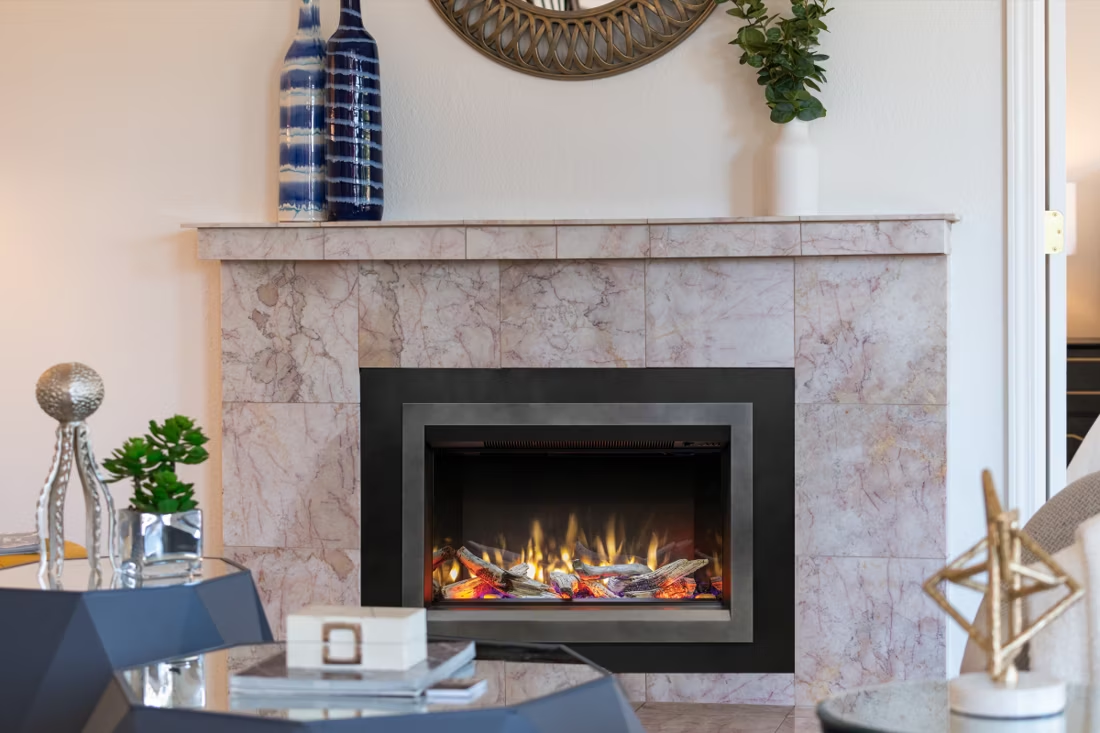
Four fuels. One honest answer for Kittson County.
Three steps. No salesperson until you're ready.
Tell us about your project
Your zip code, your situation, and the fuel you're leaning toward—or let the answers point you to one.
See what's actually available
The brands dealers within 100 miles genuinely carry—real options, never a catalog mirage.
Get your dealer & Project Guide
A trusted local dealer, plus the free Project Guide & Parts List that names every component of the job.
Frequently Asked Questions
Which fuel works best in Kittson County's climate?
Climate zone 7 doesn't leave much room for undersized equipment. Wood remains a serious primary or backup heat source here—oak and maple burn long and hot, birch lights easily and burns clean, and aspen works fine as a fast-burning shoulder-season wood; a catalytic wood stove sized for the space can hold a fire through a -20°F night without constant reloading. Pellet stoves are a strong option too, especially with regional pellet supply from brands like Lignetics and Indeck Energy Services close by in the upper Midwest—less labor than splitting wood, and most units run fine on a battery backup during outages. Gas (mostly propane in a county this rural) is the convenience choice for homeowners who want instant, thermostat-controlled heat without fuel handling. Electric fireplaces are supplemental almost everywhere in Kittson County—good for a bedroom or a cabin room, but not a realistic stand-alone heat source when the wind is coming off the prairie. Most homes here end up running two fuels: wood or pellet for real heat, propane or electric for convenience rooms.
Do I need a permit to install a wood stove or gas fireplace in Kittson County?
In most cases, yes, though the process is simpler here than in a larger jurisdiction. New wood stoves, inserts, gas fireplaces, and pellet stoves typically require a building permit through the county, and any incorporated town like Hallock or Karlstad may route permitting through the city rather than the county zoning office. Wood-burning appliances installed new should meet current EPA emissions standards, and any gas line work for a propane fireplace should be done by a licensed installer, since Kittson County doesn't have municipal natural gas service and nearly all gas appliances here run on propane. Most local hearth retailers—even the ones based an hour away in Thief River Falls or Grand Forks—handle the permitting as part of the installation, so you're not filing paperwork yourself in most cases.
Where do I even find a hearth dealer if I live in Kittson County?
Honestly—you probably won't find one physically located inside the county. With a population under 2,300, Kittson County doesn't support a standalone hearth showroom the way a larger county would. Homeowners in Hallock, Karlstad, Kennedy, and Lake Bronson typically work with retailers based in Thief River Falls, Grand Forks, or other regional hubs within an hour or two's drive; these dealers regularly service rural counties like this one and will often do the site visit and installation on-location even if the showroom is a drive away. The retailer listings on this hub note their service radius so you know who actually covers your specific town.
Is natural gas available for a gas fireplace in Kittson County, or is it propane?
It's propane almost everywhere in Kittson County. There's no municipal natural gas distribution system covering the county's small towns, so gas fireplaces, inserts, and stoves here are set up to run on propane, either from a home's existing tank or a new tank installed as part of the project. This isn't a downgrade—propane appliances perform identically to natural gas units once the orifices are sized correctly—but it does mean your installer needs to plan for tank placement, delivery access in winter, and a propane-specific gas line rather than assuming a gas main is nearby.
What local wood species work best for a wood stove in Kittson County?
Oak and maple are the top choices if you can get them seasoned—dense, high-BTU hardwoods that hold coals overnight, which matters when it's -25°F outside and you don't want to reload at 3 a.m. Birch is widely available on Kittson County farmland, splits easily, and burns clean, though it burns faster than oak or maple so it's better mixed in than relied on alone for overnight burns. Aspen is common too but it's a softer, faster-burning wood—fine for shoulder-season fires in September or May, less ideal as your only fuel through the coldest stretch of January and February. Whatever species you're burning, seasoning matters even more in this climate: wood needs at least six months to a year of dry, covered storage to burn efficiently and avoid excess creosote in a chimney that's already working overtime.
What's the typical installed cost across fuel types in Kittson County?
Costs run close to regional Upper Midwest norms, though travel time for the installer (since most are based outside the county) can add a modest trip charge. Wood stove or insert installation: roughly $4,000–$8,500 for a typical retrofit, more if new chimney chase work is needed. Propane fireplace, insert, or stove: roughly $4,000–$10,000 depending on whether an existing propane tank and line are already in place. Pellet stove or insert: roughly $4,000–$7,000 for a standard installation. Electric fireplace: $200–$3,000 for the unit itself, plus $400–$1,000 in labor for anything beyond a plug-in unit. Given the driving distances involved, it's worth asking any retailer up front whether their quote includes travel, since that's a real cost variable in a county this rural.
Can a fireplace actually lower my heating bill?
Yes—by creating a comfort zone. A furnace heats every square foot of the house just to warm the one room you're in; a gas fireplace on low burns roughly a sixth of the gas a typical furnace does. Set the furnace around 55–60 degrees as a baseline, then heat the rooms your family actually uses. Families who heat this way commonly save $20–$60 a month.
Wood, gas, pellet, or electric—how do I choose?
Match the fuel to your life, not the other way around. Wood: lowest fuel cost and total power-outage independence, but you're hauling and stacking. Gas: press a button, set a thermostat, no maintenance to speak of. Pellet: wood economics with automatic feeding, in exchange for weekly cleaning and a need for electricity. Electric: plugs in anywhere with honest supplemental heat. Nobody regrets the fuel that fits how they actually live.
Does a fireplace add value to my home?
On average, a fireplace adds back to the home about the same amount you spent installing it. Add the monthly savings from heating the rooms you actually use instead of the whole house—often hundreds of dollars a year—and the value case is strong before you even count what a fire does for how your family uses the room.
How much should I budget for a fireplace?
For an average home—covering the fireplace, the vent pipe, and basic installation—a budget between $3,900 and $5,500 gives you a lot of options across wood, gas, and pellet. By the time you add finish work, gas line, and electrical, the average complete installation lands between $5,000 and $12,000 all-in. In a remodel or new build, a good rule is to put about 2.5% of the total project cost toward the fireplace.
Stove and Fireplace Dealers in Kittson County
Listings include WhyFire partner dealers, dealers we have verified as authorized for the brands we recommend, and established local businesses that carry hearth products. Every listing shows which one it is. The ones marked Preferred run on WhyFire's software, so they can show you real pricing and book your appointment right here. No manufacturer pays for placement. How we verify dealers →
Geroy's Home & Appliance
McMunn & Yates Building Supply
Sunrooms Plus Inc.
Find your fireplace or stove dealer for Kittson County.
Pick your fuel below and we'll match you with a trusted local dealer who actually covers your town, plus a free Project Guide & Parts List for your project.
Find Your Fireplace →