
Steady, Hopper-Fed Heat for Kandiyohi County's Long Winters.
With a heavy winter heating load and winter lows averaging 3°F, Kandiyohi County homes need heat that doesn't quit—from Willmar to New London, Spicer, and the lake country in between. Find the right pellet stove or insert, and connect with a trusted local dealer.
Every Project Starts From One of These Five Situations
Consistent heat without the wood pile.
Kandiyohi County sits in west-central Minnesota's lake country, home to more than 100 lakes and the county seat of Willmar, with New London, Spicer, Atwater, Raymond, and Prinsburg spread across the surrounding farmland. Climate zone 6A puts this county in the same cold-climate tier as Fargo or International Falls—a heavy winter heating load, winter lows averaging 3°F, and a heating season that regularly starts in October and doesn't let go until April. Homes here, whether a Willmar bungalow or a farmstead outside Blomkest, need a heat source that can run for months without babysitting.
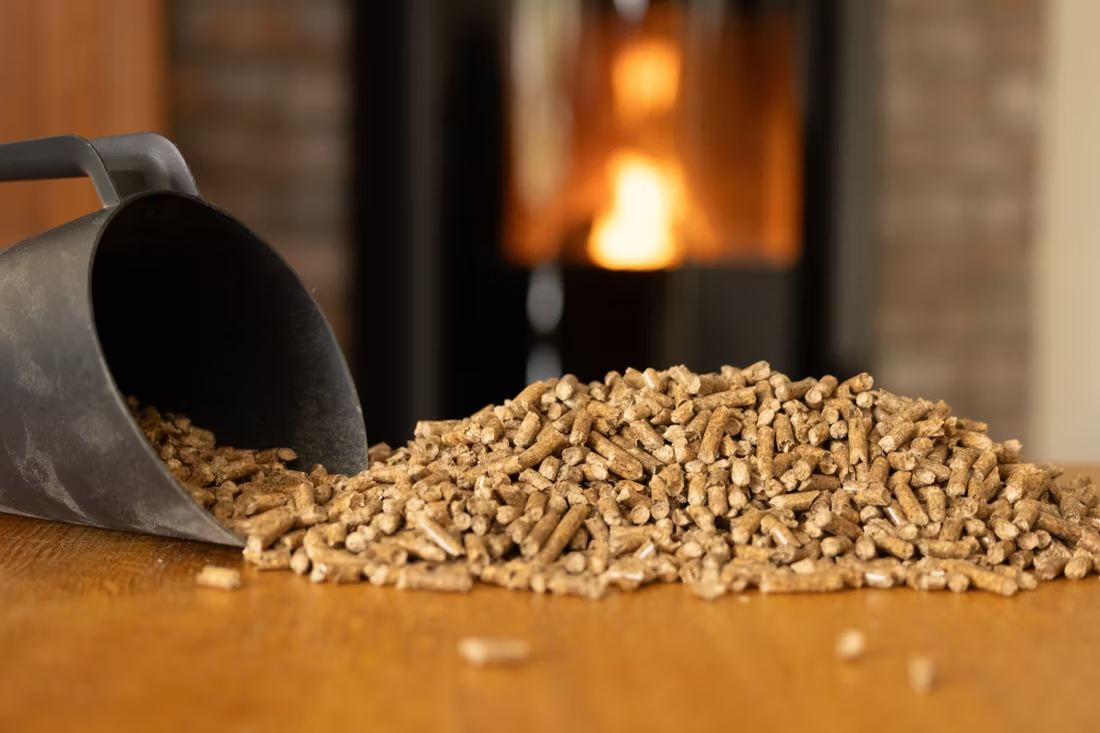
Pellet stoves fit that need well. Regional brands including Indeck Energy Services, Lignetics, and Somerset Pellet Fuel supply hardwood pellets made largely from the oak, maple, birch, and aspen that grow throughout this part of Minnesota, and local farm and hardware stores across the county typically stock pallets through the winter months. Kandiyohi County has no air-quality non-attainment status and no winter burn restrictions, so pellet appliances here run without the curtailment periods some western counties impose. For rural acreages on propane, a pellet stove or insert is a genuine way to cut fuel bills while keeping the thermostat-set convenience that a wood stove can't match.
Three steps. No salesperson until you're ready.
Tell us about your project
Your zip code, your situation, and the fuel you're leaning toward—or let the answers point you to one.
See what's actually available
The brands dealers within 100 miles genuinely carry—real options, never a catalog mirage.
Get your dealer & Project Guide
A trusted local dealer, plus the free Project Guide & Parts List that names every component of the job.
Frequently Asked Questions
How much does a pellet stove installation cost in Kandiyohi County?
A freestanding pellet stove installation typically runs $3,000 to $6,500 in this part of Minnesota, depending on the unit's hopper size and heat output, whether an existing chimney chase can be reused, and the length of PL vent pipe needed to route through an exterior wall. A pellet insert into an existing masonry fireplace usually lands toward the lower end of that range since it uses the existing chimney chase for the vent run. Farmstead installations outside Willmar or in the Prinsburg and Raymond areas sometimes run slightly higher if the dealer has to route vent pipe through thicker insulated walls typical of older farmhouses. Get a firm number from a local dealer after they've seen your space.
What size pellet stove do I need for a Kandiyohi County home?
With winter lows averaging 3°F and a heating season that runs six months or more, sizing tends to run larger here than in milder climates. A small pellet stove (under 40,000 BTU) is fine for supplemental heat in a single room or a lake cabin around Green Lake or Nest Lake, but most full-time Kandiyohi County homes do better with a mid-to-large unit in the 50,000-plus BTU range, especially older farmhouses with less insulation. A local dealer will factor in your square footage, insulation quality, and ceiling height before recommending a model—oversizing wastes fuel and undersizing leaves you cold on the coldest nights.
Where do I buy pellets in Kandiyohi County, and how much do they cost?
Hardwood pellets from brands like Lignetics, Indeck Energy Services, and Somerset Pellet Fuel are typically available through farm supply stores and hardware retailers in Willmar and the surrounding towns, especially as the fall heating season approaches. Pricing generally falls in the $250 to $350 per ton range in this region, and a season's supply for a primary-heat home usually runs two to three tons. Buying early in the fall, before the first cold snap drives demand up, is the best way to avoid running short mid-winter—pellet shortages are more common in late January than in October.
Do I need a permit to install a pellet stove in Kandiyohi County?
Yes—a building permit is generally required for a new pellet stove or insert installation, typically handled through the Kandiyohi County Planning & Zoning Office in Willmar for rural properties, or your local city office if you're inside Willmar, New London, or another incorporated community. Most local dealers include permit filing as part of the installation, so you usually don't have to coordinate it yourself. Kandiyohi County has no wintertime air-quality restrictions on solid-fuel appliances, so once a permit is issued and the unit passes inspection, there are no seasonal operating limits to worry about.
Will a pellet stove keep working if the power goes out?
Not without a backup power source. Pellet stoves rely on an electric auger to feed fuel and a blower to circulate heat, so a power outage stops the stove even with a full hopper. In Kandiyohi County, where winter storms occasionally knock out rural power for hours at a time, many homeowners pair a pellet stove with a small battery backup unit or a portable generator sized to run the auger and igniter. If uninterrupted heat during outages is a priority, it's worth discussing options with your dealer—some households opt for a wood stove as backup specifically for this reason, since wood burns without any electrical input.
What's the best pellet stove for a Kandiyohi County winter?
Look for a stove rated for sustained high heat output rather than one designed mainly for mild-climate supplemental use—with such a heavy winter heating load, this county asks more of an appliance than most of the country. Models with larger hopper capacity (60-plus pounds) reduce how often you're refilling during a multi-day cold stretch, and higher-efficiency units make better use of every ton of pellets over a six-month heating season. A local dealer familiar with farmhouse and lake-home construction in the area can match hopper size and BTU output to your specific home rather than a generic recommendation.
How often does a pellet stove need cleaning and maintenance?
Ash removal from the burn pot should happen every few days during regular winter use, and a deeper cleaning of the venting, hopper, and auger system is typically recommended every one to two months during heavy-use months like December through February. An annual professional service—checking the igniter, gaskets, blower motors, and venting for creosote buildup—is standard practice before each heating season starts. Given how many months a Kandiyohi County pellet stove runs each year, staying on top of this schedule matters more here than in shorter-winter regions.
Pellet stove vs. wood stove—which makes more sense in Kandiyohi County?
Both are common choices here, and the right one depends on priorities. Wood stoves burn oak, maple, birch, and aspen that are all locally available, work without electricity—a real advantage during rural power outages—and often cost less to fuel if you're cutting your own wood. Pellet stoves trade that self-sufficiency for convenience: load the hopper, set the thermostat, and let it run for a day or more without tending, with less ash and no chimney creosote buildup to manage. For farmstead properties already set up for wood, a wood stove often wins. For households that want set-and-forget heat and don't mind depending on grid power, pellet is usually the better fit.
Are there rebates or tax credits available for pellet stoves in Minnesota?
High-efficiency pellet stoves rated at 75% efficiency or higher generally qualify for the federal biomass stove tax credit (26 U.S. Code Section 25(C)), which covers a percentage of both equipment and installation costs—ask your dealer for the manufacturer's efficiency documentation needed to claim it. Minnesota does not currently run a statewide pellet stove rebate program the way it does for some other efficiency upgrades, so the federal credit is typically the primary incentive available to Kandiyohi County homeowners. A local dealer can confirm whether a specific model you're considering qualifies before you buy.
Why is a fireplace insert so efficient?
An insert does two things: it seals the chimney completely, so you stop losing air you already paid to heat, and it radiates warmth into the room through the firebox and glass. Most add a heat-exchange fan that pulls cool room air underneath, wraps it around the hot firebox, and pushes it back out warm. Your home is more efficient before you've even lit the first fire.
Why is my open fireplace making my house colder?
Open fireplaces suck—literally. As the fire burns, it consumes air your furnace already paid to heat and pulls it out through the chimney, so the house is actually colder after the fire goes out than before you lit it. An insert fixes this: it seals the chimney, puts fixed glass across the front, and turns that hole in your house into a real heat source.
Can a fireplace actually lower my heating bill?
Yes—by creating a comfort zone. A furnace heats every square foot of the house just to warm the one room you're in; a gas fireplace on low burns roughly a sixth of the gas a typical furnace does. Set the furnace around 55–60 degrees as a baseline, then heat the rooms your family actually uses. Families who heat this way commonly save $20–$60 a month.
What is an in-home preview and do I need one?
It's a visit where a hearth professional measures your space, confirms the model you picked actually works in your home, and walks the specs—framing, gas line, venting, finish work—before anything is ordered. Some details you just can't know until you see the house. Never make a down payment without one; it's the single most-skipped step that burns buyers.
Stove and Fireplace Dealers in Kandiyohi County
Pellet Brands Stocked Around Kandiyohi County
Manufacturers will point you to the nearest stocking dealer.
Find your pellet stove in Kandiyohi County.
Tell us a bit about your home and we'll match you with a trusted local dealer and send over a free Project Guide & Parts List—sized to your space, with the venting and parts your Kandiyohi County pellet stove or insert project actually needs.
Find Your Fireplace →