
Set-it-and-forget-it heat for Goodhue County's long winters.
Goodhue County faces a long, demanding heating season each year, with winter lows averaging 6°F along the Mississippi River bluffs. A pellet stove delivers steady, thermostat-controlled heat through that stretch without the daily wood-splitting. We'll match you with a trusted local dealer who can size it right and get it installed.
Every Project Starts From One of These Five Situations
Reliable heat for a Zone 6A winter, without the wood-splitting.
Goodhue County sits in climate zone 6A, and its winter heating needs put it in roughly the same league as the Twin Cities to the north—a winter that runs long and settles in cold, though not as brutal as places like Duluth further up the North Shore. From the river bluffs around Red Wing to the open farmland near Zumbrota, Pine Island, Kenyon, and Wanamingo, homeowners here need a heat source that can run for hours without attention while temperatures sit in the single digits or below.
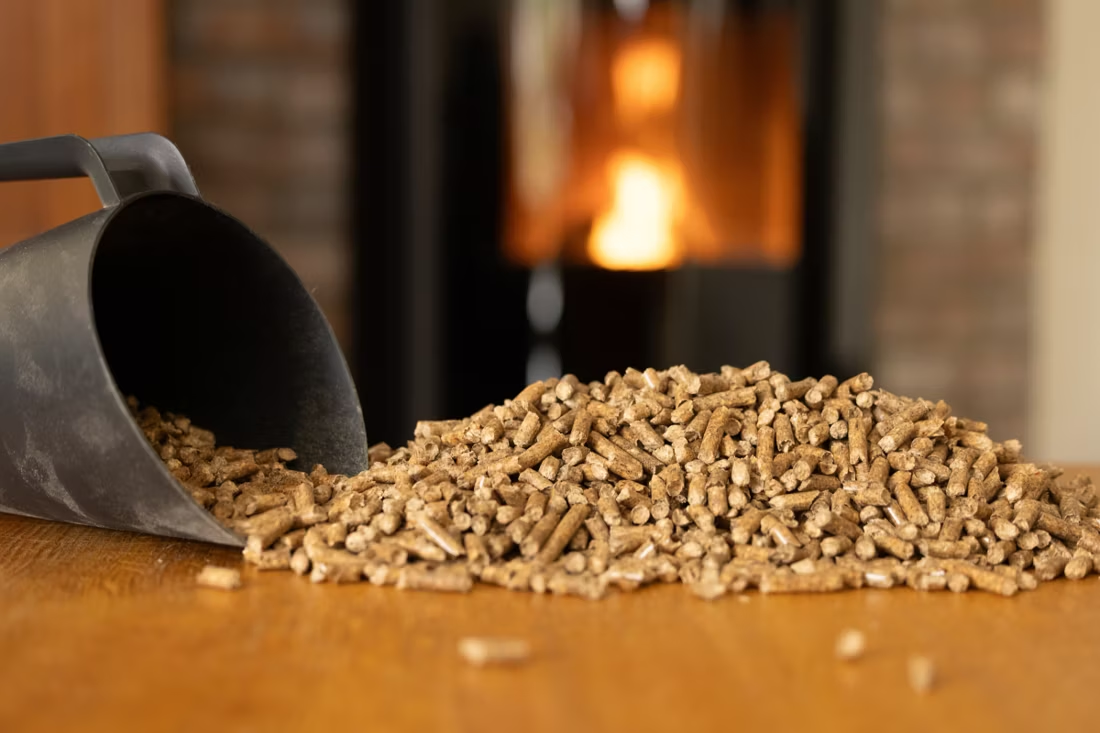
That's the appeal of a pellet stove or insert: load the hopper, set the thermostat, and let the auger and blower do the rest—no splitting oak, maple, birch, or aspen, and none of the daily chimney tending that wood heat requires. Regional pellet supply is solid, too. Brands like Lignetics and Somerset Pellet Fuel (just across the border in Somerset, WI) and Indeck Energy Services put manufactured pellets within reasonable trucking distance of most of Goodhue County, and many hardware stores and farm supply outlets in Red Wing and Zumbrota carry bagged pellets by the ton during burning season.
Three steps. No salesperson until you're ready.
Tell us about your project
Your zip code, your situation, and the fuel you're leaning toward—or let the answers point you to one.
See what's actually available
The brands dealers within 100 miles genuinely carry—real options, never a catalog mirage.
Get your dealer & Project Guide
A trusted local dealer, plus the free Project Guide & Parts List that names every component of the job.
Frequently Asked Questions
How much does a pellet stove installation cost in Goodhue County?
Pellet stove installations typically run less than wood stove installs because the venting is simpler—most units vent through 3-inch or 4-inch PL pipe straight through an exterior wall, rather than requiring a full Class A chimney. Depending on the appliance, whether it's a freestanding stove or an insert into an existing fireplace, and whether a new dedicated electrical outlet is needed near the hearth, installed costs commonly land in the $3,000 to $6,500 range across the upper Midwest. A local dealer serving Red Wing, Zumbrota, or Cannon Falls can walk your home and give you a firm number after seeing the venting path and your electrical setup.
What size pellet stove do I need for a Goodhue County home?
With average winter lows around 6°F and a long, demanding heating season, Goodhue County homes generally need a mid-to-large pellet stove to keep up, especially older farmhouses out toward Wanamingo or Kenyon that weren't built to modern insulation standards. As a rough guide: smaller units (around 40,000 BTU) suit a single room or a well-sealed cabin, while larger units (50,000+ BTU with a big hopper) are better matched to whole-home heating in a drafty older place along the bluffs. A local dealer will factor in your square footage, insulation, and ceiling height during an in-home visit rather than relying on a generic chart.
Will a pellet stove work during a power outage?
Not on its own—this is the one honest tradeoff with pellet heat. Unlike a wood stove, a pellet stove's auger, igniter, and combustion blower all run on household electricity, so a power outage shuts it down. That matters in a rural county like Goodhue where ice storms and high winds occasionally knock out lines served by Xcel Energy or the local rural electric cooperative. Some homeowners pair a pellet stove with a small battery backup or portable generator sized to run the auger and blower; others keep a wood stove or fireplace as backup heat for outages and use the pellet stove for day-to-day convenience. Ask your local dealer about battery backup options if outage resilience is a priority for you.
Where can I buy pellets in Goodhue County?
Bagged pellets are typically available through hardware stores and farm supply outlets in Red Wing, Zumbrota, and Cannon Falls during burning season, and several regional mills supply the upper Midwest market, including Lignetics and Somerset Pellet Fuel just across the St. Croix in Wisconsin—both within reasonable trucking distance. Indeck Energy Services is another regional supplier worth asking your dealer about. Pricing fluctuates with wood-fiber and diesel costs each fall, so it pays to buy early in the season and store a full winter's supply—a moderate-use home typically burns two to three tons over a Goodhue County winter.
Do I need a permit to install a pellet stove in Goodhue County?
In most cases, yes—a building permit is required for new pellet stove installations, whether you're inside Red Wing city limits or in unincorporated parts of the county, though the process is usually more straightforward than a wood stove permit since there's no masonry chimney work involved. Most local dealers handle the permitting on your behalf as part of the installation, coordinating the wall penetration for venting and any electrical work needed for the dedicated outlet. It's worth confirming with your installer up front so nothing holds up your install before cold weather sets in.
How much maintenance does a pellet stove need?
Less than a wood stove, but it's not zero-maintenance. Plan to empty the ash pan every few days during heavy winter use and give the burn pot and heat exchanger tubes a scrape and vacuum weekly to keep efficiency up. Most manufacturers recommend a full professional service annually—cleaning the exhaust fan, checking gaskets, and inspecting the auger motor—typically before the season starts in fall. Homeowners who run their stove as primary heat through a long Goodhue County winter should treat that annual service as non-negotiable; skipping it is the most common reason for mid-winter breakdowns.
How should I store pellets over a Minnesota winter?
Pellets need to stay dry—a single soggy bag can jam an auger and ruin a stove's performance. Store bags off the ground on pallets or shelving, ideally in a garage or dry outbuilding rather than an open shed, since Goodhue County's humid summers along the river valley can wick moisture into cardboard packaging if it's stacked directly on a concrete floor. Buying a season's supply (two to three tons for moderate use) in late summer or early fall, before the cold sets in and demand spikes, is standard practice for most local homeowners.
What's the best pellet stove for Goodhue County's climate?
For a Zone 6A winter with lows regularly in the single digits, look for a stove with a larger hopper (60+ pounds) and higher BTU output so it can run longer between refills and keep up on the coldest nights—brands like Harman, Lopi, and Quadra-Fire all make cold-climate-rated models commonly installed across the upper Midwest. For an older farmhouse near Pine Island or Kenyon with less insulation, sizing up is usually worth it; for a newer, tightly built home in Red Wing, a mid-size unit may be plenty. A local dealer can walk through your specific square footage and insulation level to land on the right model.
Pellet stove vs. wood stove—which is right for my home?
Wood stoves burn local oak, maple, birch, or aspen, work without electricity (a real advantage during Goodhue County ice storms), and generally cost less to fuel if you're cutting or buying cordwood locally. Pellet stoves trade that off-grid resilience for convenience—no splitting, less ash, more consistent heat output, and a thermostat you can set and walk away from—but they need power to run the auger and blower. For a primary residence where you want low-maintenance daily heat and don't mind a backup plan for outages, pellet often wins. For a rural property where power reliability is a real concern, many Goodhue County homeowners keep a wood stove for that reason, sometimes alongside a pellet unit for everyday convenience.
How often does a pellet stove need cleaning?
A clean pellet stove is a happy pellet stove. Plan on cleaning the burn pot about once a week when you're burning regularly—ash and clinkers gum up the air holes just like a pellet barbecue. Most pellet stove problems trace back to skipped cleaning that nobody explained up front. Some designs make it easy with a trapdoor burn pot: pull a lever and the gunk drops into the ash pan.
What's the difference between an insert and a zero-clearance fireplace?
An insert is a fireplace that slides into a pre-existing wood-burning fireplace—if you don't have one, there's nothing to insert it into. A zero-clearance fireplace is built into a framed wall, which makes it the answer for remodels and new construction. Simple test: existing masonry fireplace means insert; blank or framed wall means zero-clearance.
Can I install a fireplace myself?
If you're putting a fire in your house on purpose, it's best to work with an expert. Unless you're genuinely experienced in framing, gas line, vent pipe, and the national code on clearances to combustibles, have a professional do it—and ideally the same company that sells you the fireplace, so warranty, service, and liability all live under one roof.
What is an in-home preview and do I need one?
It's a visit where a hearth professional measures your space, confirms the model you picked actually works in your home, and walks the specs—framing, gas line, venting, finish work—before anything is ordered. Some details you just can't know until you see the house. Never make a down payment without one; it's the single most-skipped step that burns buyers.
Pellet Brands Stocked Around Goodhue County
Manufacturers will point you to the nearest stocking dealer.
Find your pellet stove in Goodhue County.
Tell us a bit about your home and heating goals, and we'll match you with a trusted local dealer serving Goodhue County—plus a free Project Guide & Parts List with the exact vent kit and parts your install needs.
Find Your Fireplace →