
Warm up fast when Faribault County drops below zero.
Instant, reliable heat for a county with a long, cold heating season—from Blue Earth and Wells to the farmsteads scattered between them. Find the right gas unit and connect with a trusted local dealer.
Every Project Starts From One of These Five Situations
Reliable heat that keeps up with a 7,257-degree-day winter.
Faribault County sits in the flat farmland of south-central Minnesota, with winter lows averaging 8°F and a heating season that stacks up close to Madison, Wisconsin in total degree days. That kind of cold doesn't ease up quickly—furnaces run for months straight, and a lot of county homeowners in Blue Earth, Wells, Winnebago, Elmore, Kiester, and the smaller crossroads towns like Bricelyn and Frost want a heat source that comes on instantly without loading wood or waiting on a pilot to catch.
Natural gas service reaches the larger towns in the county—Blue Earth and Wells in particular—through CenterPoint Energy, while much of the county's unincorporated farmland runs on propane delivered by regional co-ops and fuel suppliers, since gas mains don't extend out to most rural sections. Either fuel path works for a modern direct-vent fireplace or insert. The advantage for Faribault County homes is straightforward: zone heat in the main living space that doesn't depend on splitting and hauling wood through a Minnesota winter, plus (with the right ignition system) a fireplace that still lights during a rural power outage.
Three steps. No salesperson until you're ready.
Tell us about your project
Your zip code, your situation, and the fuel you're leaning toward—or let the answers point you to one.
See what's actually available
The brands dealers within 100 miles genuinely carry—real options, never a catalog mirage.
Get your dealer & Project Guide
A trusted local dealer, plus the free Project Guide & Parts List that names every component of the job.
Frequently Asked Questions
How much does a gas fireplace installation cost in Faribault County?
Most gas fireplace installations in Faribault County run between $4,500 and $10,000, with the spread driven mainly by venting distance and whether new gas line work is needed. A direct-vent insert going into an existing masonry fireplace in a Blue Earth or Wells home that already has a gas line nearby sits toward the lower end. A new built-in unit in a remodel, or a farmhouse that needs a propane tank set and a longer line run, lands higher. Rural installs outside the natural gas service area typically add propane tank and regulator setup to the quote, which a local dealer will spell out during an in-home visit.
Can I convert my existing wood fireplace to gas in Faribault County?
Yes, and it's a common upgrade in older farmhouses and in-town homes across the county that already have a working masonry chimney. A gas insert slides into the existing firebox and vents through a stainless liner run up your current flue, so you're not opening up walls or building new venting from scratch. Whether you'll run natural gas or propane depends on where the house sits—inside Blue Earth or Wells city limits, tying into the CenterPoint Energy line is usually the simplest path; outside those towns, most conversions run on propane with a new or existing tank.
Do I need natural gas, or can I install a gas fireplace on propane?
Either fuel works, and which one makes sense usually comes down to your address. CenterPoint Energy serves natural gas within Blue Earth and Wells, so homes there with an existing gas water heater or furnace can typically add a fireplace without much extra plumbing. Outside city limits—which covers most of Faribault County's farmland and smaller unincorporated communities—propane is the standard, supplied by regional bulk delivery companies with either a leased or owned tank. Nearly every gas fireplace on the market today can be set up for either fuel; your installer just configures the correct orifice and regulator for whichever gas you're running.
Will my gas fireplace still work if the power goes out?
Most direct-vent gas fireplaces with intermittent pilot ignition (IPI) include a battery backup that keeps the unit lighting on demand even with the power out—which matters in a county where winter storms and rural line outages can knock out electricity for hours at a time. The one thing to stay on top of is keeping fresh batteries in the unit, since they sit unused most of the year until you actually need them. Valor fireplaces take a different approach: the pilot's thermocouple generates the small amount of electricity the unit needs to ignite, so there's no battery to remember at all. Worth asking about if backup heat during a farm power outage is a priority.
What's the difference between a gas fireplace, insert, and stove?
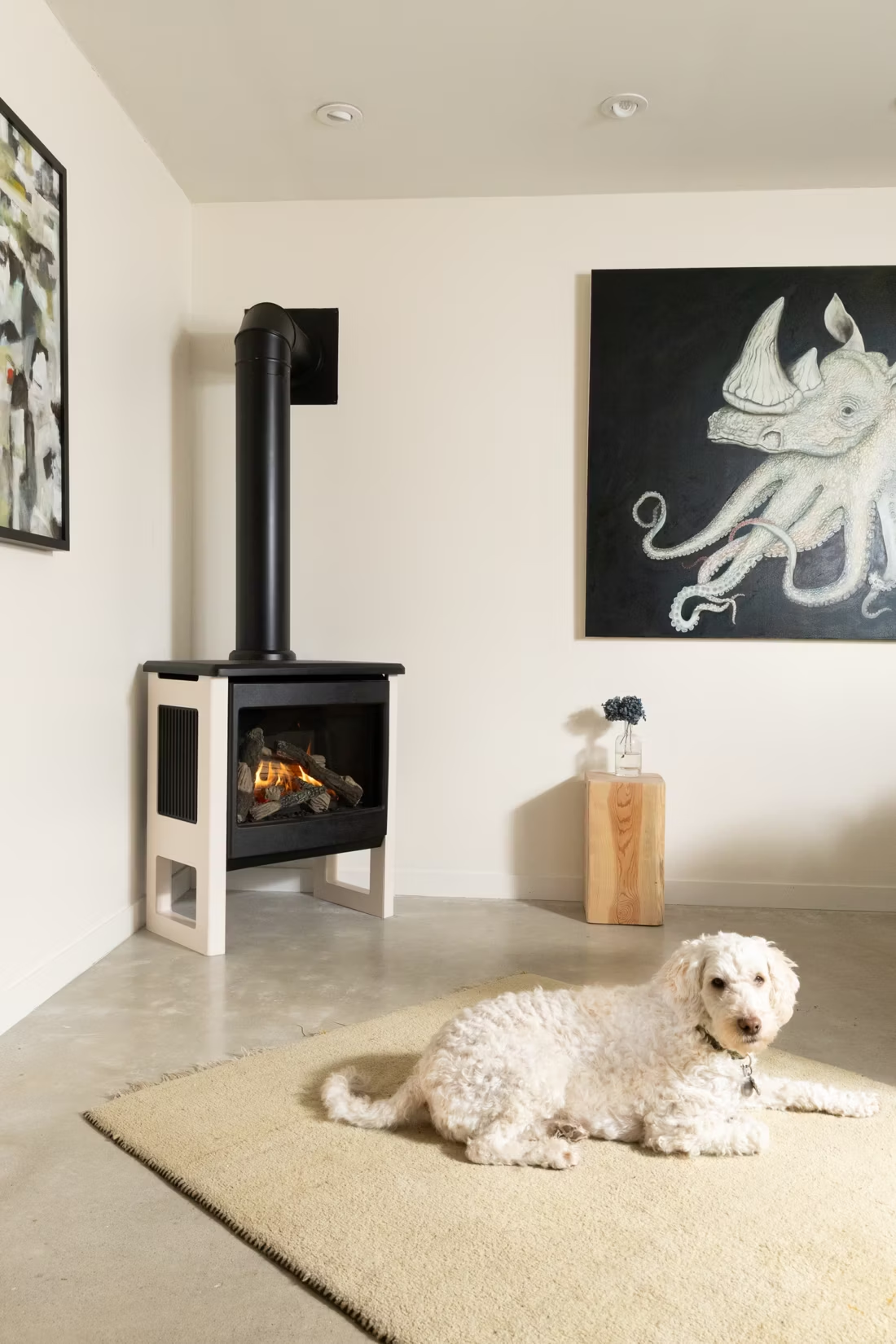
A gas fireplace is a built-in unit framed into a wall, typically chosen for new construction or a full remodel. A gas insert is sized to slide into an existing masonry firebox, converting an old wood-burning fireplace into a sealed, efficient gas unit that vents through the existing chimney. A gas stove is a freestanding cabinet-style unit that sits on the floor, similar in footprint to a wood stove, and works well in a room without an existing fireplace opening. For the many older homes in Blue Earth, Wells, and Winnebago with a masonry fireplace already in place, an insert is usually the most cost-effective path to real heat output.
Do I need a permit to install a gas fireplace in Faribault County?
Yes—a building permit and a gas line permit are both required for new gas fireplace installations, handled through Faribault County Planning & Zoning for unincorporated areas or the local city office for installs inside Blue Earth, Wells, or Winnebago. The gas connection itself needs to be run or inspected by a licensed gas-fitter, which is one reason to go through a certified hearth dealer rather than a general handyman—they coordinate the gas work, venting, and inspection as one job instead of leaving you to manage separate trades.
Should I get a vented or vent-free gas fireplace?
Vented (direct-vent) gas fireplaces draw combustion air from outside and exhaust the byproducts back outside through sealed pipe—they're the standard choice and the one installers across Faribault County recommend for full-time winter use. Vent-free units burn fuel directly into the room air and are legal in Minnesota within strict sizing and ventilation limits, but they release some moisture and combustion byproducts into the living space, which is more of a concern in a tightly sealed, well-insulated house built for a 7,257-degree-day winter. For a farmhouse or in-town home running the fireplace for hours at a stretch through a Minnesota winter, direct-vent is the safer, more common pick.
How often does a gas fireplace need to be serviced?
Plan on an annual inspection, ideally before the heating season starts in the fall. A technician checks the burner, pilot assembly, gas connections, and venting, and cleans the glass and interior—a much smaller job than a wood-chimney sweep, but skipping it lets pilot and ignition issues go unnoticed until the coldest week of the year, which is exactly when you don't want a fireplace to fail. Local gas appliance technicians serving the county typically charge in the $150-$250 range for this service.
Gas or wood—which makes more sense for a Faribault County home?
Wood still has a place here—oak, maple, birch, and aspen are all common in the county's woodlots and shelterbelts, and a lot of farm properties keep a wood stove or fireplace as backup heat that doesn't depend on the power grid or a propane delivery truck making it down the road in a storm. Gas wins on convenience: no splitting or hauling, consistent output at the flip of a switch, and (with battery-backup or Valor-style ignition) heat that still works during an outage. Many households in Blue Earth, Wells, and the surrounding townships end up with both—gas for the main living space day to day, wood as the fallback when a January system parks over southern Minnesota for a week.
Why is a fireplace insert so efficient?
An insert does two things: it seals the chimney completely, so you stop losing air you already paid to heat, and it radiates warmth into the room through the firebox and glass. Most add a heat-exchange fan that pulls cool room air underneath, wraps it around the hot firebox, and pushes it back out warm. Your home is more efficient before you've even lit the first fire.
What's the difference between an insert and a zero-clearance fireplace?
An insert is a fireplace that slides into a pre-existing wood-burning fireplace—if you don't have one, there's nothing to insert it into. A zero-clearance fireplace is built into a framed wall, which makes it the answer for remodels and new construction. Simple test: existing masonry fireplace means insert; blank or framed wall means zero-clearance.
What is an in-home preview and do I need one?
It's a visit where a hearth professional measures your space, confirms the model you picked actually works in your home, and walks the specs—framing, gas line, venting, finish work—before anything is ordered. Some details you just can't know until you see the house. Never make a down payment without one; it's the single most-skipped step that burns buyers.
Can a fireplace actually lower my heating bill?
Yes—by creating a comfort zone. A furnace heats every square foot of the house just to warm the one room you're in; a gas fireplace on low burns roughly a sixth of the gas a typical furnace does. Set the furnace around 55–60 degrees as a baseline, then heat the rooms your family actually uses. Families who heat this way commonly save $20–$60 a month.
Find your gas fireplace in Faribault County.
Tell us about your home and heating goals, and we'll match you with a trusted local dealer and send over a free Project Guide & Parts List—the exact parts, vent kit, and recommended installer for your Faribault County project.
Find Your Fireplace →