
Add electric fireplace warmth to your Cottonwood County home.
A no-venting, plug-in or hardwired way to add zone heat and real ambiance to farmhouses, basements, and additions across Windom, Mountain Lake, Westbrook, and the rest of the county. Find the right unit and connect with a trusted local dealer.
Every Project Starts From One of These Five Situations
Supplemental warmth without the chimney work.
Cottonwood County sits on flat southwest Minnesota prairie, with Windom as the county seat and about 8,200 residents spread across Windom, Mountain Lake, Westbrook, Storden, and the surrounding farm townships. With a heating season on par with Fargo, North Dakota and winter lows averaging 8°F, the climate here is closer to Fargo, North Dakota than to the Twin Cities—long, hard winters where the primary heating system, whether propane forced-air, natural gas, or a wood stove, does the heavy lifting from November through March.
Electric fireplaces aren't trying to replace that furnace, and they don't need to. What they do well in Cottonwood County homes is add real, visible warmth to a finished basement, a three-season porch that's been closed in, a main-floor addition, or a bedroom that always runs cold—without a chimney, a gas line, or a permit for combustion venting. In-town homes served by Windom Municipal Utilities and rural properties on cooperative power (Federated Rural Electric Association territory covers much of the county) can both run a modern electric insert or built-in on a standard or dedicated circuit. For older farmhouses with a dated, drafty masonry fireplace that nobody uses anymore, an electric insert is often the simplest way to get a working, good-looking fireplace back without touching the flue.
Three steps. No salesperson until you're ready.
Tell us about your project
Your zip code, your situation, and the fuel you're leaning toward—or let the answers point you to one.
See what's actually available
The brands dealers within 100 miles genuinely carry—real options, never a catalog mirage.
Get your dealer & Project Guide
A trusted local dealer, plus the free Project Guide & Parts List that names every component of the job.
Frequently Asked Questions
How much does an electric fireplace installation cost in Cottonwood County?
Plug-in units that slide into an existing opening or sit on a stand can run as little as $300–$800 including a mantel or media console, since no wiring changes are needed beyond an existing outlet. Built-in or insert-style units that require a dedicated 120V or 240V circuit—the more common choice for a permanent installation in a Windom or Mountain Lake home—typically run $800–$2,500 once you factor in the unit, a licensed electrician for the circuit, and any surround or finishing carpentry. Converting an old masonry fireplace to a electric insert on the low end of that range if the existing opening doesn't need modification.
What size electric fireplace do I need?
Electric fireplaces are sized by heater wattage and room square footage rather than BTU output the way wood or gas units are. A standard 1,500-watt heater (the ceiling for most residential units under UL listing rules) will supplement heat in a room up to roughly 400–450 square feet under normal insulation—plenty for a bedroom, den, or basement family room in most Cottonwood County homes. For larger open rooms, some homeowners install two units or pair the fireplace with the home's existing furnace or baseboard heat and treat the fireplace purely as ambiance and spot warmth rather than the room's main heat source.
Will an electric fireplace actually heat my house through a Cottonwood County winter?
No—and any reputable local dealer will tell you that upfront. With a heating season on par with Fargo, North Dakota and average winter lows of 8°F, an electric fireplace's 1,500-watt heater simply isn't sized to be a home's primary heat source here the way it might be in a milder climate. It's best understood as zone heat: it takes the edge off a specific room, lets you turn down the thermostat on the rest of the house, and adds real fire-look ambiance without wood handling or a chimney. Your furnace, boiler, or wood stove should remain the primary heat source for the season.
What's the difference between an electric insert, a built-in, and a mantel package?
An electric insert is designed to slide into an existing fireplace opening—the natural choice for the older masonry fireplaces common in Cottonwood County farmhouses built decades ago. A built-in electric fireplace is framed into a wall like a TV niche, used in new construction, additions, or basement remodels where there's no existing opening. A mantel package pairs a freestanding electric firebox with a surround and shelf, requiring no construction at all—it's the fastest option for renters or homeowners who want something plug-and-play. Local dealers carry all three and can tell you which fits your specific room and wiring.
Do I need a permit to install an electric fireplace in Cottonwood County?
A plug-in unit on an existing outlet typically doesn't require a permit. A built-in or insert installation that needs a new dedicated circuit does require an electrical permit, since it involves running new wiring—most licensed electricians serving the county handle this as part of the job and pull the permit for you. There's no combustion venting to inspect and no chimney work, which is one reason electric installs move faster than wood or gas projects here.
What happens to my electric fireplace during a power outage?
It won't run—which matters in a county where winter storms and ice can knock out rural cooperative power for hours at a time. This is the main tradeoff homeowners weigh against wood or gas: an electric fireplace gives you clean, no-mess ambiance and supplemental heat on a normal day, but it offers zero backup value if the grid goes down. Many Cottonwood County homeowners pair an electric unit in a main living space with a wood stove or propane appliance elsewhere in the house specifically as an outage hedge, given how common winter oak and maple firewood is in this part of southwest Minnesota.
Can an electric insert go into my farmhouse's old masonry fireplace?
In most cases, yes. Electric inserts are designed to fit standard masonry fireplace openings without any modification to the firebox or flue—you're not running venting, so the existing chimney can simply stay capped and unused. This is a popular fix for the older farmhouses scattered around Storden, Jeffers, and the rural townships, where the original fireplace hasn't functioned safely in years but the opening is still there. A local dealer can measure your opening and confirm insert dimensions before you buy.
What's a good electric fireplace for a cold-climate Minnesota home?
Look for units with a true 1,500-watt heater rating (some cheaper models max out lower despite similar flame effects), a thermostat with room-temperature feedback rather than just a heat-level dial, and—for basement or below-grade installs common in this area—a model rated for the humidity of an unfinished or semi-finished space. Brands widely stocked by hearth dealers serving southwest Minnesota include Dimplex, Napoleon, and Amantii; your local dealer can match wattage and features to the specific room you're heating.
Electric vs. wood vs. propane—what's the right call for a Cottonwood County home?
Wood, burning local oak, maple, birch, or aspen, remains the go-to backup and supplemental heat source in this county precisely because it works without power during outages and pairs with the self-sufficient farm heating culture common here. Propane or natural gas fireplaces deliver more consistent whole-room heat output and can also run on battery backup during an outage. Electric fireplaces don't compete on heat output or reliability during a storm, but they win on installation simplicity, cost, and zero maintenance—no chimney sweep, no gas line, no ash. For a main living space that already has good primary heat, electric is often the easiest upgrade; for anyone who wants outage-proof backup heat, wood or gas is the better call.
Can I put a TV above my fireplace?
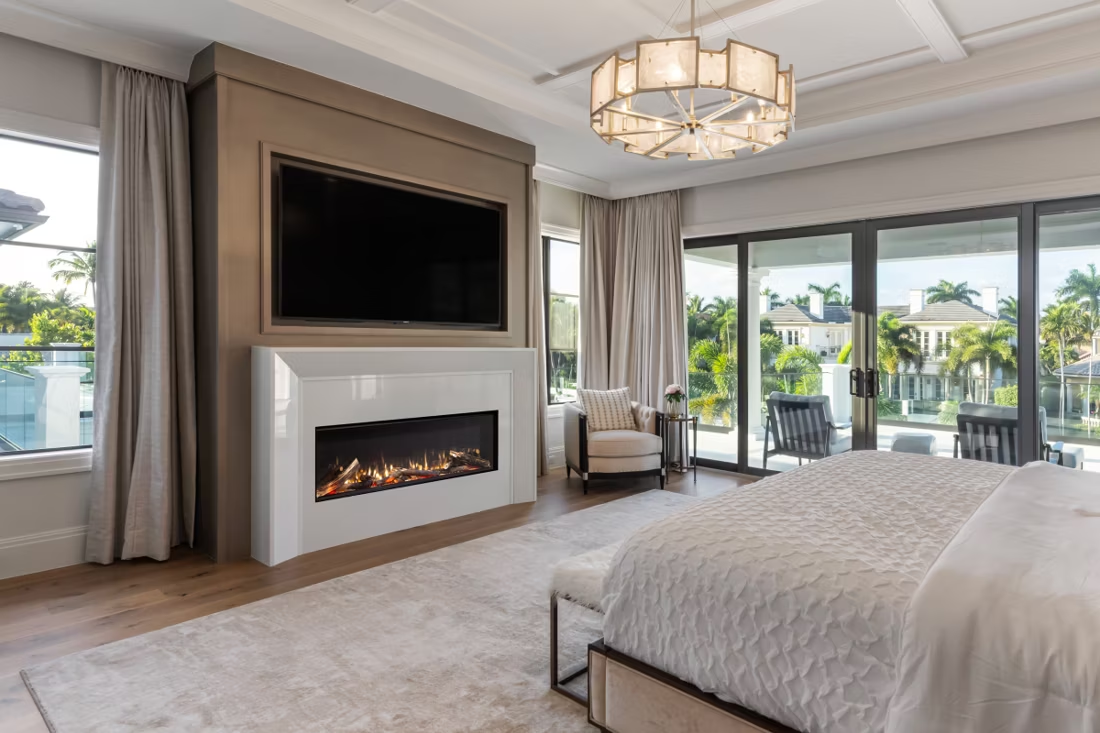
Yes—with an asterisk. Fireplaces are hot and TVs don't like heat. Either put a mantel between them to deflect rising warmth, or choose a fireplace with heat-management technology that creates a cool zone on the wall above—the wall stays around 125 degrees, barely warm, while the room still gets full heat. If you like clean lines and don't want a mantel, heat management is the answer.
Does an electric fireplace need a vent or chimney?
No—that's its superpower. An electric fireplace needs a wall and an outlet, period. No vent pipe, no gas line, no clearances to design around, which is why it works in bedrooms, offices, apartments, and walls where venting a gas or wood unit would be impractical or impossible. Installation is typically the simplest and least expensive of any fireplace type.
Does a fireplace add value to my home?
On average, a fireplace adds back to the home about the same amount you spent installing it. Add the monthly savings from heating the rooms you actually use instead of the whole house—often hundreds of dollars a year—and the value case is strong before you even count what a fire does for how your family uses the room.
What is an in-home preview and do I need one?
It's a visit where a hearth professional measures your space, confirms the model you picked actually works in your home, and walks the specs—framing, gas line, venting, finish work—before anything is ordered. Some details you just can't know until you see the house. Never make a down payment without one; it's the single most-skipped step that burns buyers.
Find your electric fireplace in Cottonwood County.
Tell us a bit about your home and we'll put together a free Project Guide & Parts List—the right unit, the electrical work it needs, and a trusted local dealer to install it.
Find Your Fireplace →