
Heat that holds through a Cottonwood County winter.
Wood, gas, pellet, and electric fireplace resources for Windom, Mountain Lake, Westbrook, and every farmstead in between. Get matched with a trusted local dealer and a free Project Guide & Parts List for your project.
Every Project Starts From One of These Five Situations
Open prairie, farmstead wood lots, and 7,400 heating degree days.
Cottonwood County sits in the open farmland of southwest Minnesota, home to about 8,200 people spread across Windom, Mountain Lake, Westbrook, and the surrounding townships. At 7,402 heating degree days, the county heats about as hard as Madison, Wisconsin—long, cold seasons with average winter lows around 8°F, and wind off the open prairie that makes still-air temperatures feel colder than the thermometer says. Farmstead shelterbelts and wood lots have long supplied oak, maple, birch, and aspen for heating, and a working woodstove or insert remains a practical backup on properties where winter power outages aren't rare.
What you'll find on this hub: hearth retailers, service technicians, and fuel suppliers covering every community in the county—from Windom and Mountain Lake to Westbrook, Storden, Jeffers, and Bingham Lake. Pick your fuel below to see local dealers, typical installation costs, and the units that fit farmhouse and in-town properties alike. Whether you're heating a century farmstead outside Storden or a house on a Windom side street, this is the starting point.
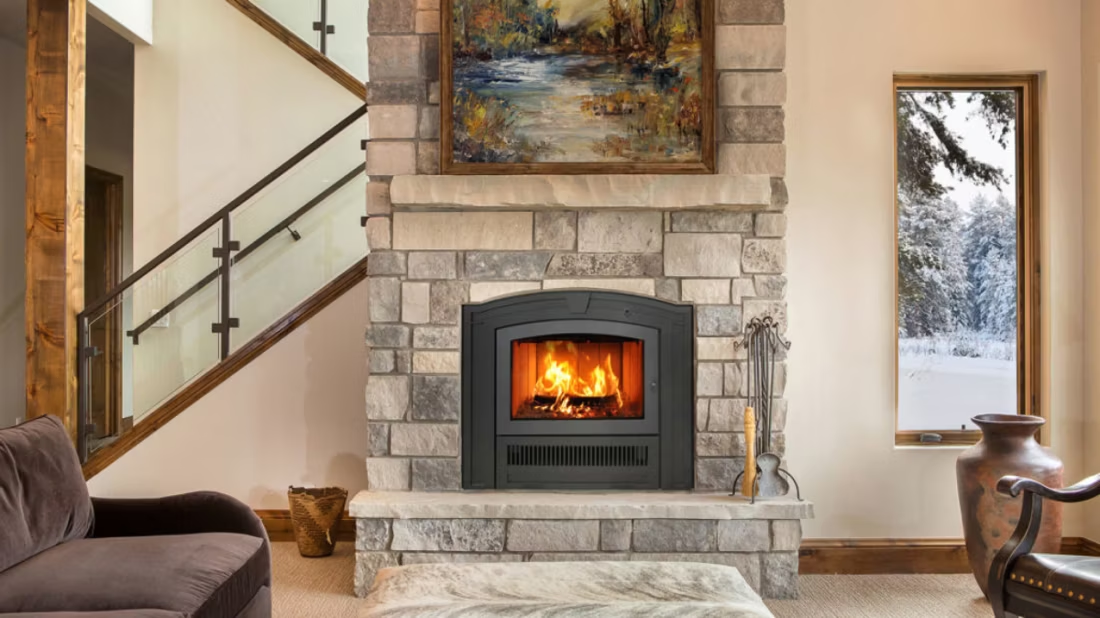
Four fuels. One honest answer for Cottonwood County.
Three steps. No salesperson until you're ready.
Tell us about your project
Your zip code, your situation, and the fuel you're leaning toward—or let the answers point you to one.
See what's actually available
The brands dealers within 100 miles genuinely carry—real options, never a catalog mirage.
Get your dealer & Project Guide
A trusted local dealer, plus the free Project Guide & Parts List that names every component of the job.
Frequently Asked Questions
Which fuel works best in Cottonwood County?
It depends on the property. Wood remains a practical choice on farmsteads with existing wood lots and shelterbelts—oak, maple, birch, and aspen all season well here, and an EPA-certified catalytic stove can hold a long, steady burn through an 8°F night without a generator running the furnace blower. Gas is the low-maintenance option: propane on rural properties, natural gas for homes inside Windom or Mountain Lake, both giving instant heat with no wood-splitting labor. Pellet stoves split the difference—automated feed, wood-like ambiance, and regional supply from Indeck Energy Services, Lignetics, and Somerset Pellet Fuel keeps fuel reasonably accessible even away from a big-box store. Electric fireplaces are supplemental here—good for a bedroom, sunroom, or an addition without existing venting, but not a primary heat source once temperatures drop toward single digits. Plenty of Cottonwood County homes run two fuels: wood or pellet as the workhorse, gas or electric for convenience in secondary rooms.
Do I need a permit to install a fireplace in Cottonwood County?
Generally yes. New wood stoves, wood inserts, gas fireplaces, gas inserts, and pellet stoves typically require a building permit, and gas installations need a separate gas-line permit completed by a licensed installer. Within Windom or Mountain Lake, permits are handled through the city office; on rural farmsteads and in unincorporated townships, they go through Cottonwood County's building and zoning department. Wood-burning appliances need to meet current EPA emissions standards to be permitted as new installs—this matters if you're replacing an older farmhouse stove. Electric fireplaces usually skip the permit process unless the install involves a new dedicated circuit. Most local dealers pull the permit as part of the installation, so you're rarely handling paperwork yourself.
Are there air quality restrictions on wood burning in Cottonwood County?
No—Cottonwood County doesn't have the winter inversion or nonattainment issues that trigger burn curtailments in mountain-basin regions. The open prairie topography here means wood smoke disperses rather than pooling, so there's no local advisory system asking residents to hold off on burning. That said, an EPA 2020 NSPS-certified stove still burns cleaner and more efficiently than an older unit, which matters for a property running a stove hard through a 7,400-heating-degree-day winter—less creosote buildup, less wood consumed per BTU, and generally less smoke drifting toward the neighbors.
Can one local hearth retailer handle all four fuel types?
In a county this size, expect one or two hearth retailers based in or near Windom to cover most of the ground, and many of them carry three or four fuel types rather than specializing narrowly—it's the only way to serve a spread-out customer base efficiently. A shop that stocks wood, gas, and pellet units side by side lets you compare a catalytic wood insert against a pellet stove in the same showroom visit, which is useful if you're not sure which fits your farmstead or in-town lot. Electric fireplaces are more often a secondary line for these dealers rather than the main draw. If a retailer only lists one or two fuels, they may still special-order or refer out for the others—worth asking directly.
How does service work on rural Cottonwood County properties?
Most chimney sweeps and gas techs serving the county are based in or travel through Windom, covering Mountain Lake, Westbrook, Storden, Jeffers, and Bingham Lake along with the townships between them. A rural service call may carry a small travel fee, and scheduling gets tighter once the first hard cold hits—booking your annual sweep or gas inspection in late summer or early fall, before the heating season starts, is easier than trying to get an emergency appointment in January. On working farmsteads it's also worth having a backup plan for outages—a wood stove or fireplace that doesn't depend on electricity to run pairs well with a primary gas or propane furnace.
What's the typical cost range for fireplace installation across all fuel types in Cottonwood County?
Costs run in line with regional rural Minnesota pricing. Wood stove or insert installation: roughly $4,000–$8,500 for a typical retrofit, higher if new chimney or hearth work is involved. Gas fireplace, insert, or stove: roughly $4,000–$10,000 depending on whether a new gas line or propane tank hookup is needed versus tapping into existing service. Pellet stove or insert: roughly $4,000–$7,000 installed. Electric fireplace: $200–$3,000 for the unit itself, plus $300–$1,000 in labor unless it's a simple plug-and-play placement. Exact pricing depends on the dealer and the specifics of your home—the county + fuel pages above break down cost detail by fuel type.
Can a fireplace actually lower my heating bill?
Yes—by creating a comfort zone. A furnace heats every square foot of the house just to warm the one room you're in; a gas fireplace on low burns roughly a sixth of the gas a typical furnace does. Set the furnace around 55–60 degrees as a baseline, then heat the rooms your family actually uses. Families who heat this way commonly save $20–$60 a month.
Can I install a fireplace myself?
If you're putting a fire in your house on purpose, it's best to work with an expert. Unless you're genuinely experienced in framing, gas line, vent pipe, and the national code on clearances to combustibles, have a professional do it—and ideally the same company that sells you the fireplace, so warranty, service, and liability all live under one roof.
How much should I budget for a fireplace?
For an average home—covering the fireplace, the vent pipe, and basic installation—a budget between $3,900 and $5,500 gives you a lot of options across wood, gas, and pellet. By the time you add finish work, gas line, and electrical, the average complete installation lands between $5,000 and $12,000 all-in. In a remodel or new build, a good rule is to put about 2.5% of the total project cost toward the fireplace.
Does a fireplace add value to my home?
On average, a fireplace adds back to the home about the same amount you spent installing it. Add the monthly savings from heating the rooms you actually use instead of the whole house—often hundreds of dollars a year—and the value case is strong before you even count what a fire does for how your family uses the room.
Stove and Fireplace Dealers in Cottonwood County
Listings include WhyFire partner dealers, dealers we have verified as authorized for the brands we recommend, and established local businesses that carry hearth products. Every listing shows which one it is. The ones marked Preferred run on WhyFire's software, so they can show you real pricing and book your appointment right here. No manufacturer pays for placement. How we verify dealers →
Day Plumbing, Heating And Cooling
Kozy Heat Gallery
Today's Fireplace & Spa
Find your fireplace in Cottonwood County.
Pick your fuel below and I'll match you with a trusted local dealer and send a free Project Guide & Parts List—the exact parts, vent kit included, and the dealer I'd recommend for your project.
Find Your Fireplace →