
Pellet heat built for Clay County's coldest nights.
From Moorhead to Hawley to Barnesville, Clay County sees average winter lows near 0°F and one of the longest, most demanding heating seasons in the Lower 48. A properly sized pellet stove or insert, installed by a trusted local dealer, keeps that kind of cold from becoming a problem.
Every Project Starts From One of These Five Situations
Automated heat for a climate that doesn't let up.
Clay County sits in the flat Red River Valley of northwestern Minnesota, directly across the river from Fargo, ND, with most of its 56,952 residents concentrated along the I-94 corridor through Moorhead, Dilworth, and Glyndon. The county falls in IECC Climate Zone 7—the coldest climate designation in the continental U.S. outside Alaska, shared with places like International Falls—and racks up one of the longest, most demanding heating seasons in the country, with average winter lows around 0°F. That's a season that starts early, ends late, and regularly produces sustained cold snaps well below zero.
Unlike wooded mountain or forest counties, Clay County is prairie and farm country—there's no national forest cutting permit system here, so most wood-burning households buy cordwood or run pellets instead of self-cutting. Pellet fuel fits that reality well: regional producers including Indeck Energy Services, Lignetics, and Somerset Pellet Fuel supply hardwood pellets milled from Upper Midwest oak, maple, birch, and aspen, so supply stays local and consistent through the season. With no air quality non-attainment issues or winter curtailment periods on the books here, there's nothing standing between a homeowner and steady, automated heat on the coldest night of the year—which in Clay County happens more often than most places.
Three steps. No salesperson until you're ready.
Tell us about your project
Your zip code, your situation, and the fuel you're leaning toward—or let the answers point you to one.
See what's actually available
The brands dealers within 100 miles genuinely carry—real options, never a catalog mirage.
Get your dealer & Project Guide
A trusted local dealer, plus the free Project Guide & Parts List that names every component of the job.
Frequently Asked Questions
How much does a pellet stove installation cost in Clay County?
A freestanding pellet stove with standard through-wall venting typically runs $3,000 to $6,000 installed, depending on the unit and whether existing wiring and a hearth pad are already in place. A pellet insert going into an existing masonry fireplace usually costs more once a liner and venting adapter are factored in—often $4,500 to $7,500. Because Clay County's long, demanding heating season pushes most homeowners toward using a pellet stove as a serious secondary or primary heat source rather than occasional ambiance, it's worth budgeting for a hopper size and BTU output that can run for hours unattended overnight. A local dealer can give a firm number after seeing your home and venting path.
What size pellet stove do I need for a Clay County home?
With average winter lows near 0°F and a full-season heating load, sizing needs to account for both square footage and how tightly built the home is. Older farmhouses and pre-1980s homes around Moorhead and Barnesville lose more heat through walls and windows than newer construction in Dilworth or west Fargo-adjacent subdivisions, so the same square footage can call for a noticeably larger stove. As a rough starting point: small units (under 1,000 sq ft) suit a single room or add-on, medium units (1,000–2,000 sq ft) cover most main living areas, and large units (2,000+ sq ft) can carry a well-insulated whole home through a Red River Valley winter. A local dealer will size this properly with an in-home visit rather than a square-footage chart alone.
Where does pellet fuel come from in the Clay County area?
Regional producers including Indeck Energy Services, Lignetics, and Somerset Pellet Fuel supply hardwood pellets to the Red River Valley, milled from Upper Midwest species like oak, maple, birch, and aspen rather than shipped in from out of region. That regional supply chain matters in a climate zone 7 county—pellet availability tends to stay stable through a long, cold Minnesota-North Dakota winter when demand peaks hardest. Local hearth dealers typically stock bagged pellets seasonally or can point you to farm supply and hardware retailers that carry the same regional brands.
Do I need a permit to install a pellet stove in Clay County?
Most pellet stove installations require a building permit through your local jurisdiction—Moorhead, Dilworth, and Hawley each handle permitting for homes within city limits, while unincorporated parts of the county go through the Clay County building department. The permit process mainly checks clearances, venting termination, and electrical work for the stove's auger and blower. Most local dealers handle the permit application as part of the installation, so it's rarely something a homeowner has to navigate alone.
Will my pellet stove work if the power goes out?
Not without backup power. Pellet stoves rely on an electric auger to feed fuel and a blower to distribute heat, so a standard unit stops running the moment the power drops—which matters more in Clay County than in milder regions, since Red River Valley blizzards and ice storms can knock out power for hours or longer during the exact cold snaps you'd need heat the most. Some homeowners pair a pellet stove with a small battery backup or portable generator sized for the stove's low wattage draw. If uninterrupted backup heat during outages is a priority, a wood stove is worth discussing alongside pellet options—a local dealer can walk through the tradeoffs for your specific home.
What's the difference between a pellet stove and a pellet insert?
A pellet stove is a freestanding unit that sits on a hearth pad and vents through an exterior wall or existing chimney—it can go almost anywhere with a clear path to the outside. A pellet insert is built to slide into an existing masonry fireplace opening, using a vent liner run up the existing chimney to convert an old wood fireplace into an automated, thermostat-controlled heat source. For Clay County homes with an existing but rarely-used masonry fireplace, an insert is often the more practical upgrade; homes without one typically go with a freestanding stove.
How much maintenance does a pellet stove need?
Pellet stoves need regular ash removal (every few days during heavy winter use) and a full cleaning of the burn pot, heat exchanger tubes, and venting once a year, ideally before the heating season starts in early fall. Given Clay County's long heating season—often running from October through April—stoves used as a primary or heavy secondary heat source should also have the auger motor, igniter, and gaskets checked annually. Local dealers who sell pellet stoves typically offer this service directly or can refer you to a technician familiar with your specific brand.
Is pellet heat a good fit for Clay County's climate, or is wood better?
Both work here, and the right choice depends on priorities. Pellet stoves offer thermostat-controlled, hands-off heat that's well suited to Clay County's long, steady cold—you're not splitting or stacking wood, and burn times are more predictable across a season that runs long and cold from start to finish. Wood, using locally common species like oak, maple, birch, or aspen, still has the edge for backup heat during power outages, which matter in a prairie county exposed to Red River Valley blizzards. Some Clay County homeowners run pellet as their daily-use heat source and keep a wood stove or fireplace as an outage backup. A local dealer can help weigh both against your home's setup.
How do I find a reliable pellet stove dealer in Clay County?
Look for a dealer who installs regularly in this specific climate—someone who can speak to sizing for zone-7 heating loads, proper venting termination clearances for Minnesota's building code, and which regional pellet brands (Indeck Energy Services, Lignetics, Somerset Pellet Fuel) perform best in local units. Avoid big-box installs for pellet appliances; venting and clearance mistakes are the most common cause of poor performance and service calls. Find My Fireplace matches you with a trusted local dealer serving Clay County and provides a free Project Guide & Parts List so you know exactly what's being installed before anyone shows up.
How often does a pellet stove need cleaning?
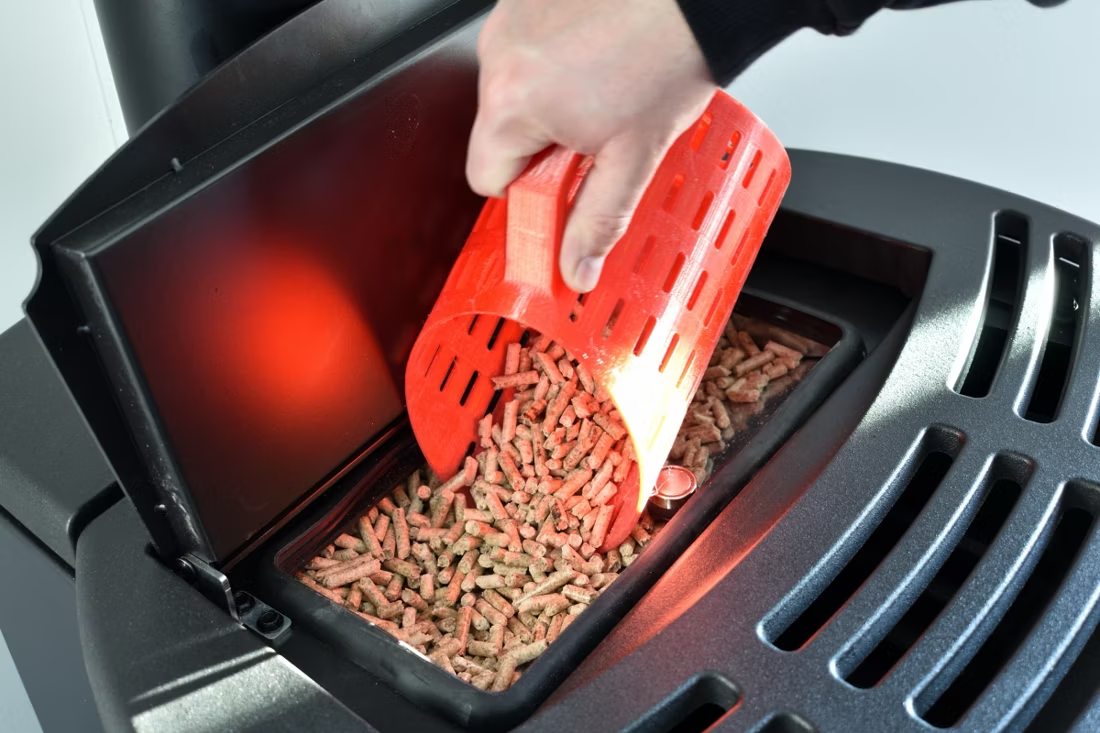
A clean pellet stove is a happy pellet stove. Plan on cleaning the burn pot about once a week when you're burning regularly—ash and clinkers gum up the air holes just like a pellet barbecue. Most pellet stove problems trace back to skipped cleaning that nobody explained up front. Some designs make it easy with a trapdoor burn pot: pull a lever and the gunk drops into the ash pan.
What's the difference between an insert and a zero-clearance fireplace?
An insert is a fireplace that slides into a pre-existing wood-burning fireplace—if you don't have one, there's nothing to insert it into. A zero-clearance fireplace is built into a framed wall, which makes it the answer for remodels and new construction. Simple test: existing masonry fireplace means insert; blank or framed wall means zero-clearance.
What is an in-home preview and do I need one?
It's a visit where a hearth professional measures your space, confirms the model you picked actually works in your home, and walks the specs—framing, gas line, venting, finish work—before anything is ordered. Some details you just can't know until you see the house. Never make a down payment without one; it's the single most-skipped step that burns buyers.
How much should I budget for a fireplace?
For an average home—covering the fireplace, the vent pipe, and basic installation—a budget between $3,900 and $5,500 gives you a lot of options across wood, gas, and pellet. By the time you add finish work, gas line, and electrical, the average complete installation lands between $5,000 and $12,000 all-in. In a remodel or new build, a good rule is to put about 2.5% of the total project cost toward the fireplace.
Stove and Fireplace Dealers in Clay County
Pellet Brands Stocked Around Clay County
Manufacturers will point you to the nearest stocking dealer.
Find your pellet stove in Clay County.
Tell us about your home and heating goals, and we'll match you with a trusted local dealer serving Clay County—plus a free Project Guide & Parts List with the exact stove, vent kit, and install plan for your project.
Find Your Fireplace →