
Steady heat for Chippewa County's brutal winters.
With 8,345 heating degree days and average winter lows near 2°F, Chippewa County homes need heat that doesn't quit. A pellet stove gives you thermostat-set, automated warmth from Montevideo to Milan—find the right unit and connect with a trusted local dealer.
Every Project Starts From One of These Five Situations
Consistent, thermostat-controlled heat for a demanding climate.
Chippewa County sits in west-central Minnesota's climate zone 6A, where winter lows average just 2°F and the county racks up roughly 8,345 heating degree days a season—colder and longer than Fargo, ND, most winters. Montevideo, the county seat, and smaller communities like Milan and Watson have long relied on wood heat from the region's oak, maple, birch, and aspen stands. Pellet stoves have found a strong foothold here for a simple reason: they deliver the same steady radiant warmth without the daily splitting, stacking, and hauling that cordwood demands during a season this long.
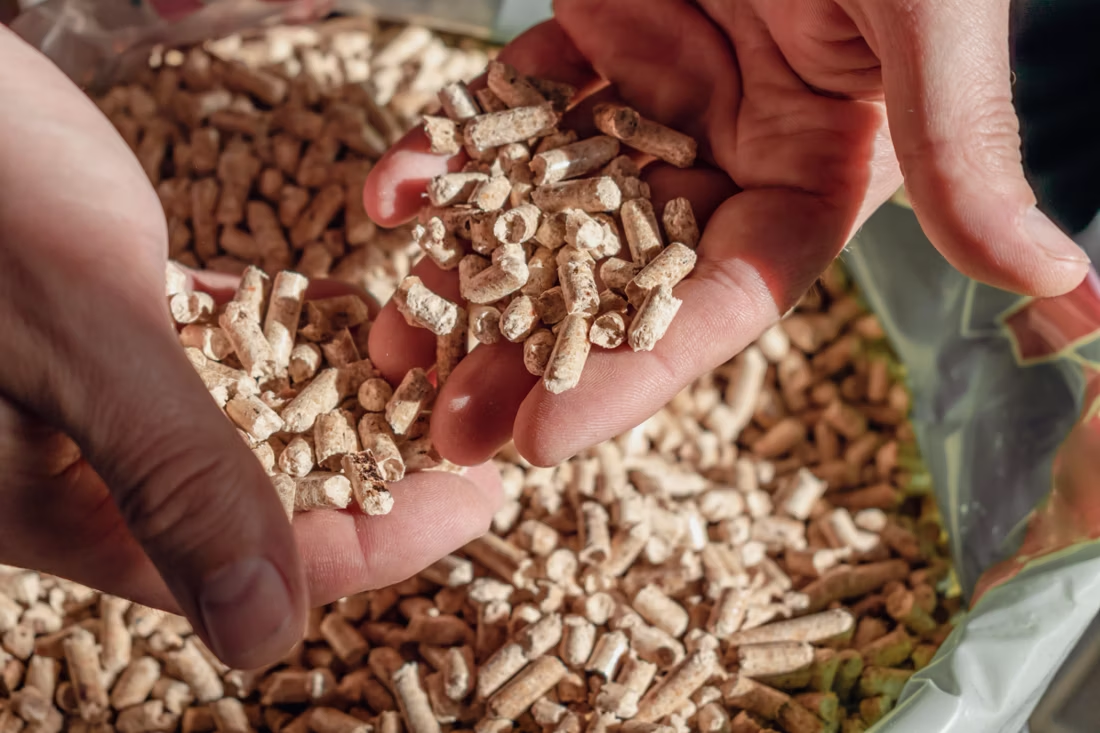
Chippewa County has no air quality non-attainment issues and no seasonal curtailment periods, so pellet appliances run without the burn-restriction concerns that affect some western states. Regional pellet fuel producers—including Indeck Energy Services, Lignetics, and Somerset Pellet Fuel—supply hardwood pellets sourced from Upper Midwest timber, which means reliable local supply rather than relying on fuel trucked in from out of state. For farmhouses, acreages, and empty-nesters looking to cut down on physical wood work while still getting real heat during 8,000-plus-degree-day winters, a pellet stove or insert is often the most practical upgrade on the table.
Three steps. No salesperson until you're ready.
Tell us about your project
Your zip code, your situation, and the fuel you're leaning toward—or let the answers point you to one.
See what's actually available
The brands dealers within 100 miles genuinely carry—real options, never a catalog mirage.
Get your dealer & Project Guide
A trusted local dealer, plus the free Project Guide & Parts List that names every component of the job.
Frequently Asked Questions
How much does a pellet stove installation cost in Chippewa County?
Across west-central Minnesota, a typical pellet stove installation runs roughly $3,000 to $6,000, depending on the unit, whether it vents through an existing chimney or requires new wall or roof penetration, and any electrical work needed for the hopper and blower. A pellet insert installed into an existing masonry fireplace tends to land in the same range, sometimes slightly higher if a stainless liner is needed for the vent run. Chippewa County requires a building permit for new installations, and most local dealers handle that paperwork as part of the sale so you're not filing separately with the county.
What size pellet stove do I need for my Chippewa County home?
Sizing depends on square footage, insulation quality, and whether the stove is your primary or supplemental heat source. Given how many homes in this part of Minnesota are older farmhouses with less-than-ideal insulation, sizing tends to run larger here than in a milder climate—a stove rated for 1,500 square feet in a well-sealed home might only comfortably cover 1,000 in a drafty older place near Montevideo or out in the townships. At 2°F average winter lows and 8,345 heating degree days, undersizing shows up fast on the coldest nights. A local dealer will walk through your floor plan and insulation before recommending a model rather than sizing off square footage alone.
Where does pellet fuel come from and how much does it cost?
Chippewa County sits within reach of several regional pellet producers, including Indeck Energy Services, Lignetics, and Somerset Pellet Fuel, all of which manufacture hardwood pellets from the oak, maple, birch, and aspen common to this part of Minnesota. Pellet fuel is typically sold in 40-pound bags stacked on a pallet (a ton runs 50 bags), and across the Upper Midwest that ton generally runs somewhere in the $200 to $300 range depending on the season and supplier, with early-fall buying usually cheaper than mid-winter. A well-insulated home burning a stove as primary heat through a full Chippewa County winter can go through 2 to 3 tons; supplemental use is often under a ton.
Pellet stove vs. wood stove—which makes sense for my home?
Wood stoves burn cordwood cut from local oak, maple, birch, or aspen, run without electricity, and offer the lowest fuel cost if you're cutting or buying your own wood—a real advantage during winter storms when the power goes out. Pellet stoves trade that off for convenience: load the hopper, set the thermostat, and the auger and igniter handle the rest, with far less ash and no splitting or stacking. For Chippewa County acreages and farms where physical wood handling gets harder every winter, or for households where both adults work full time, pellet is often the easier long-term choice. For anyone who wants heat guaranteed during an outage, wood remains the more dependable backup.
Do I need a permit to install a pellet stove in Chippewa County?
Yes—new pellet stove and insert installations require a building permit through the Chippewa County building department, and any new electrical circuit for the unit's auger and blower may need an electrical permit as well. Because Chippewa County has no air quality non-attainment designation, there are no curtailment periods or burn-day restrictions to work around, which is one advantage pellet appliances have here over some parts of the country. Most local hearth dealers pull the permit as part of the installation, so it's rarely something homeowners have to manage on their own.
What's the best pellet stove for a climate this cold?
For a county averaging 8,345 heating degree days, look for a pellet stove with a higher BTU output rating and a hopper large enough to run through a cold overnight without a refill—40-to-60-pound hoppers are common on mid-to-large units from brands like Harman, Lopi, and Enviro, all of which are widely serviced in the Upper Midwest. A stove with a larger firebox and higher maximum burn rate will matter more here than in a milder climate zone, since Chippewa County's 2°F average winter lows mean the appliance needs headroom, not just a rating that matches square footage on paper. A local dealer can match hopper size and BTU output to your specific home rather than a one-size estimate.
How much maintenance does a pellet stove need?
Pellet stoves need more frequent light maintenance than wood stoves but far less heavy cleaning. Plan on emptying the ash pan every few days to weekly during regular winter use, cleaning the burn pot every week or two to keep the igniter working properly, and a full professional service once a year to check the auger motor, blower, gaskets, and exhaust fan. Because Chippewa County winters run long, a stove used as primary heat from October through April will need more frequent attention than one used only for occasional supplemental warmth. Local dealers who sell the unit typically also offer annual service.
Will my pellet stove work during a power outage?
Not without backup power—pellet stoves rely on an electric auger to feed fuel and a blower to distribute heat and exhaust combustion gases, so they shut down when the power does. Given how cold Chippewa County winters get and how long outages can stretch during a bad ice storm, many homeowners here pair a pellet stove with a small battery backup unit or a generator sized to run the stove's electrical draw. If guaranteed heat during an outage is the priority, a wood stove or a battery-backed gas unit is worth discussing with your dealer as a complement to a pellet appliance rather than a replacement.
Pellet stove vs. gas fireplace—which is right for my home?
Pellet stoves burn compressed hardwood pellets sourced from regional producers, offer strong heat output for the fuel cost, and give Chippewa County homeowners a renewable, locally-sourced alternative to fuel oil or electric baseboard. Gas fireplaces offer instant on-off convenience and don't need fuel loaded or ash removed, but they depend on either a natural gas hookup or propane delivery, and running costs track propane and gas prices rather than regional pellet supply. For homes without existing gas service, pellet is often the simpler retrofit since it needs only an electrical outlet and a vent run. A local dealer can walk through both options against your home's existing utilities.
Why is a fireplace insert so efficient?
An insert does two things: it seals the chimney completely, so you stop losing air you already paid to heat, and it radiates warmth into the room through the firebox and glass. Most add a heat-exchange fan that pulls cool room air underneath, wraps it around the hot firebox, and pushes it back out warm. Your home is more efficient before you've even lit the first fire.
How often does a pellet stove need cleaning?
A clean pellet stove is a happy pellet stove. Plan on cleaning the burn pot about once a week when you're burning regularly—ash and clinkers gum up the air holes just like a pellet barbecue. Most pellet stove problems trace back to skipped cleaning that nobody explained up front. Some designs make it easy with a trapdoor burn pot: pull a lever and the gunk drops into the ash pan.
Does a fireplace add value to my home?
On average, a fireplace adds back to the home about the same amount you spent installing it. Add the monthly savings from heating the rooms you actually use instead of the whole house—often hundreds of dollars a year—and the value case is strong before you even count what a fire does for how your family uses the room.
How much should I budget for a fireplace?
For an average home—covering the fireplace, the vent pipe, and basic installation—a budget between $3,900 and $5,500 gives you a lot of options across wood, gas, and pellet. By the time you add finish work, gas line, and electrical, the average complete installation lands between $5,000 and $12,000 all-in. In a remodel or new build, a good rule is to put about 2.5% of the total project cost toward the fireplace.
Pellet Brands Stocked Around Chippewa County
Manufacturers will point you to the nearest stocking dealer.
Find your pellet stove in Chippewa County.
Tell us a bit about your home and we'll match you with the right pellet stove or insert for Chippewa County's long winters, plus a free Project Guide & Parts List—the exact parts, vent kit, and a recommended local dealer to get it installed.
Find Your Fireplace →