
Thermostat-controlled heat built for 9,397 heating degree days.
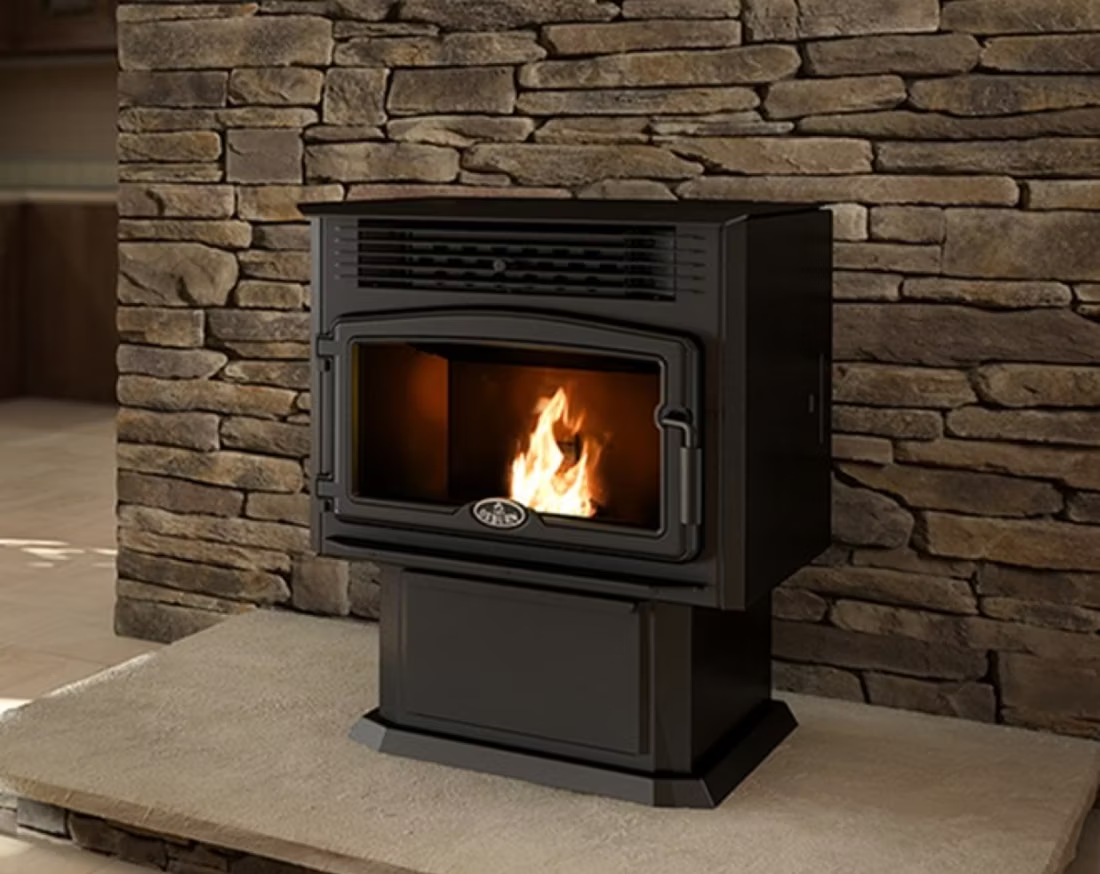
Becker County averages a winter low of -4°F, and the heating season here runs long and hard. A pellet stove feeds itself from a hopper and holds a steady temperature through the coldest stretches without the daily splitting and stacking a wood stove demands. I'll match you with a trusted local dealer who knows what actually holds heat through a west-central Minnesota winter.
Every Project Starts From One of These Five Situations
Set-and-forget warmth for lake-country winters that don't let up.
Becker County sits in Minnesota's lakes region around Detroit Lakes and the White Earth Nation, with roughly 14,329 residents spread across small towns and rural townships. Climate Zone 7 puts this county in the same cold-climate tier as International Falls, MN, and the numbers back it up: a winter low average of -4°F and 9,397 heating degree days, among the highest totals in the lower 48. The heating season runs from October well into April. Plenty of local homes still burn oak, maple, birch, and aspen cut from private woodlots or under a Chippewa National Forest cutting permit, but pellet stoves have earned a real foothold here among homeowners who want consistent, hands-off heat without tending a fire through a January cold snap.
A pellet stove's automatic auger feed and thermostat control mean it holds a set temperature on its own for hours at a time, which matters when overnight lows in Becker County regularly sit in single digits or below zero. Fuel comes in 40-pound bags from regional suppliers like Lignetics, Indeck Energy Services, and Somerset Pellet Fuel, sold at farm stores and hearth dealers throughout the area rather than delivered by the cord. Becker County doesn't carry the air-quality restrictions some western counties impose on wood burning, so the choice between pellet and cordwood here comes down to convenience and labor, not emissions compliance—pellet still burns cleaner and needs far less daily attention than a wood stove during the county's long, hard winters.
Three steps. No salesperson until you're ready.
Tell us about your project
Your zip code, your situation, and the fuel you're leaning toward—or let the answers point you to one.
See what's actually available
The brands dealers within 100 miles genuinely carry—real options, never a catalog mirage.
Get your dealer & Project Guide
A trusted local dealer, plus the free Project Guide & Parts List that names every component of the job.
Frequently Asked Questions
How much does a pellet stove installation cost in Becker County?
Most pellet stove installations in this area run roughly $3,500 to $7,000, depending on the unit and whether it vents through an existing chimney or needs a new through-wall PL-vent run. A freestanding stove going into a home with no existing venting—common in older farmhouses around Frazee or Ogema—tends to land toward the higher end once wall penetration and a hearth pad are added. A pellet insert dropped into an existing masonry fireplace, more typical closer to Detroit Lakes, is often on the lower end since the chimney cavity is already there to work with.
What size pellet stove do I need for a Becker County winter?
With a winter low average of -4°F and 9,397 heating degree days, undersizing is the mistake to avoid. A stove rated for 1,500 to 2,000 square feet is a reasonable starting point for a well-insulated main living area, but homes relying on the stove as a primary heat source through the coldest weeks often need to size up and plan for more frequent hopper refills. Hopper capacity matters as much as BTU output here—a larger hopper means fewer 2 a.m. reloads when temperatures drop hard. A local dealer can size this correctly after seeing your floor plan and insulation.
Do I need a permit to install a pellet stove in Becker County?
Yes. New solid-fuel appliance installations require a building permit, and outside city limits that typically goes through Becker County Planning & Zoning; within Detroit Lakes or another incorporated town, the city handles it. Most local hearth dealers pull the permit as part of the installation and coordinate the inspection, so you're not left tracking down paperwork on your own.
Where do I buy pellets in Becker County, and how much do they cost?
Pellets are sold by the bag rather than delivered like propane or cordwood, and regional brands including Lignetics, Indeck Energy Services, and Somerset Pellet Fuel are commonly stocked at hearth shops and farm supply stores across west-central Minnesota. Expect pricing in the $250 to $300 per ton range depending on supplier and season, with the best prices typically found buying a full winter's supply—often 3 to 5 tons for a home using pellets as primary heat—before the season starts rather than restocking bag by bag in January.
Pellet stove vs. wood stove—which makes more sense in Becker County?
Wood has a real cost advantage if you're willing to cut it yourself: a Chippewa National Forest permit runs $10 to $20 per cord, and oak, maple, birch, and aspen are all common species on permit-eligible land, with the season running May through October. Wood also works with no electricity, which matters during an ice storm outage. Pellet stoves trade that lower fuel cost for convenience—no splitting, no stacking, and a hopper that feeds itself for hours—but they need power to run the auger and blower. Plenty of Becker County households run both: pellet in the main living space for daily ease, a wood stove or fireplace as backup for extended outages.
What happens to my pellet stove during a power outage?
A standard pellet stove won't run without electricity—the auger, igniter, and combustion blower all need power. Given how far Becker County winters can push an outage after an ice storm or heavy lake-effect snow, it's worth asking your dealer about a battery backup unit sized for your stove, or planning for a small generator if you're relying on pellet as primary heat in a rural part of the county. Some households pair a pellet stove with a wood-burning appliance specifically as an outage fallback.
How often does a pellet stove need cleaning and maintenance?
Plan on emptying the ash pan every few days during heavy winter use and giving the burn pot and glass a quick clean weekly. A full inspection and vent cleaning once a year, ideally before the heating season starts in October, catches anything the daily upkeep misses. Homes running the stove nearly around the clock through Becker County's coldest months—December through February—should expect to service the igniter and check the gaskets more closely than a household using it only for supplemental heat on shoulder-season days.
Will a pellet stove actually keep up at -4°F and below?
A properly sized, well-maintained pellet stove holds its own at Becker County's coldest temperatures, but it needs to be sized for the job—a unit that's marginal on paper will run at full output constantly during a hard cold snap and still fall short in a larger or poorly insulated home. Many local homeowners pair a pellet stove with existing forced-air or baseboard heat rather than relying on it as the sole heat source, using it to carry the bulk of the load while a backup system covers the deepest cold or an extended outage.
Are there rebates or tax credits for installing a pellet stove?
High-efficiency biomass stoves, including most modern pellet stoves rated at 75% efficiency or higher, currently qualify for a federal tax credit covering 30% of the equipment and installation cost, up to $2,000 a year. Minnesota utility efficiency programs occasionally add local incentives on top of that, though availability shifts year to year, so it's worth asking your local dealer what's currently active before you finalize a purchase—they typically stay current on which units qualify.
Why is a fireplace insert so efficient?
An insert does two things: it seals the chimney completely, so you stop losing air you already paid to heat, and it radiates warmth into the room through the firebox and glass. Most add a heat-exchange fan that pulls cool room air underneath, wraps it around the hot firebox, and pushes it back out warm. Your home is more efficient before you've even lit the first fire.
How often does a pellet stove need cleaning?
A clean pellet stove is a happy pellet stove. Plan on cleaning the burn pot about once a week when you're burning regularly—ash and clinkers gum up the air holes just like a pellet barbecue. Most pellet stove problems trace back to skipped cleaning that nobody explained up front. Some designs make it easy with a trapdoor burn pot: pull a lever and the gunk drops into the ash pan.
How much should I budget for a fireplace?
For an average home—covering the fireplace, the vent pipe, and basic installation—a budget between $3,900 and $5,500 gives you a lot of options across wood, gas, and pellet. By the time you add finish work, gas line, and electrical, the average complete installation lands between $5,000 and $12,000 all-in. In a remodel or new build, a good rule is to put about 2.5% of the total project cost toward the fireplace.
Can I install a fireplace myself?
If you're putting a fire in your house on purpose, it's best to work with an expert. Unless you're genuinely experienced in framing, gas line, vent pipe, and the national code on clearances to combustibles, have a professional do it—and ideally the same company that sells you the fireplace, so warranty, service, and liability all live under one roof.
Stove and Fireplace Dealers in Becker County
Pellet Brands Stocked Around Becker County
Manufacturers will point you to the nearest stocking dealer.
Get your free Project Guide & Parts List for a pellet stove in Becker County.
Tell me about your home and how you plan to use the stove, and I'll match you with a trusted local Becker County dealer and send over a free Project Guide & Parts List—the exact equipment, vent kit, and recommended installer for your pellet project, no big-box guesswork.
Find Your Fireplace →