
Pellet Heat in Wayne, Michigan: A Niche Fit, Done Right.
Pellet stoves are not the default choice in this Detroit-area suburb, but for the right basement, garage, or den, they still make sense. We will connect you with a trusted local dealer who will tell you honestly whether one fits your home.
Every Project Starts From One of These Five Situations
Why pellet stoves are rare here—and where they still make sense.
Wayne sits in Wayne County on the western edge of the Detroit metro area, at 666 feet of elevation in climate zone 5A. Winters are real here—the city has a long, cold heating season with a typical low near 19°F—but this is a fully built-out, gas- and electric-served suburb, not the wooded, off-grid stretches of northern Michigan where solid-fuel heat carries real weight. That is why pellet stoves show up as a niche option here rather than a mainstream one: most Wayne homeowners heat with natural gas furnaces and choose gas fireplaces or electric units for supplemental hearth heat, not pellet appliances.
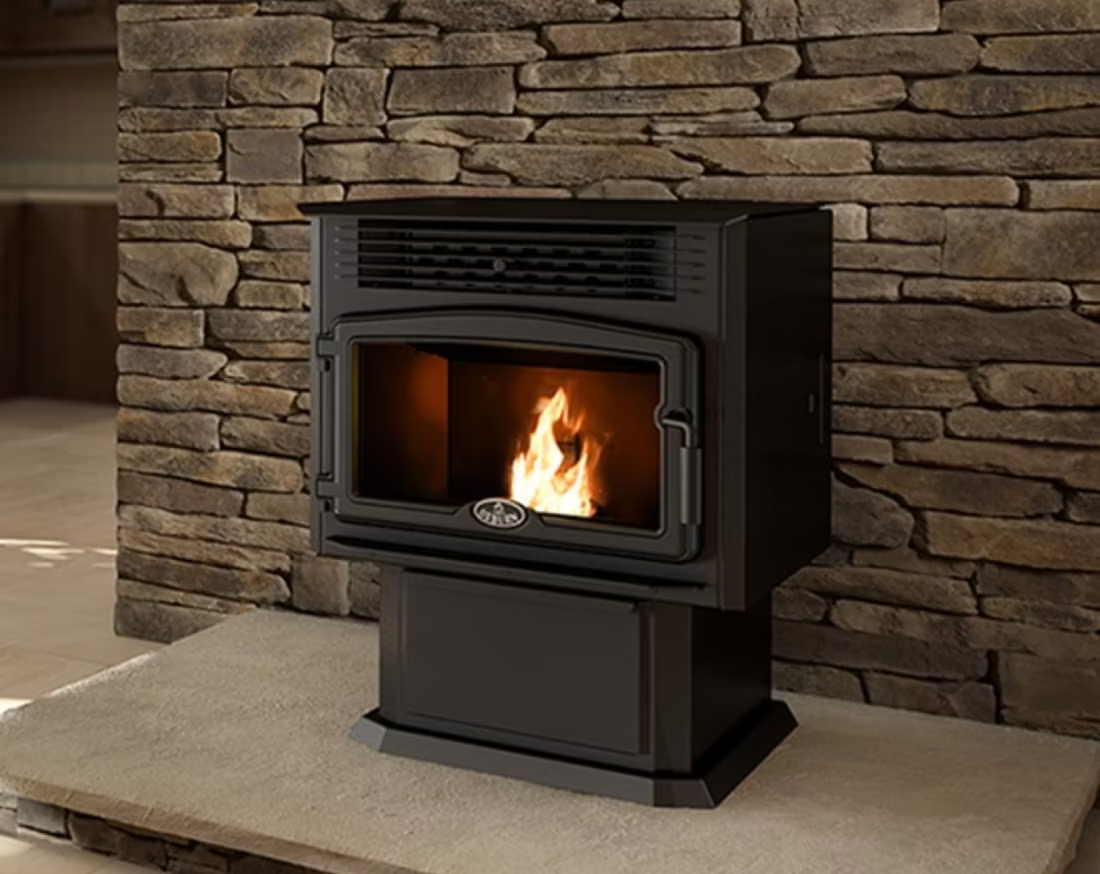
That does not mean pellet heat is off the table. A handful of Wayne homeowners still install pellet stoves in finished basements, garages, or three-season rooms—spaces where a gas line is not already run and a clean-burning, low-maintenance solid-fuel option beats a space heater. Fuel is not the obstacle: pellet brands like Indeck Energy Services, Lignetics, and Somerset Pellet Fuel are distributed throughout the Great Lakes region and sold at hearth and farm-supply stores within driving distance. What matters most is being honest about fit—a trusted local dealer can tell you in five minutes whether a pellet stove makes sense for your specific room, or whether you would be better served by the gas or electric options that are already the norm in this market.
Three steps. No salesperson until you're ready.
Tell us about your project
Your zip code, your situation, and the fuel you're leaning toward—or let the answers point you to one.
See what's actually available
The brands dealers within 100 miles genuinely carry—real options, never a catalog mirage.
Get your dealer & Project Guide
A trusted local dealer, plus the free Project Guide & Parts List that names every component of the job.
Frequently Asked Questions
Are pellet stoves a common choice for homes in Wayne, MI?
Not really, and we would rather tell you that upfront than pretend otherwise. Wayne is a dense, fully built-out suburb with reliable natural gas and electric service already run to nearly every home, so gas fireplaces and electric units are the default hearth choice for most homeowners here. Pellet stoves are more common in the wooded, rural stretches of northern Michigan where solid fuel has always been part of how homes get heated. In Wayne, pellet installs tend to be one-off projects—a finished basement, a garage, or a room a homeowner wants heated independently from the furnace zone.
How much does a pellet stove installation cost in Wayne?
Because pellet installs are uncommon in this market, there is not a strong local price pattern the way there is for gas fireplace installs in Wayne. Cost mostly comes down to the unit itself, whether you need a new hearth pad, and how far the vent run has to travel through an exterior wall. The honest answer is that a local dealer needs to see the room to quote it accurately—venting a pellet stove out of a finished basement is a very different job than venting one off a garage wall.
What size pellet stove do I need?
Sizing depends on the square footage of the specific space you are heating, not your whole house—in Wayne, pellet stoves are almost always installed as zone heat for a basement, garage, or added room rather than as a home's primary heat source. A small unit rated for 500 to 1,000 square feet handles most finished basements and single rooms; anything larger than that is unusual for the way pellet stoves get used locally. A dealer walking the space will size it correctly rather than selling you a unit built for whole-home heating you do not need.
Where can I buy pellet fuel near Wayne?
Pellet fuel itself is not hard to find even though the stoves are uncommon—brands like Indeck Energy Services, Lignetics, and Somerset Pellet Fuel are distributed throughout the Great Lakes region and stocked at hearth shops and farm-supply retailers around metro Detroit. Most homeowners buy by the ton or by the pallet, roughly fifty forty-pound bags, ahead of the winter season rather than restocking bag by bag, since selection is usually better before the cold sets in.
Will a pellet stove still run if the power goes out?
Not without backup power, and that is worth knowing before you buy one. Pellet stoves rely on an electric auger to feed fuel and a blower to move heat into the room, so a DTE Electric or Wyandotte Municipal Service Commission outage during an ice storm will shut the unit down along with everything else. If backup heat during outages is the goal, a battery-backed gas fireplace is a better match for that specific need. If ambiance and low-maintenance solid-fuel heat is the goal, a small generator or battery system will keep a pellet stove running through most outages.
Do I need a permit to install a pellet stove in Wayne?
Most likely, yes—new solid-fuel or vented appliance installs typically require a building permit through the City of Wayne, and the unit needs to meet current EPA emissions standards like any other pellet stove sold today. Because these installs are infrequent locally, it is worth confirming permit specifics with the city before work starts. A dealer who has pulled a permit for this exact kind of project in Wayne before will save you the back-and-forth.
Pellet stove vs. gas fireplace—why does gas dominate in Wayne?
Gas wins in Wayne mostly because the infrastructure is already there. Natural gas lines run to the vast majority of homes in this part of Wayne County, so adding a gas fireplace or insert is usually a matter of tapping an existing line rather than sorting out fuel logistics. Gas also gives instant on-off heat with no fuel storage, no ash, and no hopper to refill—for a suburb where convenience is the priority, that combination is hard for pellet to compete with. Pellet still wins on a few things gas cannot match: a real flame from actual wood-derived fuel, and zero dependency on a gas line.
Pellet stove vs. electric fireplace—which makes more sense for a Wayne home?
Electric fireplaces are the lower-commitment option—no venting, no fuel deliveries, and a straightforward plug-in install, which is part of why electric fuel relevance runs standard in this market. They cost more per hour of real heat than a pellet stove does, especially at DTE Electric's residential rate of roughly 20.1 cents per kWh (Wyandotte Municipal Service Commission customers pay closer to 16.3 cents), but they are the simplest path to supplemental warmth and ambiance with essentially zero maintenance. Pellet makes more sense if you specifically want higher heat output for a larger zone, like a finished basement, and do not mind hauling bags of fuel and doing periodic ash cleanout.
If pellet stoves are uncommon in Wayne, why would someone here still want one?
Usually one of three reasons: they grew up with wood or pellet heat and want that experience again, they have a specific space—a garage, a workshop, a finished basement—that is not on the gas or electric heating zone and needs its own source of heat, or they simply prefer the look and feel of a real flame over a gas or electric unit. None of those are wrong reasons. The honest caveat is that pellet stoves need more hands-on maintenance than gas or electric—hopper refills, ash removal, and an annual professional cleaning—so it is worth going in with clear eyes about that tradeoff before committing.
Why is my open fireplace making my house colder?
Open fireplaces suck—literally. As the fire burns, it consumes air your furnace already paid to heat and pulls it out through the chimney, so the house is actually colder after the fire goes out than before you lit it. An insert fixes this: it seals the chimney, puts fixed glass across the front, and turns that hole in your house into a real heat source.
Why is a fireplace insert so efficient?
An insert does two things: it seals the chimney completely, so you stop losing air you already paid to heat, and it radiates warmth into the room through the firebox and glass. Most add a heat-exchange fan that pulls cool room air underneath, wraps it around the hot firebox, and pushes it back out warm. Your home is more efficient before you've even lit the first fire.
Does a fireplace add value to my home?
On average, a fireplace adds back to the home about the same amount you spent installing it. Add the monthly savings from heating the rooms you actually use instead of the whole house—often hundreds of dollars a year—and the value case is strong before you even count what a fire does for how your family uses the room.
Can a fireplace actually lower my heating bill?
Yes—by creating a comfort zone. A furnace heats every square foot of the house just to warm the one room you're in; a gas fireplace on low burns roughly a sixth of the gas a typical furnace does. Set the furnace around 55–60 degrees as a baseline, then heat the rooms your family actually uses. Families who heat this way commonly save $20–$60 a month.
Nearby Dealers
Hearth shops serving Wayne and the surrounding area. Every listing shows whether it is a WhyFire partner, a dealer we have verified as authorized for the brands we recommend, or a local business carrying hearth products. No manufacturer pays for placement. How we verify dealers →
Premier Furniture
Fireside Hearth & Home - Canton
Glenn's Fireplace & Spa
Allstate By Watsons
Allstate Billiards, Patio, Fireplace
This Is It Shop's House Of Fire
AirMaster
Fireside Hearth & Home - Royal Oak
Big George’s
Big Georges Appliance Mart
Grate Fireplace Shop
Creative Design Build Associates
Pellet Brands Stocked Around Wayne
Manufacturers will point you to the nearest stocking dealer.
Find your pellet stove in Wayne, MI.
Tell us about your space and we will be upfront about whether a pellet stove is the right call, then match you with a trusted local dealer and a free Project Guide & Parts List covering the exact parts, including the vent kit, for your project.
Find Your Fireplace →