
Steady heat for Vicksburg's long winters.
Automated, hardwood-fueled heat for a southwest Michigan town with a heating season as long and cold as Duluth, Minnesota's. Find the right pellet stove and connect with a trusted local dealer.
Every Project Starts From One of These Five Situations
Consistent heat without babysitting a fire.
Vicksburg sits in Kalamazoo County at the edge of southwest Michigan's snow belt, where lake-effect bands off Lake Michigan pile on top of an already long heating season—winter lows average 18°F and the heating season runs long and cold, rivaling some of the toughest winters in the Midwest. That's a Duluth-adjacent heating load in a village of under 4,000 people, and it's exactly the kind of climate where a pellet stove earns its keep: consistent, thermostatically controlled heat through a full southwest Michigan winter, without the daily wood-splitting that hardwood country like this normally demands.
Kalamazoo County's oak, maple, birch, and ash forests have long supplied local firewood, but pellet stoves let homeowners get that same hardwood heat in a bagged, automated form—no splitting, no seasoning, no creosote buildup to manage. Regional suppliers including Indeck Energy Services, Lignetics, and Somerset Pellet Fuel keep pellets stocked at farm and hardware stores throughout the region, so running out mid-February isn't the gamble it can be in more remote parts of the state. One thing worth planning for: pellet stoves run on electricity to power the auger and combustion blower, and much of rural Kalamazoo County is served by Midwest Energy Cooperative or Wolverine Power Supply Cooperative rather than a large investor-owned utility—worth factoring into your backup-power plan for winter outages.
Three steps. No salesperson until you're ready.
Tell us about your project
Your zip code, your situation, and the fuel you're leaning toward—or let the answers point you to one.
See what's actually available
The brands dealers within 100 miles genuinely carry—real options, never a catalog mirage.
Get your dealer & Project Guide
A trusted local dealer, plus the free Project Guide & Parts List that names every component of the job.
Frequently Asked Questions
How much does a pellet stove installation cost in Vicksburg?
Across southwest Michigan, installers we work with typically quote $3,000 to $6,000 for a freestanding pellet stove installation, including the appliance, hearth pad if needed, and vent kit through an exterior wall. Pellet inserts going into an existing masonry fireplace usually run $3,500 to $7,000 depending on the liner length and whether the existing firebox needs modification. Costs move up if your installer has to run a new dedicated electrical circuit for the stove—common in older Vicksburg-area homes that weren't wired with an outlet near the fireplace. A local dealer will give you a firm number after seeing your space in person.
What size pellet stove do I need for my home?
Most pellet stoves are rated for somewhere between 1,200 and 2,800 square feet, and for a Kalamazoo County home dealing with a heating season about as long and cold as Duluth, Minnesota's, it's usually smarter to size toward the upper end of what your square footage suggests rather than the minimum. A stove that's slightly undersized will run at max output constantly on the coldest nights and still fall short; one that's sized right will cycle down comfortably most of the winter and only work hard during cold snaps. Hopper capacity matters too—a 40 to 60 pound hopper gets you through an overnight burn without a refill, which matters when it's single digits outside at 2 a.m. A local dealer can size this correctly based on your home's insulation and layout.
Pellet stove or wood stove—which makes more sense in Vicksburg?
Kalamazoo County has plenty of oak, maple, birch, and ash, and homeowners with land or a woodlot often lean wood for the lower fuel cost and the fact that it works with no electricity during an outage. Pellet stoves trade that off for real convenience: no splitting or stacking, a thermostat that holds a set temperature, and a cleaner burn with far less ash to deal with. The tradeoff that matters most locally is power—a pellet stove's auger and blower need electricity, and outages do happen in this part of southwest Michigan during ice storms and heavy lake-effect snow. If you want set-it-and-forget-it heat and have reliable power (or a backup plan), pellet is usually the easier day-to-day choice. If backup heat during outages is the priority, wood still has the edge.
Where can I buy pellets locally, and what do they cost?
Regional brands including Lignetics, Indeck Energy Services, and Somerset Pellet Fuel are widely stocked at farm supply and hardware stores throughout southwest Michigan, and most Vicksburg-area homeowners can pick up pellets within a short drive rather than special-ordering. Premium hardwood pellets typically run somewhere in the $250 to $320 per ton range in this part of Michigan, and a season's supply for an average home usually falls between 2 and 3 tons depending on how many hours a day the stove runs and how well the home is insulated. Buying a season's worth in late summer, before demand picks up, is the usual strategy for avoiding shortages in January.
Will my pellet stove work during a power outage?
Not without a plan for backup power. Pellet stoves rely on an electric auger to feed the hopper and a blower for combustion air and heat distribution, so a standard unit shuts down the moment the power does. That's a real consideration in rural Kalamazoo County, where much of the area is served by Midwest Energy Cooperative or Wolverine Power Supply Cooperative rather than a large metro utility, and restoration times after an ice storm or heavy lake-effect snow event can stretch longer than in denser service areas. Many pellet stove owners here pair the unit with a small battery backup or a portable generator sized to run the stove's low-wattage motors—usually under 100 watts of continuous draw—so heat doesn't stop when the lights do. Ask your local dealer about battery-backup-compatible models if outage resilience matters to you.
Do I need a permit to install a pellet stove in Vicksburg?
Most new pellet stove installations require a building permit, and depending on your address that means either the Village of Vicksburg or Kalamazoo County building department, since the village sits partly within Kalamazoo County's broader jurisdiction. The permit process mainly confirms proper clearances, wall penetration for the vent kit, and that the unit meets current EPA emissions standards. Reputable local installers handle this paperwork as part of the installation, so it's rarely something homeowners have to navigate on their own—worth confirming with your dealer up front.
How much maintenance does a pellet stove actually need?
Less than a wood stove, but it's not zero-maintenance. Plan on emptying the ash pan every few days during heavy use, cleaning the burn pot and glass weekly, and vacuuming the hopper and exhaust passages a few times each season. Once a year—typically before heating season starts in the fall—the vent pipe and combustion blower should get a full cleaning, either by you or a technician, since pellet exhaust runs cooler than wood smoke and can build up fine ash residue over a Michigan-length heating season. It's a fraction of the chimney-sweeping commitment a wood stove requires, which is part of the appeal for a lot of Vicksburg-area homeowners.
What's the best pellet stove for a Vicksburg winter?
Given the region's long, Duluth-level heating season and stretches of single-digit lows, look for models with a larger hopper (50+ pounds) and a higher max BTU output rated for 2,000+ square feet if you're heating a full main level. Auto-ignition models are worth the extra cost here—with this many burn hours per season, being able to set a thermostat and walk away, rather than manually relighting after every outage or empty hopper, matters more than it would in a milder climate. A local dealer familiar with southwest Michigan homes can match hopper size and BTU output to your specific square footage and insulation level.
Pellet insert or freestanding pellet stove—which fits my home?
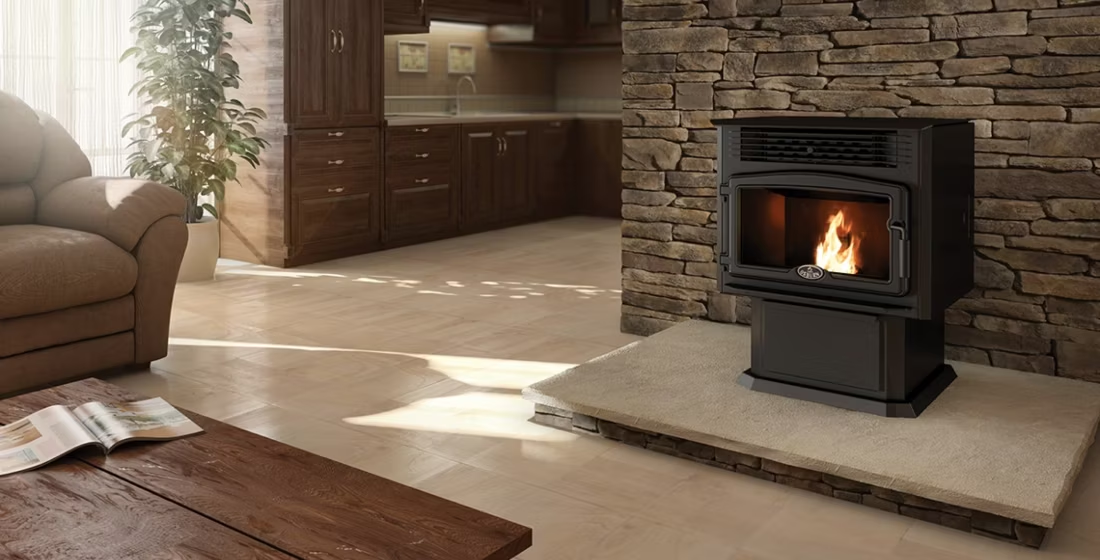
If you already have a masonry fireplace, a pellet insert slides into that existing opening and vents through a liner run up the chimney—it's the more common upgrade path for older Kalamazoo County farmhouses that already have a hearth. A freestanding pellet stove sits on its own hearth pad and vents straight through an exterior wall, which makes it the better option for homes without an existing fireplace, or for placing heat in a room—like a converted garage or addition—that doesn't have one. Both use the same hopper-and-auger mechanics; the difference is really about what your home's existing structure gives you to work with. A local dealer can walk your space and tell you which makes more sense.
Why is a fireplace insert so efficient?
An insert does two things: it seals the chimney completely, so you stop losing air you already paid to heat, and it radiates warmth into the room through the firebox and glass. Most add a heat-exchange fan that pulls cool room air underneath, wraps it around the hot firebox, and pushes it back out warm. Your home is more efficient before you've even lit the first fire.
Can a pellet stove heat a whole house?
It genuinely can. I burned a pellet stove as my only heat source for years after a furnace died, and it kept the entire house warm. Pellets feed automatically from a hopper, so you get wood-heat economics with thermostat-style control. Two honest caveats: it needs weekly cleaning during the season, and most models need electricity to run—ask about battery backup if outages are a concern.
How much should I budget for a fireplace?
For an average home—covering the fireplace, the vent pipe, and basic installation—a budget between $3,900 and $5,500 gives you a lot of options across wood, gas, and pellet. By the time you add finish work, gas line, and electrical, the average complete installation lands between $5,000 and $12,000 all-in. In a remodel or new build, a good rule is to put about 2.5% of the total project cost toward the fireplace.
Can I install a fireplace myself?
If you're putting a fire in your house on purpose, it's best to work with an expert. Unless you're genuinely experienced in framing, gas line, vent pipe, and the national code on clearances to combustibles, have a professional do it—and ideally the same company that sells you the fireplace, so warranty, service, and liability all live under one roof.
Nearby Dealers
Hearth shops serving Vicksburg and the surrounding area. Every listing shows whether it is a WhyFire partner, a dealer we have verified as authorized for the brands we recommend, or a local business carrying hearth products. No manufacturer pays for placement. How we verify dealers →
Sackett's Fireplace
Hodgson Light Log & Patio
Flame Experience
Bosker Brick Company
Pellet Brands Stocked Around Vicksburg
Manufacturers will point you to the nearest stocking dealer.
Find your pellet stove in Vicksburg.
Tell us a bit about your home and we'll put together a free Project Guide & Parts List—the right pellet stove or insert, the vent kit you'll need, and a trusted local dealer near Kalamazoo County to install it.
Find Your Fireplace →