
Steady pellet heat for Sanilac County's long, cold winters.
With a long, cold heating season like Madison, Wisconsin's and winter lows averaging 15°F across the Thumb, Sanilac County homes need heat that doesn't quit. Find the right pellet stove or insert and connect with a trusted local dealer.
Every Project Starts From One of These Five Situations
Consistent heat without the daily wood-splitting work.
Sanilac County sits out on Michigan's Thumb, bordered by Lake Huron, with a population of just over 13,400 spread across farm towns like Sandusky (the county seat), Croswell, Marlette, Deckerville, and Port Sanilac. Climate zone 6A and winters in the same range as Madison, Wisconsin put this area through a long, cold heating season, made harder by open farmland exposure and lake-effect snow blowing in off Huron. A lot of the housing stock is older farmhouses, which tend to be drafty and expensive to heat with electric baseboard or an aging furnace alone.
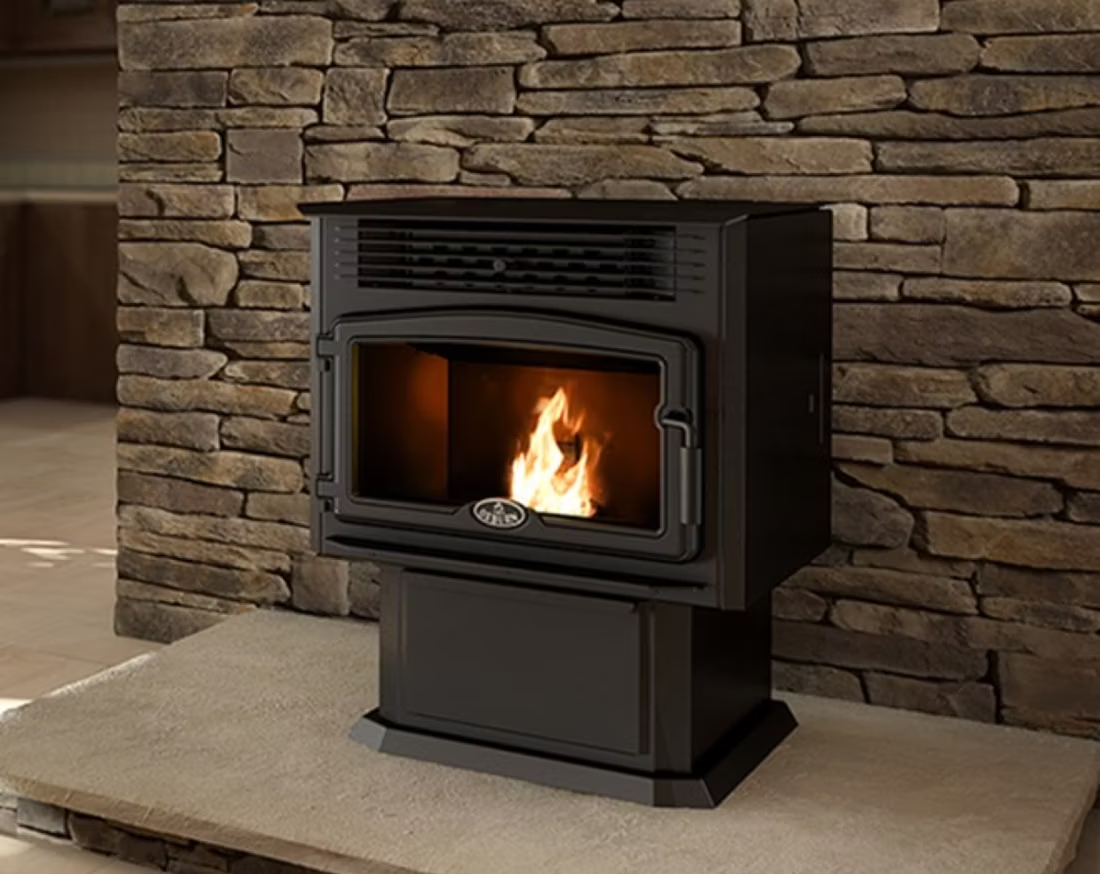
That combination—cold winters, rural properties, and a strong regional pellet supply chain through companies like Indeck Energy Services, Lignetics, and Somerset Pellet Fuel—makes pellet heat a practical fit for Sanilac County. There are no air quality non-attainment restrictions or burn curtailment periods listed for the county, so pellet stoves run without the seasonal red-flag days that complicate wood burning elsewhere. The tradeoff is that a pellet stove's auger and blower need electricity to operate, which matters in a rural county served in part by cooperative and utility lines that can see outages during ice storms off the lake—something worth planning around with a battery backup if pellet heat is your primary source.
Three steps. No salesperson until you're ready.
Tell us about your project
Your zip code, your situation, and the fuel you're leaning toward—or let the answers point you to one.
See what's actually available
The brands dealers within 100 miles genuinely carry—real options, never a catalog mirage.
Get your dealer & Project Guide
A trusted local dealer, plus the free Project Guide & Parts List that names every component of the job.
Frequently Asked Questions
How much does a pellet stove installation cost in Sanilac County?
A typical freestanding pellet stove installation runs in the range of $3,000 to $6,000 in most Michigan markets, depending on the model, whether you need a new hearth pad, and how far the wall-vent run has to travel. A pellet insert going into an existing wood fireplace usually sits toward the higher end of that range because of the venting adapter work. Sanilac County's rural geography means some installers based out of Port Huron or the Saginaw area may add a small travel charge for homes farther out toward Deckerville or Carsonville—worth asking about when you get quotes.
What size pellet stove do I need for my home?
Sizing depends on square footage, ceiling height, and how well insulated the house is—and a lot of Sanilac County's older farmhouses lose more heat than a similarly sized newer build. As a rough guide: small pellet stoves (up to 1,000 sq ft) suit a single room or a cabin, medium units (1,000–2,000 sq ft) cover most main living areas, and large stoves (2,000+ sq ft) can carry a whole home if the insulation is decent. Because winter lows here average 15°F with long stretches of sustained cold, it's worth sizing toward the upper end of any recommendation rather than the lower end—a local dealer will size the room based on an in-home look rather than square footage alone.
Where can I find certified pellet stove installers near Sanilac County?
Look for installers with NFI (National Fireplace Institute) certification, which covers proper venting, clearance, and appliance sizing for pellet-burning equipment specifically. Hearth dealers serving the Sandusky, Croswell, and Marlette area typically handle both the stove and the wall-vent installation as one job, which keeps warranty coverage intact. For homes out toward Deckerville, Carsonville, or Port Sanilac, ask up front whether a travel charge applies—installers based closer to Port Huron or the Saginaw Valley cover a wide service radius across the Thumb.
What's the difference between a pellet stove and a pellet insert?
A pellet stove is a freestanding unit that sits on a hearth pad and vents through an exterior wall or existing chimney—it can go almost anywhere in the house with a clear path to the outside. A pellet insert is built to slide into an existing masonry fireplace opening, turning a wood-burning fireplace into a pellet-fed heat source while reusing the existing chimney chase for venting. For Sanilac County homes with an older masonry fireplace that's rarely used, an insert is often the more efficient upgrade. Homes without an existing fireplace are usually better matched to a freestanding stove.
Do I need a permit to install a pellet stove in Sanilac County?
Yes—a new pellet stove installation generally requires a building permit through the county building department, since it involves a new appliance, venting penetration through a wall or chimney, and clearance-to-combustible requirements. Most local dealers handle the permit application as part of the installation, so it's rarely something homeowners have to manage themselves. There's no seasonal curtailment period listed for Sanilac County, so once installed and permitted, a pellet stove can run whenever you need heat.
What's the best pellet stove for Sanilac County's climate?
With a long, cold heating season like Madison, Wisconsin's and long stretches of sub-20°F nights common across the Thumb, look for a pellet stove with a large-capacity hopper—40 to 80 pounds—so it can run through a full overnight cycle without a refill. Models with a thermostat-controlled auger help match output to the actual temperature swing between an afternoon warm-up and an overnight cold front. Pair that with a reliable local pellet supply—brands like Lignetics and Somerset Pellet Fuel are distributed regionally and should be available through Thumb-area dealers—so you're not scrambling for fuel mid-winter.
Where can I buy wood pellets in or near Sanilac County?
Regional pellet brands with distribution into the Thumb include Indeck Energy Services, Lignetics, and Somerset Pellet Fuel, typically sold in 40-pound bags through farm supply stores, hardware stores, and hearth dealers. Pricing generally runs in the $250 to $320 per ton range depending on brand and hardwood content—premium hardwood pellets (often blended with the oak, maple, and ash common to Michigan's forests) burn hotter and leave less ash than lower-grade softwood blends. Buying a season's supply early, before the first cold snap hits, is common practice among Sanilac County pellet-stove owners since local stock can run low by January.
Does a pellet stove work during a power outage?
Not on its own—a pellet stove's auger and blower run on standard household electricity, so a power outage stops the stove even if you still have fuel in the hopper. This matters in Sanilac County's rural stretches, where lines run through farm cooperatives and can go down during winter ice storms off Lake Huron. A small battery backup or inverter sized for the stove's low wattage draw (most pellet stoves use well under 500 watts) will keep it running through a typical outage. If backup power during outages is a priority, a wood stove or a properly sized battery system paired with your pellet unit are the two practical paths—your local dealer can walk through both.
Pellet stove vs. wood stove—which is right for my Sanilac County home?
Wood stoves burn cordwood—often locally sourced oak, maple, birch, or ash—run without electricity, and offer real backup heat during the ice-storm outages that hit rural parts of the Thumb. Pellet stoves are easier to load and run (fill the hopper, set the thermostat), burn cleaner with far less ash, and give more even output over a long cold stretch—but they need electricity and a steady pellet supply rather than a wood pile. For Sanilac County homes with reliable power and easy access to bagged pellets, a pellet stove is usually the lower-maintenance choice. For homes where storm-driven outages are a real concern, wood remains the more self-sufficient option—and some households run both.
Why is my open fireplace making my house colder?
Open fireplaces suck—literally. As the fire burns, it consumes air your furnace already paid to heat and pulls it out through the chimney, so the house is actually colder after the fire goes out than before you lit it. An insert fixes this: it seals the chimney, puts fixed glass across the front, and turns that hole in your house into a real heat source.
Why is a fireplace insert so efficient?
An insert does two things: it seals the chimney completely, so you stop losing air you already paid to heat, and it radiates warmth into the room through the firebox and glass. Most add a heat-exchange fan that pulls cool room air underneath, wraps it around the hot firebox, and pushes it back out warm. Your home is more efficient before you've even lit the first fire.
Can a fireplace actually lower my heating bill?
Yes—by creating a comfort zone. A furnace heats every square foot of the house just to warm the one room you're in; a gas fireplace on low burns roughly a sixth of the gas a typical furnace does. Set the furnace around 55–60 degrees as a baseline, then heat the rooms your family actually uses. Families who heat this way commonly save $20–$60 a month.
How much should I budget for a fireplace?
For an average home—covering the fireplace, the vent pipe, and basic installation—a budget between $3,900 and $5,500 gives you a lot of options across wood, gas, and pellet. By the time you add finish work, gas line, and electrical, the average complete installation lands between $5,000 and $12,000 all-in. In a remodel or new build, a good rule is to put about 2.5% of the total project cost toward the fireplace.
Stove and Fireplace Dealers in Sanilac County
Pellet Brands Stocked Around Sanilac County
Manufacturers will point you to the nearest stocking dealer.
Find your pellet stove in Sanilac County.
Tell us a bit about your home and we'll put together a free Project Guide & Parts List—the exact stove, vent kit, and parts your project needs—and match you with a trusted local dealer serving Sanilac County.
Find Your Fireplace →