
Push-button heat for Montcalm County's 7,000-degree-day winters.
From Stanton to Greenville, Howard City to Lakeview, pellet stoves give Montcalm County homes consistent, thermostat-controlled heat through a long west-central Michigan winter. Find the right unit and connect with a trusted local dealer.
Every Project Starts From One of These Five Situations
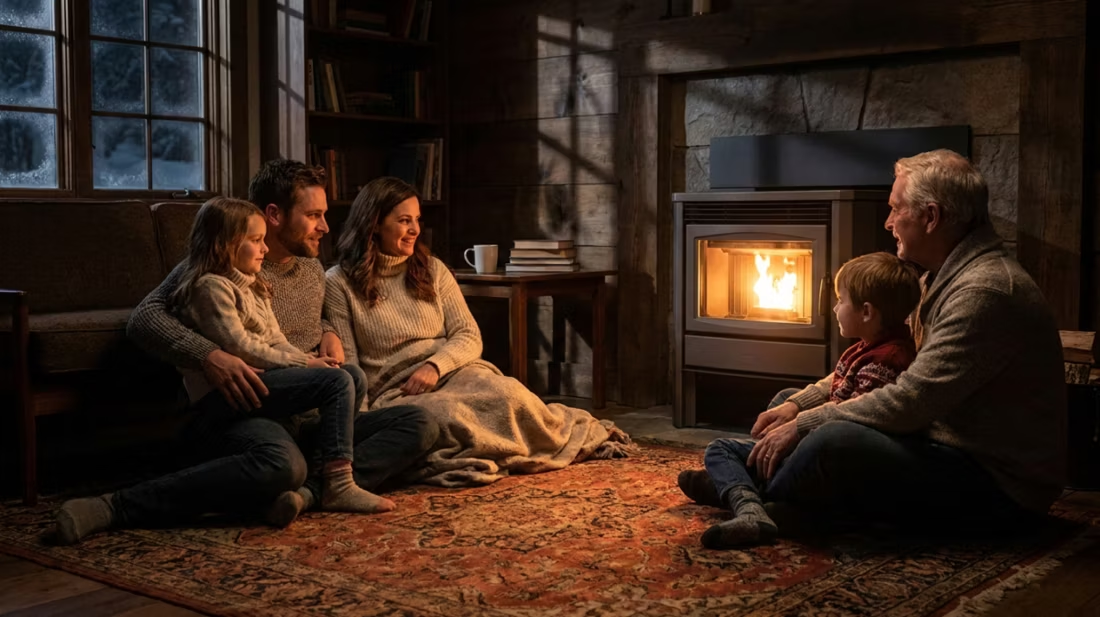
Reliable warmth without the wood-splitting.
Montcalm County sits in Michigan's Climate Zone 5A, where winter lows average 13 degrees and the heating season runs up around 7,060 degree days a year—a workload similar to what homes in Madison, Wisconsin deal with every winter. That's a long stretch of cold for a mostly rural, agricultural county built around towns like Stanton, Greenville, Howard City, Lakeview, Carson City, Sheridan, and Edmore. Plenty of those homes already burn wood—the county's abundant oak, maple, birch, and ash make good firewood—but not every household wants to split, stack, and haul cordwood every year. That's where pellet heat fits in.
A pellet stove or insert gives you set-and-forget heat: load the hopper, set the thermostat, and let the auger do the work—no splitting maul required. Montcalm County has no air quality non-attainment issues or winter burn curtailment periods, so pellet appliances run without the restrictions some other counties place on solid-fuel heating during inversion events. Hardwood pellets are also produced regionally by companies like Indeck Energy Services, Lignetics, and Somerset Pellet Fuel, which keeps supply local and shipping distances short compared to trucking pellets in from out of state. For homeowners who also want a backup or supplemental wood-burning option, cutting permits through the Huron-Manistee National Forests run $10 to $20 per cord during the May-to-October season.
Three steps. No salesperson until you're ready.
Tell us about your project
Your zip code, your situation, and the fuel you're leaning toward—or let the answers point you to one.
See what's actually available
The brands dealers within 100 miles genuinely carry—real options, never a catalog mirage.
Get your dealer & Project Guide
A trusted local dealer, plus the free Project Guide & Parts List that names every component of the job.
Frequently Asked Questions
How much does a pellet stove installation cost in Montcalm County?
Most pellet stove and insert installations in Montcalm County land somewhere between $3,000 and $6,500, depending on the unit, whether it's a freestanding stove or an insert going into an existing fireplace, and how much venting work is required. A pellet insert going into a masonry fireplace that already has a usable chimney liner tends to run toward the lower end. A freestanding stove in a new location—with fresh through-wall venting and an electrical outlet run to the hearth—sits closer to the higher end. Local dealers will give you a firm number after seeing your home, but this range holds for most of the county, from Stanton to the smaller townships surrounding it.
What size pellet stove do I need for my Montcalm County home?
Sizing depends on square footage, ceiling height, insulation, and whether the stove is your primary heat source or a supplement to a furnace. Given Montcalm County's roughly 7,000 heating degree days, err on the side of a stove rated for your full square footage rather than undersizing—a stove that's working hard every night in January wears out faster and burns through pellets quicker. Small stoves (up to 1,200 sq ft) suit a single room or manufactured home; medium stoves (1,200–2,000 sq ft) handle most main living areas in the county's older farmhouses; large stoves (2,000+ sq ft) can carry a well-insulated whole home through a 13-degree overnight low. A local dealer will size your space for free during an in-home visit.
Where can I find certified pellet stove installers near me?
Look for installers with NFI (National Fireplace Institute) pellet-specialist certification—it signals training specific to hopper systems, auger mechanisms, and the venting requirements pellet appliances use, which differ from wood stove venting. Retailers serving Montcalm County generally cover the whole county, from Greenville and Howard City out to the smaller crossroads towns, though expect a modest travel charge for installs in the more remote townships. Having the selling dealer handle the install keeps warranty coverage intact and simplifies any future service calls on the auger motor or igniter.
What's the difference between a pellet stove and a pellet insert?
A pellet stove is a freestanding appliance that sits on its own hearth pad and vents through a wall or existing chimney—it can go almost anywhere in a home with the right clearances. A pellet insert is built to slide into an existing masonry fireplace opening, turning an old, inefficient fireplace into a controlled, thermostat-driven heat source while reusing the chimney chase you already have. For Montcalm County's older farmhouses and ranch homes with an existing fireplace, an insert is usually the more cost-effective route. Homes without an existing fireplace opening are better suited to a freestanding stove.
Do I need a permit to install a pellet stove in Montcalm County?
Yes—a building permit is typically required for a new pellet stove or insert installation, issued through your local township or the county building department depending on where you live. Most dealers handle this paperwork as part of the installation, so it's rarely something you have to manage yourself. Because Montcalm County has no air quality non-attainment designation and no winter burn curtailment periods, there's no additional environmental permitting layer to worry about beyond the standard building permit and electrical inspection for the unit's power connection.
What's the best pellet stove for a Montcalm County winter?
Look for a stove with a large hopper capacity—models that hold 40 to 60 pounds of pellets can run 24 to 36 hours unattended, which matters when overnight lows drop into the single digits and you don't want to be refilling the hopper at 2 a.m. Auto-ignition (rather than a manual light) also matters for convenience during a county-wide cold snap when you're running the stove daily for months. Ask your local dealer about thermostat integration too—a stove that modulates output based on room temperature burns pellets more efficiently across a long Michigan heating season than one that runs at a fixed setting.
Where can I buy pellet fuel in Montcalm County?
Regional producers including Indeck Energy Services, Lignetics, and Somerset Pellet Fuel supply hardwood and blended pellets to dealers and hardware stores throughout west-central Michigan, so Montcalm County residents aren't relying on pellets shipped in from far away. Pricing generally lands in the mid-$200s to low-$300s per ton depending on the brand and softwood-versus-hardwood blend; a typical home burning a stove through the full heating season uses two to three tons. Buying a full season's supply in late summer, before demand and pricing climb in fall, is the standard local strategy.
How often does a pellet stove need to be serviced?
Plan on a full cleaning and inspection once a year, ideally at the end of burning season or right before it starts back up in fall. That includes cleaning the burn pot, vacuuming the exhaust venting, checking the auger for wear, and inspecting the gaskets and igniter. Heavy users running the stove as a primary heat source through Montcalm County's long winter should also vacuum the ash pan and hopper area every one to two weeks during peak use. Skipping this maintenance is the most common cause of poor burns, clinker buildup, and premature auger motor failure.
Pellet stove vs. wood stove—which is right for my Montcalm County home?
Wood stoves work without electricity, which matters during winter storms when outages happen, and pair well with the oak, maple, birch, and ash that grow throughout the county—plus Huron-Manistee National Forests cutting permits at $10 to $20 per cord if you're willing to cut your own. Pellet stoves need electricity to run the auger and blower, so they're not a backup option during an outage, but they're far more convenient day to day: load the hopper, set the thermostat, and walk away for a day or more without tending a fire. For Montcalm County homes with reliable power and a preference for hands-off heat, pellet usually wins. For rural properties where storm-related outages are a real concern, many households keep a wood stove as backup even if pellet is their daily driver.
Can a pellet stove heat a whole house?
It genuinely can. I burned a pellet stove as my only heat source for years after a furnace died, and it kept the entire house warm. Pellets feed automatically from a hopper, so you get wood-heat economics with thermostat-style control. Two honest caveats: it needs weekly cleaning during the season, and most models need electricity to run—ask about battery backup if outages are a concern.
Are pellet stoves loud?
They make some noise—there are two fans running plus an auger motor that turns as it feeds pellets. But there's a real range: premium models are engineered quiet, and the best offer a whisper-quiet mode you can comfortably watch TV next to. If noise matters in your room, ask to hear a stove running before you buy—it's a five-minute test that saves years of annoyance.
Can I install a fireplace myself?
If you're putting a fire in your house on purpose, it's best to work with an expert. Unless you're genuinely experienced in framing, gas line, vent pipe, and the national code on clearances to combustibles, have a professional do it—and ideally the same company that sells you the fireplace, so warranty, service, and liability all live under one roof.
Can a fireplace actually lower my heating bill?
Yes—by creating a comfort zone. A furnace heats every square foot of the house just to warm the one room you're in; a gas fireplace on low burns roughly a sixth of the gas a typical furnace does. Set the furnace around 55–60 degrees as a baseline, then heat the rooms your family actually uses. Families who heat this way commonly save $20–$60 a month.
Pellet Brands Stocked Around Montcalm County
Manufacturers will point you to the nearest stocking dealer.
Find your pellet stove in Montcalm County.
Tell us a bit about your home and we'll match you with a trusted local dealer and send you a free Project Guide & Parts List—a plan for your pellet project in Montcalm County with the exact parts, including the vent kit, and our recommended dealer.
Find Your Fireplace →