
Real Flame Look, No Chimney, in Monroe County.
From Monroe to Dundee, Milan, and the Lake Erie shoreline, electric fireplaces are an easy, code-simple way to add heat and ambiance without a gas line or masonry chimney. Find the right unit and connect with a trusted local dealer.
Every Project Starts From One of These Five Situations
The easiest fireplace to add to almost any room.
Monroe County sits along the western shore of Lake Erie between Detroit and Toledo, in climate zone 5A with a winter heating load comparable to places like Cleveland or Toledo and an average winter low near 18°F. It's a real Midwest winter—cold enough that most homes run a furnace from November through March—but not so extreme that supplemental heat sources need to carry the whole load. Traditional wood heat still has a following here, especially in the county's rural stretches around Ida, Petersburg, and Erie Township, where oak, maple, birch, and ash are the common firewood species. But in newer subdivisions, condo developments along the River Raisin and the Lake Erie shoreline, and rental properties throughout Monroe, Dundee, and Milan, electric fireplaces have become the practical default.
The appeal is straightforward: no chimney, no gas line, no combustion byproducts to vent, and no county mechanical permit hurdle for a plug-in unit. DTE Energy serves most of Monroe County's electric accounts, and running an electric fireplace costs only a few cents an hour at typical residential rates—cheap enough to run for ambiance on a mild evening or as zone heat in a converted sunroom or finished basement without touching the thermostat for the rest of the house. Electric isn't going to replace a furnace through a winter this long and cold, and it won't run during a power outage without a generator or battery backup—but for supplemental warmth, HOA-restricted condos, apartments, and rental units where a masonry chimney isn't an option, it's often the only realistic fit.
Three steps. No salesperson until you're ready.
Tell us about your project
Your zip code, your situation, and the fuel you're leaning toward—or let the answers point you to one.
See what's actually available
The brands dealers within 100 miles genuinely carry—real options, never a catalog mirage.
Get your dealer & Project Guide
A trusted local dealer, plus the free Project Guide & Parts List that names every component of the job.
Frequently Asked Questions
How much does an electric fireplace installation cost in Monroe County?
Costs vary widely because electric fireplaces span such a range of products. A plug-in freestanding or wall-mounted unit that just needs a standard outlet runs $300 to $900 installed—often a DIY job. A built-in electric insert or a linear wall unit wired to its own dedicated circuit typically costs $1,500 to $4,000 once an electrician runs new wiring and a finish carpenter builds out the surround. Full mantel packages with custom millwork can push toward $5,000. Because most electric units don't need venting or gas lines, labor costs stay well below what a wood or gas installation runs in Monroe County.
Do I need a permit to install an electric fireplace in Monroe County?
In most cases, no—a plug-in electric fireplace that uses an existing outlet doesn't trigger a building or mechanical permit. If you're having a built-in unit hardwired on a new dedicated circuit, the electrical work itself typically requires a permit through your local municipality's building department, since Monroe, Dundee, Milan, and the county's townships each handle their own permitting for incorporated and unincorporated areas. A licensed electrician pulling the permit as part of the job is standard practice and worth insisting on, since it protects you if you ever sell the house.
Can an electric fireplace actually heat a room in a Michigan winter?
It depends on the room and your expectations. Most electric fireplaces put out 4,000 to 5,000 BTUs—enough to noticeably warm a bedroom, home office, or finished basement room in the 200 to 400 square foot range, especially with the furnace holding the rest of the house at a base temperature. With Monroe County's long, cold winter season and winter lows near 18°F, an electric unit isn't sized to replace your furnace on a January night—it's a supplemental or zone-heat tool, and a very effective one for a single room you spend a lot of time in.
Will my electric fireplace work during a power outage?
No—this is the one real tradeoff compared to a wood stove. Electric fireplaces require power to run both the heater and the flame-effect display, so during an outage they shut off completely, unlike a wood-burning unit that keeps producing heat regardless of the grid. If you're in a part of Monroe County that sees outages during winter storms off Lake Erie, it's worth having a backup heat source—even a small propane or wood option—if you're relying on electric as anything more than supplemental heat.
What's the difference between a plug-in electric fireplace and a built-in insert?
A plug-in unit is a freestanding or wall-mounted fireplace that runs off a standard 120-volt outlet—no electrician needed, and it can be moved if you rearrange a room or move house entirely. A built-in insert is designed to be recessed into a wall, an existing masonry fireplace opening, or custom cabinetry, and it's usually wired to a dedicated circuit for a cleaner look and sometimes a stronger heater. For Monroe County homeowners converting an old wood-burning fireplace they no longer want to maintain, an electric insert is a popular retrofit—it drops into the existing firebox and eliminates chimney upkeep entirely.
Are electric fireplaces a good fit for condos and rental properties in Monroe County?
Yes—this is where electric often makes the most sense. Condo associations and rental properties along the Lake Erie shoreline and in Monroe's newer developments frequently restrict or prohibit wood-burning and even gas appliances due to venting requirements and insurance considerations. Electric fireplaces sidestep all of that: no chimney, no exterior venting, no open flame, and in many cases no permit at all for a plug-in model. That makes them one of the few fireplace options a renter or condo owner can realistically install without a management approval process.
What does it cost to run an electric fireplace with DTE Energy rates?
At typical DTE Energy residential rates, a 1,500-watt electric fireplace running on its heater setting costs somewhere around 15 to 25 cents per hour, depending on your specific rate plan and time of use. Running it a few hours a night for supplemental heat or ambiance in a bedroom or living room adds up to a modest monthly cost—usually far less than what an equivalent amount of furnace runtime would cost across the whole house. Running the flame effect alone, without heat, costs only a fraction of that.
How much maintenance does an electric fireplace need?
Very little compared to wood or gas. There's no chimney to sweep, no gas line to inspect, and no combustion byproducts to worry about. Maintenance is mostly dusting the unit, occasionally replacing an LED bulb in the flame-effect display, and checking that the heating element and fan are free of dust buildup. Most manufacturers rate the flame-effect LEDs for years of continuous use, so beyond basic cleaning, electric fireplaces in Monroe County homes typically run for a decade or more without a service call.
Electric vs. gas vs. wood—which fireplace is right for my Monroe County home?
Wood offers the highest heat output and works during power outages, and it's still common in the county's rural areas where oak, maple, birch, and ash firewood are readily available—but it means chimney maintenance and permitting. Gas delivers strong, consistent heat with the flip of a switch, but it requires a gas line and venting work. Electric is the simplest and cheapest to install, works anywhere there's an outlet, and produces zero emissions—but it's supplemental heat only, sized around a few thousand BTUs, and it won't help you during an outage. For a primary living space that needs real heat, gas or wood usually wins in Monroe County's climate; for a bedroom, basement, condo, or rental where ambiance and easy installation matter more, electric is often the better fit.
Can I put a TV above my fireplace?
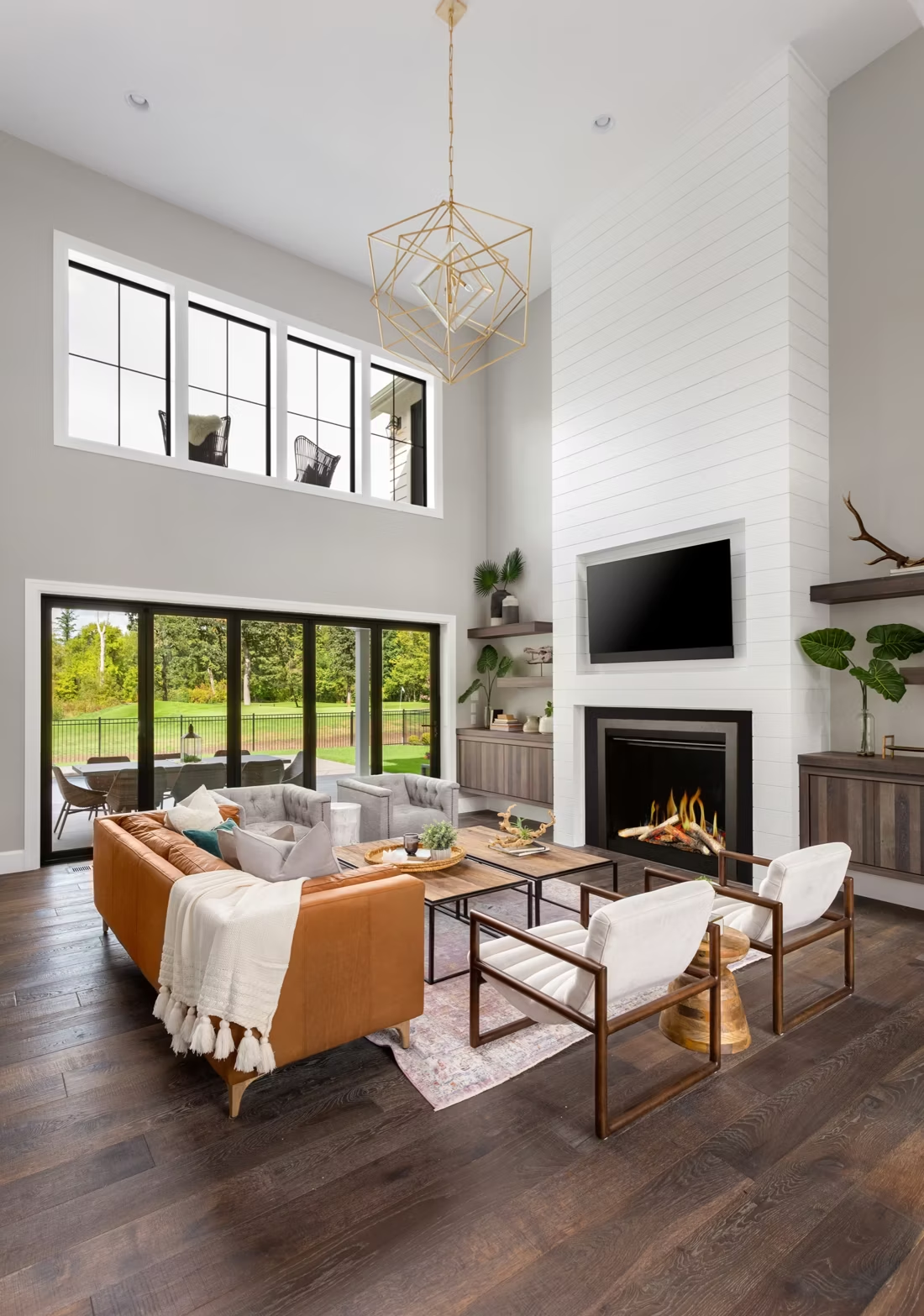
Yes—with an asterisk. Fireplaces are hot and TVs don't like heat. Either put a mantel between them to deflect rising warmth, or choose a fireplace with heat-management technology that creates a cool zone on the wall above—the wall stays around 125 degrees, barely warm, while the room still gets full heat. If you like clean lines and don't want a mantel, heat management is the answer.
Does an electric fireplace need a vent or chimney?
No—that's its superpower. An electric fireplace needs a wall and an outlet, period. No vent pipe, no gas line, no clearances to design around, which is why it works in bedrooms, offices, apartments, and walls where venting a gas or wood unit would be impractical or impossible. Installation is typically the simplest and least expensive of any fireplace type.
How much should I budget for a fireplace?
For an average home—covering the fireplace, the vent pipe, and basic installation—a budget between $3,900 and $5,500 gives you a lot of options across wood, gas, and pellet. By the time you add finish work, gas line, and electrical, the average complete installation lands between $5,000 and $12,000 all-in. In a remodel or new build, a good rule is to put about 2.5% of the total project cost toward the fireplace.
Does a fireplace add value to my home?
On average, a fireplace adds back to the home about the same amount you spent installing it. Add the monthly savings from heating the rooms you actually use instead of the whole house—often hundreds of dollars a year—and the value case is strong before you even count what a fire does for how your family uses the room.
Find your electric fireplace in Monroe County.
Tell us about your home and we'll match you with the right electric fireplace or insert, plus a free Project Guide & Parts List with the exact parts and a recommended local Monroe County dealer.
Find Your Fireplace →