
Find your fireplace fit for Monroe County, Michigan.
Wood, gas, pellet, and electric fireplace resources for every city and township in Monroe County—from Monroe and Dundee to the Lake Erie shoreline towns of Luna Pier and Erie. Connect with a trusted local hearth retailer and get a real installation plan, not a big-box guess.
Every Project Starts From One of These Five Situations
Lake-effect winters across Monroe County, Michigan.
Monroe County sits on the flat glacial lake plain along Lake Erie, wedged between metro Detroit and Toledo, Ohio. Winters aren't Upper Peninsula brutal, but they're solid heating-season winters—average lows near 18°F, roughly 6,240 heating degree days a year, putting Monroe in the same heating-load territory as Buffalo, NY. Lake Erie's moisture keeps winters damp and gray more than bitterly cold, but the heating season still runs a full six months. Local woodlots and farm hedgerows have long supplied oak, maple, birch, and ash for wood stoves and fireplaces—hardwoods that season well and burn hot, a tradition that's stayed strong even as natural gas service has expanded through DTE Energy's lines across most of the county.
This hub rolls up every hearth resource in Monroe County—retailers, chimney sweeps and gas techs, pellet and firewood suppliers—serving communities from the city of Monroe out to Dundee, Ida, Carleton, Petersburg, Temperance, and the Lake Erie towns of Luna Pier and Erie. Pick a fuel below to see local dealers, real installation costs, and the specific units that make sense for a Monroe County home, whether that's a farmhouse near Ida or a lakefront cottage in Erie Township.
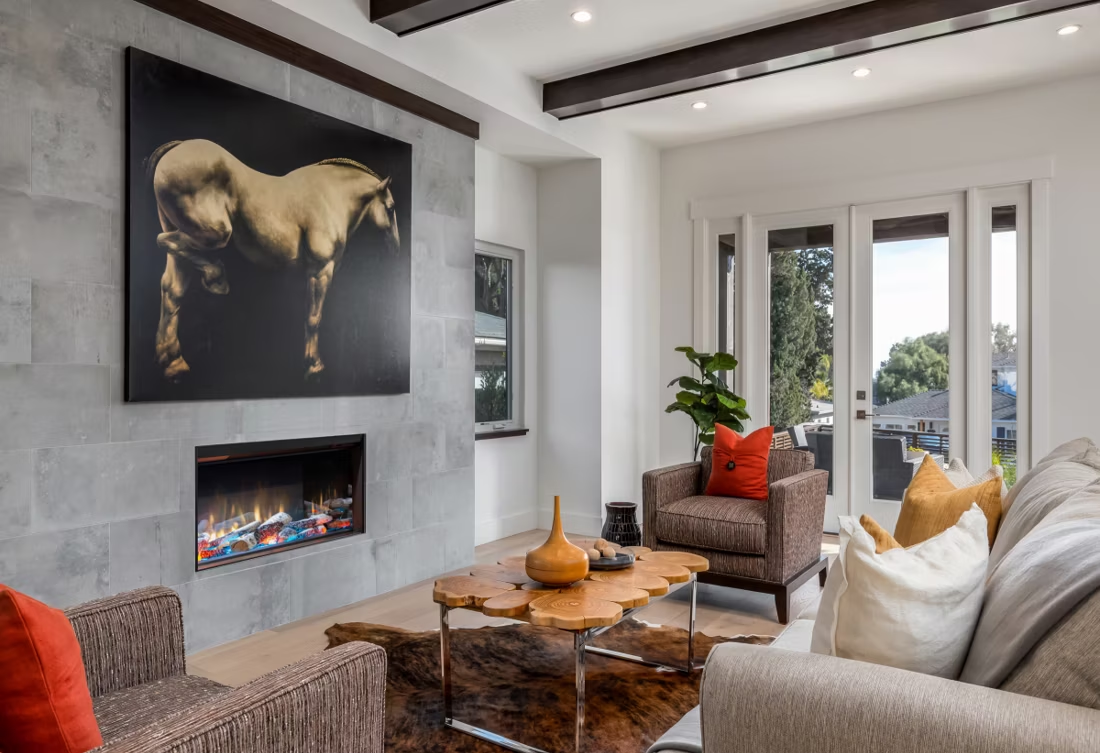
Four fuels. One honest answer for Monroe County.
Three steps. No salesperson until you're ready.
Tell us about your project
Your zip code, your situation, and the fuel you're leaning toward—or let the answers point you to one.
See what's actually available
The brands dealers within 100 miles genuinely carry—real options, never a catalog mirage.
Get your dealer & Project Guide
A trusted local dealer, plus the free Project Guide & Parts List that names every component of the job.
Frequently Asked Questions
Which fuel works best in Monroe County?
It depends on the home and how you want to live with it. Wood remains a strong option in Monroe County's rural townships—oak, maple, birch, and ash from local woodlots season well and burn hot, and a catalytic or EPA-certified stove can carry a farmhouse through a January cold snap without running up a gas bill. Gas is the practical choice where DTE Energy's natural gas lines already run, which covers most of the city of Monroe and the more built-up townships like Frenchtown and Bedford—instant heat, no wood handling, easy to zone to one room. Pellet splits the difference: less labor than wood, and regional suppliers like Indeck Energy Services, Lignetics, and Somerset Pellet Fuel keep bagged fuel available through the county's six-month heating season. Electric works well as a supplemental unit—a bedroom, a sunroom, a finished basement—but on its own it won't carry the load through a Monroe County winter with roughly 6,240 heating degree days. Most homes here end up running two fuels: gas or wood as the primary heater, electric or pellet filling in a secondary space.
Do I need a permit to install a fireplace in Monroe County?
In most cases, yes. New wood stoves, wood inserts, gas fireplaces, gas inserts, gas stoves, and pellet stoves generally require a building permit, and any new gas line work needs a separate permit pulled by a licensed gas fitter. Michigan's building code also requires new wood-burning appliances to be EPA-certified—that's a standard national requirement, not a Monroe County-specific restriction, since the county doesn't carry the nonattainment status or inversion issues that trigger stricter local burn rules in some western states. Permits for the city of Monroe go through the city, while unincorporated areas and townships like Ida, Bedford, and Frenchtown route through their own township or the Monroe County Building Department. Most hearth retailers pull the permit as part of the installation quote, so you're rarely handling that paperwork yourself.
Are there air quality restrictions on wood burning in Monroe County?
No—Monroe County doesn't carry the winter inversion or wildfire-smoke issues that drive burn curtailment programs in places like the Klamath Basin or the Willamette Valley. There's no nonattainment designation tied to residential wood smoke here, and no voluntary or mandatory no-burn day advisories tied to the county itself. That said, new wood-burning installations still need to meet EPA-certified emissions standards as part of the building permit—that's about appliance efficiency and creosote buildup, not regional air quality enforcement. If you're near Detroit or Toledo's urban edges, some local nuisance ordinances address excessive smoke between neighbors, but that's a property-line issue, not a county-wide burn restriction.
Can one local hearth retailer handle all four fuel types?
Many can, though coverage varies by dealer. Retailers serving Monroe County commonly pair wood, gas, and pellet under one roof since installation crews and permitting overlap; electric units are often carried as a simpler, lower-labor add-on rather than a specialty line. If you're cross-shopping fuels—say, deciding between a wood insert and a gas insert for the same fireplace opening—look for a dealer with working display units of each type running in the showroom. Seeing actual flame height, glass temperature, and sound level side by side tells you more in five minutes than a spec sheet will.
How does service work in the rural parts of Monroe County?
Most chimney sweeps and gas techs serving Monroe County are based near the city of Monroe or the Bedford/Temperance corridor and drive out to the rest of the county—west to Dundee and Ida, south along the Ohio line, and out to the Lake Erie shoreline communities of Luna Pier and Erie. Expect a modest trip fee for the farther townships, and know that pre-season scheduling (September–October) books up faster than mid-winter emergency calls, especially once the first real cold snap hits and gas igniters start failing. If you're in one of the more remote farm townships, it's worth scheduling your annual wood chimney sweep or gas inspection early rather than waiting for a no-heat call in January.
What's the typical cost range for fireplace installation across all fuel types in Monroe County?
Costs vary by fuel and how much venting or gas line work is involved. Wood stove or insert installation: roughly $4,000–$8,500 for a typical retrofit, more for new construction requiring a full chimney chase. Gas fireplace, insert, or stove: roughly $4,000–$10,000, with cost driven mostly by how far the gas line has to run and whether direct-vent piping needs to go through an exterior wall or up through the roof. Pellet stove or insert: roughly $4,000–$7,000 installed. Electric fireplace: $200–$3,000 for the unit itself, with $300–$1,000 in labor unless it's a plug-and-play model, which covers most wall-mount and freestanding installs. See the county + fuel pages above for retailer-specific pricing.
Does a fireplace add value to my home?
On average, a fireplace adds back to the home about the same amount you spent installing it. Add the monthly savings from heating the rooms you actually use instead of the whole house—often hundreds of dollars a year—and the value case is strong before you even count what a fire does for how your family uses the room.
How much should I budget for a fireplace?
For an average home—covering the fireplace, the vent pipe, and basic installation—a budget between $3,900 and $5,500 gives you a lot of options across wood, gas, and pellet. By the time you add finish work, gas line, and electrical, the average complete installation lands between $5,000 and $12,000 all-in. In a remodel or new build, a good rule is to put about 2.5% of the total project cost toward the fireplace.
What is an in-home preview and do I need one?
It's a visit where a hearth professional measures your space, confirms the model you picked actually works in your home, and walks the specs—framing, gas line, venting, finish work—before anything is ordered. Some details you just can't know until you see the house. Never make a down payment without one; it's the single most-skipped step that burns buyers.
Wood, gas, pellet, or electric—how do I choose?
Match the fuel to your life, not the other way around. Wood: lowest fuel cost and total power-outage independence, but you're hauling and stacking. Gas: press a button, set a thermostat, no maintenance to speak of. Pellet: wood economics with automatic feeding, in exchange for weekly cleaning and a need for electricity. Electric: plugs in anywhere with honest supplemental heat. Nobody regrets the fuel that fits how they actually live.
Stove and Fireplace Dealers in Monroe County
Listings include WhyFire partner dealers, dealers we have verified as authorized for the brands we recommend, and established local businesses that carry hearth products. Every listing shows which one it is. The ones marked Preferred run on WhyFire's software, so they can show you real pricing and book your appointment right here. No manufacturer pays for placement. How we verify dealers →
Fireside Hearth And Home A Div Of Overhead
Reliance Propane & Fuel Oil
Country Hearth Center
Myers Fireplace & Patio
Quality Overhead Door
Get matched with a Monroe County hearth dealer.
Pick your fuel below and we'll match you with a trusted local retailer, then send a free Project Guide & Parts List—the exact parts, vent kit included, and the dealer we recommend for your Monroe County home.
Find Your Fireplace →