
Find your pellet stove in Mecosta County, MI.
Steady, thermostat-controlled heat for the long, cold winters of Big Rapids, Morley, Chippewa Lake, and the rest of Mecosta County. Find the right stove or insert, and connect with a trusted local dealer.
Every Project Starts From One of These Five Situations
Consistent heat for a county built around long winters.
Mecosta County sits in west-central Michigan, in climate zone 6A, where winter lows average 13°F and the county faces a long, demanding heating season—a load closer to Burlington, Vermont than to most of the Lower Peninsula. Snow cover typically holds from December through March, and homes around Big Rapids, Morley, Remus, and the lakes near Chippewa Lake and Mecosta lean on secondary or primary heat sources that don't quit when a January cold snap settles in.
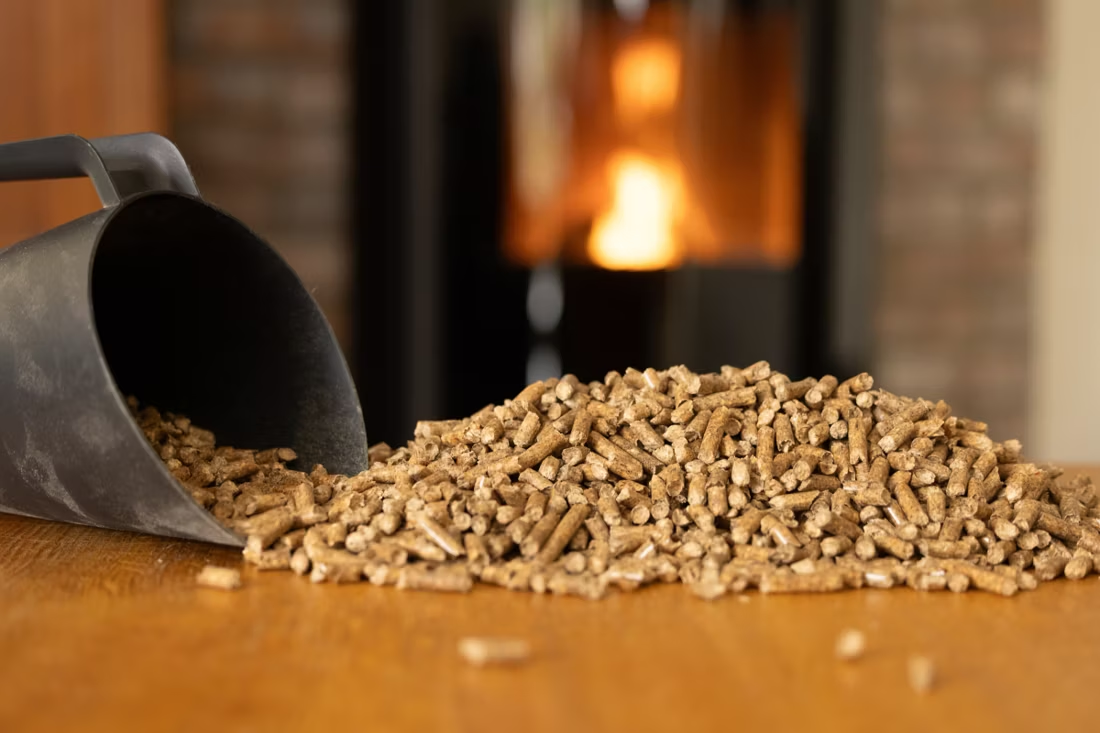
Pellet stoves fit that need well: load the hopper, set the thermostat, and get consistent output for 24-plus hours without tending a fire by hand. Regional pellet supply is solid here—Indeck Energy Services, Lignetics, and Somerset Pellet Fuel all distribute into the area, so fuel isn't something you have to drive far or stockpile a season in advance to secure. For county residents who also cut their own firewood—oak, maple, birch, and ash are the common local species, with permits available through the Huron-Manistee National Forests during the May-to-October cutting season—a pellet stove often serves as the low-maintenance backup or secondary heat source paired with a wood-burning primary unit.
Three steps. No salesperson until you're ready.
Tell us about your project
Your zip code, your situation, and the fuel you're leaning toward—or let the answers point you to one.
See what's actually available
The brands dealers within 100 miles genuinely carry—real options, never a catalog mirage.
Get your dealer & Project Guide
A trusted local dealer, plus the free Project Guide & Parts List that names every component of the job.
Frequently Asked Questions
How much does a pellet stove installation cost in Mecosta County?
Most pellet stove installations run in the neighborhood of $3,000 to $6,500 in Mecosta County, depending on the unit, whether you need a new hearth pad, and the venting path. Pellet stoves vent through a smaller-diameter pipe than wood stoves—through-wall PL venting is common and less expensive than a full masonry chimney build. Homes converting an old wood stove setup to pellet, reusing existing clearances and floor protection, land on the lower end; new installations in a room without any existing hearth infrastructure run higher. A local dealer will give you a firm number after seeing your space.
What size pellet stove do I need for my home?
Sizing depends on square footage, insulation, and whether the stove is your primary or supplemental heat source. With Mecosta County facing a long, demanding heating season and winter lows averaging 13°F, most homeowners here size toward the larger end of a manufacturer's range rather than the smaller end—a stove rated for 1,500 sq ft in a mild climate may only comfortably cover 1,000-1,200 sq ft in this climate. Older farmhouses around Morley and Remus with less insulation typically need more output than a newer, tightly built home of the same size. A local dealer can walk your space and size it correctly—undersizing is the most common mistake homeowners make when buying based on square footage alone.
Where do I buy pellets, and how much should I store?
Regional brands including Indeck Energy Services, Lignetics, and Somerset Pellet Fuel supply the west Michigan market, and hardware and farm supply stores around Big Rapids stock bagged pellets by the ton through heating season. Given Mecosta County's cold, long winters, plan on 2 to 3 tons of pellets for a stove used as primary heat in an average-size home, and 1 to 1.5 tons for supplemental use. Pellets need dry, covered storage—a garage or shed works, but keep bags off a damp concrete floor. Buying early in the fall, before the season's cold snaps drive up local demand, is the easiest way to avoid running low in February.
Pellet stove vs. wood stove—which is right for my home?
Wood stoves burn cordwood, work without electricity (a real advantage during Mecosta County's winter power outages), and pair well with self-cut oak, maple, birch, and ash from local land or Huron-Manistee National Forest permits. Pellet stoves are easier to run day to day—load the hopper, set the thermostat, less ash, more consistent output—but they need electricity to run the auger and combustion blower, so they stop working in an outage unless you add a battery backup. For county homeowners who already lose power during ice storms and want a fuel source that keeps running through it, wood is usually the safer bet. For homeowners who want convenience and consistent, low-maintenance heat and have reliable power, pellet is the better fit. Some households run both—pellet for daily convenience, wood as the outage backup.
Do I need a permit to install a pellet stove in Mecosta County?
Yes—pellet stove installations require a building permit in Mecosta County, and the unit needs to meet current EPA emissions standards. Because pellet stoves use direct-vent PL pipe rather than a full masonry chimney, the permit and inspection process is typically simpler and faster than a wood stove or fireplace install. Most local dealers handle the permitting as part of the installation, so it's rarely something homeowners have to manage on their own. Unlike some parts of Michigan with air quality non-attainment concerns, Mecosta County has no specific wood or pellet smoke curtailment periods, which simplifies year-round operation.
What's the best pellet stove for Mecosta County's climate?
With winter lows averaging 13°F and a heating season that runs from October through April, look for a pellet stove rated for continuous, cold-climate operation rather than an entry-level model built for mild-winter markets. A larger hopper capacity (40 lbs or more) reduces how often you need to reload during the coldest stretches, and a reliable auger feed system matters more here than in warmer states, since the unit runs longer and harder over the season. Local dealers carrying brands stocked through regional distributors like Indeck Energy Services and Lignetics can match hopper size and BTU output to your square footage and insulation level.
How often does a pellet stove need maintenance?
Pellet stoves need more frequent attention than a once-a-year wood chimney sweep, but each task is quicker. Plan on cleaning the burn pot and ash drawer every few days during heavy winter use, a full interior cleaning (heat exchanger tubes, hopper, auger) every 4-6 weeks of the season, and a professional annual service before each heating season starts—typically September, ahead of Mecosta County's first cold snap. Skipping the annual service is the most common cause of auger jams and feed problems mid-winter, right when you need the stove most.
What's the difference between a pellet stove and a pellet insert?
A pellet stove is a freestanding unit that sits on a hearth pad and vents through a wall or existing chimney chase—it can go almost anywhere in a room with proper clearances. A pellet insert is built to slide into an existing masonry fireplace opening, converting an old wood-burning fireplace into pellet heat while using the existing chimney chase for venting with a proper liner. For Mecosta County homes with an existing fireplace that's rarely used because it doesn't put out real heat, an insert is often the better upgrade. Homes without an existing fireplace opening are better suited to a freestanding stove.
Does a pellet stove need a dedicated electrical outlet, and what happens during a power outage?
Yes—pellet stoves need a standard 120V outlet to run the auger, igniter, and combustion blower, and most installations include running a new outlet near the stove if one isn't already there. Because Mecosta County sees winter ice storms and downed lines like much of rural Michigan, a battery backup or small inverter generator is worth budgeting for if you're relying on the pellet stove as your primary heat source—without power, the auger stops feeding and the fire goes out. Some homeowners pair a pellet stove for daily convenience with a wood stove or fireplace as the no-power backup, which covers both scenarios.
How often does a pellet stove need cleaning?
A clean pellet stove is a happy pellet stove. Plan on cleaning the burn pot about once a week when you're burning regularly—ash and clinkers gum up the air holes just like a pellet barbecue. Most pellet stove problems trace back to skipped cleaning that nobody explained up front. Some designs make it easy with a trapdoor burn pot: pull a lever and the gunk drops into the ash pan.
Why is a fireplace insert so efficient?
An insert does two things: it seals the chimney completely, so you stop losing air you already paid to heat, and it radiates warmth into the room through the firebox and glass. Most add a heat-exchange fan that pulls cool room air underneath, wraps it around the hot firebox, and pushes it back out warm. Your home is more efficient before you've even lit the first fire.
How much should I budget for a fireplace?
For an average home—covering the fireplace, the vent pipe, and basic installation—a budget between $3,900 and $5,500 gives you a lot of options across wood, gas, and pellet. By the time you add finish work, gas line, and electrical, the average complete installation lands between $5,000 and $12,000 all-in. In a remodel or new build, a good rule is to put about 2.5% of the total project cost toward the fireplace.
Does a fireplace add value to my home?
On average, a fireplace adds back to the home about the same amount you spent installing it. Add the monthly savings from heating the rooms you actually use instead of the whole house—often hundreds of dollars a year—and the value case is strong before you even count what a fire does for how your family uses the room.
Stove and Fireplace Dealers in Mecosta County
Fullmer & Sons Heating, Cooling, And Fireplaces Inc.
Pellet Brands Stocked Around Mecosta County
Manufacturers will point you to the nearest stocking dealer.
Find your pellet stove in Mecosta County.
Tell us a bit about your home and we'll match you with a trusted local dealer and a free Project Guide & Parts List—the exact parts, vent kit, and recommended dealer for your pellet project in Mecosta County.
Find Your Fireplace →