
Add heat and ambiance to a Mackinac County home without touching the chimney.
From St. Ignace to Curtis, Naubinway to the Les Cheneaux Islands—electric units offer supplemental warmth and easy installation for a county where winter runs long. Find the right unit and connect with a trusted local dealer.
Every Project Starts From One of These Five Situations
Supplemental heat that goes in almost anywhere.
Mackinac County sits at the top of Michigan's Lower Peninsula and the eastern edge of the Upper Peninsula, split by the Straits of Mackinac. With roughly 8,370 heating degree days and average winter lows around 11°F, this is a Zone 7 climate—closer in severity to International Falls or Duluth than most of the Midwest. Winter here runs from October into April, and many year-round residents rely on wood or propane as a primary heat source, with electric fireplaces filling a different role: zone heat for a den, a lakeside cottage bedroom, or a rental cabin around Curtis or Hessel that doesn't get daily use.
With a population under 3,200 spread across a large, lake-dotted county, a lot of Mackinac County's building stock is seasonal or part-time—cottages on the Les Cheneaux Islands, cabins near the Hiawatha National Forest boundary, hunting camps outside Naubinway. Electric fireplaces and inserts are popular in exactly those settings because there's no chimney, no venting, and no combustion to worry about when a place sits closed up for weeks at a time. Plug it in, and it's ready. For full-time homes, an electric insert into an old, drafty masonry fireplace can also cut down on heat loss up the flue while adding real, usable supplemental warmth to a room.
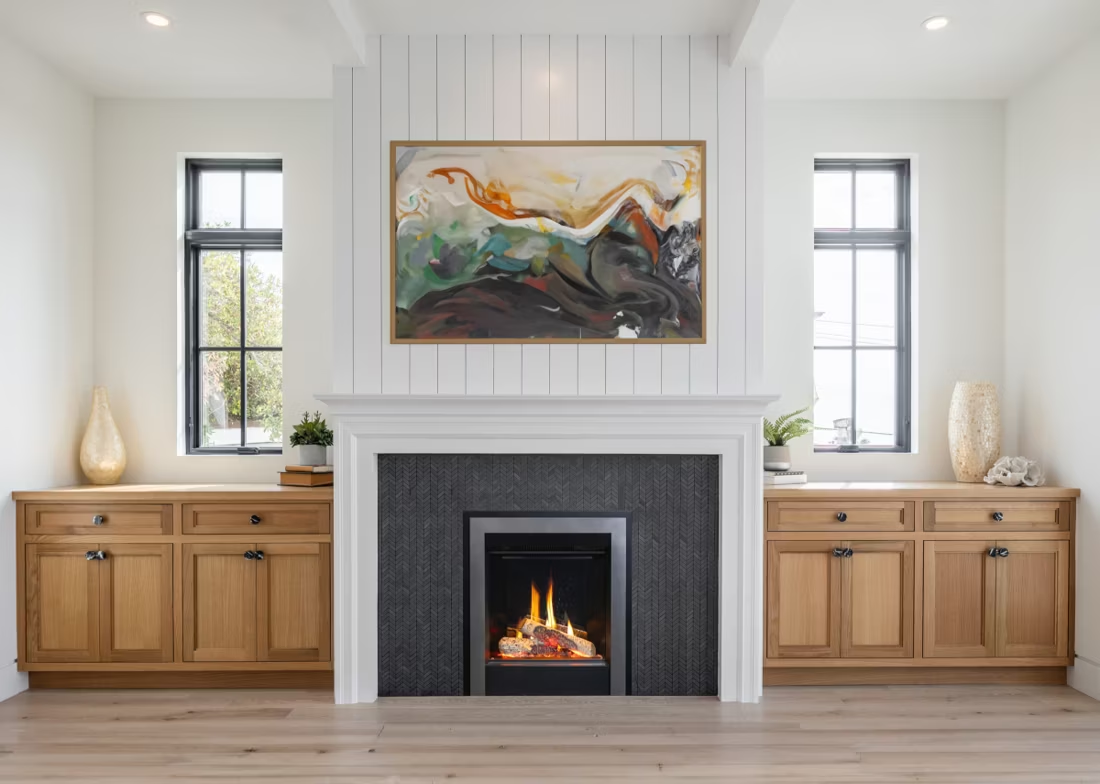
Three steps. No salesperson until you're ready.
Tell us about your project
Your zip code, your situation, and the fuel you're leaning toward—or let the answers point you to one.
See what's actually available
The brands dealers within 100 miles genuinely carry—real options, never a catalog mirage.
Get your dealer & Project Guide
A trusted local dealer, plus the free Project Guide & Parts List that names every component of the job.
Frequently Asked Questions
How much does an electric fireplace installation cost in Mackinac County?
Most electric fireplace and insert installations in Mackinac County run $400 to $1,200. A plug-in freestanding unit or a simple insert into an existing masonry opening is on the low end—often just the cost of the unit itself with minimal labor. Built-in electric fireplaces that require new framing, a dedicated electrical circuit, or wall finishing work (common in a St. Ignace remodel or a new build near Curtis) land at the higher end. Because there's no venting or gas line work involved, electric installs are consistently the least expensive fireplace option available to Mackinac County homeowners.
Will an electric fireplace actually heat a room in a Mackinac County winter?
It will heat a room, but it's not going to replace your furnace or wood stove on a January night when temperatures sit in the single digits. Most electric fireplaces put out around 5,000 BTUs—enough to noticeably warm a bedroom, den, or small living area, especially as supplemental heat alongside central heating or a wood stove. In a county averaging 8,370 heating degree days a year, electric units are best understood as zone heat: warming the room you're actually in rather than trying to heat an entire drafty farmhouse or lake cottage from one unit.
Do I need a permit to install an electric fireplace in Mackinac County?
Most plug-in electric fireplaces don't require a permit since there's no venting, gas line, or structural chimney work involved. If you're adding a built-in unit that requires new electrical wiring or a dedicated circuit—common for larger units in a remodel near St. Ignace or a new cottage build on the Les Cheneaux Islands—that electrical work typically needs to be done by a licensed electrician and may require a permit through the local building authority. A local dealer or electrician handling the install can tell you quickly whether your specific project crosses that line.
What's the difference between an electric fireplace, insert, and electric stove?
An electric fireplace is typically a wall-mounted or built-in unit designed to look like a traditional fireplace, often with a mantel surround. An electric insert is sized to slide into an existing masonry fireplace opening, converting an old wood-burning hearth into supplemental heat without any chimney work. An electric stove is a freestanding cabinet-style unit that mimics a wood or pellet stove's look and can sit almost anywhere near an outlet. For Mackinac County's older lake homes and cottages with existing masonry fireplaces that see little use, an insert is often the simplest upgrade—for camps and cabins without an existing hearth, a freestanding stove or wall-mount unit is more practical.
Can an electric fireplace run during a power outage in Mackinac County?
No—electric fireplaces require power to run their heating elements and flame effects, so they're not a backup heat source during an outage. This matters in Mackinac County, where winter storms off Lake Michigan and Lake Huron can knock out power for extended stretches in rural areas around Naubinway or the Hiawatha National Forest boundary. Most year-round residents here who rely on electric fireplaces for supplemental heat also keep a wood stove, propane heater, or generator as backup for when the grid goes down.
What size electric fireplace do I need for my Mackinac County home?
Sizing is driven more by the room and the look you want than by BTU output, since most electric fireplaces produce similar heat regardless of width. A 30 to 40 inch unit suits a bedroom or den in a typical St. Ignace or Curtis-area home; a 50 to 60 inch unit works better as a focal point in a larger open living space. If supplemental warmth is the priority in a full-time home, look for a model with a stated heating area in square feet and match it to the specific room you're heating rather than the whole house—a local dealer can walk through this during a quick consultation.
Are electric fireplaces a good fit for seasonal cottages in Mackinac County?
Yes, and it's one of the more common uses across the Les Cheneaux Islands, Hessel, and other seasonal communities in the county. Electric units don't require any combustion, venting, or chimney maintenance, which means there's nothing to inspect or winterize when a cottage sits closed for months. For owners who want ambiance and a bit of quick warmth on opening weekend without dealing with firewood storage or a chimney sweep, an electric insert or freestanding unit is a low-maintenance option that simply works when you flip the switch.
How does an electric insert compare to converting an old fireplace to gas or wood?
An electric insert is the simplest and least expensive conversion—no gas line, no chimney liner, no venting, just a unit that slides into the existing opening and plugs in. A gas conversion delivers more real heat and can double as a backup heat source with the right ignition system, but requires either natural gas or a propane tank and more installation work. A wood insert keeps the original heat character of an old masonry fireplace and works without electricity, which matters during outages, but requires an EPA-certified unit and ongoing firewood and chimney maintenance. For Mackinac County homeowners who want to preserve an old fireplace's look with minimal disruption, electric is the low-effort choice—for those who want real supplemental heat and outage resilience, wood or gas is usually the better long-term fit.
Electric vs. wood or pellet stove—which makes more sense for my Mackinac County home?
Wood and pellet stoves—burning local species like oak, maple, birch, and ash, or pellets from regional suppliers like Indeck Energy Services and Somerset Pellet Fuel—deliver real primary or supplemental heat output and, in wood's case, work without electricity during outages, which is a genuine consideration in a rural county prone to lake-effect storms. Electric fireplaces offer none of that heat capacity or outage backup, but they install in an afternoon, cost far less upfront, and need no fuel storage, ash removal, or chimney sweeping. For a full-time Mackinac County home in an 8,370 HDD climate, wood or pellet typically carries more of the heating load; electric works best as the easy, low-maintenance ambiance layer in a secondary room or seasonal cottage.
Can I put a TV above my fireplace?
Yes—with an asterisk. Fireplaces are hot and TVs don't like heat. Either put a mantel between them to deflect rising warmth, or choose a fireplace with heat-management technology that creates a cool zone on the wall above—the wall stays around 125 degrees, barely warm, while the room still gets full heat. If you like clean lines and don't want a mantel, heat management is the answer.
Do electric fireplaces actually produce heat?
Yes—most put out around 4,800–5,000 BTUs from a standard outlet, which comfortably warms a bedroom, office, or den as a comfort-zone heater. What they won't do is carry a whole house the way wood, gas, or pellet can. Think of electric as ambiance-first with honest supplemental heat: flames on with no heat in July, flames plus warmth in January.
Can a fireplace actually lower my heating bill?
Yes—by creating a comfort zone. A furnace heats every square foot of the house just to warm the one room you're in; a gas fireplace on low burns roughly a sixth of the gas a typical furnace does. Set the furnace around 55–60 degrees as a baseline, then heat the rooms your family actually uses. Families who heat this way commonly save $20–$60 a month.
Can I install a fireplace myself?
If you're putting a fire in your house on purpose, it's best to work with an expert. Unless you're genuinely experienced in framing, gas line, vent pipe, and the national code on clearances to combustibles, have a professional do it—and ideally the same company that sells you the fireplace, so warranty, service, and liability all live under one roof.
Find your electric fireplace in Mackinac County.
Tell us a bit about your home or cottage and we'll match you with the right electric fireplace or insert, plus a free Project Guide & Parts List with your recommended local dealer.
Find Your Fireplace →