
Heat engineered for the Straits of Mackinac's long, hard winters.
Wood, gas, pellet, and electric fireplace resources for every community in Mackinac County—from St. Ignace to Mackinac Island to Naubinway. Find the right unit for an 8,370-heating-degree-day winter and connect with a trusted local hearth dealer.
Every Project Starts From One of These Five Situations
Deep-freeze winters at the edge of the Upper Peninsula.
Mackinac County sits at the eastern tip of Michigan's Upper Peninsula, wrapped by Lake Huron, Lake Michigan, and the Straits of Mackinac. It's IECC climate zone 7—the same cold-climate tier as International Falls, Minnesota—with 8,370 heating degree days and an average winter low of 11°F. The heating season here typically runs from October through April, and the hardwood forests that cover the county—oak, maple, birch, and ash—have supplied firewood to Straits-area households for generations. With only about 3,144 year-round residents spread across a county larger than Rhode Island, most homes here are heated by whichever fuel is most reliable for their specific location, not whichever is most convenient.
This hub covers hearth retailers, service technicians, and fuel suppliers for every community in the county—St. Ignace, the county seat; Naubinway and Engadine along Lake Michigan; Hessel and Cedarville on Les Cheneaux; Moran and Trout Lake inland; and Mackinac Island, where no motor vehicles are allowed and heating fuel arrives by ferry in the open-water months and over the ice bridge or by snowmobile once the Straits freeze. Pick your fuel below to see local dealers, typical installation costs, and the resources specific to your project.
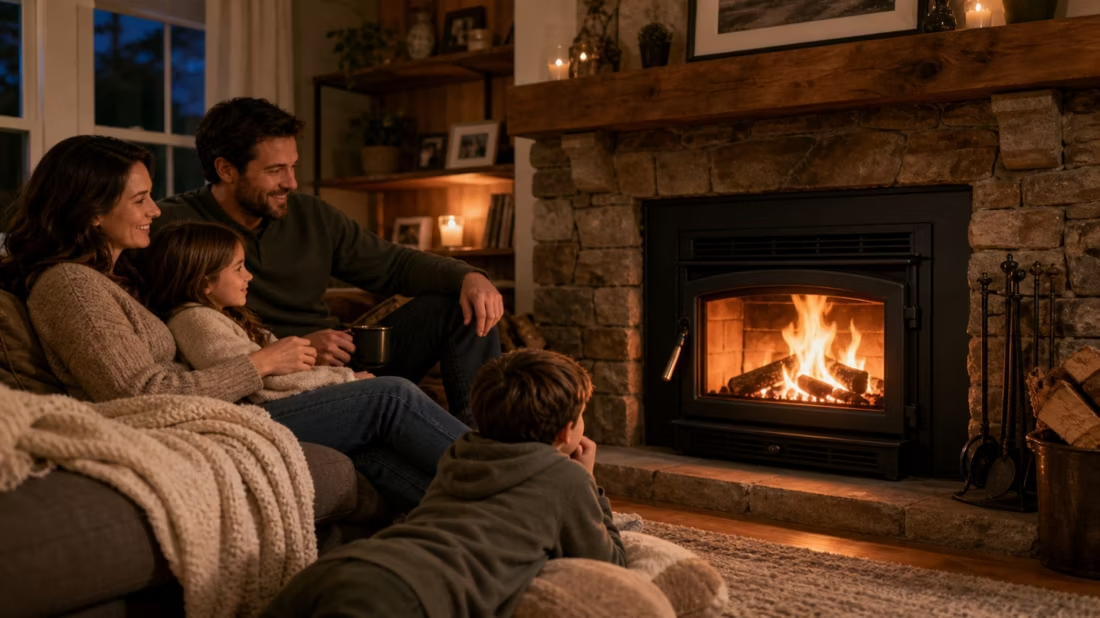
Four fuels. One honest answer for Mackinac County.
Three steps. No salesperson until you're ready.
Tell us about your project
Your zip code, your situation, and the fuel you're leaning toward—or let the answers point you to one.
See what's actually available
The brands dealers within 100 miles genuinely carry—real options, never a catalog mirage.
Get your dealer & Project Guide
A trusted local dealer, plus the free Project Guide & Parts List that names every component of the job.
Frequently Asked Questions
Which fuel works best for a Mackinac County home?
It depends on where you live and how often you lose power. Wood is the traditional backbone here—oak, maple, birch, and ash are all abundant in the county's hardwood stands, and a wood stove keeps working through the ice storms that periodically knock out power along the Straits. Propane is the practical choice for gas heat; piped natural gas is limited across most of the county, so gas fireplaces and inserts here typically run on a propane tank rather than a utility line. Pellet stoves are a solid middle option—Indeck Energy Services, Lignetics, and Somerset Pellet Fuel all supply the region, though anyone on Mackinac Island needs to plan pellet deliveries around the ferry schedule or the winter ice bridge. Electric fireplaces work well as supplemental heat in a bedroom or sunroom, but with an average winter low of 11°F and over 8,370 heating degree days, they're not a realistic primary heat source on their own.
Do I need a permit to install a wood stove or gas fireplace in Mackinac County?
Generally yes. Michigan's Uniform Construction Code requires a building permit for new wood stoves, wood inserts, gas appliances, and pellet stoves, and permits in Mackinac County are handled at the township or county level depending on where you live—St. Ignace, Moran Township, and the other jurisdictions each issue their own. Any new wood-burning appliance needs to meet current EPA 2020 NSPS emissions standards, and gas installations require a licensed propane technician to run and pressure-test the line since most of the county runs on tank propane rather than utility gas. Most local hearth dealers pull the permit as part of the installation, so you're not usually filing paperwork yourself.
Are there any wood-burning restrictions in Mackinac County?
No—unlike wood-heavy counties out West that deal with winter inversions and non-attainment status, Mackinac County has no air quality restrictions on wood burning. The Straits area gets enough wind off Lake Huron and Lake Michigan that smoke doesn't pool the way it can in a mountain basin. That said, an EPA-certified stove still burns oak, maple, or ash more efficiently and with less creosote buildup than an old pre-1988 stove, which matters when you're running a stove hard for six or seven months a year.
How does heating fuel get delivered to Mackinac Island?
Differently than anywhere else in the county. Mackinac Island bans motor vehicles year-round, so propane, firewood, and pellets arrive by ferry during the open-water season—roughly late April through December—and, once the Straits freeze solid enough, over the ice bridge or by snowmobile and sled. Island homeowners generally need to schedule bulk propane and firewood deliveries well ahead of the season, since a late order can end up waiting for the next ferry run or a safe ice crossing. If you're heating a home or cottage on the island, talk to your dealer early—August or September, not December—about pre-season delivery.
What's the typical installation cost range across fuel types in Mackinac County?
Ranges here run close to national averages, with a bit of added labor for rural travel. Wood stove or insert: roughly $4,500–$9,500 for a typical install, more if new masonry chimney work is needed. Gas fireplace, insert, or stove: $4,500–$10,500, with propane tank setup or line work adding to the low end. Pellet stove or insert: $4,500–$7,500. Electric fireplace: $200–$3,000 for the unit itself, plus $400–$1,200 in labor for anything beyond a plug-and-play install. Because the county's population is spread thin, expect a modest trip charge from dealers based in St. Ignace if you're out in Naubinway, Engadine, or the Les Cheneaux area.
How do I size a stove or fireplace for a Mackinac County winter?
Size for the cold snap, not the average day. At 11°F average winter lows and 8,370 heating degree days—a climate load closer to Duluth, Minnesota than to most of the Lower 48—an undersized stove will run flat-out and still lose ground on the coldest nights. A local dealer will size the unit to your home's square footage, insulation level, and layout rather than a rule of thumb, and for wood heat in this climate, a catalytic stove capable of a long, steady overnight burn is usually worth the extra upfront cost over a lower-end non-catalytic model.
What is an in-home preview and do I need one?
It's a visit where a hearth professional measures your space, confirms the model you picked actually works in your home, and walks the specs—framing, gas line, venting, finish work—before anything is ordered. Some details you just can't know until you see the house. Never make a down payment without one; it's the single most-skipped step that burns buyers.
Can I install a fireplace myself?
If you're putting a fire in your house on purpose, it's best to work with an expert. Unless you're genuinely experienced in framing, gas line, vent pipe, and the national code on clearances to combustibles, have a professional do it—and ideally the same company that sells you the fireplace, so warranty, service, and liability all live under one roof.
I know I want a fireplace—where do I actually start?
Do two things today: snap a photo of the wall or fireplace you want to transform, and take a tape measure to the space—width, height, depth. Those two artifacts answer most of a hearth professional's first questions. Then settle fuel (wood, gas, pellet, or electric) and set a realistic budget: $3,900–$5,500 covers fireplace, vent, and basic install for most homes.
Wood, gas, pellet, or electric—how do I choose?
Match the fuel to your life, not the other way around. Wood: lowest fuel cost and total power-outage independence, but you're hauling and stacking. Gas: press a button, set a thermostat, no maintenance to speak of. Pellet: wood economics with automatic feeding, in exchange for weekly cleaning and a need for electricity. Electric: plugs in anywhere with honest supplemental heat. Nobody regrets the fuel that fits how they actually live.
Stove and Fireplace Dealers in Mackinac County
Listings include WhyFire partner dealers, dealers we have verified as authorized for the brands we recommend, and established local businesses that carry hearth products. Every listing shows which one it is. The ones marked Preferred run on WhyFire's software, so they can show you real pricing and book your appointment right here. No manufacturer pays for placement. How we verify dealers →
Fireside Hearth & Leisure- Cheboygan
Great Lakes Services
H2Oasis Inc / Fireside Hearth & Leisure Of Petoskey
H20asis Inc
Find your fireplace in Mackinac County.
Pick your fuel below to get matched with a trusted local dealer and receive a free Project Guide & Parts List—sized for your home, your climate, and the fuel that actually gets delivered where you live.
Find Your Fireplace →