
Electric heat that keeps up with Livingston County's cold—without a chimney.
Zone heat for the long winters between Howell and Hartland—a heating season on par with Bozeman, MT and average lows near 14°F. No gas line, no venting, no masonry work. Find the right unit and connect with a trusted local dealer.
Every Project Starts From One of These Five Situations
Reliable warmth without the venting hassle.
Livingston County sits in the corridor between Detroit and Lansing, a mix of older farmhouses, lakefront cottages around Ore Lake and the Pinckney chain, and newer subdivisions in Genoa and Green Oak Townships. Zone 5A winters here run cold and long—a heating season on par with Bozeman, MT and an average winter low of 14°F mean most homes lean on a furnace for primary heat and look to a fireplace for the room-by-room warmth a central system doesn't deliver well. Electric units have become the default choice for finished basements, condos in Brighton and Howell, and lake cottages where running a gas line or masonry chimney isn't practical or affordable.
There's no combustion, no venting, and in most cases no building permit for a plug-in freestanding or insert unit—you plug it in and it works. Built-in wall units are a different story: they typically need a dedicated circuit and should be wired by a licensed electrician, with an electrical permit pulled through the local township or the Livingston County Building Division for unincorporated areas. Either way, the appeal is the same: instant, controllable heat in the room you're actually using, with none of the upkeep that comes with a chimney or gas line—a real advantage in a county where many homes are on wood or propane for backup heat already.
Three steps. No salesperson until you're ready.
Tell us about your project
Your zip code, your situation, and the fuel you're leaning toward—or let the answers point you to one.
See what's actually available
The brands dealers within 100 miles genuinely carry—real options, never a catalog mirage.
Get your dealer & Project Guide
A trusted local dealer, plus the free Project Guide & Parts List that names every component of the job.
Frequently Asked Questions
How much does an electric fireplace installation cost in Livingston County?
Plan on roughly $400 to $2,500 depending on the unit and how it's installed. A freestanding electric stove or a simple insert that plugs into an existing outlet sits at the low end—no electrician, no permit, just unbox and plug in. A built-in wall unit or a linear model set into new framing runs higher once you factor in a licensed electrician running a dedicated 20-amp circuit, which most local installers quote separately from the unit itself. Because there's no chimney, no gas line, and no venting to size, electric installs in Livingston County are consistently the least expensive fireplace option—and the fastest to complete, often in a single day.
What size electric fireplace do I need for my home?
Most electric fireplaces are built around a standard 1,500-watt heating element regardless of price point, which comfortably takes the chill off a single room of 200 to 400 square feet—a finished basement rec room, a primary bedroom, a three-season porch. They're not designed to replace your furnace across an open-concept main floor, especially given Livingston County's long, Bozeman-style heating season. For larger spaces, some homeowners install two units on separate circuits (one per zone) rather than expecting a single fireplace to do the work of a whole-home system. A local dealer can walk your space and tell you honestly whether one unit will do the job or whether you're better served pairing it with your existing furnace.
Who installs electric fireplaces near me?
For a plug-in unit, no specialized installer is required—many homeowners in Howell, Brighton, and Hartland handle it themselves. For a built-in or wall-mounted unit that needs a new dedicated circuit, you want a licensed Michigan electrician, and most local hearth retailers either employ one directly or work with a trusted subcontractor to handle the wiring and permit together. That coordination matters: an undersized or shared circuit is the most common reason a new electric fireplace trips a breaker or underperforms once installed.
What's the difference between an electric fireplace, insert, and stove?
An electric fireplace is typically a built-in or wall-mounted unit designed to look like a framed, permanent feature—common in new construction or remodels in newer Livingston County subdivisions. An electric insert is sized to slide into an existing masonry firebox, letting a homeowner with an old wood fireplace they no longer want to tend convert it to push-button heat without touching the chimney. An electric stove is a freestanding cabinet-style unit, popular in cottages around the county's lakes where a cast-iron look is wanted without the weight of an actual wood stove. All three run on the same basic heating element; the choice comes down to the space and the look you're after.
Do I need a permit to install an electric fireplace in Livingston County?
A plug-in, freestanding unit generally doesn't require a permit—it's no different than plugging in a space heater. A hardwired or built-in unit that needs a new dedicated circuit does require an electrical permit, pulled either through your local township (Genoa, Hartland, Green Oak, and others each handle their own) or through the Livingston County Building Division for unincorporated parts of the county. Most electricians who do this work regularly will pull the permit as part of the job, so it's rarely something the homeowner has to manage directly.
What's the best electric fireplace for a Livingston County winter?
Because nearly every electric fireplace tops out around 1,500 watts (about 5,100 BTU) regardless of brand, the honest answer is that none of them are built to be a home's primary heat source in a climate with winters as long and cold as Bozeman, MT—that job stays with your furnace. What varies is the flame realism and the way heat is thrown into the room: infrared quartz models from brands like Dimplex tend to warm a space more evenly than basic fan-forced units, which matters for a finished basement or a drafty three-season porch. If you want genuine backup heat for winter power outages—which do happen here, particularly with ice loading on lines served by Consumers Energy and DTE Energy—a wood or pellet stove is the better companion appliance, since electric units stop working the moment the power does.
How much maintenance does an electric fireplace need?
Very little. There's no chimney to sweep and no annual gas line inspection—just occasional dusting of the interior, a check that the blower fan spins freely, and eventually replacing an LED light strip or heating element after years of use. This low-maintenance profile is one of the main reasons electric units are popular in rental properties and lake cottages around Livingston County that sit empty for stretches—there's nothing that needs seasonal servicing before use.
How much does it cost to run an electric fireplace in Livingston County?
At Michigan's residential electric rates—Consumers Energy and DTE Energy customers in the county are generally paying in the neighborhood of 17 cents per kilowatt-hour—a 1,500-watt unit running on high costs roughly 25 cents an hour, or about $6 for a full day of continuous use. Most homeowners run the heat function only when they're in the room and leave the flame effect on by itself for ambiance, which draws only a few watts. For zone-heating a finished basement or bedroom rather than running a furnace zone all day, that's typically a net savings.
Electric vs. wood or gas—which fireplace is right for my home?
Electric wins on cost, install speed, and safety—no open flame, cool-touch glass, and it's the only fuel option that works in a condo, a rental, or a basement room without an exterior wall for venting. Its real limitation is that it stops working when the power does, which matters in a county that sees its share of winter ice storms on Consumers Energy and DTE lines. Wood remains a strong choice here given the local oak, maple, birch, and ash available for cordwood, and pellet stoves are well supported regionally by brands like Indeck Energy Services, Lignetics, and Somerset Pellet Fuel for homeowners who want a cleaner-burning backup that still works when the grid doesn't. Many Livingston County homes end up with both: electric for daily convenience in a living space, wood or pellet somewhere else as real emergency heat.
Can I put a TV above my fireplace?
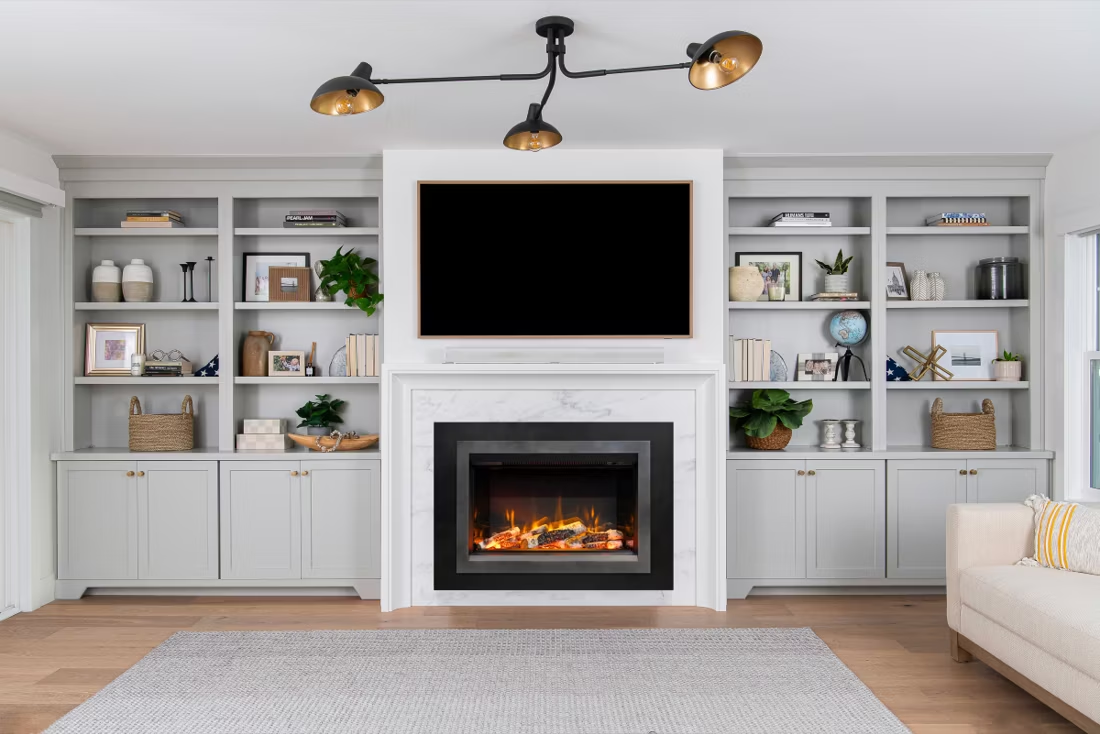
Yes—with an asterisk. Fireplaces are hot and TVs don't like heat. Either put a mantel between them to deflect rising warmth, or choose a fireplace with heat-management technology that creates a cool zone on the wall above—the wall stays around 125 degrees, barely warm, while the room still gets full heat. If you like clean lines and don't want a mantel, heat management is the answer.
What fireplace styles should I know before shopping?
Four cover most of the market: screen-front traditional (mesh front, open feel, fits craftsman homes), traditional door set (the classic look you grew up with), modern linear (wide, low, the statement piece for entertaining), and clean face contemporary (no trim—your tile or stone runs right to the fire's edge). Walk in knowing those four terms and you're ahead of most buyers.
Does a fireplace add value to my home?
On average, a fireplace adds back to the home about the same amount you spent installing it. Add the monthly savings from heating the rooms you actually use instead of the whole house—often hundreds of dollars a year—and the value case is strong before you even count what a fire does for how your family uses the room.
What is an in-home preview and do I need one?
It's a visit where a hearth professional measures your space, confirms the model you picked actually works in your home, and walks the specs—framing, gas line, venting, finish work—before anything is ordered. Some details you just can't know until you see the house. Never make a down payment without one; it's the single most-skipped step that burns buyers.
Stove and Fireplace Dealers in Livingston County
Find your electric fireplace in Livingston County.
Tell us a bit about your home and we'll put together a free Project Guide & Parts List—the right electric unit, the circuit and mounting details, and a trusted local dealer near Howell, Brighton, or wherever you are in the county.
Find Your Fireplace →