
Heat your Livingston County home right, whatever the fuel.
Wood, gas, pellet, and electric fireplace resources for every city and township in Livingston County—from Howell and Brighton to Fowlerville, Pinckney, and Hartland. Find the right unit and connect with a trusted local hearth retailer.
Every Project Starts From One of These Five Situations
Southeast Michigan winters test every kind of heat.
Livingston County sits in southeastern Michigan between Detroit and Lansing—rolling glacial terrain dotted with kettle lakes like Ore Lake, Portage Lake, and Lake Chemung. The county falls in climate zone 5A, with average winter lows near 14°F, a heating load comparable to Madison, Wisconsin. The heating season typically runs from October through April, and hardwood forests of oak, maple, birch, and ash—some of the densest, highest-BTU firewood species available—have long supplied local wood stoves and fireplaces.
What you'll find on this hub: hearth retailers, service technicians, and fuel suppliers covering every community in the county—Howell, Brighton, Pinckney, Fowlerville, Hartland, and the surrounding townships of Genoa, Hamburg, Green Oak, Tyrone, and Unadilla. Pick your fuel below to drill into local dealers, installation costs, and recommended units for your specific project—whether you're heating a farmhouse near Fowlerville or a lake home on Ore Lake.
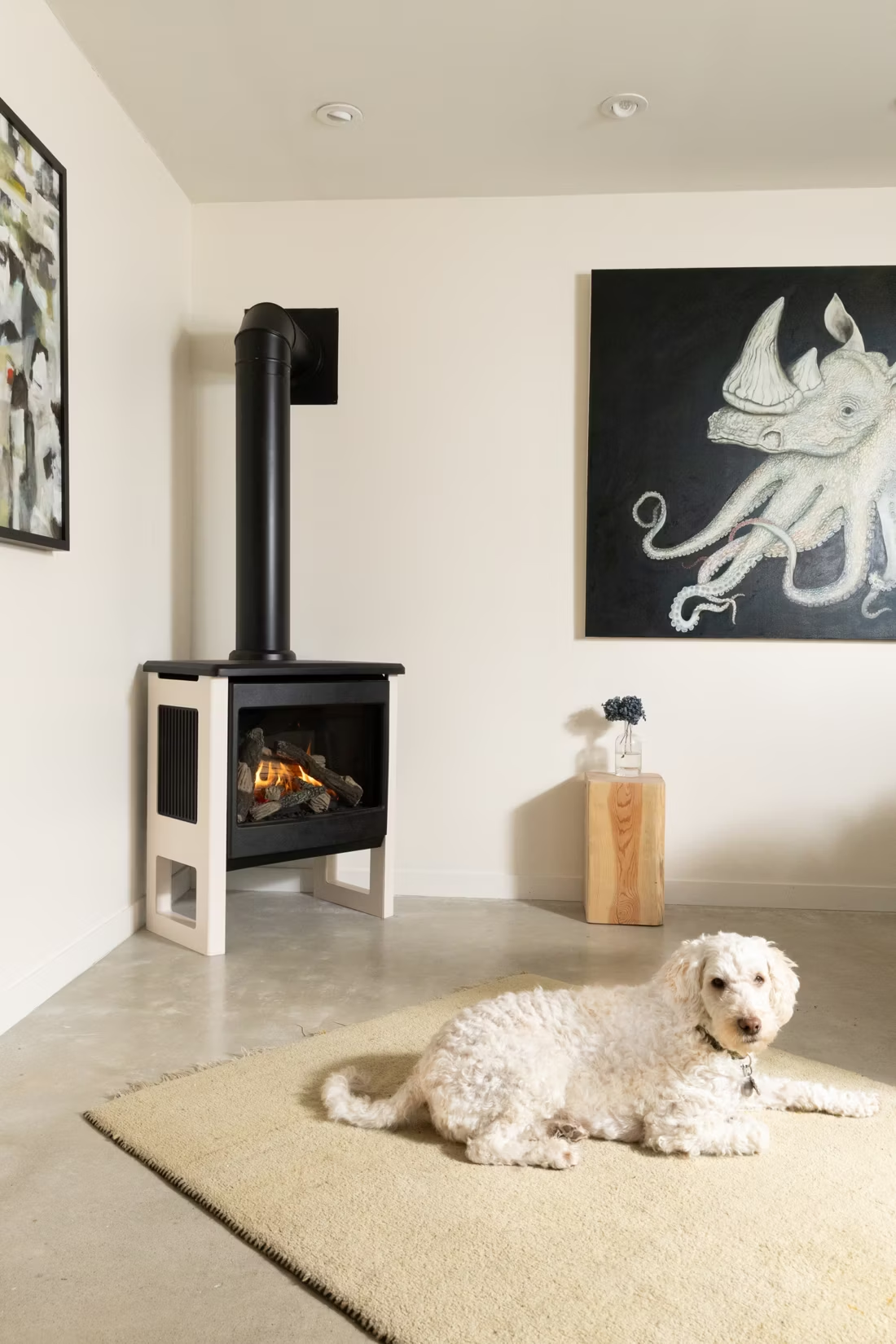
Four fuels. One honest answer for Livingston County.
Three steps. No salesperson until you're ready.
Tell us about your project
Your zip code, your situation, and the fuel you're leaning toward—or let the answers point you to one.
See what's actually available
The brands dealers within 100 miles genuinely carry—real options, never a catalog mirage.
Get your dealer & Project Guide
A trusted local dealer, plus the free Project Guide & Parts List that names every component of the job.
Frequently Asked Questions
Which fuel works best for a Livingston County home?
It depends on your home and priorities. Wood remains a strong choice here—oak, maple, birch, and ash are all common in local woodlots, and dense hardwoods like oak and maple deliver long, steady burns through Livingston County's long, Madison-Wisconsin-style heating season. Gas is the convenience option for homes with natural gas service (Consumers Energy serves much of the county) or propane in the more rural townships—instant heat with no wood-splitting required. Pellet stoves are a solid middle ground, with regional pellet supply from Indeck Energy Services, Lignetics, and Somerset Pellet Fuel keeping fuel costs predictable. Electric fireplaces work well as supplemental heat—finished basements, sunrooms, bedrooms—but with average winter lows near 14°F, they're not typically relied on as a home's sole heat source. Many Livingston County homeowners end up combining fuels: wood or pellet for the primary heating load, gas or electric for secondary rooms.
Do I need a permit to install a fireplace or stove in Livingston County?
In most cases, yes. Wood stoves, wood inserts, gas fireplaces, gas inserts, gas stoves, and pellet stoves typically require a building permit, and gas installations need a separate permit for the gas line work, pulled by a licensed gas-fitter. Within cities like Howell and Brighton, permits are issued through the city; in the townships that cover most of Livingston County's land area—Hartland, Genoa, Iosco, Tyrone, and others—permits go through the township or Livingston County's building department, depending on local arrangement. Electric fireplace installs usually skip the permit unless you're hardwiring a built-in unit into a new circuit. Most local hearth retailers pull the permit as part of the installation, so it's rarely something homeowners have to manage themselves.
Are there any wood-burning restrictions in Livingston County?
No—Livingston County doesn't have the winter inversion or non-attainment issues that trigger burn advisories in some parts of the country. There's no formal burn-ban program here. That said, an EPA-certified stove still makes sense: it burns oak, maple, birch, and ash more completely, produces less smoke for your neighbors, and uses less wood per BTU delivered than an older, uncertified unit. If you're replacing an old stove, a certified model will noticeably cut down on visible chimney smoke, even without any regulatory requirement to do so.
Can one hearth retailer in Livingston County handle all four fuel types?
Many can, or at least most of them. Because wood, gas, pellet, and electric are all standard, commonly-installed fuel types here, most Livingston County hearth retailers stock at least two or three fuel categories, and several carry all four with working showroom displays. That's useful if you're not sure which fuel fits your home—a multi-fuel dealer can walk you through the trade-offs between, say, a wood insert burning local oak and a direct-vent gas unit tied into Consumers Energy service, without you having to visit three separate shops.
How does installation and service work in the more rural parts of Livingston County?
Most hearth retailers and service technicians are based in or near Howell and Brighton, but they routinely travel out to the townships—Iosco, Conway, Deerfield, Unadilla, Tyrone, Cohoctah—for installs and annual service. Expect a modest travel fee for calls further from the county's main corridors along US-23 and I-96. Because the heating season here runs roughly October through April, scheduling chimney sweeps, gas inspections, or pellet stove cleanings in late summer or early fall—before the first cold snap—gets you ahead of the rush that hits most retailers once temperatures drop.
What's the typical installation cost range across fuel types in Livingston County?
Costs vary by fuel and by how much venting or gas line work is involved. Wood stove or insert: roughly $4,000–$8,500 for a typical install, more if a full masonry chimney liner is needed. Gas fireplace, insert, or stove: roughly $4,000–$10,000 depending on whether a new gas line has to be run to reach it. Pellet stove or insert: roughly $4,000–$7,000 for a standard install. Electric fireplace: $200–$3,000 for the unit itself, plus $400–$1,200 in labor for anything beyond a simple plug-in setup, which covers most wall-mount and built-in installs. The county + fuel pages above break these down further with local retailer-sourced pricing.
What are the biggest mistakes people make buying a fireplace?
Five come up constantly: budgeting for the unit but not the full job (vent, gas line, electrical, finish work); drowning in options instead of starting from style and fuel; buying without an in-home preview; handing installation to a handyman instead of a pro; and giving up out of sheer indecision. Every one is avoidable with a clear plan—step one, step two, step three.
Wood, gas, pellet, or electric—how do I choose?
Match the fuel to your life, not the other way around. Wood: lowest fuel cost and total power-outage independence, but you're hauling and stacking. Gas: press a button, set a thermostat, no maintenance to speak of. Pellet: wood economics with automatic feeding, in exchange for weekly cleaning and a need for electricity. Electric: plugs in anywhere with honest supplemental heat. Nobody regrets the fuel that fits how they actually live.
What is an in-home preview and do I need one?
It's a visit where a hearth professional measures your space, confirms the model you picked actually works in your home, and walks the specs—framing, gas line, venting, finish work—before anything is ordered. Some details you just can't know until you see the house. Never make a down payment without one; it's the single most-skipped step that burns buyers.
Can a fireplace actually lower my heating bill?
Yes—by creating a comfort zone. A furnace heats every square foot of the house just to warm the one room you're in; a gas fireplace on low burns roughly a sixth of the gas a typical furnace does. Set the furnace around 55–60 degrees as a baseline, then heat the rooms your family actually uses. Families who heat this way commonly save $20–$60 a month.
Stove and Fireplace Dealers in Livingston County
Listings include WhyFire partner dealers, dealers we have verified as authorized for the brands we recommend, and established local businesses that carry hearth products. Every listing shows which one it is. The ones marked Preferred run on WhyFire's software, so they can show you real pricing and book your appointment right here. No manufacturer pays for placement. How we verify dealers →
Lighting Hearth & Home By Gross Electric
Fireside Hearth & Home- Brighton
Brighton Stone & Fireplace
Jw Fireplace
Nature’s Flame
Big Georges Appliance Mart
Big George’s
Cjw Chimney & Fireplace
Get matched with a Livingston County dealer.
Tell us about your home and we'll match you with a trusted local hearth retailer and send a free Project Guide & Parts List—the parts, the vent kit, and the dealer recommendation for your specific fuel and project in Livingston County.
Find Your Fireplace →