
Instant heat, zero mess, real Leslie winters.
No chimney, no gas line, no venting—just plug-in or hardwired warmth for the rooms you actually live in during Leslie's long heating season. Find the right unit and get matched with a trusted local dealer.
Every Project Starts From One of These Five Situations
Simple heat for a small town with cold, long winters.
Leslie sits in Ingham County at just under 1,000 feet in climate zone 5A, where winter lows average 16°F and the heating season is a genuine commitment—the city logs a long, cold winter comparable to Madison, Wisconsin, putting it in the same cold-climate tier. Most of Leslie's housing stock is older single-family homes on a furnace, with a fireplace or stove providing zone heat in the room people spend the most time in.
Electric fireplaces and inserts fit that role well because they skip the parts of a wood or gas project that slow things down in a market this size: no chimney, no venting, no gas line, and in most cases no building permit—just a standard outlet or, for larger built-ins, a dedicated circuit run by a licensed electrician. The one thing to plan around is cost per hour: Consumers Energy's residential rate here runs about 18 cents per kWh, on the higher side for Michigan, so an electric fireplace makes the most sense as supplemental warmth in a specific room rather than a replacement for furnace heat on the coldest nights.
Three steps. No salesperson until you're ready.
Tell us about your project
Your zip code, your situation, and the fuel you're leaning toward—or let the answers point you to one.
See what's actually available
The brands dealers within 100 miles genuinely carry—real options, never a catalog mirage.
Get your dealer & Project Guide
A trusted local dealer, plus the free Project Guide & Parts List that names every component of the job.
Frequently Asked Questions
How much does it cost to install an electric fireplace in Leslie?
A plug-in electric insert or freestanding stove typically runs $200 to $600 for the unit with no additional electrical work, since it uses a standard 120V outlet. A built-in wall-mount or a larger insert that needs a new dedicated 20-amp circuit—common if you're putting one into an older Leslie farmhouse with an outdated panel—runs closer to $1,200 to $3,000 once you factor in the electrician's time, any drywall or mantel work, and the unit itself. Local dealers can tell you within a few minutes of looking at your panel and wall which end of that range you'll land on.
What size electric fireplace do I need for a Leslie home?
Most electric fireplace inserts and stoves put out somewhere between 4,600 and 5,200 BTU, drawing about 1,350 to 1,500 watts—enough to comfortably warm a 400 to 500 square foot room, but not a whole house. Given Leslie's long, cold winters comparable to Madison, Wisconsin, that's the right way to think about sizing: pick a unit for the specific room you want warmer—a living room, a converted porch, a bedroom—rather than expecting it to offset your furnace across the whole home. A local dealer will walk your space before recommending a wattage.
Will my electric fireplace still work if the power goes out?
No, and this is worth being upfront about: an electric fireplace needs power to run its heating element, fan, and flame effect, so it goes dark the moment the grid does. Ingham County sees its share of winter ice storms that knock out power for hours or longer, and if backup heat during an outage matters to you, a wood stove burning local oak, maple, or ash is the more reliable choice for that specific job. Electric fireplaces are best thought of as everyday convenience heat, not storm insurance.
Do I need a permit to install an electric fireplace in Leslie?
A plug-in unit that uses an existing outlet typically doesn't require a permit. If your installation needs a new dedicated circuit or panel work, that electrical work does require a permit—the City of Leslie contracts building and electrical inspections through the Ingham County Building Division, and any licensed electrician doing the circuit work will normally pull that permit as part of the job. It's a quick process compared to a wood or gas install, which is part of why electric is a popular first project for homeowners here.
What's the difference between an electric insert, a wall-mount unit, and a freestanding electric stove?
An electric insert is built to slide into an existing masonry fireplace opening, giving an old wood-burning fireplace a heat source again without touching the chimney. A wall-mount unit hangs flat against a wall like a large TV and works well in a room without an existing fireplace. A freestanding electric stove sits on the floor and mimics the look of a wood stove, which some Leslie homeowners choose specifically to match the style of an older farmhouse. All three plug into standard power or a dedicated circuit—the right pick usually comes down to whether you already have a fireplace opening to fill.
How much does it cost to actually run an electric fireplace in Leslie?
At Consumers Energy's residential rate of about 18 cents per kWh, a typical 1,500-watt unit costs roughly 27 cents an hour to run on high heat. Used for five hours a night through a Michigan winter, that works out to around $40 a month—noticeably cheaper than heating an entire room with a furnace running longer cycles. If your property is served by Tri-County Electric Cooperative or Wolverine Power Supply Cooperative rather than Consumers Energy, which is common for addresses just outside city limits, ask about their current residential rate since it can differ from the city rate.
Can an electric fireplace be my home's primary heat source?
Generally no, not in a climate zone 5A location like Leslie with winters comparable to Madison, Wisconsin. Electric fireplaces and stoves are sized for zone heating—one room at a time—not for offsetting the load a furnace carries across an entire house during a Michigan winter. Homeowners here typically use electric units to warm up a specific living space and dial back the thermostat elsewhere, which lowers overall heating costs without asking the fireplace to do a job it isn't built for.
Are there rebates available for electric fireplaces in Michigan?
Not typically for electric fireplaces specifically. Consumers Energy and other Michigan utilities run efficiency rebate programs, but those are generally aimed at heat pumps, insulation, and whole-home efficiency upgrades rather than decorative or zone-heating electric fireplace units. If you're weighing wood or pellet instead, those categories do have Michigan-specific incentives worth asking a local dealer about—but for a straightforward electric insert or stove, budget for the unit and installation without expecting a rebate to offset it.
Electric vs. wood—which makes more sense for my Leslie home?
Wood offers real backup heat during power outages, lower ongoing fuel costs if you're already sourcing oak, maple, birch, or ash locally, and the kind of radiant heat that can carry a room through a sub-zero night. Electric offers a much simpler installation, no chimney or venting to maintain, and instant on-off convenience—appealing for a rental, a room addition, or anyone who wants ambiance without the upkeep of a wood-burning appliance. For a lot of Leslie homeowners, the deciding factor is whether outage-proof heat matters enough to take on chimney maintenance; if it doesn't, electric is the easier path.
Can I put a TV above my fireplace?
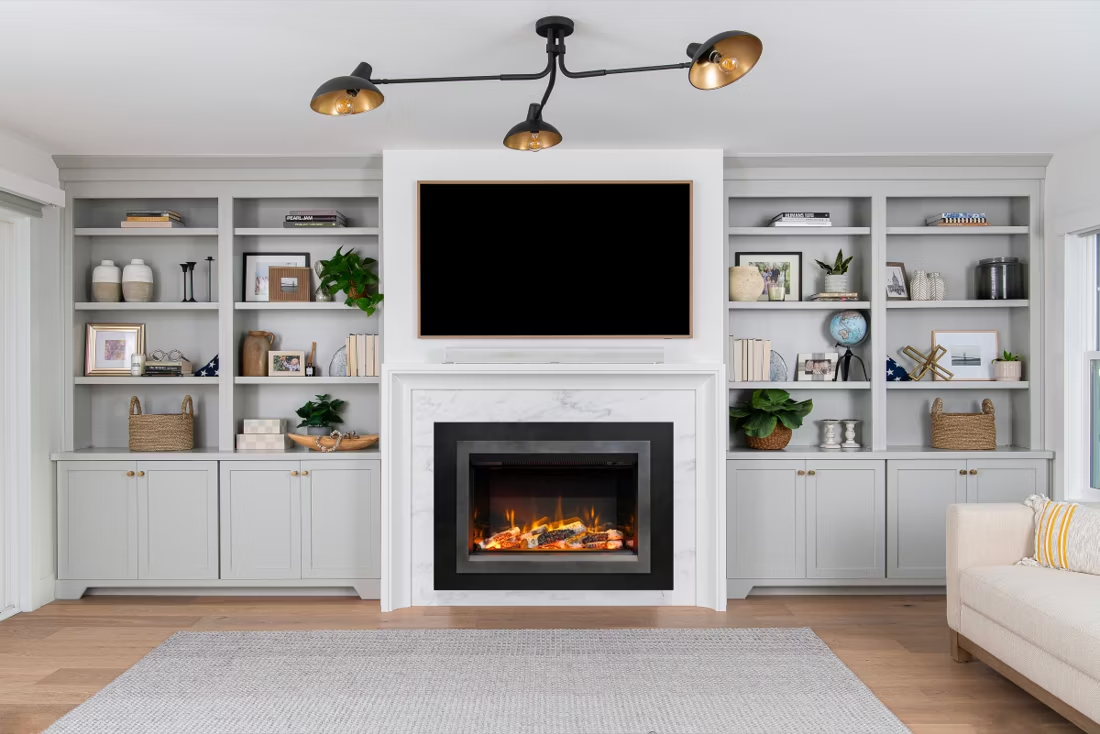
Yes—with an asterisk. Fireplaces are hot and TVs don't like heat. Either put a mantel between them to deflect rising warmth, or choose a fireplace with heat-management technology that creates a cool zone on the wall above—the wall stays around 125 degrees, barely warm, while the room still gets full heat. If you like clean lines and don't want a mantel, heat management is the answer.
Does an electric fireplace need a vent or chimney?
No—that's its superpower. An electric fireplace needs a wall and an outlet, period. No vent pipe, no gas line, no clearances to design around, which is why it works in bedrooms, offices, apartments, and walls where venting a gas or wood unit would be impractical or impossible. Installation is typically the simplest and least expensive of any fireplace type.
What is an in-home preview and do I need one?
It's a visit where a hearth professional measures your space, confirms the model you picked actually works in your home, and walks the specs—framing, gas line, venting, finish work—before anything is ordered. Some details you just can't know until you see the house. Never make a down payment without one; it's the single most-skipped step that burns buyers.
Can a fireplace actually lower my heating bill?
Yes—by creating a comfort zone. A furnace heats every square foot of the house just to warm the one room you're in; a gas fireplace on low burns roughly a sixth of the gas a typical furnace does. Set the furnace around 55–60 degrees as a baseline, then heat the rooms your family actually uses. Families who heat this way commonly save $20–$60 a month.
Nearby Dealers
Hearth shops serving Leslie and the surrounding area. Every listing shows whether it is a WhyFire partner, a dealer we have verified as authorized for the brands we recommend, or a local business carrying hearth products. No manufacturer pays for placement. How we verify dealers →
Superior Saw
Storey Fireplace & Chimney
Summit Lawn And Recreation
Nature’s Flame
Kane Heating
Electric Service in Leslie
An electric fireplace's heater draws about 1,500 watts—pennies per hour at local rates.
Consumers Energy Co
Tri-County Electric Coop (Mi)
Wolverine Power Supply Coop
Find your electric fireplace in Leslie.
Tell us a bit about your home and we'll match you with the right electric insert, wall-mount, or stove—plus a free Project Guide & Parts List and a trusted local dealer to install it.
Find Your Fireplace →