
Built for Ingham County's Six-Month Heating Season.
Wood, gas, pellet, and electric fireplace resources for every city and township in Ingham County—from the Capitol dome in Lansing to farmhouses outside Stockbridge and Webberville. Find the right unit and connect with a trusted local hearth retailer.
Every Project Starts From One of These Five Situations
Capital-region heating from Mason to East Lansing.
Ingham County anchors south-central Michigan around Lansing, the state capital, and East Lansing, home to Michigan State University—though the actual county seat is the smaller city of Mason, a few miles south. At Climate Zone 5A with winter lows averaging 17°F, the heating season here runs roughly from October through April, putting Ingham County in the same cold-climate tier as Madison, Wisconsin. The county's hardwood forests—oak, maple, birch, and ash—supply most of the seasoned firewood sold locally, and those same species show up in catalytic and non-catalytic wood stoves built to hold a fire through a long overnight burn.
Unlike Western counties with winter inversion problems, Ingham County carries no air quality non-attainment designation, so wood burning here isn't subject to the curtailment advisories you'll find in basin geographies—though individual municipalities like Lansing still enforce standard nuisance ordinances around open burning. What you'll find on this hub: hearth retailers, service technicians, and fuel suppliers covering the whole county—from dense East Lansing rental blocks near campus to rural Leslie, Dansville, and Webberville townships. Pick your fuel below to drill into local dealers, installation costs, and recommended units for your specific project.
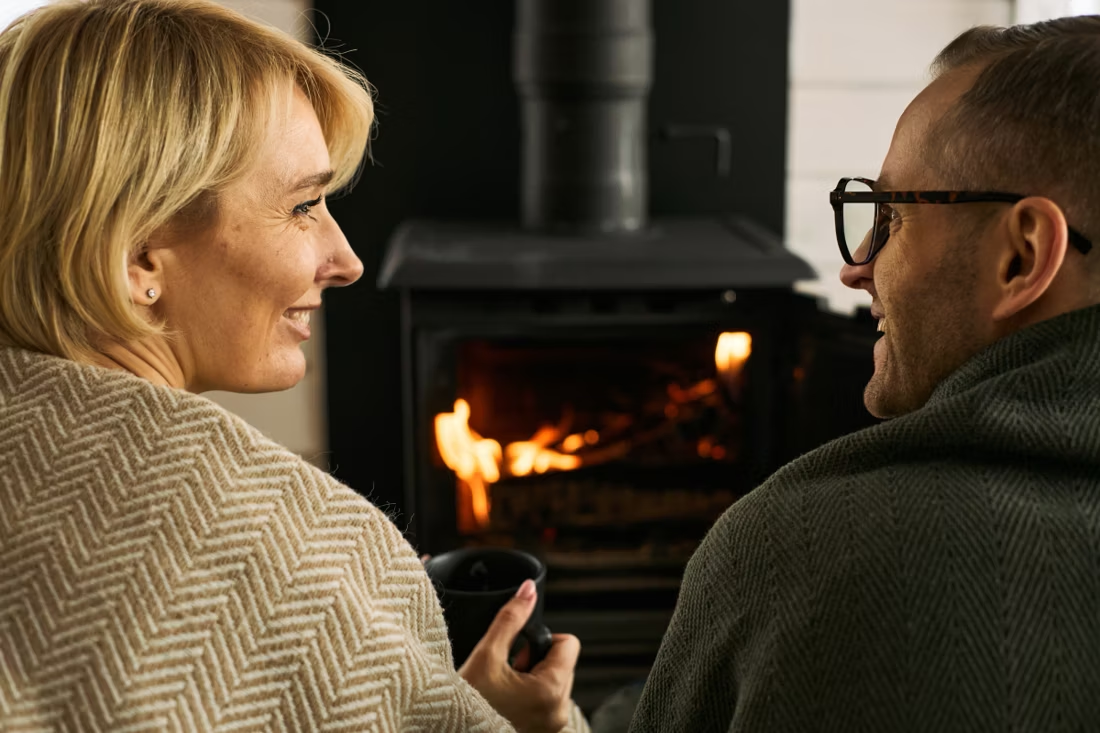
Four fuels. One honest answer for Ingham County.
Three steps. No salesperson until you're ready.
Tell us about your project
Your zip code, your situation, and the fuel you're leaning toward—or let the answers point you to one.
See what's actually available
The brands dealers within 100 miles genuinely carry—real options, never a catalog mirage.
Get your dealer & Project Guide
A trusted local dealer, plus the free Project Guide & Parts List that names every component of the job.
Frequently Asked Questions
Which fuel works best in Ingham County?
It depends on the home and the budget. Wood remains a strong choice in Ingham County—the surrounding hardwood forests supply plenty of seasoned oak, maple, birch, and ash, and a catalytic wood stove can hold an overnight burn through the county's frequent single-digit and teens nights. Gas is the convenience pick for Lansing and East Lansing homes on Consumers Energy's natural gas network—instant heat, no wood handling, and a clean look that fits condos near campus. Pellet splits the difference: regional supply from Indeck Energy Services, Lignetics, and Somerset Pellet Fuel keeps fuel available locally, and a pellet stove needs far less daily tending than a wood stove. Electric works well as a supplemental heat source—a good fit for East Lansing apartments and secondary rooms, but not a substitute for primary heat given the county's roughly seven-month heating season. Most Ingham County homes end up pairing a primary wood, gas, or pellet unit with electric in a bedroom or den.
Do I need a permit to install a fireplace in Ingham County?
Almost always, yes. Within Lansing, permits for wood stoves, wood inserts, gas fireplaces, gas inserts, and pellet stoves go through the City of Lansing's Building Safety Division. East Lansing and Mason each run their own building departments for properties inside city limits, while unincorporated townships—Meridian, Alaiedon, Locke, and others—route permits through Ingham County. Gas installations also need a separate gas-line permit and licensed gas-fitter for the connection work. Electric fireplaces typically skip the permit process unless the install involves a new dedicated circuit or hardwired built-in unit. Most local hearth retailers pull the permit for you as part of the installation quote, so you're rarely filing the paperwork yourself.
Are there any burning restrictions in Ingham County?
Ingham County doesn't carry an air quality non-attainment designation, so there's no basin-style winter inversion advisory system like you'd see in some Western counties—homeowners here aren't asked to voluntarily curtail wood burning on high-pollution days. That said, the City of Lansing and other municipalities enforce standard nuisance ordinances around open burning of yard waste and trash, which is separate from indoor wood stove use. New wood stove installations still need to meet current EPA emissions standards, and choosing an EPA-certified unit over an older uncertified stove will cut particulate output significantly and burn less wood per BTU, which matters given how many nights fall into the teens each winter.
Can one local hearth retailer handle all four fuel types?
Several retailers in the Lansing metro area carry wood, gas, pellet, and electric under one roof, which is useful if you're still deciding between fuels and want to compare working displays side by side. Smaller shops closer to Mason or the eastern townships tend to specialize—often wood and pellet, with gas handled through a subcontracted gas-fitter for the line work. Firewood and pellet suppliers are a separate category from hearth retailers; they sell the fuel but generally don't install or service appliances. If you're cross-shopping fuels for a Lansing or East Lansing home, the multi-fuel dealers are the better starting point.
How does service work in the rural parts of Ingham County?
Most chimney sweeps and gas technicians are based in or near Lansing and travel out to Stockbridge, Webberville, Dansville, and Leslie for service calls, usually with a modest travel fee attached—often $25–$60 depending on distance from the metro core. Booking early matters: pre-season sweeps and inspections (August through October) are far easier to schedule than an emergency call in January when everyone's furnace and stove problems show up at once. If you're heating a rural property with wood or pellet as the primary source, keeping a backup electric heater on hand isn't a bad idea for the coldest stretches of the six-month heating season.
What's the typical installation cost across fuel types in Ingham County?
Costs vary by fuel and by how much venting or gas line work is involved. Wood stove or insert installation: roughly $4,000–$8,500 for a typical retrofit, higher for new masonry chimney work. Gas fireplace, insert, or stove: roughly $4,500–$10,500, with the lower end applying when existing gas service and venting are already in place. Pellet stove or insert: roughly $4,000–$7,000 for a standard install. Electric fireplace: $200–$2,800 for the unit itself, plus $400–$1,200 in labor for anything beyond a plug-and-play wall unit, such as a built-in with a new circuit. The county + fuel pages above break these down further with local retailer pricing.
How much should I budget for a fireplace?
For an average home—covering the fireplace, the vent pipe, and basic installation—a budget between $3,900 and $5,500 gives you a lot of options across wood, gas, and pellet. By the time you add finish work, gas line, and electrical, the average complete installation lands between $5,000 and $12,000 all-in. In a remodel or new build, a good rule is to put about 2.5% of the total project cost toward the fireplace.
Can I install a fireplace myself?
If you're putting a fire in your house on purpose, it's best to work with an expert. Unless you're genuinely experienced in framing, gas line, vent pipe, and the national code on clearances to combustibles, have a professional do it—and ideally the same company that sells you the fireplace, so warranty, service, and liability all live under one roof.
Can a fireplace actually lower my heating bill?
Yes—by creating a comfort zone. A furnace heats every square foot of the house just to warm the one room you're in; a gas fireplace on low burns roughly a sixth of the gas a typical furnace does. Set the furnace around 55–60 degrees as a baseline, then heat the rooms your family actually uses. Families who heat this way commonly save $20–$60 a month.
Wood, gas, pellet, or electric—how do I choose?
Match the fuel to your life, not the other way around. Wood: lowest fuel cost and total power-outage independence, but you're hauling and stacking. Gas: press a button, set a thermostat, no maintenance to speak of. Pellet: wood economics with automatic feeding, in exchange for weekly cleaning and a need for electricity. Electric: plugs in anywhere with honest supplemental heat. Nobody regrets the fuel that fits how they actually live.
Stove and Fireplace Dealers in Ingham County
Listings include WhyFire partner dealers, dealers we have verified as authorized for the brands we recommend, and established local businesses that carry hearth products. Every listing shows which one it is. The ones marked Preferred run on WhyFire's software, so they can show you real pricing and book your appointment right here. No manufacturer pays for placement. How we verify dealers →
Superior Saw
Nature’s Flame
Kane Heating
Find your fireplace in Ingham County.
Pick your fuel below and I'll match you with a trusted local dealer who'll put together a free Project Guide & Parts List—the exact parts, vent kit included, and the local pro who can install it right.
Find Your Fireplace →