
Plug-in warmth for Grand Rapids-area homes, no chimney required.
With average winter lows around 17°F and a long, cold winter season across Kent County, an electric fireplace won't replace your furnace—but it adds real zone heat and ambiance to condos, finished basements, and historic homes from Heritage Hill to Rockford without any venting work. Find the right unit and connect with a trusted local dealer.
Every Project Starts From One of These Five Situations
Electric heat fits Kent County's grid and its housing stock.
Kent County is home to nearly 900,000 people across Grand Rapids, Wyoming, Kentwood, Grandville, Rockford, Lowell, Cedar Springs, and the townships between them—a mix of dense urban neighborhoods, mid-century subdivisions, and older homes with no chimney at all. In a climate zone 5A county with an average winter low of 17°F, most homeowners here already have a furnace doing the heavy lifting. What they're often missing is a way to add warmth and ambiance to a specific room—a converted attic bonus room, a condo with no gas line, a finished basement in Wyoming or Kentwood—without cutting into a wall or running new gas piping.
Consumers Energy serves the vast majority of Kent County's electric grid, and that reliability matters here: unlike gas or wood, an electric fireplace lives and dies by the outlet or circuit it's plugged into. Plug-in freestanding and mantel units need nothing more than a standard outlet and no permit at all. Built-in linear or recessed models often call for a dedicated 20-amp circuit, which means a licensed electrician and, in many cases, an electrical permit through Kent County Building Safety Division or your city's building department if you're inside Grand Rapids, Wyoming, or Kentwood city limits. Either way, a local dealer who knows the difference will steer you toward the right unit instead of a big-box model that overheats a small room or underwhelms a large one.
Three steps. No salesperson until you're ready.
Tell us about your project
Your zip code, your situation, and the fuel you're leaning toward—or let the answers point you to one.
See what's actually available
The brands dealers within 100 miles genuinely carry—real options, never a catalog mirage.
Get your dealer & Project Guide
A trusted local dealer, plus the free Project Guide & Parts List that names every component of the job.
Frequently Asked Questions
How much does an electric fireplace installation cost in Kent County?
Plug-in freestanding or mantel-style electric fireplaces typically run $300 to $800 installed, since they just need a standard outlet and no electrical or building permit. Built-in linear or wall-recessed units—the kind often framed into a living room wall in a Wyoming or Cascade Township remodel—usually run $1,500 to $4,000 once you factor in cabinetry work, a dedicated circuit, and licensed electrician labor. Costs run higher when the install involves opening drywall in an older Heritage Hill or Eastown home with plaster walls, or when a masonry fireplace opening needs modification to accept an insert.
Do I need a permit to install an electric fireplace in Kent County?
A plug-in unit that draws power from an existing outlet generally doesn't require a permit anywhere in Kent County. A hardwired built-in unit is different—because it typically needs a new dedicated circuit, most jurisdictions require an electrical permit. If you're inside Grand Rapids, Wyoming, or Kentwood city limits, that permit goes through the city's own building department; in unincorporated Kent County townships, it runs through the Kent County Building Safety Division. A licensed electrician working with a hearth dealer will usually pull this permit as part of the install.
Will an electric fireplace actually heat my room, or is it just for looks?
Most electric fireplaces are genuine supplemental heaters, not decoration—a mid-size unit puts out enough heat to warm a 400 to 1,000 square foot space, depending on insulation and ceiling height. But given Kent County's long, cold winter season and winter lows regularly in the teens, an electric fireplace is not a substitute for your furnace on the coldest nights of a West Michigan January. Think of it as zone heat for the room you're actually sitting in—turn down the thermostat elsewhere and let the fireplace carry a finished basement or a bonus room over the furnace.
What's the difference between an electric fireplace, insert, and stove?
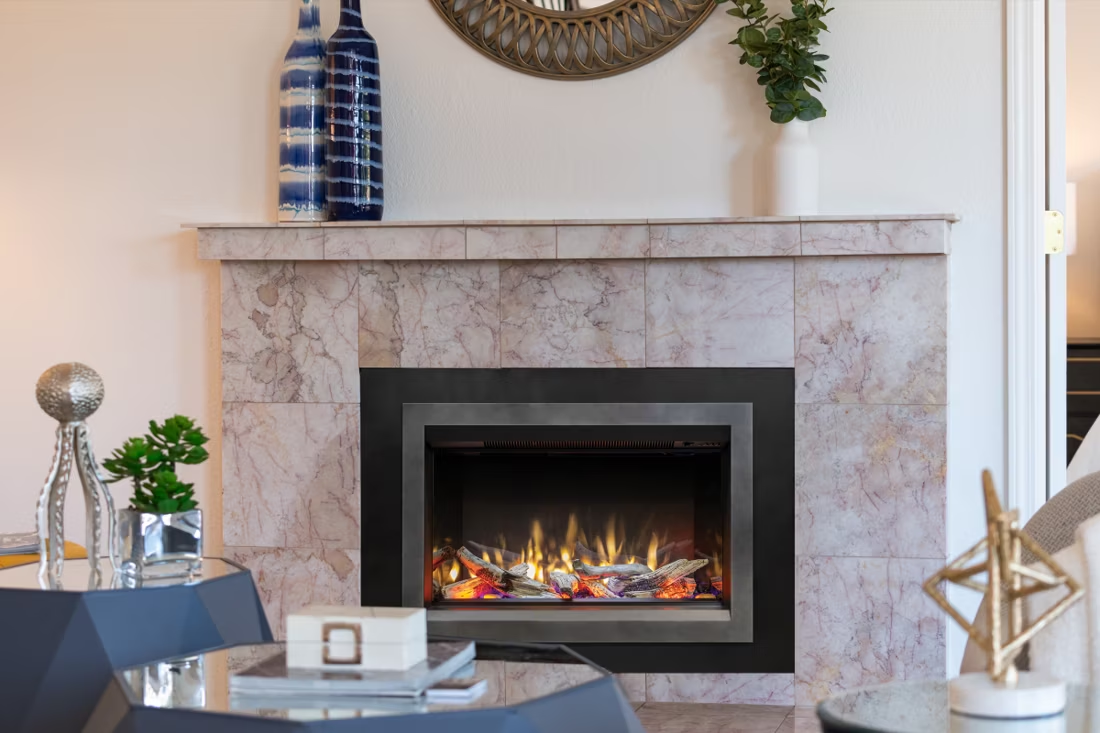
A built-in electric fireplace is designed to be framed into a wall, much like a TV mount, and is common in new construction and remodels around Cascade, Ada, and Grandville. An electric insert is sized to slide into an existing wood-burning masonry fireplace opening—a popular option in older Grand Rapids neighborhoods like Eastown and Heritage Hill where homeowners want to retire an unused wood fireplace without losing the mantel and surround. An electric stove is a freestanding cabinet-style unit that sits on the floor, mimicking a wood stove's look without any venting at all. For most Kent County homes with an existing but unused fireplace, an insert is the simplest upgrade.
Electric vs. gas fireplace—which makes more sense in Kent County?
Natural gas is available through Consumers Energy across most of Kent County, so a gas fireplace is a real option for most homeowners here, offering higher heat output and the ability to run during a power outage with a battery-backed ignition. Electric wins on install simplicity and upfront cost—no gas line, no venting, and often no permit at all for plug-in units—which makes it the better fit for condos, apartments, rentals, and rooms where running new gas piping isn't practical. If you already have gas service to the house and want real heat output, ask a local dealer about gas. If you want ambiance and modest zone heat with the least disruption, electric is usually the faster, cheaper path.
What's the best electric fireplace for a Kent County home?
For a built-in linear unit, brands like Dimplex, Napoleon, and SimpliFire are common choices among local dealers for their realistic flame effects and reliable heating elements sized for rooms of 400 square feet or more. For an insert into an existing masonry opening in an older Grand Rapids-area home, look for a model specifically sized to the firebox rather than a universal fit—a local retailer will measure your existing opening before recommending a unit. Since Kent County winters are cold enough that supplemental heat actually gets used, prioritize a unit with a real heating element (not just a light-and-flame display) if you want it to do more than look nice.
Will my electric fireplace still work if the power goes out?
No—and this is worth planning around. West Michigan sees occasional ice storms and high-wind events off Lake Michigan that can knock out power for hours or, in bad years, days. An electric fireplace, unlike a wood stove or a gas unit with battery-backed ignition, goes dark the moment the grid does. If backup heat during outages matters to your household, pair an electric fireplace (for everyday convenience and ambiance) with a wood-burning or battery-independent gas option elsewhere in the home rather than relying on electric alone.
How much does it cost to run an electric fireplace in Kent County?
Most electric fireplaces draw around 1,500 watts on the heat setting, which at typical Consumers Energy residential rates works out to roughly 15 to 20 cents per hour of heater use. Running one for several hours a day through a West Michigan winter adds a modest but noticeable amount to a monthly bill—far less than running a space heater of the same wattage, and far less than heating the same square footage with your furnace alone, since you're only heating the room you're in.
Electric fireplace vs. wood stove—which is right for my Kent County home?
Wood stoves burning local oak, maple, birch, or ash deliver serious heat output, work with zero electricity—a real advantage during a Lake Michigan-driven ice storm outage—and appeal to homeowners in Kent County's more rural townships who already have access to firewood. Electric fireplaces trade that off for simplicity: no chimney, no wood handling, no ash, and in most cases no permit. For a Grand Rapids condo, a Kentwood rental, or a finished basement where running a flue isn't realistic, electric is the practical choice. For a rural property outside Rockford or Lowell where backup heat during outages matters, wood still has a strong case.
Can I put a TV above my fireplace?
Yes—with an asterisk. Fireplaces are hot and TVs don't like heat. Either put a mantel between them to deflect rising warmth, or choose a fireplace with heat-management technology that creates a cool zone on the wall above—the wall stays around 125 degrees, barely warm, while the room still gets full heat. If you like clean lines and don't want a mantel, heat management is the answer.
Do electric fireplaces actually produce heat?
Yes—most put out around 4,800–5,000 BTUs from a standard outlet, which comfortably warms a bedroom, office, or den as a comfort-zone heater. What they won't do is carry a whole house the way wood, gas, or pellet can. Think of electric as ambiance-first with honest supplemental heat: flames on with no heat in July, flames plus warmth in January.
Can I install a fireplace myself?
If you're putting a fire in your house on purpose, it's best to work with an expert. Unless you're genuinely experienced in framing, gas line, vent pipe, and the national code on clearances to combustibles, have a professional do it—and ideally the same company that sells you the fireplace, so warranty, service, and liability all live under one roof.
What is an in-home preview and do I need one?
It's a visit where a hearth professional measures your space, confirms the model you picked actually works in your home, and walks the specs—framing, gas line, venting, finish work—before anything is ordered. Some details you just can't know until you see the house. Never make a down payment without one; it's the single most-skipped step that burns buyers.
Stove and Fireplace Dealers in Kent County
Heritage Fireplace & Design Center
Get matched with an electric fireplace dealer in Kent County.
Tell us about your room, your home, and what you're hoping to add—and we'll put together a free Project Guide & Parts List with the right unit, the exact parts including any circuit or venting needs, and a trusted local Kent County dealer to install it.
Find Your Fireplace →