
Instant Heat for West Michigan Winters—No Chimney Required.
Grand Rapids has a heavy winter heating load and winter lows around 17°F. Electric fireplaces add real zone heat and ambiance to any room—no venting, no gas line, no masonry. Get matched with a trusted local dealer.
Every Project Starts From One of These Five Situations
The easiest fireplace upgrade in a climate with a heavy winter heating load.
Grand Rapids sits along the Grand River in Kent County at 731 feet elevation, in climate zone 5A, with average winter lows near 17°F and a winter heating load in the same range as Madison, WI or Burlington, VT. Furnaces, mostly natural gas, handle the bulk of that load across Kent County's housing stock, but electric fireplaces have become the go-to way homeowners add supplemental warmth and a real flame look to a basement rec room, primary bedroom, or converted attic space without opening a wall for venting.
Grand Rapids is also a city of condos, historic Heritage Hill duplexes, and downtown high-rises where wood or pellet appliances are either prohibited by HOA rules or simply impossible to vent—which is part of why electric is the standard, mainstream fireplace fuel here rather than a niche one. Power comes from Consumers Energy or DTE Electric Company depending on your neighborhood, with Wolverine Power Supply Cooperative serving some rural fringe areas of Kent County. At roughly $0.2013 per kWh—above the national average—most homeowners run electric units as targeted zone heat rather than a whole-house heating source, which is exactly what these appliances are built for.
Three steps. No salesperson until you're ready.
Tell us about your project
Your zip code, your situation, and the fuel you're leaning toward—or let the answers point you to one.
See what's actually available
The brands dealers within 100 miles genuinely carry—real options, never a catalog mirage.
Get your dealer & Project Guide
A trusted local dealer, plus the free Project Guide & Parts List that names every component of the job.
Frequently Asked Questions
How much does an electric fireplace installation cost in Grand Rapids?
A plug-in electric insert or mantel package that uses an existing 120V outlet typically runs $300 to $1,500 installed, since there's no venting or gas line to run. A built-in wall unit or a linear electric fireplace that needs a new dedicated circuit—common in basement remodels and additions around Grand Rapids—adds electrician labor, usually $150 to $400 for the circuit run, pushing a full project to $1,000 to $3,500 once you factor in a custom surround or mantel. Compare that to gas fireplace installs in this same market, which regularly run $4,000 to $10,000 once venting and gas line work are included—the lower install cost is one of the main reasons electric wins for supplemental rooms.
Do I need a permit to install an electric fireplace in Grand Rapids or Kent County?
A simple plug-in unit that runs off an existing outlet generally doesn't require a permit. If your installer needs to run a new dedicated circuit—typical for larger 240V linear units—that electrical work does require a permit pulled by a licensed electrician, either through the City of Grand Rapids Building Inspections Department if you're within city limits, or through Kent County for surrounding townships. There's no chimney, gas line, or combustion-appliance inspection involved, which is a big part of why electric projects move faster than wood or gas installs here.
Will an electric fireplace actually heat a room during a Michigan winter?
Most residential units top out around 1,500 watts, which produces roughly 5,000 BTU—enough to comfortably supplement a single room up to about 300-400 square feet, but not enough to replace your furnace when it's 17°F outside, which is Grand Rapids' average winter low. Think of it as zone heat: warm the home office or bedroom you're actually using and let the thermostat on your Consumers Energy or DTE-metered furnace drop a degree or two elsewhere. For a drafty older Heritage Hill or Eastown home, don't expect an electric unit to keep up on its own during a January cold snap.
What's the difference between an electric insert, a built-in wall unit, and a mantel package?
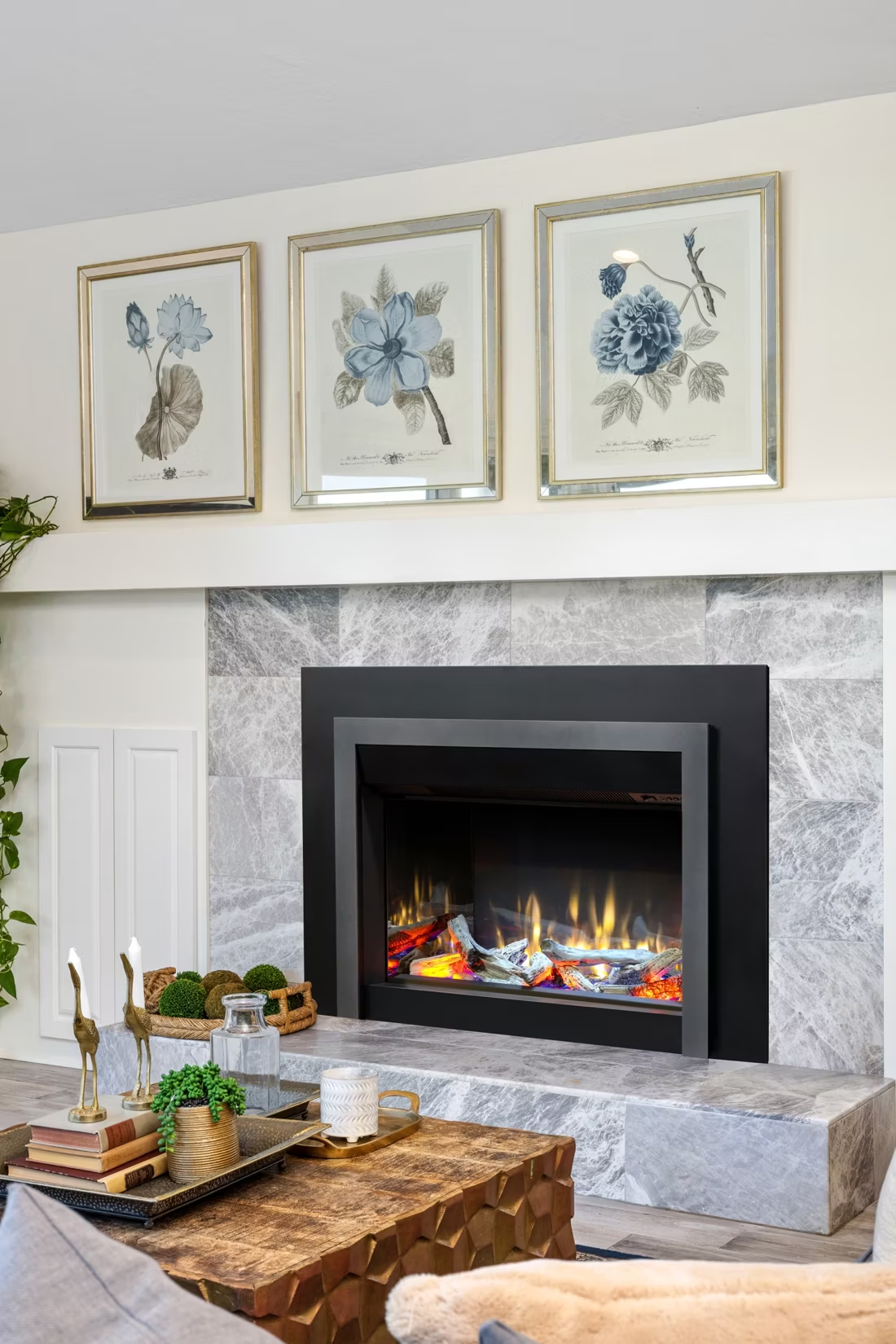
An electric insert is designed to drop into an existing masonry or wood-burning fireplace opening, giving old Grand Rapids homes with a dormant wood fireplace a working flame effect again without touching the chimney. A built-in wall unit is framed into new construction or a remodel—popular in basement finishing projects around Kent County—and can be recessed flush with drywall. A mantel package is a freestanding cabinet with an electric firebox built in, the simplest option since it just needs floor space and an outlet. For most condo and apartment situations downtown, the mantel package or a slim wall-mounted unit is the easiest path since there's no fireplace opening to work with.
What will an electric fireplace add to my electric bill?
At the current Consumers Energy and DTE residential rate of roughly $0.20 per kWh, a 1,500-watt unit running on high heat costs about $0.30 an hour. Used for a few hours most evenings—say five hours a day through a cold stretch—that's roughly $45 a month, comparable to running a space heater. Most owners use the flame-only mode (no heat) far more often than the heat setting, which draws only 30-50 watts and costs pennies a day—a detail worth asking your dealer about if ambiance matters more than warmth for part of the year.
Is an electric fireplace a good fit for a downtown Grand Rapids condo or apartment?
It's usually the only realistic option. Wood stoves and pellet inserts aren't practical or applicable in most multi-family and downtown Grand Rapids buildings—there's no chimney access, HOA rules typically prohibit combustion appliances, and pellet units need hopper space and exterior venting that condos don't have. Electric units need nothing more than a wall outlet or a simple circuit, install in an afternoon, and don't require HOA sign-off on venting or chimney modifications, which is why they're the default fireplace choice in Grand Rapids' downtown high-rises and converted loft buildings.
Electric vs. gas—which is right for my Grand Rapids home?
Gas fireplaces produce far more heat output—enough to serve as genuine supplemental or even primary zone heat during Grand Rapids' coldest stretches—and give you a real flame burning real fuel, but they cost more to install once you factor in venting and gas line work, and they require an annual service check. Electric units cost a fraction to install, can go anywhere with an outlet, and never need chimney sweeps or gas line permits, but they top out around 5,000 BTU and won't meaningfully warm a large open floor plan. Many Kent County homeowners land on gas for the main living area and electric for bedrooms, basements, or a rental property where low maintenance matters more than heat output.
Can I install an electric fireplace in an older Heritage Hill or Eastown home?
Yes, but it's worth having an electrician check your panel first. Many of Grand Rapids' historic homes near Heritage Hill and Eastown still run on older, lower-amperage electrical panels, and a larger 240V linear fireplace can require more capacity than a knob-and-tube or early-1900s panel can safely provide without an upgrade. A licensed electrician can confirm available amperage and, if needed, add a subpanel—a detail your local dealer's installer will typically flag during the in-home walkthrough before recommending a specific unit.
What features matter most for supplemental heat in a Grand Rapids climate?
Look for a unit with a separate flame-only mode so you can run the visual effect without the heater draw during Grand Rapids' long shoulder seasons—spring and fall here rarely need supplemental heat but plenty of people still want the fire going. A built-in thermostat with a remote is worth having so the unit cycles on its own rather than running at full 1,500 watts constantly. Brands like Dimplex, Napoleon, and Touchstone are commonly stocked by hearth dealers in the Grand Rapids area and offer both insert and linear wall-mount formats; your local dealer can match features to your specific room and panel capacity.
Does an electric fireplace need a vent or chimney?
No—that's its superpower. An electric fireplace needs a wall and an outlet, period. No vent pipe, no gas line, no clearances to design around, which is why it works in bedrooms, offices, apartments, and walls where venting a gas or wood unit would be impractical or impossible. Installation is typically the simplest and least expensive of any fireplace type.
Can I put a TV above my fireplace?
Yes—with an asterisk. Fireplaces are hot and TVs don't like heat. Either put a mantel between them to deflect rising warmth, or choose a fireplace with heat-management technology that creates a cool zone on the wall above—the wall stays around 125 degrees, barely warm, while the room still gets full heat. If you like clean lines and don't want a mantel, heat management is the answer.
Can a fireplace actually lower my heating bill?
Yes—by creating a comfort zone. A furnace heats every square foot of the house just to warm the one room you're in; a gas fireplace on low burns roughly a sixth of the gas a typical furnace does. Set the furnace around 55–60 degrees as a baseline, then heat the rooms your family actually uses. Families who heat this way commonly save $20–$60 a month.
Does a fireplace add value to my home?
On average, a fireplace adds back to the home about the same amount you spent installing it. Add the monthly savings from heating the rooms you actually use instead of the whole house—often hundreds of dollars a year—and the value case is strong before you even count what a fire does for how your family uses the room.
Nearby Dealers
Hearth shops serving Grand Rapids and the surrounding area. Every listing shows whether it is a WhyFire partner, a dealer we have verified as authorized for the brands we recommend, or a local business carrying hearth products. No manufacturer pays for placement. How we verify dealers →
Williams Distributing - Grand Rapids
Hancock Chimney
H20asis Inc
Copperfield Chimney Showroom
H2oasis Inc.
Fireplace Gallery Of West Mich
Electric Service in Grand Rapids
An electric fireplace's heater draws about 1,500 watts—pennies per hour at local rates.
Consumers Energy Co
Dte Electric Company
Wolverine Power Supply Coop
Find your electric fireplace in Grand Rapids.
Tell us a bit about your home and we'll match you with the right electric fireplace, insert, or built-in unit—plus a free Project Guide & Parts List and a trusted local Grand Rapids dealer to install it.
Find Your Fireplace →