
Steady heat for Jackson County's 6,470-degree-day winters.
From the city of Jackson out to Brooklyn, Napoleon, Grass Lake, Concord, and Spring Arbor, pellet heat gives south-central Michigan homes a thermostat-controlled fire without splitting or stacking cordwood. Find the right stove and connect with a trusted local dealer.
Every Project Starts From One of These Five Situations
A hopper full of pellets for six-plus months of Michigan winter.
Jackson County sits in Michigan's climate zone 5A, with an average winter low of 18°F and a heating season that stretches from October well into April, similar to what homes in Madison, Wisconsin deal with. The county's 101,896 residents are spread across the city of Jackson and surrounding townships like Blackman, Summit, Napoleon, Grass Lake, Brooklyn, Concord, and Spring Arbor, where lot sizes and heating needs vary a lot more than in a dense urban core.
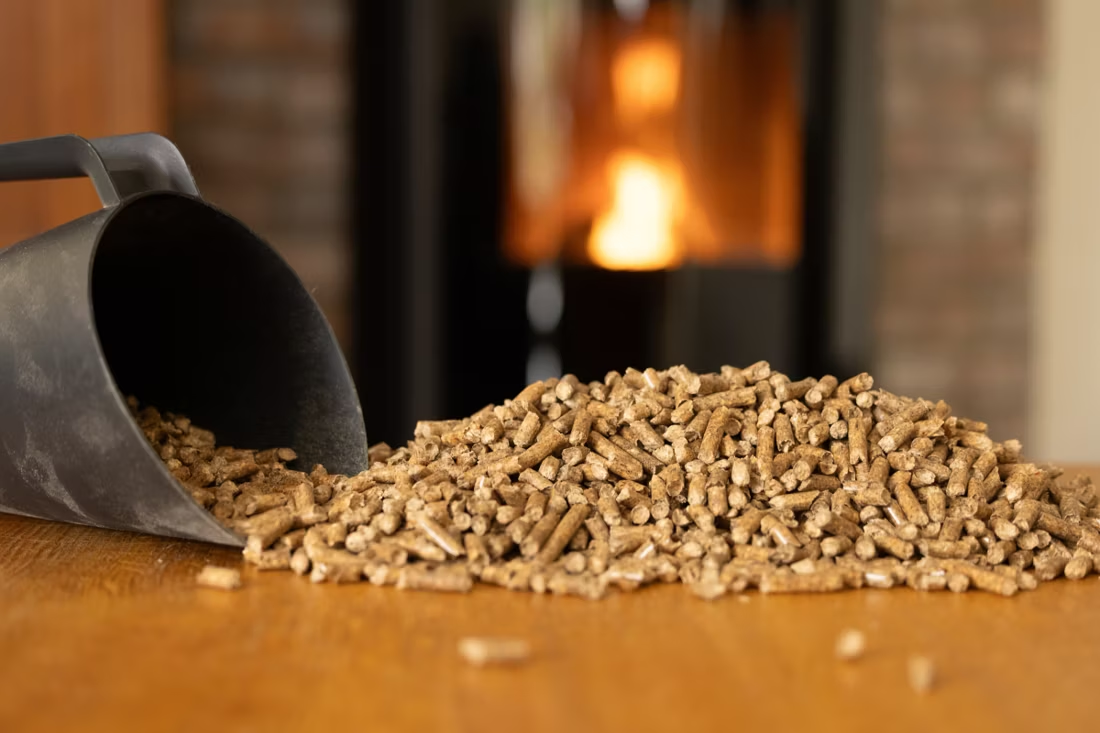
Pellet appliances are a standard, mainstream choice here—not a niche one. Jackson County has no air quality non-attainment issues or wood-burning curtailment periods, so there's no regulatory reason to favor pellet over wood the way some western counties do. Instead, pellet's appeal in Jackson County is practical: the region's oak, maple, birch, and ash hardwood forests feed a real regional pellet supply chain, with brands like Somerset Pellet Fuel, Lignetics, and Indeck Energy Services all serving Michigan and the broader Great Lakes market. For homeowners who want consistent, automated heat through a long southern-Michigan winter without wood handling, a pellet stove or insert is a straightforward fit.
Three steps. No salesperson until you're ready.
Tell us about your project
Your zip code, your situation, and the fuel you're leaning toward—or let the answers point you to one.
See what's actually available
The brands dealers within 100 miles genuinely carry—real options, never a catalog mirage.
Get your dealer & Project Guide
A trusted local dealer, plus the free Project Guide & Parts List that names every component of the job.
Frequently Asked Questions
How much does a pellet stove installation cost in Jackson County?
A typical pellet stove installation in Jackson County runs $3,500 to $6,500, depending on the unit, whether it's a freestanding stove or an insert into an existing fireplace, and how much venting work is required. Pellet stoves vent through a smaller-diameter pipe than wood stoves and can often exit through a side wall rather than requiring a full chimney, which keeps costs down compared to a masonry wood installation. Inserts into an existing fireplace with a liner already run typically land toward the lower end; new freestanding installs in a room without existing venting run higher once wall penetration and exterior venting are added.
Pellet stove vs. wood stove—which makes more sense in Jackson County?
Wood stoves burn cordwood—often locally sourced oak, maple, birch, or ash—work without electricity, and hold heat well, but they require splitting, stacking, and regular chimney sweeping. Pellet stoves load from a bag, run on a thermostat, burn cleaner with less ash, and are easier for daily use, but they need electricity to run the auger and combustion blower, so they won't function during a power outage unless you add a battery backup. For Jackson County homeowners who want convenience over ritual—especially in townships without a reliable local firewood source—pellet is usually the more practical choice. For rural properties where storm-related outages are a real concern, some homeowners keep a wood stove for backup even after installing pellet as their daily heater.
Where can I buy pellets locally in Jackson County?
Regional pellet brands commonly available in and around Jackson County include Somerset Pellet Fuel, Lignetics, and Indeck Energy Services, sold through local hearth dealers and farm supply stores. Hardwood pellets from Michigan and Great Lakes-region mills typically run in the $250 to $300 per ton range, usually sold by the ton (roughly fifty 40-lb bags) or by the pallet. Buying early in the fall before demand peaks during the first hard cold snap is the best way to avoid the mid-winter price bump that hits when supply tightens.
What size pellet stove do I need for my home?
Sizing depends on square footage, ceiling height, insulation, and whether the stove is your primary or supplemental heat source. As a rough guide for Jackson County's cold-climate housing stock: smaller units (under 1,000 sq ft) suit a single room or a well-insulated ranch, mid-size units (1,000-1,800 sq ft) cover most main living areas, and larger units (1,800+ sq ft) can carry a whole home if it's reasonably tight. Older farmhouses common in the county's rural townships—Napoleon, Concord, Parma—often need a size up from what square footage alone would suggest, since drafts and older windows push heat loss higher. A local dealer will size your home for free during an in-home visit.
Do I need a permit to install a pellet stove in Jackson County?
Yes—a new solid-fuel appliance installation typically requires a building permit in Jackson County. Within the city of Jackson, permits are issued through the city building department; in the surrounding townships, they generally route through the Jackson County construction code office. Most local hearth dealers handle the permit application and inspection scheduling as part of the installation, so it's rarely something homeowners have to manage on their own.
Will my pellet stove work during a power outage?
Not without a backup power source. Pellet stoves rely on an electric auger to feed fuel and a blower to move combustion air and distribute heat, so a standard unit shuts down the moment the power goes out. For Jackson County homes in outage-prone rural areas—particularly after ice storms, which are a real risk given the county's winter climate—a small battery backup or generator sized for the stove's low wattage draw can keep it running. This is worth discussing with your dealer up front if backup heat during outages matters to you; some households pair a pellet stove for daily convenience with a wood-burning unit for outage resilience.
How often does a pellet stove need to be cleaned and serviced?
Pellet stoves need more frequent light maintenance than wood stoves but far less heavy chimney work. The ash pot and burn pot should be cleaned every few days to weekly depending on use, the glass wiped down regularly, and the exhaust venting and hopper checked monthly during heating season. A full professional service—cleaning the exhaust fan, checking gaskets, and inspecting the auger motor—is recommended once a year, ideally before the county's heating season ramps up in October. Skipping the annual service is the most common cause of pellet stoves running inefficiently or shutting down mid-winter.
What's the best pellet stove for Jackson County's climate?
For a climate zone 5A county averaging 18°F winter lows and a heating season stretching from October well into April, look for a pellet stove with a solid BTU output in the 40,000-50,000 range for whole-home use, from established manufacturers like Harman, Lopi, or England's Stove Works—all commonly stocked by dealers serving southern Michigan. A larger hopper capacity (60+ lbs) is worth prioritizing for rural Jackson County households, since it means fewer refills during the long stretch of consecutive cold days that's typical here. Ask your local dealer which models they stock parts and service for locally, since long-term serviceability matters more than any single spec sheet number.
Pellet stove vs. gas fireplace—which is right for my home?
Gas fireplaces offer instant on-off operation, no fuel storage or loading, and (with the right ignition system) can run during a power outage. Pellet stoves offer a real, visible flame with wood-like ambiance, lower fuel cost per BTU than propane in most of rural Jackson County, and use a renewable, regionally sourced fuel from mills like Somerset Pellet Fuel. Gas tends to win for homeowners who want zero-maintenance daily convenience in a main living space; pellet tends to win for homeowners who want the look and feel of a wood fire with far less labor than cordwood, and who don't mind a weekly ash-pot cleaning. Many Jackson County homes end up with gas in the main living area and a pellet stove in a den, basement, or secondary space.
Why is a fireplace insert so efficient?
An insert does two things: it seals the chimney completely, so you stop losing air you already paid to heat, and it radiates warmth into the room through the firebox and glass. Most add a heat-exchange fan that pulls cool room air underneath, wraps it around the hot firebox, and pushes it back out warm. Your home is more efficient before you've even lit the first fire.
What's the difference between an insert and a zero-clearance fireplace?
An insert is a fireplace that slides into a pre-existing wood-burning fireplace—if you don't have one, there's nothing to insert it into. A zero-clearance fireplace is built into a framed wall, which makes it the answer for remodels and new construction. Simple test: existing masonry fireplace means insert; blank or framed wall means zero-clearance.
What is an in-home preview and do I need one?
It's a visit where a hearth professional measures your space, confirms the model you picked actually works in your home, and walks the specs—framing, gas line, venting, finish work—before anything is ordered. Some details you just can't know until you see the house. Never make a down payment without one; it's the single most-skipped step that burns buyers.
Can a fireplace actually lower my heating bill?
Yes—by creating a comfort zone. A furnace heats every square foot of the house just to warm the one room you're in; a gas fireplace on low burns roughly a sixth of the gas a typical furnace does. Set the furnace around 55–60 degrees as a baseline, then heat the rooms your family actually uses. Families who heat this way commonly save $20–$60 a month.
Stove and Fireplace Dealers in Jackson County
Pellet Brands Stocked Around Jackson County
Manufacturers will point you to the nearest stocking dealer.
Find your pellet stove in Jackson County.
Tell us a bit about your home and we'll match you with the right pellet stove or insert, plus a free Project Guide & Parts List—the exact parts, including venting, and a trusted local Jackson County dealer to install it.
Find Your Fireplace →