
Steady heat through Ionia County's long, cold winters.
With a long, cold winter season and average winter lows near 16°F, Ionia County homes need heat that runs steady from November through March. A pellet stove or insert delivers thermostat-controlled warmth without the splitting, stacking, and hauling that cordwood demands.
Every Project Starts From One of These Five Situations
Automated, hardwood-fed heat for a farm county that already runs on wood.
Ionia County sits in the farmland belt of west-central Michigan, between Grand Rapids and Lansing, with communities from Ionia and Belding to Portland, Lake Odessa, Saranac, Pewamo, and Clarksville. Climate zone 5A and winters as cold and long as Madison, Wisconsin put the county in the same cold-winter tier—long stretches below freezing, average lows around 16°F, and a heating season that regularly runs six months or more. Woodlots throughout the county are heavy with oak, maple, birch, and ash, the same hardwoods that feed regional pellet production.
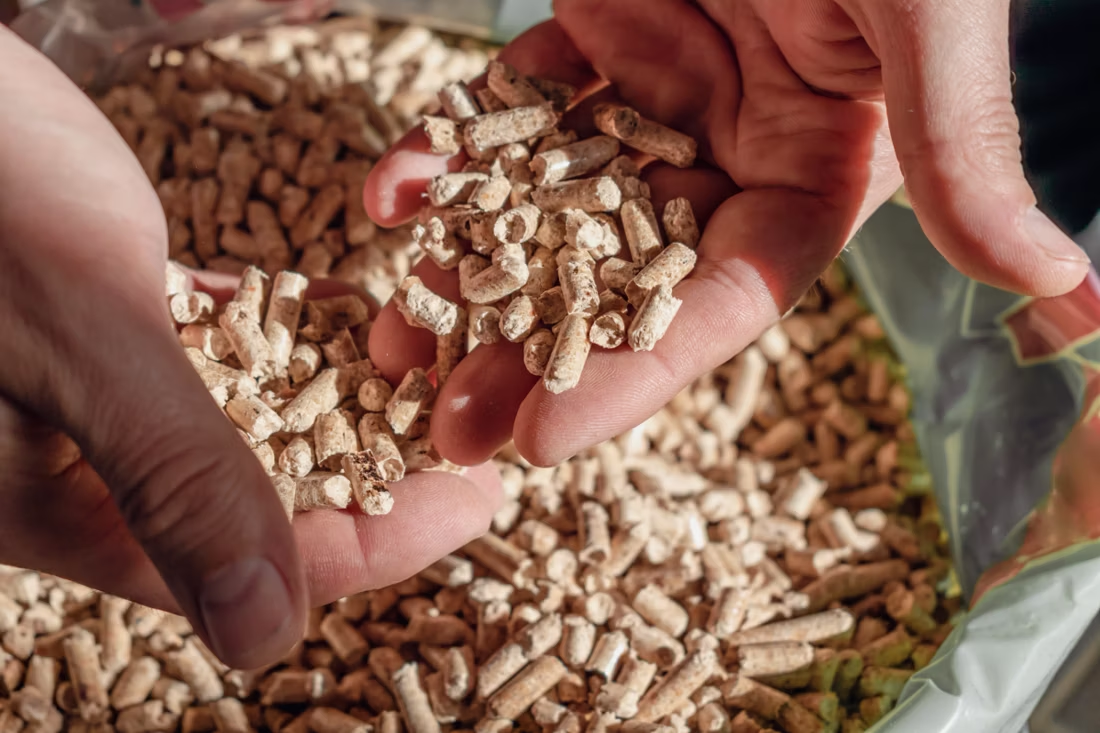
That local hardwood supply chain matters: brands like Lignetics and Somerset Pellet Fuel source and distribute pellets through the Midwest, and Ionia County dealers typically stock several bag brands rather than one. There are no air quality non-attainment concerns or winter inversion advisories in Ionia County, so unlike parts of the country where pellet stoves get chosen partly to dodge burn restrictions, here the appeal is almost entirely about convenience—load a hopper, set a thermostat, and get consistent radiant heat without tending a fire every few hours.
Three steps. No salesperson until you're ready.
Tell us about your project
Your zip code, your situation, and the fuel you're leaning toward—or let the answers point you to one.
See what's actually available
The brands dealers within 100 miles genuinely carry—real options, never a catalog mirage.
Get your dealer & Project Guide
A trusted local dealer, plus the free Project Guide & Parts List that names every component of the job.
Frequently Asked Questions
How much does a pellet stove installation cost in Ionia County?
A freestanding pellet stove installation in Ionia County typically runs $3,000 to $6,500, depending on the unit, whether new venting is needed, and hearth pad requirements. A pellet insert going into an existing masonry fireplace usually falls in a similar range once the vent liner and hopper access are accounted for. Homes without an existing hearth or chimney chase will land toward the higher end because of added framing and venting work. A local dealer will give you a firm number after seeing your space, but most Ionia County installs are straightforward single-day jobs since pellet venting is smaller and simpler than a masonry chimney.
What size pellet stove do I need for my Ionia County home?
Sizing depends on square footage, ceiling height, and how much of the home you're trying to heat. As a rough guide for a cold-climate county like this one: small units (under 1,000 sq ft) suit a single room or converted garage, medium units (1,000–2,000 sq ft) cover most main living areas in the county's older farmhouses and ranch homes, and larger units (2,000+ sq ft) can carry a well-insulated whole house through a 16°F night. Homes in older Ionia or Belding housing stock with less insulation often need to size up compared to newer construction in Lake Odessa or Portland. A local dealer will size the unit based on an in-home look rather than square footage alone.
Where can I buy pellets locally in Ionia County?
Pellets are widely available through farm supply stores, hardware stores, and hearth dealers throughout Ionia County, with regional brands like Lignetics and Somerset Pellet Fuel commonly stocked alongside other Midwest producers. Bag pricing fluctuates through the season, tends to run cheaper if you buy a full ton (50 bags) in late summer before demand picks up, and climbs during cold stretches when everyone's hopper is running low at once. Buying early and storing a season's worth in a dry garage or shed is the standard move for anyone using a pellet stove as a primary or heavy secondary heat source here.
What's the difference between a pellet stove and a pellet insert?
A pellet stove is a freestanding unit that sits on a hearth pad and vents through a wall or existing chimney chase—it can go almost anywhere with the right clearances. A pellet insert is built to slide into an existing masonry fireplace opening, converting a drafty wood-burning fireplace into a sealed, thermostat-controlled heat source using a smaller liner inside the existing chimney. For Ionia County homes with an older wood fireplace that rarely gets used, an insert is often the better fit since it reuses the chimney you already have. Homes without an existing fireplace typically go with a freestanding stove instead.
Do I need a permit to install a pellet stove in Ionia County?
Most pellet stove and insert installations require a building permit through your township or the Ionia County building department, since the unit involves a vent penetration through a wall or roof. Most hearth dealers handle the permit paperwork as part of the installation, so it's rarely something homeowners have to manage themselves. Unlike wood stoves, pellet appliances aren't subject to the EPA 2020 NSPS certification debates that come up in some states, since pellet stoves are inherently low-emission—there's no air quality curtailment concern to navigate in Ionia County either way.
What's the best pellet stove for a Michigan winter?
For a county with winters as demanding as Fargo, North Dakota, look for a pellet stove with a large hopper capacity (40+ pounds) so it can run 24+ hours between refills during the coldest stretches. Higher-output models in the 40,000-50,000 BTU range are worth considering for primary heat in larger or older farmhouses common around Ionia and Pewamo, while smaller 20,000-30,000 BTU units work fine as supplemental heat in newer, better-insulated homes near Lake Odessa or Portland. A local dealer can match hopper size and BTU output to your actual square footage and insulation level rather than guessing from a chart.
How often does a pellet stove need cleaning and maintenance?
Pellet stoves need more frequent attention than gas but far less than wood—the burn pot and ash pan should be emptied every few days during heavy use, and a full cleaning of the exhaust fan, hopper, and venting is recommended every one to two tons of pellets burned, roughly once a month in a cold Ionia County winter. An annual professional service, ideally before burning season starts each fall, checks the auger motor, gaskets, and venting for wear. Skipping maintenance is the most common reason pellet stoves lose efficiency or shut down mid-winter—not a good time to be without heat at 16°F.
Will my pellet stove work during a power outage?
Not without a backup power source. Pellet stoves rely on electricity to run the auger that feeds pellets and the fan that circulates heat, so a standard outage shuts the unit down entirely—worth knowing in a county that sees winter storm-related outages. Many Ionia County homeowners pair a pellet stove with a small battery backup unit or a portable generator sized to run the stove's low electrical draw (typically under 500 watts). If backup heat during extended outages is a top priority, a wood stove or a gas unit with battery-backed ignition may be worth considering alongside or instead of a pellet appliance.
Pellet stove vs. wood stove—which is right for my home?
Wood stoves work without electricity, burn free or cheap self-cut firewood from the oak, maple, birch, and ash common in Ionia County woodlots, and hold heat longer per load once loaded with a good hardwood mix. Pellet stoves are more hands-off—load a hopper, set a thermostat, and walk away—with less ash, no chimney creosote to worry about, and cleaner glass. For homes where convenience and consistent thermostat control matter more than fireside ritual or off-grid backup capability, pellet wins. For rural properties where power outages are a real concern and firewood is already on hand, wood stays the more resilient choice. Local dealers carry both, and can walk through the trade-offs for your specific home.
What's the difference between an insert and a zero-clearance fireplace?
An insert is a fireplace that slides into a pre-existing wood-burning fireplace—if you don't have one, there's nothing to insert it into. A zero-clearance fireplace is built into a framed wall, which makes it the answer for remodels and new construction. Simple test: existing masonry fireplace means insert; blank or framed wall means zero-clearance.
Why is my open fireplace making my house colder?
Open fireplaces suck—literally. As the fire burns, it consumes air your furnace already paid to heat and pulls it out through the chimney, so the house is actually colder after the fire goes out than before you lit it. An insert fixes this: it seals the chimney, puts fixed glass across the front, and turns that hole in your house into a real heat source.
Does a fireplace add value to my home?
On average, a fireplace adds back to the home about the same amount you spent installing it. Add the monthly savings from heating the rooms you actually use instead of the whole house—often hundreds of dollars a year—and the value case is strong before you even count what a fire does for how your family uses the room.
Can a fireplace actually lower my heating bill?
Yes—by creating a comfort zone. A furnace heats every square foot of the house just to warm the one room you're in; a gas fireplace on low burns roughly a sixth of the gas a typical furnace does. Set the furnace around 55–60 degrees as a baseline, then heat the rooms your family actually uses. Families who heat this way commonly save $20–$60 a month.
Pellet Brands Stocked Around Ionia County
Manufacturers will point you to the nearest stocking dealer.
Find your pellet stove in Ionia County.
Tell us a bit about your home and heating goals, and we'll match you with a trusted local dealer plus a free Project Guide & Parts List—the exact parts, including the vent kit, for your pellet project in Ionia County.
Find Your Fireplace →