
Steady pellet heat for the Thumb's long, wind-driven winters.
From Bad Axe to Harbor Beach to Caseville, Huron County farmhouses face open lake wind off Saginaw Bay and Lake Huron for months on end. We'll match you with a trusted local dealer who can size and install the right pellet stove or insert for your home.
Every Project Starts From One of These Five Situations
Consistent, low-maintenance warmth for farm country.
Huron County sits at the very tip of Michigan's Thumb, surrounded on three sides by Lake Huron and Saginaw Bay, with almost nothing but flat farmland to break the wind. At climate zone 6A with a winter heating load roughly the same as Madison, WI—the county's average winter low of 16°F doesn't sound extreme on paper, but the open exposure and lake-effect squalls make the cold feel harder-driving than the number suggests. Homes in Bad Axe, Sebewaing, Harbor Beach, and the smaller crossroads towns in between are spread thin across a population of just 12,263, and a lot of the housing stock is older farmhouses built long before modern insulation standards.
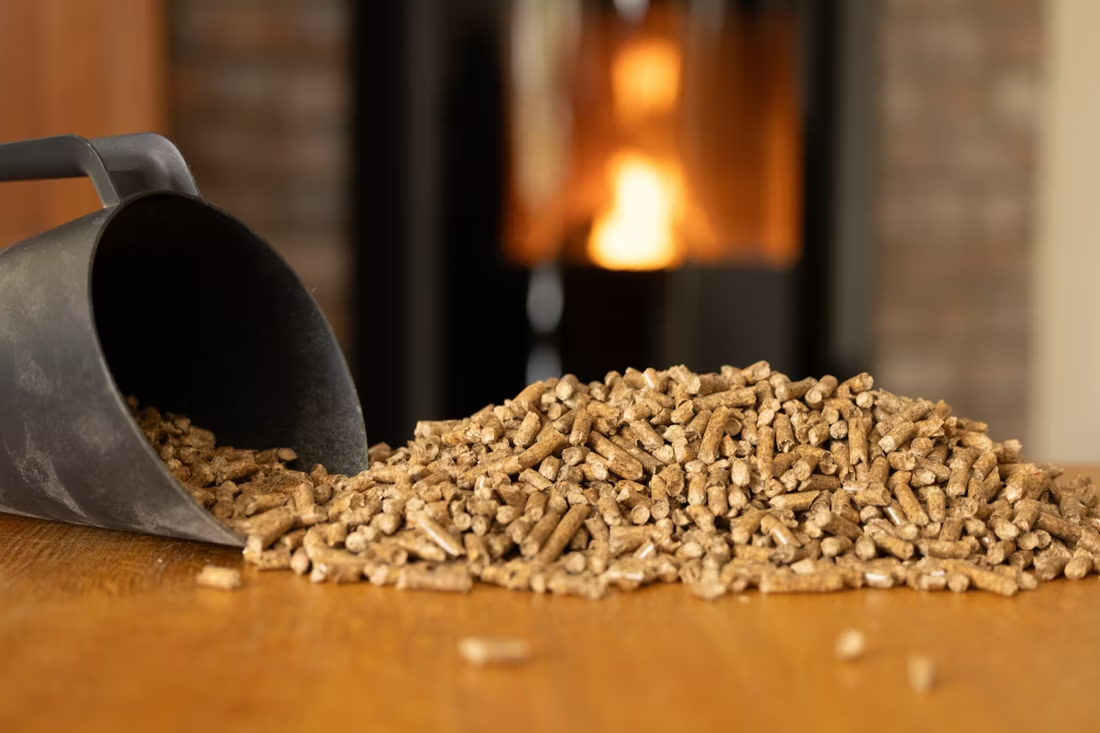
Pellet stoves have found a real niche here because they fit the rhythm of ag life: load the hopper, set the thermostat, and walk away—no splitting, stacking, or feeding a fire during planting or harvest season. Regional suppliers including Indeck Energy Services, Lignetics, and Somerset Pellet Fuel keep bagged pellets moving through farm co-ops and hardware stores across the county, often at $230 to $300 per ton, so restocking doesn't mean a special trip to Saginaw or Flint. For homeowners who still want the option of burning local hardwood—oak, maple, birch, and ash are all common on Thumb woodlots—a pellet stove works well as the low-effort primary unit while a wood stove elsewhere handles backup heat during outages.
Three steps. No salesperson until you're ready.
Tell us about your project
Your zip code, your situation, and the fuel you're leaning toward—or let the answers point you to one.
See what's actually available
The brands dealers within 100 miles genuinely carry—real options, never a catalog mirage.
Get your dealer & Project Guide
A trusted local dealer, plus the free Project Guide & Parts List that names every component of the job.
Frequently Asked Questions
How much does a pellet stove installation cost in Huron County?
Most pellet stove installations in Huron County run $3,000 to $6,000, depending on the unit, whether it vents through an existing chimney or needs new through-wall venting, and whether a dedicated electrical outlet has to be added near the install location. Installs into an existing masonry fireplace as a pellet insert tend to land on the lower end. New freestanding units in a farmhouse without existing venting—common outside Bad Axe and Sebewaing—run higher once wall penetration and venting materials are factored in. Rural properties farther from Harbor Beach or Caseville may see a modest travel charge added by the installer.
What size pellet stove do I need for my home?
Sizing depends on square footage, ceiling height, and how well-insulated the home is—and in Huron County, that last factor matters more than usual. Many of the county's farmhouses were built decades before modern insulation codes and sit fully exposed to wind off Saginaw Bay or Lake Huron, so a stove sized for a similarly sized but tighter, newer home in a sheltered subdivision will often come up short here. As a rough guide, smaller units (under 1,000 sq ft) suit a single room or seasonal cottage near the shoreline, mid-size units (1,000-2,000 sq ft) cover most main living areas, and larger units handle a full farmhouse as primary heat. A local dealer will walk your home and size it based on actual exposure, not just square footage.
Where can I find certified pellet stove installers near me?
Look for installers with NFI (National Fireplace Institute) certification, which covers proper venting, clearance, and electrical setup for pellet appliances. The dealers we match Huron County homeowners with cover the county from Bad Axe to the Caseville and Port Austin areas, and most handle the permit paperwork with the Huron County Building Department as part of the install. For farms and cottages well outside the county seat, expect a small travel fee built into the quote—it's standard practice in a county this spread out.
Pellet stove vs. wood stove—which fits a Huron County home better?
Wood stoves burn local hardwood—oak, maple, birch, and ash are all common on Thumb woodlots—and keep working without electricity, which matters when lake-effect ice storms take down power lines across the county. Pellet stoves trade that off-grid independence for convenience: no splitting or stacking, cleaner burns, and a thermostat instead of a damper. For working farms where time during planting and harvest is tight, pellet is often the easier daily-use choice. Many Huron County households end up with both—pellet for everyday heat, wood as the backup plan for when the power's out.
Do I need a permit to install a pellet stove in Huron County?
Yes—new pellet stove installations require a building permit through the Huron County Building Department, based in Bad Axe. The permit covers the appliance clearance, venting path, and any electrical work for the auger and blower circuit. Most local dealers handle the permit application as part of the installation, so it's rarely something the homeowner has to manage directly.
Will my pellet stove work during a power outage?
Not on its own—this is worth being upfront about. Pellet stoves rely on an electric auger to feed fuel and a blower to distribute heat, so they shut down when the power does. That's a real consideration in Huron County, where lake-effect ice and wind off Saginaw Bay regularly knock out rural power lines for hours or longer. Some homeowners pair a pellet stove with a small backup generator or battery inverter sized to the stove's low wattage draw, which keeps it running through most outages. If uninterrupted backup heat during outages is the top priority, a wood stove is the more dependable fallback for this county.
Where can I buy pellets in Huron County?
Bagged pellets from regional producers including Indeck Energy Services, Lignetics, and Somerset Pellet Fuel are stocked at farm supply and hardware stores throughout the county, typically running $230 to $300 per ton. Buying a season's supply—usually 2 to 3 tons for a home using a pellet stove as primary heat through a winter with a Madison, WI-level heating load—before cold weather sets in avoids the price bump and stock shortages that can hit toward January. Ask your local dealer which brand burns cleanest in the model you choose; ash content varies noticeably between suppliers.
How often do I need to refill the hopper, and how much maintenance does a pellet stove need?
Most pellet stove hoppers hold 40 to 130 pounds of fuel and burn through it in 24 to 60 hours depending on the heat setting and hopper size—so daily or every-other-day refilling is typical during a Huron County winter. Beyond refilling, plan on cleaning the burn pot and ash pan every few days of regular use, and a full professional service once a year to check the auger motor, blower, and venting. It's less hands-on than splitting and stacking wood, but it's not zero-maintenance—the auger and blower are mechanical parts that eventually wear.
Pellet stove vs. propane furnace—which makes more sense out here?
With natural gas service limited across most of rural Huron County, propane is the common whole-house alternative, and it's worth comparing directly. A propane furnace or boiler heats the whole house automatically with no daily attention, but propane prices are volatile and delivery can be delayed during winter storms. A pellet stove heats a zone rather than the whole house, needs manual hopper refills, but runs on a fuel—bagged pellets from Indeck Energy Services or Lignetics—that's cheaper per BTU in most years and stockpiled ahead of time rather than delivered on a schedule. Many Thumb households run propane for baseline heat and add a pellet stove in the main living area to cut propane usage and add a second heat source.
What's the difference between an insert and a zero-clearance fireplace?
An insert is a fireplace that slides into a pre-existing wood-burning fireplace—if you don't have one, there's nothing to insert it into. A zero-clearance fireplace is built into a framed wall, which makes it the answer for remodels and new construction. Simple test: existing masonry fireplace means insert; blank or framed wall means zero-clearance.
Why is my open fireplace making my house colder?
Open fireplaces suck—literally. As the fire burns, it consumes air your furnace already paid to heat and pulls it out through the chimney, so the house is actually colder after the fire goes out than before you lit it. An insert fixes this: it seals the chimney, puts fixed glass across the front, and turns that hole in your house into a real heat source.
Does a fireplace add value to my home?
On average, a fireplace adds back to the home about the same amount you spent installing it. Add the monthly savings from heating the rooms you actually use instead of the whole house—often hundreds of dollars a year—and the value case is strong before you even count what a fire does for how your family uses the room.
What is an in-home preview and do I need one?
It's a visit where a hearth professional measures your space, confirms the model you picked actually works in your home, and walks the specs—framing, gas line, venting, finish work—before anything is ordered. Some details you just can't know until you see the house. Never make a down payment without one; it's the single most-skipped step that burns buyers.
Stove and Fireplace Dealers in Huron County
Pellet Brands Stocked Around Huron County
Manufacturers will point you to the nearest stocking dealer.
Find your pellet stove in Huron County.
Tell us about your home and we'll match you with a trusted local dealer and send over a free Project Guide & Parts List—a plan for your pellet project in Huron County, with the exact parts, vent kit, and recommended installer.
Find Your Fireplace →