
Instant heat for Grand Traverse County's long, cold winters.
With winter lows averaging 17°F and a heating season that rivals Madison, Wisconsin, Grand Traverse County—from Traverse City to the Old Mission and Leelanau shorelines—leans hard on heat that works the moment you flip a switch. Find the right gas fireplace or insert and get matched with a trusted local dealer.
Every Project Starts From One of These Five Situations
Reliable heat for bay-effect winters.
Grand Traverse County sits at the base of two bays off Lake Michigan, and that water does strange things to winter—lake-effect snow bands can stall over Acme or Old Mission Peninsula for days, and the county racks up a winter heating load on par with Madison, Wisconsin. Climate zone 6A means furnaces run nearly continuously from November through March. Wood heat has deep roots here—oak, maple, birch, and ash are all common in local woodlots—but a growing share of homeowners, especially in newer construction around Traverse City and in seasonal cottages on the peninsulas, are choosing gas for the rooms where convenience matters more than tending a fire.
Natural gas service reaches most of Traverse City proper and the densely built townships around it, typically through Consumers Energy; head out toward Fife Lake, Kingsley, or the far end of Peninsula Township and propane becomes the more practical fuel. Either way, a gas fireplace or insert gives you heat on demand—useful in a lakefront home that sits empty most weekdays in January, or as a reliable zone-heat backup when a lake-effect system knocks out power for a stretch.
Three steps. No salesperson until you're ready.
Tell us about your project
Your zip code, your situation, and the fuel you're leaning toward—or let the answers point you to one.
See what's actually available
The brands dealers within 100 miles genuinely carry—real options, never a catalog mirage.
Get your dealer & Project Guide
A trusted local dealer, plus the free Project Guide & Parts List that names every component of the job.
Frequently Asked Questions
How much does a gas fireplace installation cost in Grand Traverse County?
Most gas fireplace and insert installations in Grand Traverse County run somewhere between $4,000 and $10,000, with the spread driven by the unit itself, the venting path, and whether new gas line work is required. A direct-vent insert dropped into an existing masonry fireplace that already has gas nearby sits toward the lower end. New construction, or a full built-in installation with framing and a fresh gas or propane line run, sits higher. Homes out on Old Mission or Peninsula Township should expect a modest travel charge added by installers coming from Traverse City.
Can I convert my existing wood fireplace to gas?
Yes, and it's a common project for older homes around Traverse City with an existing masonry fireplace. A gas insert typically slides into the existing firebox and vents through a stainless liner run up the current chimney, which keeps costs down since you're not building new venting from scratch. Whether you're on natural gas through Consumers Energy or running propane, most insert models can be configured for either fuel—the installer swaps the orifice and regulator to match.
Do I need natural gas, or can I use propane?
Either works, and which one you have often comes down to where in the county you're located. Natural gas service covers most of Traverse City and the tighter-built areas around it. Once you're out toward Kingsley, Fife Lake, or the far reaches of Peninsula Township, propane—either from an existing tank or a new one set by a local supplier—is the standard choice. Almost every gas fireplace on the market today can be set up for either fuel, so availability shouldn't limit which unit you pick.
Will my gas fireplace work during a power outage?
Most will, which matters here—lake-effect snow events can knock out power in Grand Traverse County for a day or more at a stretch. Units with IPI (intermittent pilot ignition) run on a battery backup that kicks in automatically when the power drops, so the fireplace lights and heats the room just like normal. Valor's gas fireplaces skip the battery altogether—the pilot's thermocouple generates its own small electrical current, so there's nothing to remember to replace. Ask your local dealer about the ignition system on any model you're considering if outage backup matters to you.
What's the difference between a gas fireplace, gas insert, and gas stove?
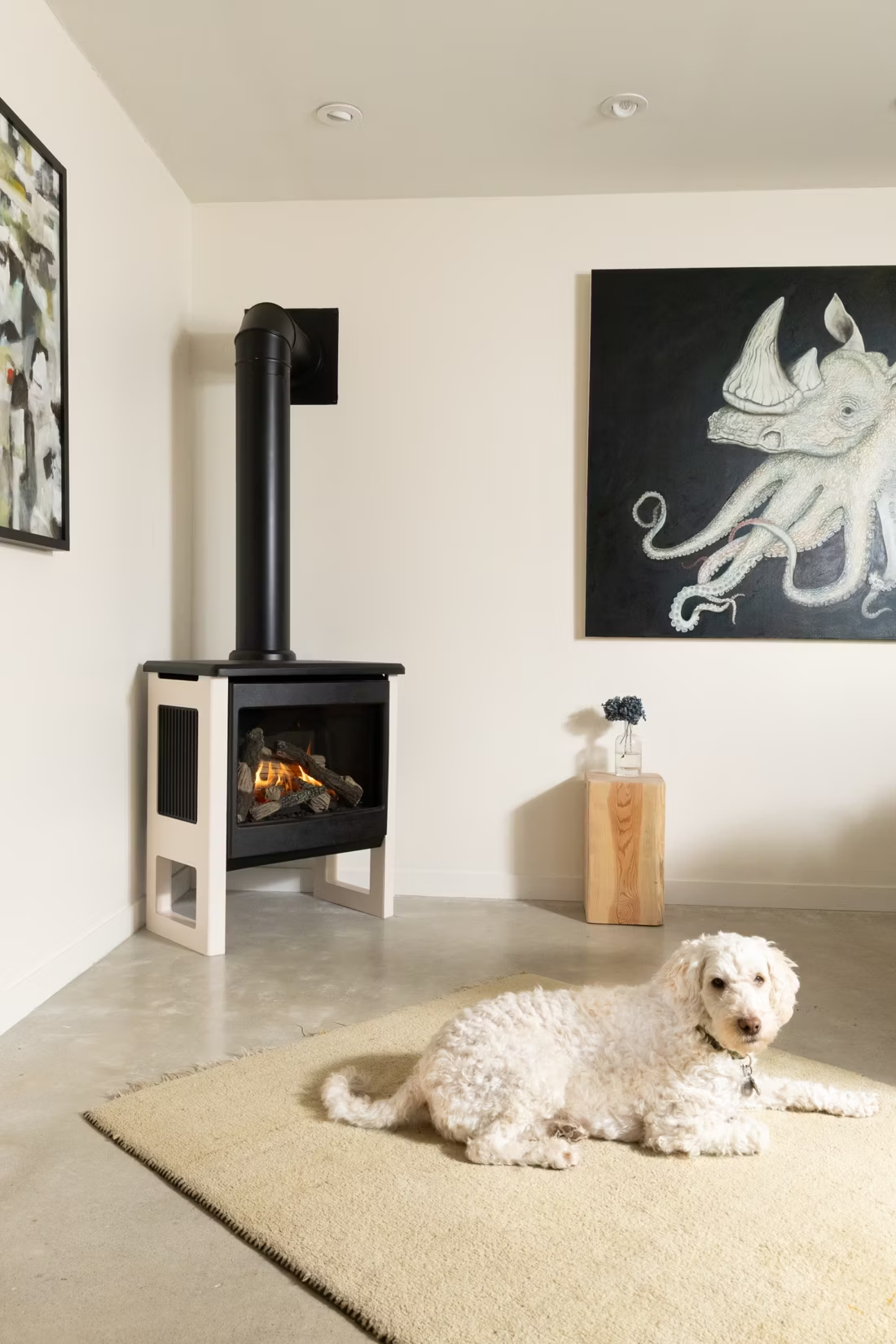
A gas fireplace is a fully built-in unit framed into a wall—the right call for new construction or a major remodel. A gas insert is sized to slide into an existing masonry fireplace, sealing it off and using the existing chimney as a vent chase for a stainless liner. A gas stove is a freestanding cabinet unit, similar in footprint to a wood stove, that can sit almost anywhere with the right clearances. For the many older homes around Traverse City with an existing wood fireplace they no longer want to tend, an insert is usually the simplest upgrade.
Do I need a permit to install a gas fireplace in Grand Traverse County?
Yes—you'll need both a building permit and a gas line permit, issued through whichever local jurisdiction covers your address, whether that's the City of Traverse City or a township building department like Garfield, Acme, or Peninsula Township. Most hearth dealers coordinate this as part of the install, including the gas line work, which has to be done by a licensed gas-fitter regardless of which permit office is involved.
What's the difference between vented and vent-free gas fireplaces?
Vented (direct-vent) gas fireplaces pull combustion air from outside and exhaust it back outside through a sealed pipe—they're the standard choice and produce real, sustained heat. Vent-free units burn fuel directly into the room with no external venting; they're legal in Michigan but come with strict room-sizing rules and oxygen-depletion safety sensors, and they add moisture and combustion byproducts to indoor air. For year-round Grand Traverse County homes, direct-vent units are what most local dealers recommend, though vent-free can make sense for a seasonal cottage without existing venting.
How often should my gas fireplace be serviced?
Plan on an annual inspection, ideally before the heavy-use months start in November. A technician checks the burner, pilot assembly, venting, and gas connections, and cleans the glass. It's a quick visit compared to chimney sweeping for wood units, but it matters just as much for safety—especially for units that sit dormant most of the year in a seasonal home on the peninsulas and then get run hard once winter guests arrive.
Gas vs. wood—which is right for my Grand Traverse County home?
Wood still has a real foothold here—oak, maple, birch, and ash are all common in local stands, and Huron-Manistee National Forest cutting permits run $10 to $20 per cord during the May-to-October season, which keeps fuel costs low for anyone willing to cut and season their own. Gas trades that self-sufficiency for convenience: instant on-off heat, no ash or creosote, and a fireplace that works the same whether you're there every day or opening up the cottage for a single winter weekend. Many county homeowners end up with both—gas in the main living space for daily use, wood in a den or seasonal cabin for backup heat and atmosphere.
Why is my open fireplace making my house colder?
Open fireplaces suck—literally. As the fire burns, it consumes air your furnace already paid to heat and pulls it out through the chimney, so the house is actually colder after the fire goes out than before you lit it. An insert fixes this: it seals the chimney, puts fixed glass across the front, and turns that hole in your house into a real heat source.
Why is a fireplace insert so efficient?
An insert does two things: it seals the chimney completely, so you stop losing air you already paid to heat, and it radiates warmth into the room through the firebox and glass. Most add a heat-exchange fan that pulls cool room air underneath, wraps it around the hot firebox, and pushes it back out warm. Your home is more efficient before you've even lit the first fire.
Does a fireplace add value to my home?
On average, a fireplace adds back to the home about the same amount you spent installing it. Add the monthly savings from heating the rooms you actually use instead of the whole house—often hundreds of dollars a year—and the value case is strong before you even count what a fire does for how your family uses the room.
What is an in-home preview and do I need one?
It's a visit where a hearth professional measures your space, confirms the model you picked actually works in your home, and walks the specs—framing, gas line, venting, finish work—before anything is ordered. Some details you just can't know until you see the house. Never make a down payment without one; it's the single most-skipped step that burns buyers.
Stove and Fireplace Dealers in Grand Traverse County
Fireside Service & Installation
Find your gas fireplace in Grand Traverse County.
Tell us a bit about your home and we'll match you with a trusted local dealer and put together a free Project Guide & Parts List—the exact parts, including the vent kit, for your gas fireplace project in Grand Traverse County.
Find Your Fireplace →