
No chimney needed for Grand Traverse County's long, cold winters.
With 7,104 heating degree days and winter lows averaging 17°F, Grand Traverse County runs a long heating season—and a lot of homes here are cottages, condos, and short-term rentals around the Bay where a masonry chimney isn't an option. I'll match you with a trusted local dealer who can spec the right electric unit for real warmth, not just glow.
Every Project Starts From One of These Five Situations
Zone heat for cottages, condos, and cherry-country farmhouses.
Grand Traverse County sits at the base of two bays on Lake Michigan's Grand Traverse Bay, and its housing stock reflects that: dense seasonal cottage clusters along the shoreline, condos and townhomes in and around Traverse City, and older farmhouses scattered through the cherry orchards inland that were never built with a second chimney in mind. In climate zone 6A, with 7,104 heating degree days—a winter load comparable to Duluth, MN—homeowners here are looking for supplemental heat that's easy to add to an existing structure. An electric fireplace or insert needs no flue, no gas line, and no masonry work, which makes it the practical choice for a condo on Front Street, a rental cottage on Old Mission Peninsula, or a sunroom addition where running new venting isn't realistic.
There's no air quality concern flagged for Grand Traverse County, and electric units add none regardless—no smoke, no combustion byproducts, nothing to monitor for a carbon monoxide risk in a tightly sealed vacation rental. That matters for owners managing unoccupied properties through the county's long winter, since an electric unit can run safely on a thermostat or timer with no one home. Most households here still lean on propane, fuel oil, or a heat pump system for whole-home heat given the 7,104-HDD load, and use electric fireplaces as targeted zone heat in a bedroom, basement, or main living area—a way to turn down the central system a few degrees and let the fireplace carry that one room, which shows up on a bill from Cherryland Electric Cooperative or Traverse City Light & Power depending on where in the county you're served.
Three steps. No salesperson until you're ready.
Tell us about your project
Your zip code, your situation, and the fuel you're leaning toward—or let the answers point you to one.
See what's actually available
The brands dealers within 100 miles genuinely carry—real options, never a catalog mirage.
Get your dealer & Project Guide
A trusted local dealer, plus the free Project Guide & Parts List that names every component of the job.
Frequently Asked Questions
How much does an electric fireplace installation cost in Grand Traverse County?
A plug-in electric insert or wall-mount unit that runs off a standard household outlet typically lands between $300 and $1,500 including the unit and basic setup—no electrician needed if you're using an existing 15- or 20-amp circuit. A built-in electric fireplace framed into a wall, or a larger unit that requires its own dedicated circuit, runs closer to $800 to $3,000 once you add a licensed electrician for the wiring. Older Traverse City-area homes and farmhouses without extra circuit capacity in the panel are more likely to need that dedicated-circuit work, so it's worth having a local dealer walk the space before you buy.
Can an electric fireplace actually heat a room in Grand Traverse County's winters?
Yes, for the room it's in. A properly sized electric insert or stove can genuinely heat a 400 to 1,000 square foot space, which covers a bedroom, den, or open living area in most local homes. Given the county's 7,104 heating degree days and winter lows averaging 17°F, though, electric heat here almost always plays a supplemental role—most homes rely on propane, fuel oil, or a heat pump as the primary system, and use the fireplace to zone-heat one room so the central system can run a few degrees lower. If you're outfitting a seasonal cottage or a rental where the whole structure needs backup heat, talk to your dealer about whole-home electric heat strategies rather than relying on a single fireplace unit.
Do I need a permit to install an electric fireplace in Grand Traverse County?
A basic plug-in unit generally doesn't require a permit since it's not altering the home's electrical system. If you're installing a built-in unit that needs a new dedicated circuit, an electrical permit through the local building authority is standard, and that work should go through a licensed electrician regardless of permit requirements. This is a much lighter lift than wood heat in the county—anyone cutting their own firewood on Huron-Manistee National Forests land needs a personal-use cutting permit ($10 to $20 per cord, May through October season)—but electric sidesteps that entirely, along with any chimney or venting inspection.
What size electric fireplace do I need for my home?
Sizing comes down to the room, not the whole house. A 1,500-watt insert is the standard output for most units and will genuinely warm a well-insulated 400 to 600 square foot room; older farmhouses around Kingsley or Interlochen with less insulation may need the fireplace paired with existing baseboard or forced-air heat to stay comfortable on the coldest days. For open floor plans common in newer Traverse City-area builds, a wider linear unit spreads heat and visual presence across more of the room even at the same wattage. A local dealer can walk your space and match wattage and unit width to the actual square footage rather than a generic size chart.
Are electric fireplaces a good fit for a cottage or short-term rental on the Bay?
Very much so, and it's one of the most common installs in Grand Traverse County's vacation-property market. A direct-plug or hardwired electric fireplace can run unattended on a thermostat while the property sits empty between bookings, with none of the carbon monoxide risk of an unvented gas unit or the fire-tending needs of wood. Many units also come with a remote or app control, which lets an owner or property manager turn heat on ahead of a guest's arrival without a site visit. For condos and townhomes without any existing flue, it's often the only realistic fireplace option short of a full gas line install.
How does an electric fireplace compare to wood or gas for my Grand Traverse County home?
Wood remains a real option here—oak, maple, birch, and ash are common local species, and Huron-Manistee National Forests issues personal-use cutting permits for $10 to $20 per cord—but it requires a chimney, storage space, and hands-on tending that doesn't fit every property type in the county. Gas offers instant, thermostatic heat but needs either a gas line or a propane tank and still requires venting in most configurations. Electric skips both the fuel supply and the venting question entirely, at the cost of lower maximum heat output and higher per-BTU electricity cost. For a primary heat source in a full-time home, wood or gas usually wins on running cost; for supplemental zone heat or a property without existing venting, electric is often the more practical answer.
How much maintenance does an electric fireplace need?
Very little compared to a wood or gas system. There's no chimney sweep, no gas line inspection, and no ash to manage. Plan to dust the heater vents and glass front periodically, check the power cord and plug for wear if it's a portable unit, and replace the LED light strip eventually on models that use one for the flame effect—usually a many-years-out concern rather than an annual service item. This low-maintenance profile is part of why electric units are popular in rental cottages around Grand Traverse Bay, where owners aren't on-site to manage upkeep between stays.
Are there rebates or utility programs for electric heating in Grand Traverse County?
Cherryland Electric Cooperative and Traverse City Light & Power, the two main electric providers covering the county, periodically run efficiency and appliance rebate programs, though these tend to focus on whole-home systems like heat pumps rather than standalone electric fireplaces. It's still worth checking with your provider before you buy, since program details change year to year. Because electric fireplaces use standard household current rather than a specialized high-efficiency system, the bigger cost consideration is usually your per-kWh rate and how many hours a day you run the unit as zone heat, not a rebate.
What electric fireplace brands do local Grand Traverse County dealers carry?
Local hearth and appliance dealers in the Traverse City area typically stock a mix of national electric fireplace brands—Dimplex, Napoleon, and Amantii are common names you'll see on showroom floors—spanning wall-mount units, built-in linear fireplaces, and freestanding stoves styled to look like a wood-burning unit. Availability varies by dealer and season, which is exactly why I match you with a trusted local retailer who can show you what's actually in stock or orderable right now rather than sending you chasing a model online that no one nearby can install or service.
Can I put a TV above my fireplace?
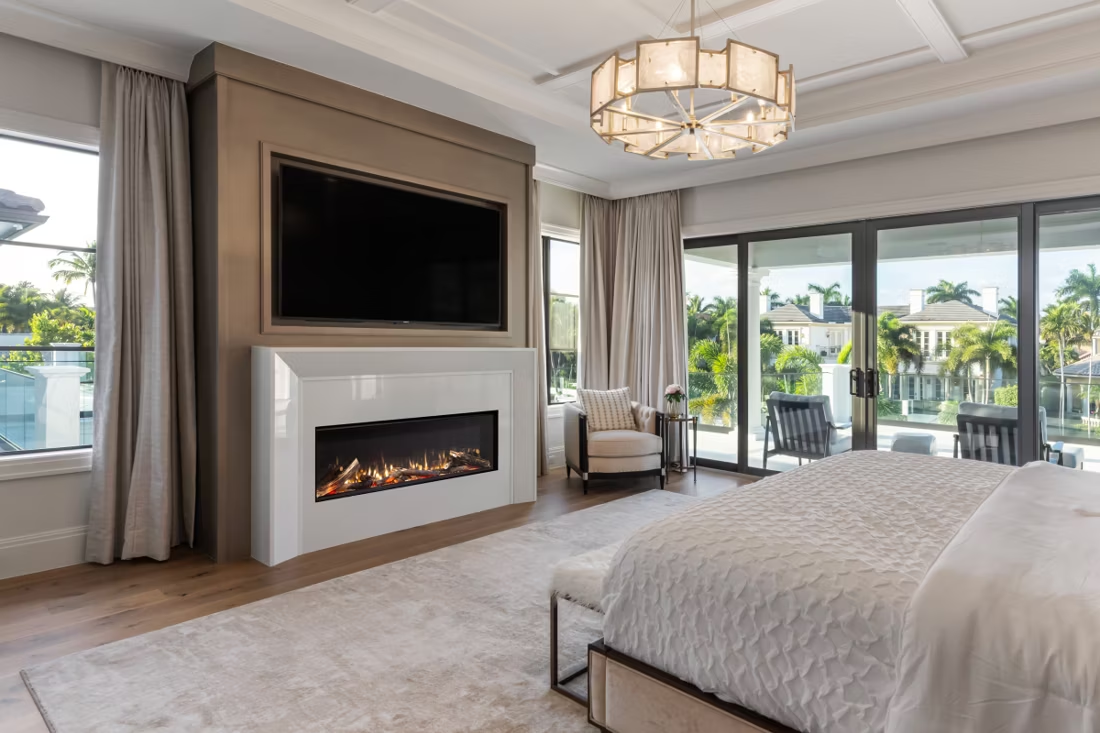
Yes—with an asterisk. Fireplaces are hot and TVs don't like heat. Either put a mantel between them to deflect rising warmth, or choose a fireplace with heat-management technology that creates a cool zone on the wall above—the wall stays around 125 degrees, barely warm, while the room still gets full heat. If you like clean lines and don't want a mantel, heat management is the answer.
Does an electric fireplace need a vent or chimney?
No—that's its superpower. An electric fireplace needs a wall and an outlet, period. No vent pipe, no gas line, no clearances to design around, which is why it works in bedrooms, offices, apartments, and walls where venting a gas or wood unit would be impractical or impossible. Installation is typically the simplest and least expensive of any fireplace type.
Can I install a fireplace myself?
If you're putting a fire in your house on purpose, it's best to work with an expert. Unless you're genuinely experienced in framing, gas line, vent pipe, and the national code on clearances to combustibles, have a professional do it—and ideally the same company that sells you the fireplace, so warranty, service, and liability all live under one roof.
What is an in-home preview and do I need one?
It's a visit where a hearth professional measures your space, confirms the model you picked actually works in your home, and walks the specs—framing, gas line, venting, finish work—before anything is ordered. Some details you just can't know until you see the house. Never make a down payment without one; it's the single most-skipped step that burns buyers.
Stove and Fireplace Dealers in Grand Traverse County
Fireside Service & Installation
Get your free Project Guide & Parts List for an electric fireplace in Grand Traverse County.
Tell me about your home or property—cottage, condo, or full-time residence—and I'll match you with a trusted local Grand Traverse County dealer and send over a free Project Guide & Parts List: the right unit, circuit requirements if any, and a recommended installer for your electric heat project.
Find Your Fireplace →