
Pellet heat built for Dickinson County's 8,708-degree-day winters.
From Iron Mountain and Kingsford out to Norway, Felch, and Sagola, winters here average lows near 6°F—cold enough to rival International Falls, Minnesota. A pellet stove or insert gives you thermostat-set, hands-off heat through the long U.P. season, and we'll match you with a trusted local dealer who can size and install it correctly.
Every Project Starts From One of These Five Situations
Consistent, thermostat-controlled heat for the deep U.P. winters.
Dickinson County sits in Michigan's Upper Peninsula, anchored by Iron Mountain and its twin city Kingsford, with Norway, Felch, and Sagola spread across the surrounding hardwood forest. Classified climate zone 6A, the county has a heating load in the same league as International Falls, Minnesota, with an average winter low near 6°F. That kind of cold means a heat source has to run for months without much fuss, night after night, whether anyone's tending it or not.
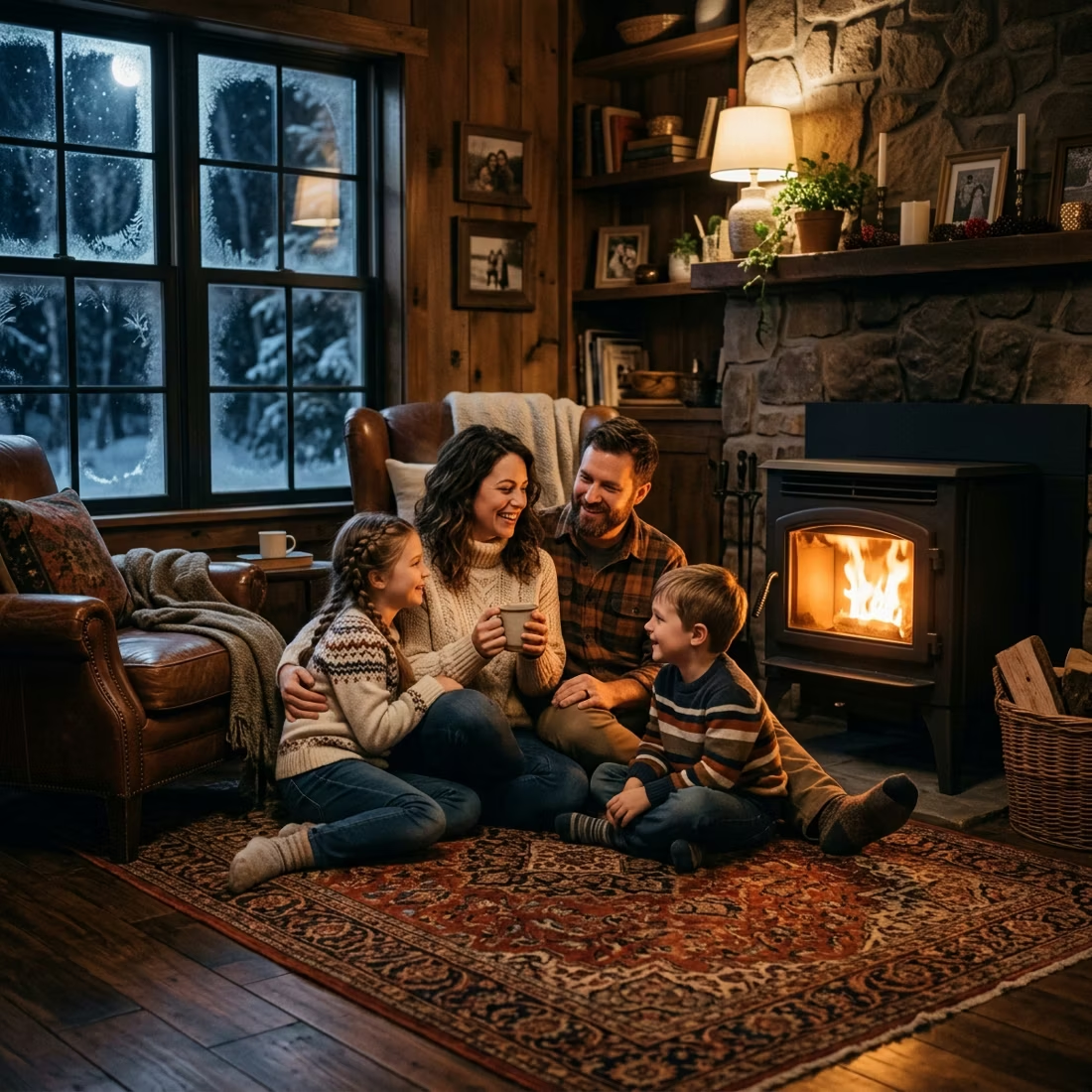
The county's oak, maple, birch, and ash forests aren't just firewood stock—they're also the feedstock for the hardwood pellets sold regionally by producers like Lignetics and Somerset Pellet Fuel, with additional supply moving through Indeck Energy Services. A pellet stove or insert loads from a hopper and runs on a thermostat, which makes it a practical fit for anyone in Dickinson County who wants wood-adjacent heat without splitting, stacking, and feeding a firebox by hand through a winter that runs from October into April. There are no local air quality restrictions on burning here, so the appeal is less about smoke management and more about reliable, set-it heat during the coldest stretches.
Three steps. No salesperson until you're ready.
Tell us about your project
Your zip code, your situation, and the fuel you're leaning toward—or let the answers point you to one.
See what's actually available
The brands dealers within 100 miles genuinely carry—real options, never a catalog mirage.
Get your dealer & Project Guide
A trusted local dealer, plus the free Project Guide & Parts List that names every component of the job.
Frequently Asked Questions
How much does a pellet stove or insert installation cost in Dickinson County?
Most pellet stove and insert installations in Dickinson County run in the $3,000 to $6,500 range, depending on the unit, whether you're venting through an exterior wall or an existing chimney, and whether a hearth pad or floor protection needs to be added for code clearance. A freestanding pellet stove venting straight out through an exterior wall is typically the least expensive path since it avoids chimney work entirely. A pellet insert going into an existing masonry fireplace costs a bit more once a liner and venting adapter are factored in. A local dealer can give you a firm number after seeing the space.
What size pellet stove do I need for a Dickinson County home?
Sizing comes down to square footage, insulation, and how much of the heating load you want the stove to carry. With Dickinson County facing a heating load in the same league as International Falls, Minnesota, most homes here need a mid-to-large pellet stove—one that can run 2 to 3 bags a day on the coldest nights—rather than the smaller units sized for milder climates. A stove meant to supplement a furnace in one main living space can run smaller than one meant to be the primary heat source for an older farmhouse near Felch or Sagola with less insulation. A local dealer will walk your home and size it based on your actual layout rather than a generic square-footage chart.
Is a pellet stove a good backup heat source during a power outage?
Not on its own. Pellet stoves rely on an electric auger to feed fuel and a blower to distribute heat, so they stop running the moment the power goes out—a real consideration in Dickinson County, where ice storms and heavy snow loads can knock out power for hours or longer. Some homeowners pair a pellet stove with a battery backup unit or a small generator specifically to keep the auger and igniter running through an outage. If uninterrupted heat during outages is the priority, a wood stove that needs no electricity is worth comparing before you decide.
Where can I buy pellets in Dickinson County?
Local hearth dealers and hardware suppliers in the Iron Mountain and Kingsford area typically stock hardwood pellets from regional producers including Lignetics and Somerset Pellet Fuel, with additional volume distributed through Indeck Energy Services. Hardwood pellets made from the oak, maple, birch, and ash common to the region tend to run a bit less ash than softwood blends, which matters for anyone burning through a full U.P. winter. Buying a season's supply—usually 3 to 5 tons for a primary-heat home—ahead of the first cold snap is standard practice, since demand and pricing both tighten once winter sets in.
Do I need a permit to install a pellet stove in Dickinson County?
Yes—a building permit is required for a new pellet stove or insert installation through Dickinson County's building department, covering the appliance clearance, hearth protection, and venting path. Most local dealers handle the permit application as part of the installation, so you're not left coordinating it yourself. Unlike some western states, Michigan doesn't run winter burn-curtailment programs, and Dickinson County has no air quality non-attainment issues, so there's no additional restriction on when you can run the stove once it's installed and permitted.
What's the best pellet stove for Dickinson County's cold winters?
Look for a stove with a large hopper—40 to 60 pounds—so it can run through a full overnight burn without a refill on the single-digit nights that are typical here. Higher-BTU units (60,000+ BTU) from manufacturers like Harman and Lopi are built for exactly this kind of extended cold-climate use and are common choices in northern Michigan and the Upper Peninsula. If the stove needs to be the primary heat source for an older, less-insulated home near Norway or Felch, size up rather than down—a stove running near its max output constantly won't last as long as one with headroom.
How often does a pellet stove need to be cleaned and serviced?
Plan on cleaning the burn pot and ash pan weekly during heavy winter use, and a full professional service—including the exhaust vent, hopper, auger, and gaskets—once a year, ideally before the season starts in the fall. Dickinson County's long burning season, often October through April, means more total run hours than milder climates see, so sticking to the maintenance schedule matters more here, not less. Local dealers who sell pellet equipment typically offer this service directly or can point you to someone who does.
What's the difference between a pellet stove and a pellet insert?
A pellet stove is a freestanding unit that vents through an exterior wall or existing chimney and can go almost anywhere in the home with the right clearances. A pellet insert is built to slide into an existing masonry fireplace opening, using a vent kit routed up the existing chimney to convert an old wood fireplace into an automated, thermostat-controlled heat source. For Dickinson County homes with an existing fireplace they don't use much, an insert is often the more efficient fix. For homes without a fireplace already in place, a freestanding stove is the simpler installation.
Pellet vs. gas—which is right for my home in Dickinson County?
Gas fireplaces run on natural gas where it's available or propane where it isn't, and give you instant on-off heat with no fuel handling. Pellet stoves burn compressed hardwood pellets, need a hopper refill every day or two in cold weather, and generally cost less to operate ton-for-ton than propane in a rural county like this one. Gas wins on convenience and works during outages if the unit has battery-backup ignition; pellet wins on lower fuel cost and a more wood-like flame at a lower price point than a wood stove. A local dealer can walk through the numbers for your specific home and fuel access.
What's the difference between an insert and a zero-clearance fireplace?
An insert is a fireplace that slides into a pre-existing wood-burning fireplace—if you don't have one, there's nothing to insert it into. A zero-clearance fireplace is built into a framed wall, which makes it the answer for remodels and new construction. Simple test: existing masonry fireplace means insert; blank or framed wall means zero-clearance.
Why is a fireplace insert so efficient?
An insert does two things: it seals the chimney completely, so you stop losing air you already paid to heat, and it radiates warmth into the room through the firebox and glass. Most add a heat-exchange fan that pulls cool room air underneath, wraps it around the hot firebox, and pushes it back out warm. Your home is more efficient before you've even lit the first fire.
Does a fireplace add value to my home?
On average, a fireplace adds back to the home about the same amount you spent installing it. Add the monthly savings from heating the rooms you actually use instead of the whole house—often hundreds of dollars a year—and the value case is strong before you even count what a fire does for how your family uses the room.
Can a fireplace actually lower my heating bill?
Yes—by creating a comfort zone. A furnace heats every square foot of the house just to warm the one room you're in; a gas fireplace on low burns roughly a sixth of the gas a typical furnace does. Set the furnace around 55–60 degrees as a baseline, then heat the rooms your family actually uses. Families who heat this way commonly save $20–$60 a month.
Stove and Fireplace Dealers in Dickinson County
Pellet Brands Stocked Around Dickinson County
Manufacturers will point you to the nearest stocking dealer.
Find your pellet stove in Dickinson County.
Tell us about your home and we'll match you with a trusted local dealer and send over a free Project Guide & Parts List—the exact stove or insert, vent kit, and parts recommended for your Dickinson County home.
Find Your Fireplace →