
Steady, clean pellet heat for Clare County's long winters.
With winter lows averaging 16°F and nearly 6,900 heating degree days a year, Clare County homes and lake cottages need heat that runs steady without daily wood-splitting. Find the right pellet stove or insert and connect with a trusted local dealer.
Every Project Starts From One of These Five Situations
Consistent warmth without the wood-splitting work.
Clare County sits in Michigan's north-central Lower Peninsula, bordering the Huron-Manistee National Forests, with a heating season that runs deep into spring—Climate Zone 6A, roughly 6,899 heating degree days a year, putting winter heating demand here in the same territory as Madison, Wisconsin. With a year-round population of just 6,711, the county is a mix of full-time residents around Harrison and Clare and seasonal owners at lake communities like Budd Lake, Lake Shamrock, and the Farwell area, many of whom want reliable heat without committing to a woodpile they only visit on weekends.
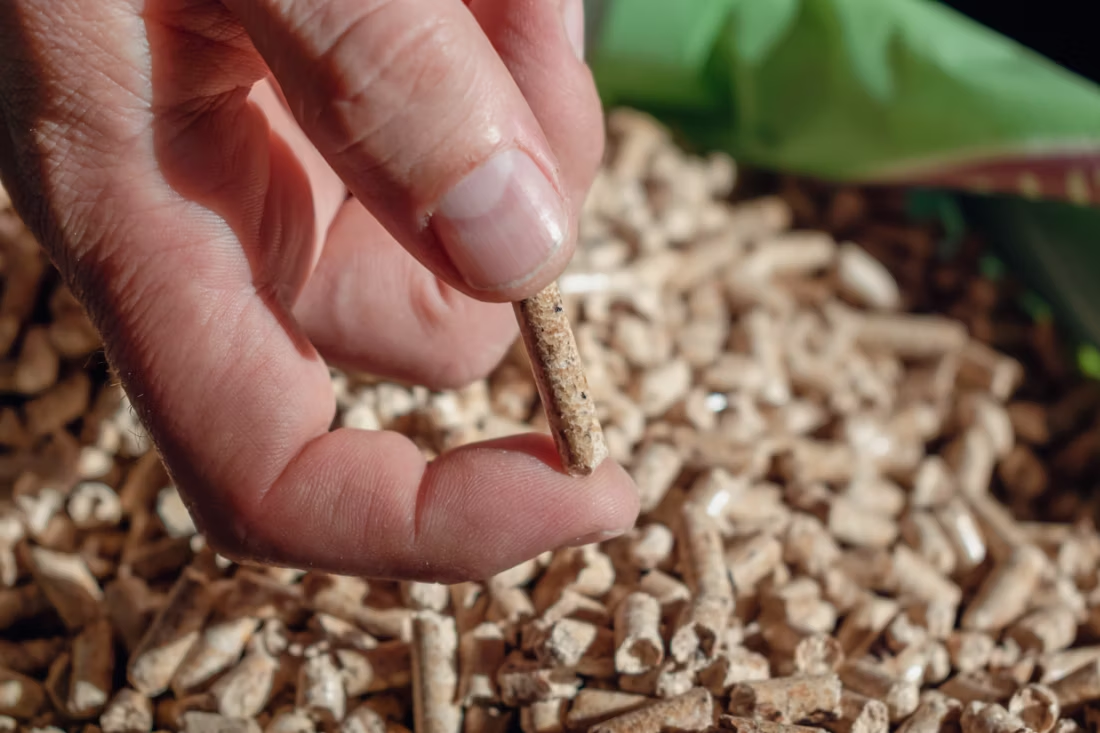
Oak, maple, birch, and ash are the hardwoods that dominate local forests, and plenty of Clare County residents still cut and split their own firewood under Forest Service permits (May through October, $10 to $20 per cord through the Huron-Manistee National Forests). But pellet stoves offer a real alternative: load a hopper, set a thermostat, and get consistent heat for days without tending a fire—a meaningful advantage for older homeowners, cabin owners who aren't around to feed a stove daily, and anyone tired of stacking and hauling cordwood. Michigan is also home to actual pellet production, with Somerset Pellet Fuel manufacturing in-state and Lignetics and Indeck Energy Services supplying the broader Midwest region, so bagged fuel isn't hard to find locally even in a county this size.
Three steps. No salesperson until you're ready.
Tell us about your project
Your zip code, your situation, and the fuel you're leaning toward—or let the answers point you to one.
See what's actually available
The brands dealers within 100 miles genuinely carry—real options, never a catalog mirage.
Get your dealer & Project Guide
A trusted local dealer, plus the free Project Guide & Parts List that names every component of the job.
Frequently Asked Questions
How much does a pellet stove installation cost in Clare County?
Pellet stove and insert installations across northern Michigan typically run in the $3,000 to $6,000 range, depending on the unit, whether it's a freestanding stove or an insert going into an existing fireplace, and how far the exhaust vent has to travel through an exterior wall. Inserts going into a masonry fireplace you already have tend to land on the lower end since the chimney chase is already in place. New construction or a stove going into a room without an existing hearth or vent path costs more once wall penetration and venting materials are factored in. A local dealer will give you a firm number after seeing your home, and for cottages around Budd Lake or Lake Shamrock, expect a small travel charge if the installer is coming from Harrison or Clare.
What size pellet stove do I need for my home?
Sizing depends on square footage, ceiling height, and how well insulated the space is—older lake cottages around Clare County often leak more heat than newer full-time homes, so they need more output for the same footprint. As a rough guide: smaller units (under 40,000 BTU) work for a single large room or a compact cottage, mid-size stoves (40,000–60,000 BTU) handle most main living areas in a year-round home, and larger units can serve as primary heat for a well-insulated whole house. Given the county's roughly 6,900 heating degree days, undersizing is the more common mistake—a stove that's just barely adequate on a mild December day will struggle during a stretch of single-digit lows in January. A local dealer will size your home for free during an in-home visit.
Where can I buy pellets in Clare County?
Bagged pellets from regional producers including Lignetics, Somerset Pellet Fuel (manufactured right here in Michigan), and Indeck Energy Services are typically available through farm supply and hardware retailers serving the Harrison, Clare, and Farwell areas, often stocked heaviest in fall as burning season approaches. Pricing and species (softwood vs. hardwood pellet blends) vary by retailer and season, so it's worth asking your local dealer which brands they stock or recommend once you've settled on a stove—some manufacturers specify pellet quality requirements that affect warranty coverage.
Do I need a permit to install a pellet stove in Clare County?
In most cases, yes—a building permit is required for a new pellet stove installation through the local building department covering your township, since the unit involves both a wall or roof vent penetration and, for hardwired models, electrical work. Requirements can vary slightly between Clare County's townships, so it's worth confirming with your local building office before work begins. Most established hearth dealers handle this paperwork as part of the installation, which is one advantage of working with a certified installer rather than a DIY setup.
Pellet stove vs. wood stove—which makes more sense in Clare County?
Wood stoves burn cordwood you can cut yourself—oak, maple, birch, and ash are all common locally, and Forest Service permits through the Huron-Manistee National Forests run just $10 to $20 per cord from May through October. Wood also keeps working with no electricity, which matters during winter storm outages. Pellet stoves trade that self-sufficiency for convenience: no splitting, no stacking, more even heat output, and a cleaner burn, but they need electricity to run the auger and blower and rely on bagged fuel you buy rather than cut. For full-time Clare County residents with the time and space to process wood, a wood stove often wins on cost. For seasonal cottage owners, older homeowners, or anyone who wants heat without the labor, pellet is usually the better fit.
What's the best pellet stove for Clare County's climate?
With winters that regularly drop into the single digits and a heating season stretching into spring, look for a pellet stove with a large hopper capacity—40 to 60+ pounds—so it can run overnight or longer without a refill during the coldest stretches. Established brands like Harman, Englander, and US Stove all make models rated for sustained cold-climate use, with auto-ignition and thermostatic control that keeps output steady rather than cycling hard. For cottages that sit unoccupied for stretches during the week, a model with a reliable auto-restart after a brief power blip is worth asking about. A local dealer can match hopper size and BTU output to your specific home and usage pattern.
How much maintenance does a pellet stove need?
Pellet stoves need more frequent attention than a wood stove but less than you'd think: the ash pan typically needs emptying every few days to a week during heavy use, the burn pot needs scraping periodically to keep the auto-ignition working properly, and the glass and hopper should be checked regularly for pellet dust and clumping. A full professional cleaning and inspection—including the exhaust venting and combustion blower—is recommended annually, usually before the start of burning season each fall. Skipping this is the most common reason pellet stoves start jamming or underperforming partway through a Clare County winter.
Will my pellet stove work if the power goes out?
No—pellet stoves rely on electricity to run the auger that feeds fuel and the blower that distributes heat, so a power outage shuts the unit down. This matters in rural Clare County, where winter storms can knock out power for hours or longer. Some homeowners pair a pellet stove with a small battery backup or generator specifically to ride out short outages, and manufacturers sell dedicated backup battery packs sized for exactly this purpose. If uninterrupted heat during outages is your top priority, a wood stove that needs no electricity—burning the oak, maple, or ash common to the area—is worth considering as a backup or primary alternative.
Pellet stove vs. electric fireplace—which should I choose?
An electric fireplace plugs into a standard outlet, needs no venting or fuel storage, and installs almost anywhere in an afternoon—but it produces modest heat output better suited to supplemental warmth than to offsetting a real Michigan winter. A pellet stove burns bagged fuel, needs a vented installation and an electrical connection for the auger and blower, but delivers meaningfully more heat output—enough to serve as primary heat in a well-insulated home. For a Clare County lake cottage used mainly for ambiance on weekends, electric can make sense. For a home that needs to hold its own against 6,900 heating degree days, pellet is the stronger choice.
Why is a fireplace insert so efficient?
An insert does two things: it seals the chimney completely, so you stop losing air you already paid to heat, and it radiates warmth into the room through the firebox and glass. Most add a heat-exchange fan that pulls cool room air underneath, wraps it around the hot firebox, and pushes it back out warm. Your home is more efficient before you've even lit the first fire.
How often does a pellet stove need cleaning?
A clean pellet stove is a happy pellet stove. Plan on cleaning the burn pot about once a week when you're burning regularly—ash and clinkers gum up the air holes just like a pellet barbecue. Most pellet stove problems trace back to skipped cleaning that nobody explained up front. Some designs make it easy with a trapdoor burn pot: pull a lever and the gunk drops into the ash pan.
Can I install a fireplace myself?
If you're putting a fire in your house on purpose, it's best to work with an expert. Unless you're genuinely experienced in framing, gas line, vent pipe, and the national code on clearances to combustibles, have a professional do it—and ideally the same company that sells you the fireplace, so warranty, service, and liability all live under one roof.
Does a fireplace add value to my home?
On average, a fireplace adds back to the home about the same amount you spent installing it. Add the monthly savings from heating the rooms you actually use instead of the whole house—often hundreds of dollars a year—and the value case is strong before you even count what a fire does for how your family uses the room.
Stove and Fireplace Dealers in Clare County
Fireside Stoves, Fireplaces & Outdoor Cooking
Pellet Brands Stocked Around Clare County
Manufacturers will point you to the nearest stocking dealer.
Find your pellet stove in Clare County.
Tell us a bit about your home and we'll match you with a trusted local dealer and send over a free Project Guide & Parts List—sized for your space, with the vent kit and hardware spelled out, so nothing gets guessed at.
Find Your Fireplace →