
Find a pellet stove built for Cheboygan County's 8,000-degree-day winters.
From the harbor at Cheboygan to Indian River and Wolverine, winters here average 11°F lows and pile up more than 8,000 heating degree days. We'll match you with a local dealer who can size and install the right pellet stove or insert for your home.
Every Project Starts From One of These Five Situations
Steady, hands-off heat for a Great Lakes snowbelt county.
Cheboygan County sits at the top of Michigan's Lower Peninsula, wrapped by Lake Huron and the Straits of Mackinac, with a year-round population of just 7,376 spread thin across small towns, lake cottages, and state forest land. Climate zone 6A puts it in company with Duluth, Minnesota, for sustained cold—winter lows average 11°F and the county racks up over 8,000 heating degree days most years, meaning furnaces and supplemental heaters run hard from October through April. The hardwood forests that surround towns like Indian River and Wolverine are heavy with oak, maple, birch, and ash, the same species regional pellet mills compress into the fuel that heats a lot of local homes.
Pellet stoves have carved out a real niche here because they solve a problem cordwood doesn't: hands-off, thermostatically controlled heat that doesn't require splitting, stacking, or feeding a fire every few hours—a meaningful advantage for the county's many seasonal cottage owners and retirees on fixed lake properties. With no air quality non-attainment issues or burn restrictions on the books, there's nothing stopping a pellet stove from running full-time through the cold months. Regional suppliers including Indeck Energy Services, Lignetics, and Somerset Pellet Fuel keep bagged pellets reasonably accessible even in a county this rural, which matters when you're 30 minutes from the nearest hardware store.
Three steps. No salesperson until you're ready.
Tell us about your project
Your zip code, your situation, and the fuel you're leaning toward—or let the answers point you to one.
See what's actually available
The brands dealers within 100 miles genuinely carry—real options, never a catalog mirage.
Get your dealer & Project Guide
A trusted local dealer, plus the free Project Guide & Parts List that names every component of the job.
Frequently Asked Questions
How much does a pellet stove installation cost in Cheboygan County?
A typical pellet stove or insert installation in Cheboygan County runs roughly $3,000 to $6,500, depending on whether you're installing a freestanding stove, converting an existing masonry fireplace to a pellet insert, and how far the vent run has to travel through an exterior wall. Homes without an existing fireplace or chimney chase generally land on the higher end once framing and venting are factored in. Because so much of the county is seasonal or lake-cottage housing, installers also account for crawlspace or slab conditions that differ from a typical year-round home. A local dealer will give you a firm number after seeing your space.
What size pellet stove do I need for my home?
With winter lows averaging 11°F and heating degree days north of 8,000, Cheboygan County homes generally need more heating capacity than a stove rated for a milder climate would suggest. Small pellet stoves (up to 1,200 sq ft) work well for a single-story cottage or a supplemental-heat setup, while medium units (1,200–2,000 sq ft) cover most year-round homes in and around Cheboygan and Indian River. Older, less-insulated lake homes—common throughout the county—often need to size up a notch even at modest square footage, since drafty walls and single-pane windows push heating loads higher than the floor plan alone would indicate. A local dealer can size your stove correctly during an in-home visit rather than guessing off square footage alone.
Where can I find certified pellet stove installers near me?
Look for installers with NFI (National Fireplace Institute) pellet-specialist certification, which covers proper venting, hopper placement, and electrical hookup for auger and blower components. Given how spread out Cheboygan County is—from the city of Cheboygan out to Tower, Afton, and the Mullett Lake area—confirm whether your dealer covers your specific address before scheduling, since travel time can affect both availability and any service-call charges. A dealer who both sells and installs the unit is worth prioritizing here, since it keeps warranty coverage and any troubleshooting under one roof rather than splitting the job between a retailer and a separate installer.
What's the difference between a pellet stove and a pellet insert?
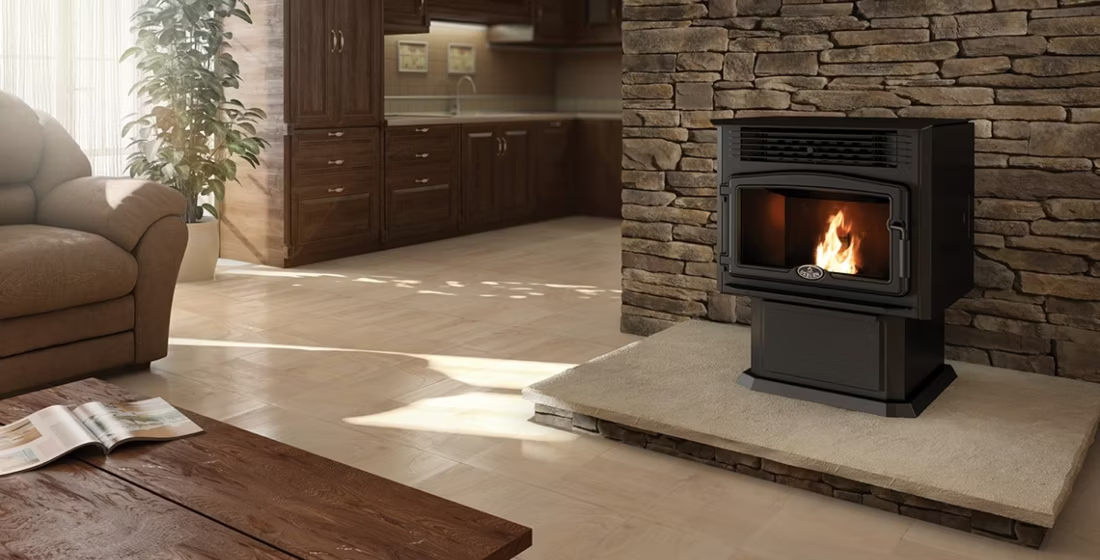
A pellet stove is a freestanding unit that sits on a hearth pad and vents through a wall or existing chimney chase—it can go almost anywhere with the right clearances, which makes it a common choice in Cheboygan County's cottages and additions that were never built with a fireplace in mind. A pellet insert is built to slide into an existing masonry fireplace opening, converting an old open hearth into a sealed, thermostatically controlled heat source while reusing the chimney you already have. For county homes with an existing wood fireplace that's mostly decorative, an insert is often the more efficient upgrade; for homes without one, a freestanding stove is the simpler install.
Do I need a permit to install a pellet stove in Cheboygan County?
Yes—new pellet stove and insert installations require a building permit, coordinated through the county building department for unincorporated areas or the local municipal office within city limits. The permit process mainly confirms proper clearances, hearth pad specs, and venting termination points relative to windows, doors, and property lines. Most dealers who sell and install pellet stoves in the county handle the permit paperwork as part of the job, which is one more reason to work with an established local retailer rather than a big-box purchase you install yourself.
What's the best pellet stove for Cheboygan County's climate?
For a climate that regularly sees single-digit lows and stacks up over 8,000 heating degree days, look for a pellet stove with a large hopper capacity—40 to 80 pounds—so it can run through a full overnight cycle without a refill, and a heat output in the 40,000–60,000 BTU range for a primary-heat setup in a year-round home. Because pellet stoves need electricity to run the auger and blower, and lake-effect storms off Lake Huron can knock out power for stretches in the winter, it's worth asking your dealer about models with a battery-backup option or planning a small generator hookup if you're relying on pellet heat as anything more than supplemental warmth. Brands stocked by regional suppliers like Indeck Energy Services and Lignetics-affiliated dealers are a reasonable starting point, but your local retailer can match hopper size and BTU output to your specific home.
How often does a pellet stove need to be cleaned and serviced?
Plan on cleaning the burn pot and ash removal every few days to weekly during regular winter use, a full interior cleaning of the hopper, auger, and exhaust fan monthly, and a professional annual service before the heating season starts in earnest—typically September in Cheboygan County. Heavy users running a pellet stove as primary heat through a full 8,000-degree-day winter will want to stay closer to the weekly end of that cleaning schedule, since ash buildup affects both efficiency and safe operation. Local dealers and hearth service providers can handle the annual inspection and any glass, gasket, or igniter replacement.
Where can I buy pellets in Cheboygan County?
Regional pellet brands including Indeck Energy Services, Lignetics, and Somerset Pellet Fuel supply much of northern Michigan, and local hearth retailers and farm supply stores typically stock bagged pellets by the ton or by the pallet, generally in the $250 to $320 per ton range depending on brand and hardwood versus softwood blend. Given the county's rural spread—from Cheboygan proper out to Wolverine and Tower—many homeowners buy a season's supply by the pallet in early fall rather than making repeat trips once snow closes in. Ask your dealer which brands they stock locally, since availability can shift through the winter as demand peaks.
Pellet stove vs. wood stove—which is right for my home?
Wood stoves burn the oak, maple, birch, and ash that's abundant throughout Cheboygan County's forests, work without electricity, and are the better choice if you want backup heat during the power outages that lake-effect storms occasionally bring. Pellet stoves trade that off-grid resilience for real convenience—load the hopper, set the thermostat, and let it run for a day or more without tending—plus less ash and no chimney creosote buildup to manage. Since the county has no air quality non-attainment issues, there's no regulatory push toward one fuel over the other; it comes down to whether you want the self-sufficiency of wood or the low-maintenance operation of pellets. Many county homeowners run pellet as their daily-use heat and keep a wood stove or fireplace as backup for outages.
How often does a pellet stove need cleaning?
A clean pellet stove is a happy pellet stove. Plan on cleaning the burn pot about once a week when you're burning regularly—ash and clinkers gum up the air holes just like a pellet barbecue. Most pellet stove problems trace back to skipped cleaning that nobody explained up front. Some designs make it easy with a trapdoor burn pot: pull a lever and the gunk drops into the ash pan.
What's the difference between an insert and a zero-clearance fireplace?
An insert is a fireplace that slides into a pre-existing wood-burning fireplace—if you don't have one, there's nothing to insert it into. A zero-clearance fireplace is built into a framed wall, which makes it the answer for remodels and new construction. Simple test: existing masonry fireplace means insert; blank or framed wall means zero-clearance.
Can a fireplace actually lower my heating bill?
Yes—by creating a comfort zone. A furnace heats every square foot of the house just to warm the one room you're in; a gas fireplace on low burns roughly a sixth of the gas a typical furnace does. Set the furnace around 55–60 degrees as a baseline, then heat the rooms your family actually uses. Families who heat this way commonly save $20–$60 a month.
Does a fireplace add value to my home?
On average, a fireplace adds back to the home about the same amount you spent installing it. Add the monthly savings from heating the rooms you actually use instead of the whole house—often hundreds of dollars a year—and the value case is strong before you even count what a fire does for how your family uses the room.
Stove and Fireplace Dealers in Cheboygan County
Pellet Brands Stocked Around Cheboygan County
Manufacturers will point you to the nearest stocking dealer.
Find your pellet stove in Cheboygan County.
Tell us a bit about your home and we'll match you with a trusted local dealer and a free Project Guide & Parts List—the exact stove or insert, vent kit, and installation plan for your Cheboygan County home.
Find Your Fireplace →