
Keep Your Family Warm and Safe—No Matter What
Burton sits deep in natural-gas territory, so wood stoves are rare here—but for the right home, on the right lot, a local dealer can still make one work.
Every Project Starts From One of These Five Situations
A suburb built for natural gas, not firewood.
Burton's winters are genuinely cold—a long, roughly seven-month heating season and an average winter low of 15°F put it in the same range as Buffalo, NY, and residents here know what a long Michigan February feels like. But cold weather alone doesn't drive wood-stove demand, and Burton is a good example of why. This is a fully built-out Genesee County suburb of Flint, with modest residential lot sizes and natural gas mains already running to nearly every street. Consumers Energy serves the area for both electric and gas, and most homes were built with a gas furnace as the default heat source from day one.
That infrastructure is a big part of why wood fuel relevance in Burton is genuinely low, not just marketing-speak. There's less of the wooded acreage you'd find in rural Genesee County—out toward Otisville, Clio, or Genesee Township—where a homeowner might have oak, maple, birch, or ash growing on their own property and a good reason to burn it. In Burton proper, wood stoves show up mostly in older homes built before the gas trunklines went in, on larger corner lots at the city's edge, or as a deliberate backup-heat choice for homeowners who remember losing power during an ice storm and don't want to be without heat again.
Three steps. No salesperson until you're ready.
Tell us about your project
Your zip code, your situation, and the fuel you're leaning toward—or let the answers point you to one.
See what's actually available
The brands dealers within 100 miles genuinely carry—real options, never a catalog mirage.
Get your dealer & Project Guide
A trusted local dealer, plus the free Project Guide & Parts List that names every component of the job.
Frequently Asked Questions
Are wood stoves a realistic option for a home in Burton?
Yes, but it's a smaller and more deliberate decision here than in a rural or forested part of the state. Burton's housing stock is dense enough, and its natural gas service (through Consumers Energy) reliable enough, that most homeowners never seriously consider wood. Where it does make sense is in older homes with an existing masonry chimney, homes on larger lots that can accommodate wood storage, or as a dedicated backup heat source. A local dealer can tell you quickly, based on your specific address and home layout, whether a wood stove installation is practical or whether a gas or electric option would serve you better.
Why is wood heat less common in Burton than in more rural parts of Genesee County?
Two things: infrastructure and land. Burton has near-universal natural gas access, so the upfront and ongoing case for switching to wood is weaker than it is in townships without gas mains. It's also a fairly dense suburb—smaller lots mean less room for a woodshed or a seasoned cordwood stack, and fewer homes have their own stand of oak or maple to harvest from. Head out toward Otisville, Clio, or the unincorporated parts of Genesee County and you'll see wood heat show up far more often, mostly because those homes are more likely to sit on wooded acreage.
How much does a wood stove installation cost for the Burton homeowners who do choose one?
Because wood installs are infrequent here, pricing is less standardized than in markets with a deep bench of wood-stove specialists, but homeowners typically report all-in costs in the $3,500 to $8,500 range. The low end covers a straightforward EPA-certified stove installed into an existing masonry chimney; the high end covers a home without an existing chimney, where a full Class A chimney system has to be built through the roof. A local dealer will give you a firm number after seeing your home, since venting path is the single biggest cost variable.
Do I need a permit to install a wood stove in Burton?
Yes—a new solid-fuel appliance is a mechanical change to the home, and the City of Burton's building department requires a permit for it, the same as it would for a furnace replacement or a structural addition. Because these installs are uncommon locally, it's worth having your installer confirm current clearance and venting requirements directly with the city rather than assuming rules from a more wood-heavy Michigan county apply here. A qualified local dealer will typically pull this permit as part of the installation.
What wood species are available if I do install a stove in Burton?
Oak, maple, birch, and ash are the common species around Genesee County, and all four season well and burn hot—oak and maple in particular are dense, long-burning hardwoods that hold coals overnight. Because Burton itself has limited wooded acreage, most homeowners here buy seasoned cordwood from suppliers serving the greater Flint area rather than cutting their own, so budget $200 to $300 per cord depending on species and how well it's been dried.
Can a wood stove serve as backup heat during a Burton winter power outage?
This is actually the strongest local case for wood heat. Burton's gas furnaces still need electricity to run the blower and ignition, so a winter ice storm that knocks out power can leave a gas-heated home cold even though the gas is still flowing. A wood stove burns without any electrical input at all, which is why some Burton homeowners install one specifically as a hedge against multi-day outages rather than as a primary heat source. If that's your main motivation, say so when you talk to a local dealer—it changes which stove size and features make sense.
Wood stove vs. wood insert—which fits an older Burton home better?
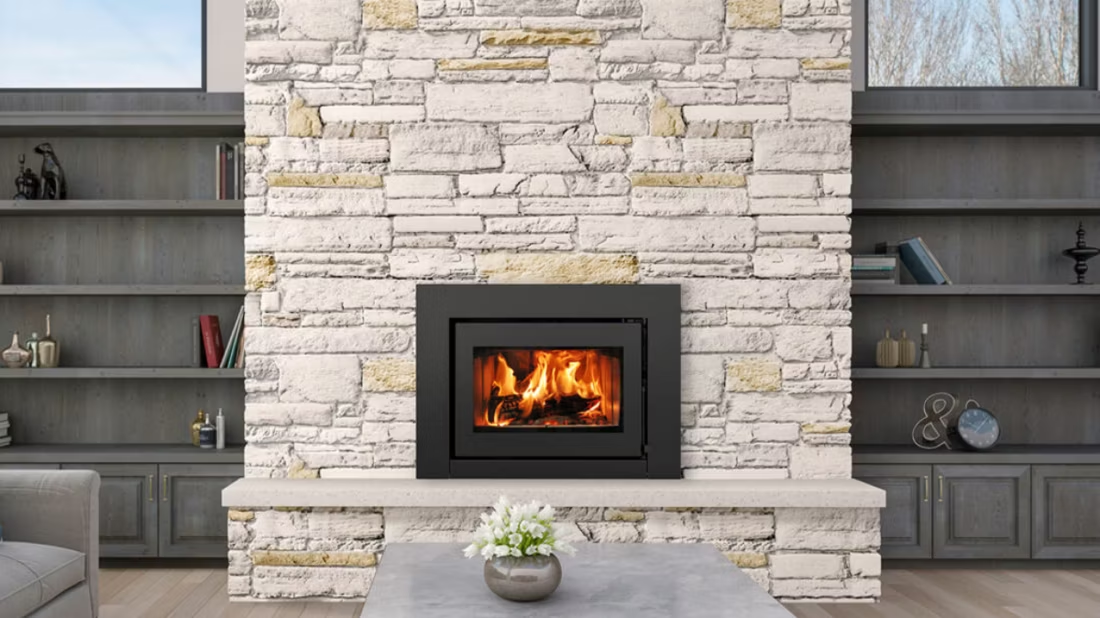
If your home already has a working masonry fireplace—more common in Burton's older, pre-1970s housing stock near the city's core—a wood insert is usually the better fit. It slides into the existing firebox, uses your existing chimney with a liner, and turns a heat-losing open fireplace into an actual heat source. A freestanding wood stove makes more sense in a newer home without an existing chimney, though building the required Class A venting from scratch adds meaningfully to the installed cost.
Should I consider a pellet stove instead of wood in Burton?
Pellet stoves are also uncommon in Burton for the same underlying reason as wood—the area's natural gas access makes solid-fuel heat a specialty choice rather than a default one. That said, pellet stoves burn cleaner, produce less ash, and are easier to load and maintain than cordwood, with regional brands like Lignetics and Somerset Pellet Fuel supplying the area. The tradeoff is that pellet stoves need electricity to run the auger and blower, so unlike a wood stove they won't help you through a power outage. If backup heat is the goal, wood beats pellet here; if convenience matters more, pellet is worth a look.
Wood vs. gas—which is right for my Burton home?
For the vast majority of Burton homes, gas wins on convenience, cost of entry, and fit with the existing housing stock—natural gas service from Consumers Energy is already at the curb, and a gas fireplace or insert can usually be installed without the venting overhaul a wood stove sometimes requires. Wood makes more sense in a narrower set of cases: homes with an existing masonry fireplace, larger lots with access to seasoned oak or maple, or households that specifically want a heat source that works when the power doesn't. A local dealer can walk through both options against your actual address and help you decide.
Why is my open fireplace making my house colder?
Open fireplaces suck—literally. As the fire burns, it consumes air your furnace already paid to heat and pulls it out through the chimney, so the house is actually colder after the fire goes out than before you lit it. An insert fixes this: it seals the chimney, puts fixed glass across the front, and turns that hole in your house into a real heat source.
Why is a fireplace insert so efficient?
An insert does two things: it seals the chimney completely, so you stop losing air you already paid to heat, and it radiates warmth into the room through the firebox and glass. Most add a heat-exchange fan that pulls cool room air underneath, wraps it around the hot firebox, and pushes it back out warm. Your home is more efficient before you've even lit the first fire.
How much should I budget for a fireplace?
For an average home—covering the fireplace, the vent pipe, and basic installation—a budget between $3,900 and $5,500 gives you a lot of options across wood, gas, and pellet. By the time you add finish work, gas line, and electrical, the average complete installation lands between $5,000 and $12,000 all-in. In a remodel or new build, a good rule is to put about 2.5% of the total project cost toward the fireplace.
What is an in-home preview and do I need one?
It's a visit where a hearth professional measures your space, confirms the model you picked actually works in your home, and walks the specs—framing, gas line, venting, finish work—before anything is ordered. Some details you just can't know until you see the house. Never make a down payment without one; it's the single most-skipped step that burns buyers.
Nearby Dealers
Hearth shops serving Burton and the surrounding area. Every listing shows whether it is a WhyFire partner, a dealer we have verified as authorized for the brands we recommend, or a local business carrying hearth products. No manufacturer pays for placement. How we verify dealers →
Autumn-Glo Fireplace Studio
Macsood’s Pool & Patio
Cjw Chimney & Fireplace
Macksood's
Pine Tree Heating & Ac
D & S Masonry Inc
Find your wood stove in Burton.
Tell us about your home and, if wood heat genuinely fits, we'll match you with a trusted local dealer and send a free Project Guide & Parts List—sized venting, real parts, no big-box guesswork.
Find Your Fireplace →