
Pellet Heat in Auburn Hills: What's Actually Realistic.
Auburn Hills sees real Michigan winters—average lows near 17°F and a long, demanding heating season—but pellet stoves remain a niche choice here. Here's an honest look at where they fit, and where DTE gas service or an electric option makes more sense.
Every Project Starts From One of These Five Situations
In Auburn Hills, pellet stoves are the exception, not the rule.
Auburn Hills is a dense, built-out Oakland County suburb—home to the Stellantis/Chrysler world headquarters, Oakland University, and Great Lakes Crossing, with subdivisions platted decades ago around natural gas and electric infrastructure rather than wood lots. At 956 feet elevation with a long, demanding winter heating season and average winter lows around 17°F, the climate here is genuinely cold—comparable to Buffalo, New York, minus the lake-effect snow totals. But cold weather alone doesn't create a pellet-heat market, and Auburn Hills never developed one the way northern Michigan or the Upper Peninsula did.
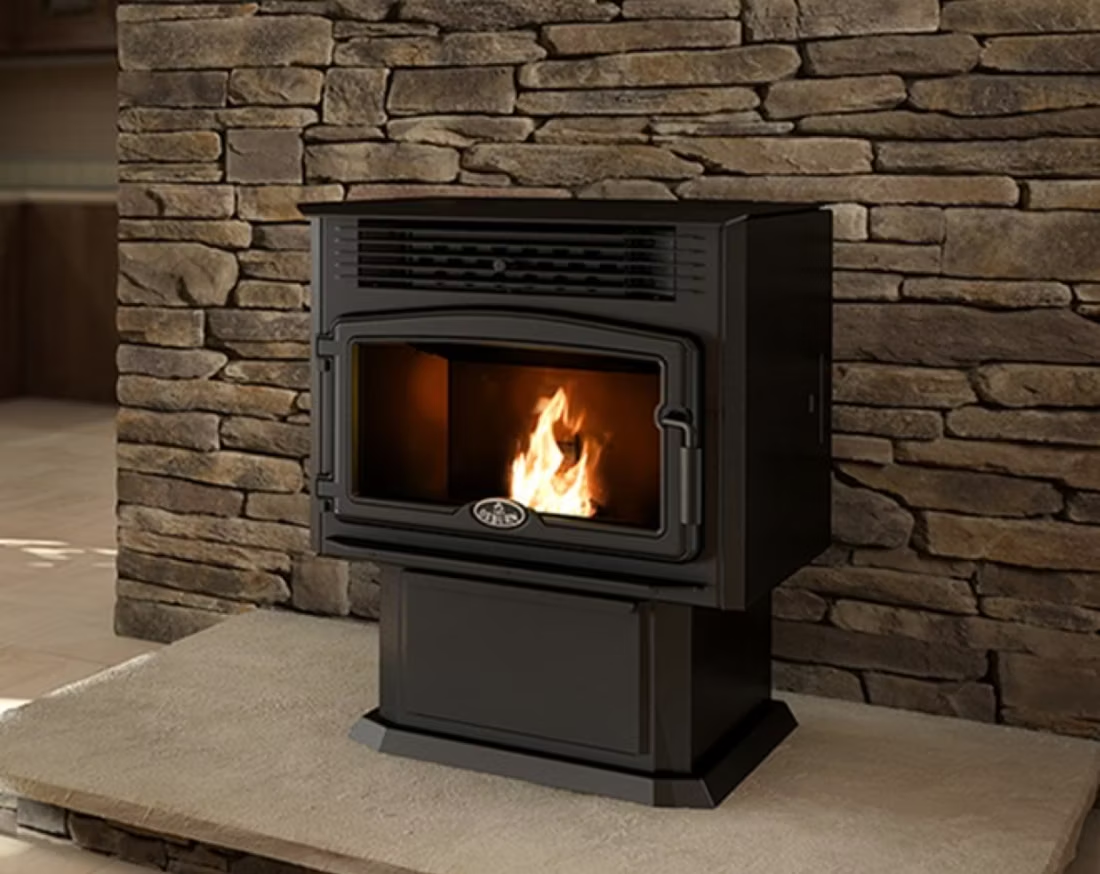
DTE's natural gas network reaches most homes in the city, which means homeowners looking for supplemental zone heat usually reach for a gas insert first. Pellet stoves still show up occasionally—in a finished basement, a sunroom addition, or a home where someone specifically wants the look and feel of a real flame—and regional suppliers like Indeck Energy Services, Lignetics, and Somerset Pellet Fuel do serve southeast Michigan. If you're one of the homeowners for whom pellet genuinely makes sense, I can still connect you with a local dealer who installs them correctly; this page is about giving you a straight answer on where pellet fits before you commit to it.
Three steps. No salesperson until you're ready.
Tell us about your project
Your zip code, your situation, and the fuel you're leaning toward—or let the answers point you to one.
See what's actually available
The brands dealers within 100 miles genuinely carry—real options, never a catalog mirage.
Get your dealer & Project Guide
A trusted local dealer, plus the free Project Guide & Parts List that names every component of the job.
Frequently Asked Questions
How much does a pellet stove installation cost in Auburn Hills?
Because pellet stoves are a small slice of the hearth market here, there isn't the same depth of local pricing data available as there is for gas inserts or electric fireplaces in Auburn Hills. Nationally, a freestanding pellet stove with venting typically installs for $3,500 to $6,500, and a pellet insert into an existing masonry fireplace often runs somewhat higher once a liner and hopper access are worked out. A local dealer who can look at your chimney or wall configuration in person will give you a firmer number—venting a pellet appliance differs from wood, and cost varies more by home layout than by stove brand.
Why don't more homes in Auburn Hills use pellet stoves?
Auburn Hills is a dense, built-out Oakland County suburb where subdivisions, corporate campuses, and retail centers like Great Lakes Crossing all sit on land developed around gas and electric utility service, not wood or biomass heating. DTE's natural gas network reaches the large majority of homes here, so when a homeowner wants supplemental zone heat, a gas insert or gas log set is usually the simplest option. Pellet stoves need a place to store 40-pound bags of fuel and a spot to vent, and in newer subdivisions with tighter lots and HOA rules, that's a harder ask than it would be in a more rural part of Michigan.
Where can I buy pellet fuel near Auburn Hills?
You won't find pellet fuel stocked on every corner the way you would in a heavier wood-heat market, but bags from Indeck Energy Services, Lignetics, and Somerset Pellet Fuel do show up at farm and feed stores and some hardware retailers around southeast Michigan. Because demand is lower here than in northern Michigan or the Upper Peninsula, it's worth calling ahead in the fall to confirm stock rather than assuming a store carries pellets year-round.
Should I get a pellet stove or a gas insert instead?
For most Auburn Hills homes, a gas insert or built-in gas fireplace is the more natural fit—natural gas service through DTE is standard throughout the city, ignition is instant, and there's no fuel to store or ash to empty. A pellet stove makes more sense if you specifically want the look and radiant feel of a real flame and don't mind filling a hopper every day or two. If your priority is reliable, low-maintenance supplemental heat, a gas insert will almost always be the easier long-term choice in this market.
Will a pellet stove work if the power goes out?
No—this is the biggest misconception homeowners bring to pellet stoves. Unlike a wood stove, a pellet appliance relies on an electric auger to feed fuel and a blower to distribute heat, so a DTE outage shuts it down just like a furnace would. If backup heat during Michigan ice storms is your main goal, a battery-backed gas fireplace or a generator-paired setup will serve you better than a pellet stove.
Do I need a permit to install a pellet stove in Auburn Hills?
Yes—any hearth appliance that vents through an exterior wall or roof needs a building permit through the City of Auburn Hills Building Department, and if you live in a subdivision with an HOA, it's worth checking the covenants too, since exterior vent terminations sometimes require architectural approval. A local dealer who has pulled permits in Oakland County before can usually walk you through what an inspector will want to see before you apply.
What size pellet stove do I need for an Auburn Hills home?
With average winter lows around 17°F and a long, demanding winter heating season, Auburn Hills sits in a genuinely cold climate zone, comparable in severity to Buffalo, New York, though without the lake-effect snow totals. A small pellet stove (under 1,000 sq ft) suits a bonus room or finished basement, while most single-family homes here would need a medium unit (1,000-1,800 sq ft) to meaningfully heat a family room or open living area as supplemental heat. Almost no one in this climate runs pellet as sole heat—it's typically paired with an existing gas or forced-air furnace.
How does running a pellet stove compare to electric heat costs here?
DTE's residential electric rate in Auburn Hills runs about 20.1 cents per kWh, which is on the higher end nationally. A pellet stove's auger and blower draw very little power—usually just a few cents a day—so the real cost driver is pellet fuel itself, not electricity. That's actually one edge pellet holds over relying on electric resistance heat here: at DTE's rates, heating a room primarily with electricity gets expensive fast, while pellet fuel pricing is more stable and less tied to the local utility rate.
Pellet stove vs. electric fireplace—which makes more sense in Auburn Hills?
An electric fireplace or insert is plug-and-play, needs no venting, and fits almost any room—a real advantage in Auburn Hills's newer construction and condo developments where exterior venting isn't always an option. A pellet stove puts out more real heat and gives you an actual flame, but requires venting, fuel storage, and regular hopper-filling and ash removal. Given DTE's higher electric rates, an electric fireplace tends to make more sense as occasional ambiance heat in a bedroom or den, while a pellet stove makes more sense if you want to meaningfully offset furnace use in a family room and don't mind the extra upkeep.
How often does a pellet stove need cleaning?
A clean pellet stove is a happy pellet stove. Plan on cleaning the burn pot about once a week when you're burning regularly—ash and clinkers gum up the air holes just like a pellet barbecue. Most pellet stove problems trace back to skipped cleaning that nobody explained up front. Some designs make it easy with a trapdoor burn pot: pull a lever and the gunk drops into the ash pan.
Why is my open fireplace making my house colder?
Open fireplaces suck—literally. As the fire burns, it consumes air your furnace already paid to heat and pulls it out through the chimney, so the house is actually colder after the fire goes out than before you lit it. An insert fixes this: it seals the chimney, puts fixed glass across the front, and turns that hole in your house into a real heat source.
Can a fireplace actually lower my heating bill?
Yes—by creating a comfort zone. A furnace heats every square foot of the house just to warm the one room you're in; a gas fireplace on low burns roughly a sixth of the gas a typical furnace does. Set the furnace around 55–60 degrees as a baseline, then heat the rooms your family actually uses. Families who heat this way commonly save $20–$60 a month.
What is an in-home preview and do I need one?
It's a visit where a hearth professional measures your space, confirms the model you picked actually works in your home, and walks the specs—framing, gas line, venting, finish work—before anything is ordered. Some details you just can't know until you see the house. Never make a down payment without one; it's the single most-skipped step that burns buyers.
Nearby Dealers
Hearth shops serving Auburn Hills and the surrounding area. Every listing shows whether it is a WhyFire partner, a dealer we have verified as authorized for the brands we recommend, or a local business carrying hearth products. No manufacturer pays for placement. How we verify dealers →
Pine Tree Furniture & Lighting
D & S Masonry Inc
Creative Design Build Associates
American Grill And Patio
Fireside Hearth & Home - Utica
This Is It Shop's House Of Fire
Fireside Hearth & Home - Royal Oak
Grate Fireplace Shop
AirMaster
Bourlier & Sons Inc
Bourlier's (Macombs)
Creekside Hearth, Patio, Bbq
Cjw Chimney & Fireplace
Allstate Billiards, Patio, Fireplace
Pellet Brands Stocked Around Auburn Hills
Manufacturers will point you to the nearest stocking dealer.
See if a pellet stove fits your Auburn Hills home.
Tell us about your home and heating goals and we'll connect you with a trusted local dealer plus a free Project Guide & Parts List—the exact parts, venting, and recommended installer for your Auburn Hills project, whether that ends up being pellet, gas, or electric.
Find Your Fireplace →