
Pellet heat built for Arenac County's long, cold winters.
From Standish to Au Gres to Omer—Michigan's smallest city—Arenac County sees a heating season on par with Madison, Wisconsin and average winter lows near 14°F. Find the right pellet stove or insert, sized for the cold, and connect with a trusted local dealer.
Every Project Starts From One of These Five Situations
Consistent heat without the woodpile work.
Arenac County sits along Saginaw Bay in Michigan's Lower Peninsula, a rural stretch of farmland, marsh, and small towns—Standish, Sterling, Turner, Twining, Au Gres, and Omer, often cited as the smallest incorporated city in the state. Winters here are long and firmly cold: Climate Zone 6A, an average winter low of 14°F, and a heating season on par with Madison, Wisconsin, and well above the Michigan statewide average. Wood heat has deep roots in this stretch of the Lower Peninsula, but for a lot of homeowners, especially those managing seasonal cottages along the bay or homes without easy access to a woodlot, pellet stoves have become the more practical way to keep that same radiant, low-utility-bill heat running through a Saginaw Bay winter.
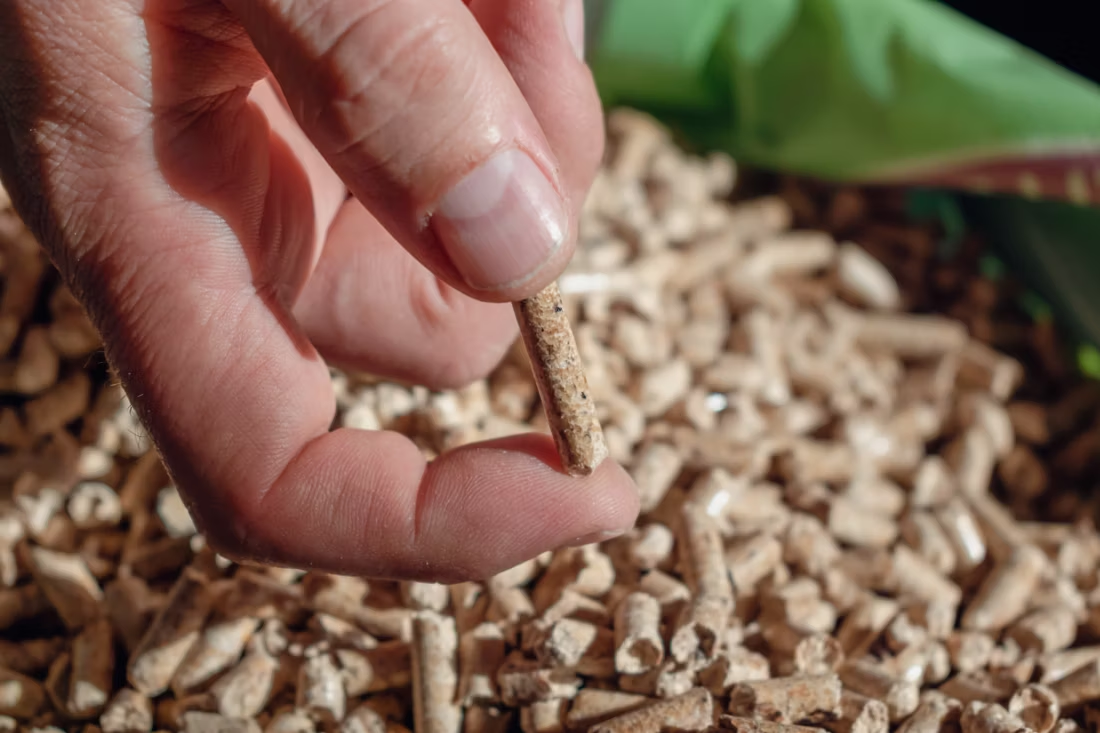
Regional pellet supply is a real advantage here. Indeck Energy Services, Lignetics, and Somerset Pellet Fuel all serve the broader Great Lakes region, which keeps bagged and bulk pellets reasonably available even in a county this small (Arenac's population is just 3,505). There are no local air quality restrictions on wood or pellet burning—no non-attainment designations or winter curtailment periods to plan around—so the choice between wood and pellet comes down to convenience, storage, and how much daily tending you want to do. A pellet stove loads from a bag instead of a woodpile, holds a steady burn overnight, and produces a fraction of the ash of an oak or maple fire—which matters when the county's oak, maple, birch, and ash forests are the traditional fuel source for wood-burning neighbors.
Three steps. No salesperson until you're ready.
Tell us about your project
Your zip code, your situation, and the fuel you're leaning toward—or let the answers point you to one.
See what's actually available
The brands dealers within 100 miles genuinely carry—real options, never a catalog mirage.
Get your dealer & Project Guide
A trusted local dealer, plus the free Project Guide & Parts List that names every component of the job.
Frequently Asked Questions
How much does a pellet stove installation cost in Arenac County?
A typical pellet stove installation runs roughly $3,000 to $6,000 in Arenac County, depending on the unit, whether you're venting through an existing wall or running new PL vent pipe, and whether the stove is going into an existing fireplace opening as an insert. Pellet installs are generally less expensive than wood stove installs because the venting is smaller-diameter and doesn't require a full masonry chimney—a straight-through-the-wall vent kit is standard for most Standish and Au Gres area homes. Get a firm number from a local dealer after they've seen your home; hopper size and electrical access can shift the estimate.
What size pellet stove do I need for a home in Arenac County?
With a heating season on par with Madison, Wisconsin and winter lows that regularly sit near 14°F, Arenac County homes need more heating capacity than a lot of generic pellet stove buying guides assume. A small pellet stove (rated for roughly 1,000-1,500 sq ft) works for a single zone or a seasonal cottage along Saginaw Bay; a medium-to-large unit (2,000+ sq ft) is more realistic for a primary residence expected to carry the load through a full Lower Michigan winter. Look for a stove with a hopper large enough to run 24 hours or more without a refill—on the coldest nights you don't want to be up at 3 a.m. topping it off. A local dealer will size this to your actual square footage and insulation, not just a chart.
What pellet brands are available near Arenac County?
Indeck Energy Services, Lignetics, and Somerset Pellet Fuel all supply the Great Lakes region and are the pellet brands most commonly stocked by dealers serving Arenac County. Because these mills are regional rather than shipped in from out of state, bagged pellet supply tends to hold up better here than in areas farther from pellet production—worth asking your local dealer which brand they stock and whether bulk or bagged pricing makes more sense for your storage setup.
Pellet stove vs. wood stove—which is right for my Arenac County home?
Wood is the traditional fuel in this part of the Lower Peninsula—oak, maple, birch, and ash are all common locally, and Forest Service cutting permits through Huron-Manistee National Forests run $10 to $20 per cord during the May-to-October season, which makes self-cut firewood an affordable option for anyone with the time and a truck. Wood also keeps working without electricity, which matters when Saginaw Bay winter storms knock out power. Pellet stoves trade that off for convenience: no splitting or stacking, a steady thermostatically controlled burn, and far less ash and creosote to manage—but they need electricity to run the auger and blower, so they're not a true backup heat source on their own. A lot of Arenac County homeowners end up with wood for backup and pellet for daily convenience.
Will my pellet stove work if the power goes out?
Not on its own. Pellet stoves rely on an electric auger to feed fuel and a blower to distribute heat, so a standard unit shuts down the moment power is lost—which is a real consideration in a rural county where ice storms and downed lines around Saginaw Bay can mean outages lasting a day or more. Some homeowners pair a pellet stove with a small backup generator or battery inverter sized to run the auger motor, which draws relatively little power. If uninterrupted heat during outages is a priority, ask your local dealer about generator compatibility before you buy, or consider a wood stove as a companion heat source.
Do I need a permit to install a pellet stove in Arenac County?
Yes—a building permit is typically required for a new pellet stove installation, issued through the Arenac County Building Department for homes outside city limits, or the local municipal office for homes within Standish, Au Gres, or Omer. The permit process confirms proper clearances to combustibles, correct vent termination location relative to windows and doors, and that the unit meets current EPA emissions standards. Most local hearth dealers handle the permit paperwork as part of the installation, so you generally don't have to navigate it yourself.
What's the difference between a pellet stove and a pellet insert?
A pellet stove is a freestanding unit that sits on its own hearth pad and vents through a wall or existing chimney—it can go almost anywhere in a home with the right clearances. A pellet insert is built to slide into an existing masonry fireplace, using a vent liner run up through the old flue to convert a drafty open fireplace into a sealed, efficient heat source. For Arenac County homes with an older fireplace that was originally built for wood, a pellet insert is often the simpler retrofit since it reuses the existing masonry opening. Homes without an existing fireplace are better suited to a freestanding stove.
How often does a pellet stove need cleaning and maintenance?
Pellet stoves need more frequent attention than a once-a-year wood chimney sweep, but each task is quicker. Plan on emptying and vacuuming the ash pan every few days during heavy winter use, cleaning the burn pot weekly, and a full teardown cleaning of the venting, exhaust fan, and hopper once a season—typically before the heating season starts in fall. For a stove running as primary heat through an Arenac County winter, that full cleaning is worth scheduling with a local dealer rather than skipping, since a clogged burn pot is the most common cause of poor burns and error codes.
Where can I buy pellets in bulk near Arenac County?
Most local hardware stores and farm supply retailers in and around Standish and the Au Gres corridor stock bagged pellets from regional mills like Lignetics and Somerset Pellet Fuel, especially heading into fall. For homes running a pellet stove as primary heat through a winter as long and cold as Madison, Wisconsin's, buying a season's supply early—rather than restocking bag by bag in January—is worth the storage space, since pellet availability can tighten during the coldest stretches. Ask your local dealer whether they offer bulk delivery or a standing order for the season; several regional suppliers do.
Why is a fireplace insert so efficient?
An insert does two things: it seals the chimney completely, so you stop losing air you already paid to heat, and it radiates warmth into the room through the firebox and glass. Most add a heat-exchange fan that pulls cool room air underneath, wraps it around the hot firebox, and pushes it back out warm. Your home is more efficient before you've even lit the first fire.
What's the difference between an insert and a zero-clearance fireplace?
An insert is a fireplace that slides into a pre-existing wood-burning fireplace—if you don't have one, there's nothing to insert it into. A zero-clearance fireplace is built into a framed wall, which makes it the answer for remodels and new construction. Simple test: existing masonry fireplace means insert; blank or framed wall means zero-clearance.
Can a fireplace actually lower my heating bill?
Yes—by creating a comfort zone. A furnace heats every square foot of the house just to warm the one room you're in; a gas fireplace on low burns roughly a sixth of the gas a typical furnace does. Set the furnace around 55–60 degrees as a baseline, then heat the rooms your family actually uses. Families who heat this way commonly save $20–$60 a month.
What is an in-home preview and do I need one?
It's a visit where a hearth professional measures your space, confirms the model you picked actually works in your home, and walks the specs—framing, gas line, venting, finish work—before anything is ordered. Some details you just can't know until you see the house. Never make a down payment without one; it's the single most-skipped step that burns buyers.
Pellet Brands Stocked Around Arenac County
Manufacturers will point you to the nearest stocking dealer.
Find your pellet stove in Arenac County.
Tell us about your home and we'll match you with a trusted local dealer and send over a free Project Guide & Parts List—a clear plan for your pellet stove project in Arenac County, including the vent kit and exact parts needed.
Find Your Fireplace →