
Steady heat for Antrim County's long winters.
With 8,288 heating degree days a year around the Chain of Lakes—Torch Lake, Elk Lake, and the country between Bellaire and Central Lake—pellet heat gives Antrim County homeowners and cottage owners a low-hassle way to hold steady warmth through a long, cold season. We'll match you with a trusted local dealer who knows what actually fits your home.
Every Project Starts From One of These Five Situations
Consistent warmth without the wood-splitting.
Antrim County sits in Michigan's northern Lower Peninsula, wrapped around Torch Lake, Elk Lake, and Intermediate Lake, with a year-round population of roughly 7,300 that grows considerably with seasonal lake residents. Winters run long and cold—Climate Zone 6A, an average winter low near 11°F, and 8,288 heating degree days a year, putting Antrim in the same heating-load territory as Duluth, MN or International Falls, MN. That's a lot of season to keep a house comfortable, whether it's occupied full-time or sitting empty for weeks at a stretch between visits.
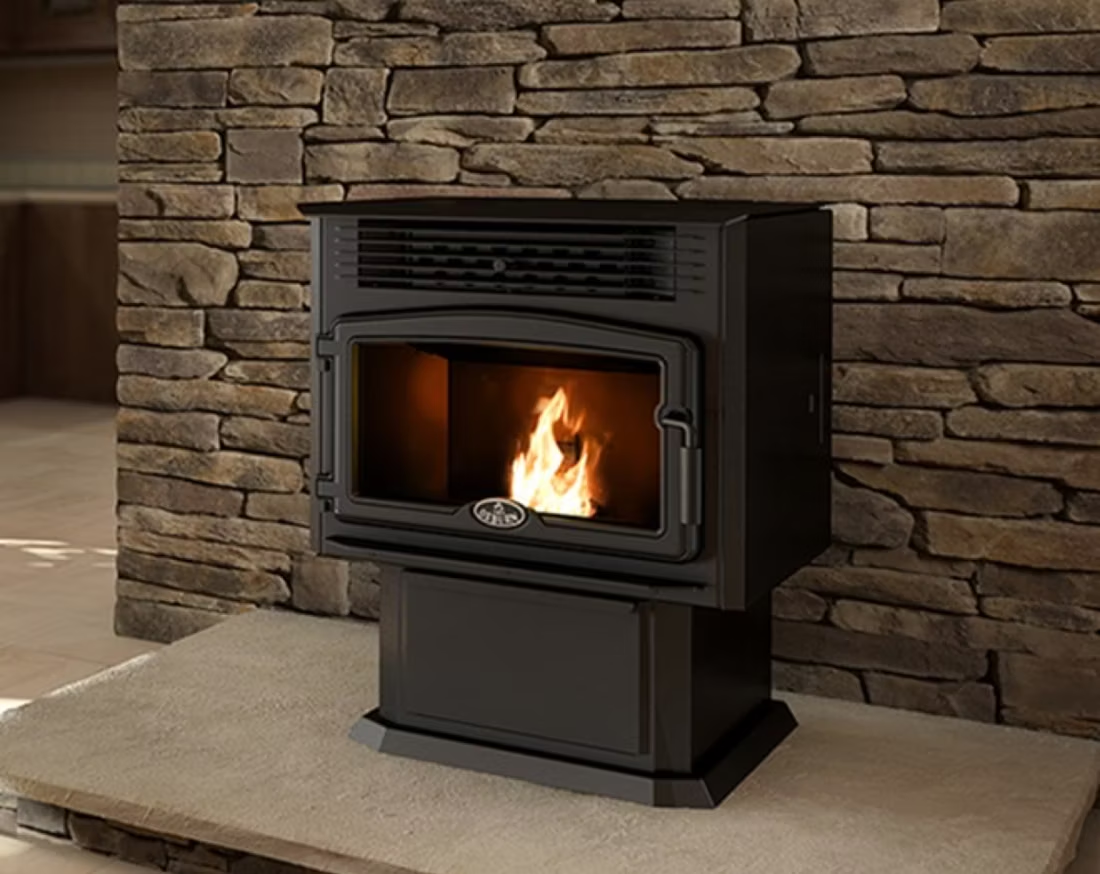
That's exactly the profile where pellet appliances earn their keep. Unlike a wood stove, a pellet stove doesn't require splitting and stacking cordwood from the oak, maple, birch, and ash that make up most of the local forest—you load a hopper with bagged fuel from suppliers like Lignetics, Indeck Energy Services, or Somerset Pellet Fuel and let a thermostat do the rest. For lake cottage owners who want dependable heat waiting for them when they arrive, and for full-time residents who'd rather not spend a winter afternoon at the wood pile, pellet is often the practical middle ground between a wood stove's rustic appeal and a furnace's total hands-off convenience. A local dealer can walk you through exactly what a pellet system looks like for your specific home and how it complements—or replaces—wood heat.
Three steps. No salesperson until you're ready.
Tell us about your project
Your zip code, your situation, and the fuel you're leaning toward—or let the answers point you to one.
See what's actually available
The brands dealers within 100 miles genuinely carry—real options, never a catalog mirage.
Get your dealer & Project Guide
A trusted local dealer, plus the free Project Guide & Parts List that names every component of the job.
Frequently Asked Questions
How much does a pellet stove installation cost in Antrim County?
Costs vary by unit, venting path, and whether you're installing into an existing fireplace opening or placing a freestanding stove where nothing currently exists. Most Antrim County pellet installations land in the range of a few thousand dollars once you account for the stove itself, the vent kit, and labor—inserts into an existing masonry fireplace tend to run lower than a new freestanding installation requiring fresh wall penetration and venting. Because the exact number depends heavily on your home's layout and the dealer's labor rates, the most reliable way to get a firm figure is an in-home look from a local installer—which is exactly what our free Project Guide & Parts List is built to set up.
What size pellet stove do I need for my Antrim County home?
Sizing depends on square footage, insulation, ceiling height, and whether the stove is your primary heat source or a supplement to a furnace. Given Antrim County's 8,288 heating degree days, undersizing is a bigger risk here than in milder climates—a stove that just barely keeps up on a 20°F evening won't have much left in reserve when temperatures drop toward the average winter low of 11°F. Seasonal cottages around Torch Lake and Elk Lake also have a different calculus than full-time homes: if the stove needs to bring a cold building back up to temperature quickly after weeks unoccupied, that argues for sizing on the larger side rather than the smaller. A local dealer will size your home properly during an in-home consultation rather than guessing from square footage alone.
Where can I find a certified pellet stove dealer near me?
Look for a dealer whose installers are trained specifically on pellet appliances—venting, hopper placement, and combustion air requirements differ meaningfully from wood stove installs, and a generalist contractor can miss details that affect performance and safety. Rather than guessing between big-box listings and whoever shows up first in a search, we match Antrim County homeowners with a local, trusted dealer who actually installs and services pellet units in this area—including remote installs around Mancelona, Elk Rapids, and the lake communities where a poor install is harder to fix on short notice.
What's the difference between a pellet stove and a pellet insert?
A pellet stove is a freestanding unit that sits on the floor and vents through a wall or existing chimney chase—it can go almost anywhere in a room with proper clearances. A pellet insert is built to slide into an existing masonry fireplace opening, converting an old wood-burning fireplace into a pellet-fed heat source while using the existing chimney cavity for venting. For Antrim County homes and cottages with an existing fireplace they no longer use for wood, an insert is often the simpler retrofit. Homes without an existing fireplace opening are usually better suited to a freestanding stove.
Do I need a permit to install a pellet stove in Antrim County?
Most jurisdictions in Michigan require a building permit for a new pellet stove installation, covering the appliance placement, clearances, and venting termination through the wall or roof. Your local building department will confirm the specific requirements for your township within Antrim County. In practice, most established local dealers handle the permit application as part of the installation, so you typically aren't the one filing paperwork—but it's worth confirming that's included before you sign a quote.
What's the best pellet stove for Antrim County's climate?
For a climate with 8,288 heating degree days, look for a stove with a large enough hopper to run through a cold night without needing a refill, and a BTU output rated for whole-home rather than supplemental use if it's going to be your primary heat. Manufacturers like Harman, Quadra-Fire, and Lopi all make pellet stoves designed for sustained cold-climate operation, with hopper capacities and auto-ignition features that matter more here than in a mild-winter market. For a seasonal cottage near the lakes, an automatic-start feature you can trigger remotely is worth asking about, since it lets you warm the place before you arrive rather than after. A local dealer can match hopper size and BTU rating to your specific square footage.
How often should a pellet stove be cleaned and serviced?
Pellet stoves need more frequent attention than a once-a-year wood chimney sweep, because the burn pot and auger mechanism accumulate ash faster. Plan on cleaning the burn pot and glass every few days to weekly during heavy winter use, a full internal cleaning a few times per season, and an annual professional service that checks the auger motor, exhaust fan, and venting for a full sweep before each heating season starts. Given how many heating degree days Antrim County racks up, a stove running as primary heat all winter will need more frequent attention than one used only as backup.
Where can I buy wood pellets in Antrim County?
Regional pellet brands sold in and around northern Michigan include Lignetics, Indeck Energy Services, and Somerset Pellet Fuel, typically available through local hardware stores, farm supply outlets, and hearth dealers. Per-ton pricing fluctuates by season and supplier, so it's worth checking current rates directly with a local retailer rather than relying on a stale number—buying early in the fall before demand peaks is generally the more cost-effective approach for full-time residents planning ahead for the season.
Pellet vs. wood—which is right for my Antrim County home?
Wood offers a lower ongoing fuel cost if you're willing to cut your own—the Huron-Manistee National Forests issue cutting permits from May through October at $10 to $20 per cord, and Antrim County's oak, maple, birch, and ash forests provide solid, dense firewood. Wood also keeps working without electricity, which matters during winter storm outages. Pellet stoves trade that self-sufficiency for convenience: no splitting or stacking, more consistent heat output, and easier operation for cottage owners who aren't around to tend a fire regularly—but they need electricity to run the auger and blower, so they go dark in a power outage unless paired with battery backup. For a full-time Antrim County home with reliable power, pellet is often the easier long-term choice. For a cabin used as backup heat during outages, wood may still make more sense as at least one heat source in the house.
How often does a pellet stove need cleaning?
A clean pellet stove is a happy pellet stove. Plan on cleaning the burn pot about once a week when you're burning regularly—ash and clinkers gum up the air holes just like a pellet barbecue. Most pellet stove problems trace back to skipped cleaning that nobody explained up front. Some designs make it easy with a trapdoor burn pot: pull a lever and the gunk drops into the ash pan.
Why is my open fireplace making my house colder?
Open fireplaces suck—literally. As the fire burns, it consumes air your furnace already paid to heat and pulls it out through the chimney, so the house is actually colder after the fire goes out than before you lit it. An insert fixes this: it seals the chimney, puts fixed glass across the front, and turns that hole in your house into a real heat source.
Can a fireplace actually lower my heating bill?
Yes—by creating a comfort zone. A furnace heats every square foot of the house just to warm the one room you're in; a gas fireplace on low burns roughly a sixth of the gas a typical furnace does. Set the furnace around 55–60 degrees as a baseline, then heat the rooms your family actually uses. Families who heat this way commonly save $20–$60 a month.
What is an in-home preview and do I need one?
It's a visit where a hearth professional measures your space, confirms the model you picked actually works in your home, and walks the specs—framing, gas line, venting, finish work—before anything is ordered. Some details you just can't know until you see the house. Never make a down payment without one; it's the single most-skipped step that burns buyers.
Pellet Brands Stocked Around Antrim County
Manufacturers will point you to the nearest stocking dealer.
Find your pellet stove in Antrim County.
Tell us about your home—full-time residence or lake cottage—and we'll match you with a trusted local dealer and send over a free Project Guide & Parts List: the exact parts, including the vent kit, for your pellet project in Antrim County.
Find Your Fireplace →