
Steady pellet heat for Alpena County's long, cold winters.
From the Lake Huron shoreline in Alpena to the inland townships toward Hillman and Long Rapids, winters here run cold and long—7,877 heating degree days' worth. A pellet stove gives you thermostat-simple heat from local hardwood pellets, and we'll connect you with a trusted dealer who installs it right.
Every Project Starts From One of These Five Situations
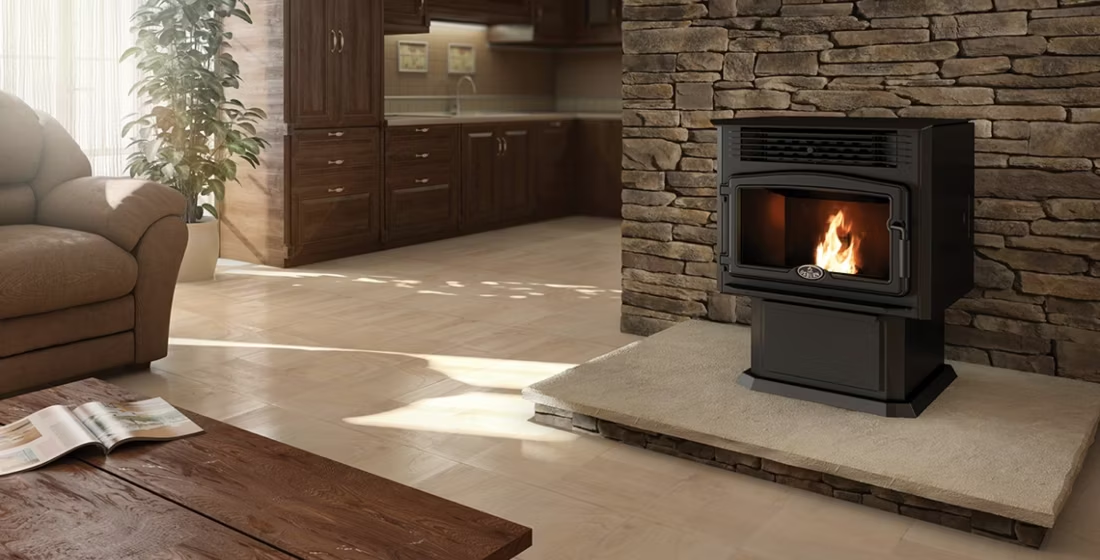
Hardwood heat, without the splitting and stacking.
Alpena County sits on Michigan's 'Sunrise Side,' where Thunder Bay meets Lake Huron and the growing season is short enough that heating season starts early and runs late—October through April in most years. At climate zone 6A, with average winter lows around 13°F and roughly 7,877 heating degree days, the county's winters are in the same league as Duluth, Minnesota's—another Great Lakes town where lake-effect snow and long cold stretches make reliable indoor heat a real planning question, not an afterthought.
With only about 11,000 residents spread across the county, a lot of homes here already burn wood—oak, maple, birch, and ash are all common locally, and the ash supply has only grown as emerald ash borer has worked through the region's ash stands over the past couple decades. A pellet stove gives those same households (or ones without the time or ability to process cordwood) a cleaner, more automated alternative: load the hopper, set the thermostat, and the auger and blower do the rest. Regional pellet suppliers including Indeck Energy Services, Lignetics, and Somerset Pellet Fuel keep hardwood pellets reasonably accessible in this part of Michigan, and the county has no air quality non-attainment issues or burn restrictions to work around, which simplifies the decision considerably.
Three steps. No salesperson until you're ready.
Tell us about your project
Your zip code, your situation, and the fuel you're leaning toward—or let the answers point you to one.
See what's actually available
The brands dealers within 100 miles genuinely carry—real options, never a catalog mirage.
Get your dealer & Project Guide
A trusted local dealer, plus the free Project Guide & Parts List that names every component of the job.
Frequently Asked Questions
How much does a pellet stove installation cost in Alpena County?
A straightforward pellet stove installation—direct-vent through an exterior wall, no existing masonry involved—typically runs in the $3,000 to $6,000 range nationally, and Alpena County homes are generally on the simpler end of that since most installs don't require running venting through multiple stories or working around a masonry chimney. Converting an existing wood-burning fireplace to a pellet insert usually costs more once liner work and a hearth pad upgrade are factored in. A local dealer can give you a firm number after seeing your home, your existing venting situation (if any), and where you want the unit placed.
What size pellet stove do I need for a home in Alpena County?
With roughly 7,877 heating degree days and average winter lows around 13°F, Alpena County sits solidly in cold-climate heating territory—not as extreme as the Upper Peninsula, but well past what a small supplemental unit is built for if you want real heat output. Sizing depends on square footage, insulation quality, and ceiling height, but homes closer to Lake Huron's shoreline should size up slightly to account for wind exposure off the water, which pulls heat out of a house faster than an equivalent inland home in a sheltered spot near Hubbard Lake or Long Rapids. A local dealer will walk your space and size the unit for free rather than relying on a square-footage chart alone.
Where do I buy hardwood pellets in Alpena County?
Hardwood pellets are sold through farm supply stores, hardware stores, and some heating retailers throughout the county, and regional producers like Indeck Energy Services, Lignetics, and Somerset Pellet Fuel supply much of the upper Midwest and Great Lakes market. Prices vary by brand and season, so it pays to buy a full winter's supply—typically 2 to 3 tons for a primary-heat home in a 6A climate—early in the fall before demand picks up. Buying local or regional brands also cuts down on shipping cost baked into the price, since pellets are heavy and freight adds up fast.
Do I need a permit to install a pellet stove in Alpena County?
Yes—a building permit is typically required for a new pellet stove installation, whether you're in the city of Alpena or unincorporated Alpena County. Permits are issued through the Alpena County Building Department for county properties, or the city for in-town projects. Most local hearth dealers handle the permit application and inspection scheduling as part of the installation, so you generally don't have to navigate it yourself.
What's the difference between a pellet stove and a pellet insert?
A pellet stove is a freestanding unit that sits on a hearth pad and vents through a wall or existing chimney chase—it can go almost anywhere in the house with the right clearances. A pellet insert is built to slide into an existing masonry fireplace opening, turning a drafty open hearth into a sealed, efficient heat source using a vent liner run up the existing chimney. For Alpena County homes with an older masonry fireplace already in place, an insert usually makes more sense than tearing it out for a freestanding unit.
Will my pellet stove work during a power outage?
Not without a backup power source. Pellet stoves rely on an electric auger to feed fuel and a blower to distribute heat and exhaust combustion gases, so a power outage shuts the unit down completely—worth knowing given how often lake-effect snow and ice can knock out power along the Lake Huron shoreline in Alpena County. Some models accept a small battery backup or DC power option for short outages, and a generator or battery inverter setup can keep a pellet stove running through longer ones. If you want heat that works no matter what the power grid is doing, that's the one real advantage cordwood has over pellets—some households here keep a wood stove as backup for exactly that reason.
How much maintenance does a pellet stove need?
Plan on emptying the ash pot every few days to weekly depending on how much you're running it, wiping the glass as needed, and cleaning the burn pot and hopper more thoroughly every few weeks during heavy use. Given a heating season that stretches from October into April in Alpena County, a stove running as primary heat will need more frequent attention than one used just for shoulder-season supplemental warmth. An annual professional cleaning—vent, blower, and internal components—is recommended by most manufacturers and keeps the unit running efficiently and safely through the coldest stretch of winter.
How much pellet fuel will I use in a typical Alpena County winter?
A home using a pellet stove as its primary heat source in a climate with Alpena County's roughly 7,877 heating degree days typically burns somewhere between 2 and 3 tons of pellets over a full season, though a larger or poorly insulated home—especially one exposed to wind off Lake Huron—can run higher. Homes using a pellet stove for supplemental heat in one main living area, with a furnace handling the rest of the house, usually burn well under a ton. Your dealer can give you a better estimate once they know your square footage and how you plan to use the stove.
Pellet stove vs. wood stove—which is right for my Alpena County home?
Wood stoves run on cordwood you can cut or buy locally—oak, maple, birch, and ash are all common in Alpena County—and they work with no electricity at all, which matters during the winter power outages that come with lake-effect storms off Lake Huron. Pellet stoves trade that off for real convenience: no splitting, stacking, or hauling wood, more consistent heat output, and less mess, but they need electricity to run and depend on a steady pellet supply from retailers or regional producers like Lignetics or Somerset Pellet Fuel. For a primary residence where ease of use matters most, pellet often wins. For a camp, cabin, or home where losing power for a few days is a real possibility, a wood stove's independence from the grid is hard to beat—and plenty of local households end up with one of each.
Why is a fireplace insert so efficient?
An insert does two things: it seals the chimney completely, so you stop losing air you already paid to heat, and it radiates warmth into the room through the firebox and glass. Most add a heat-exchange fan that pulls cool room air underneath, wraps it around the hot firebox, and pushes it back out warm. Your home is more efficient before you've even lit the first fire.
What's the difference between an insert and a zero-clearance fireplace?
An insert is a fireplace that slides into a pre-existing wood-burning fireplace—if you don't have one, there's nothing to insert it into. A zero-clearance fireplace is built into a framed wall, which makes it the answer for remodels and new construction. Simple test: existing masonry fireplace means insert; blank or framed wall means zero-clearance.
Does a fireplace add value to my home?
On average, a fireplace adds back to the home about the same amount you spent installing it. Add the monthly savings from heating the rooms you actually use instead of the whole house—often hundreds of dollars a year—and the value case is strong before you even count what a fire does for how your family uses the room.
What is an in-home preview and do I need one?
It's a visit where a hearth professional measures your space, confirms the model you picked actually works in your home, and walks the specs—framing, gas line, venting, finish work—before anything is ordered. Some details you just can't know until you see the house. Never make a down payment without one; it's the single most-skipped step that burns buyers.
Stove and Fireplace Dealers in Alpena County
Pellet Brands Stocked Around Alpena County
Manufacturers will point you to the nearest stocking dealer.
Find your pellet stove in Alpena County.
Tell us a bit about your home and heating goals, and we'll match you with a trusted local dealer and put together your free Project Guide & Parts List—the exact parts, vent kit included, for a pellet stove installation in Alpena County.”,
Find Your Fireplace →