
Load the hopper, not the woodshed, through Alger County's long winters.
With 8,474 heating degree days and winter lows averaging 13°F along Lake Superior, Alger County residents from Munising to Grand Marais need heat that keeps up without daily splitting and stacking. Find the right pellet stove and connect with a trusted local dealer.
Every Project Starts From One of These Five Situations
Consistent heat without the daily wood-splitting.
Alger County sits on Lake Superior's south shore in Michigan's Upper Peninsula, a place where winter arrives early and stays late—climate zone 6A, an average winter low of 13°F, and 8,474 heating degree days a year, putting it in the same cold-climate company as Duluth, Minnesota, just across the lake. With a year-round population under 2,400 spread across Munising, Grand Marais, and the surrounding townships bordering Hiawatha National Forest, plenty of households already burn wood cut under Forest Service permits—cordwood permits run $10 to $20 per cord through the May-to-October cutting season, and the county's stands of oak, maple, birch, and ash keep firewood cheap for those willing to do the work.
Pellet stoves offer a different trade: the same steady, radiant heat, drawn from hardwood byproduct pellets rather than a woodpile you cut and haul yourself. Regional brands like Lignetics, Somerset Pellet Fuel, and Indeck Energy Services supply the Midwest pellet market that serves the U.P., and because Alger County has no reported air quality non-attainment issues, there's no local burning restriction working against a clean-burning EPA-certified unit. The trade-off worth knowing: pellet stoves need household electricity to run the auger and blower, so in a rural county where winter storms can knock out power for hours or longer, a battery backup or small generator is worth planning for alongside the stove itself.
Three steps. No salesperson until you're ready.
Tell us about your project
Your zip code, your situation, and the fuel you're leaning toward—or let the answers point you to one.
See what's actually available
The brands dealers within 100 miles genuinely carry—real options, never a catalog mirage.
Get your dealer & Project Guide
A trusted local dealer, plus the free Project Guide & Parts List that names every component of the job.
Frequently Asked Questions
How much does a pellet stove installation cost in Alger County?
Most pellet stove installations run in the $3,000 to $6,000 range once you account for the unit, venting through an exterior wall (pellet stoves use a simpler small-diameter vent than wood stoves, not a full masonry chimney), and any hearth pad work needed for clearance. Pellet inserts installed into an existing masonry fireplace typically land toward the lower half of that range since the existing chimney structure can often be adapted. Given Alger County's small, spread-out population, expect a modest travel charge if your home is outside Munising proper—installers based in the U.P. often cover a wide service radius, and a local dealer can give you a firm number after seeing your home.
What size pellet stove do I need for my Alger County home?
With 8,474 heating degree days and lows regularly in the teens or colder off Lake Superior, most year-round homes in the county need a mid-to-large pellet stove rated for the full square footage they're heating, not just supplemental warmth. Seasonal cabins near Grand Marais or along the Lake Superior shoreline—often used intermittently rather than heated continuously—can usually get by with a smaller unit sized for occasional use. Older, less-insulated farmhouses common throughout the county will need more capacity than a similarly sized newer build. A local dealer can size the stove correctly during an in-home visit rather than relying on square-footage guesswork alone.
Where can I find certified pellet stove installers near me?
Because Alger County's population is small and spread across Munising, Grand Marais, and the townships in between, dedicated hearth retailers are thinner on the ground than in a denser county—most homeowners work with installers based out of Munising or the broader Marquette-area market who cover the eastern U.P. Look for NFI (National Fireplace Institute) certification specifically for pellet appliances, since venting and hopper setup differ from wood stove installs. A trusted local dealer will also know which pellet brands—Lignetics, Somerset Pellet Fuel, or others distributed through regional suppliers—are consistently available nearby, which matters more here than in a market with pellets on every hardware store shelf.
What's the difference between a pellet stove and a pellet insert?
A pellet stove is a freestanding unit that sits on a hearth pad and vents through a wall or existing chimney—it can go almost anywhere in the home with the right clearances. A pellet insert is built to slide into an existing masonry fireplace opening, converting an old wood-burning fireplace into a pellet-fed heat source while using much of the existing structure. For the older farmhouses and cabins common throughout Alger County that already have a masonry fireplace, an insert is often the more straightforward retrofit. Homes without an existing fireplace opening are better suited to a freestanding stove.
Do I need a permit to install a pellet stove in Alger County?
Yes—a building permit is generally required for a new pellet stove installation, issued through the local township or the Alger County building department depending on where the home sits. This is separate from the Hiawatha National Forest cutting permits that cover wood harvesting on public land—pellet stoves don't involve any cutting permit since the fuel is purchased, not gathered. Most installers handle the permit paperwork as part of the job, so it's rarely something the homeowner has to navigate alone.
What's the best pellet stove for Alger County's climate?
For a county averaging a 13°F winter low and nearly 8,500 heating degree days a year, look for a pellet stove with a larger hopper capacity—40 to 60 pounds—so it can run through a full overnight burn without refilling during the coldest, windiest stretches off Lake Superior. Brands like Harman and Englander build units with the higher BTU output and auger reliability that cold-climate U.P. homes need for primary or near-primary heat. For a seasonal cabin used only intermittently, a smaller-hopper unit is fine and easier to manage between visits. A local dealer familiar with lakeshore wind exposure can steer you toward the right BTU rating for your specific home.
How often does a pellet stove need to be serviced?
Plan on an annual professional service—checking the auger motor, exhaust blower, and venting, plus a deeper cleaning of the burn pot and heat exchanger—ideally in late summer before the heating season starts. Day-to-day, you'll need to empty the ash pan and clean the glass every few days during heavy winter use, since a pellet stove running as primary heat through an Alger County winter will see far more burn hours than one used occasionally. Skipping the annual service is the most common cause of auger jams and reduced heat output mid-winter, which is an especially bad time to be without heat in a remote U.P. home.
Where can I buy pellets in Alger County?
Regional Midwest brands like Lignetics, Somerset Pellet Fuel, and Indeck Energy Services supply much of the pellet market that reaches the eastern Upper Peninsula, typically through hardware stores, farm supply outlets, or delivered by the pallet from a regional distributor. Because Alger County is rural and somewhat removed from major distribution hubs, it's worth confirming pellet availability and delivery lead times with your dealer before your first cold snap rather than waiting until you're low—running out mid-winter with limited local stock is a real risk here in a way it isn't in a bigger market.
Pellet stove vs. wood stove—which is right for my Alger County home?
Wood is the traditional choice throughout Alger County, and it's a strong one—Hiawatha National Forest cutting permits run just $10 to $20 per cord, oak, maple, birch, and ash are all available locally, and a wood stove keeps working with zero electricity, which matters when a Lake Superior storm knocks out power for a stretch. Pellet stoves trade that off for convenience: no splitting, stacking, or hauling, more consistent heat output, and cleaner operation—but the auger and blower need electricity, so a pellet stove alone isn't a reliable outage backup unless paired with a battery unit or generator. Many households in the county end up with both: wood for storm resilience, pellet for day-to-day ease.
How often does a pellet stove need cleaning?
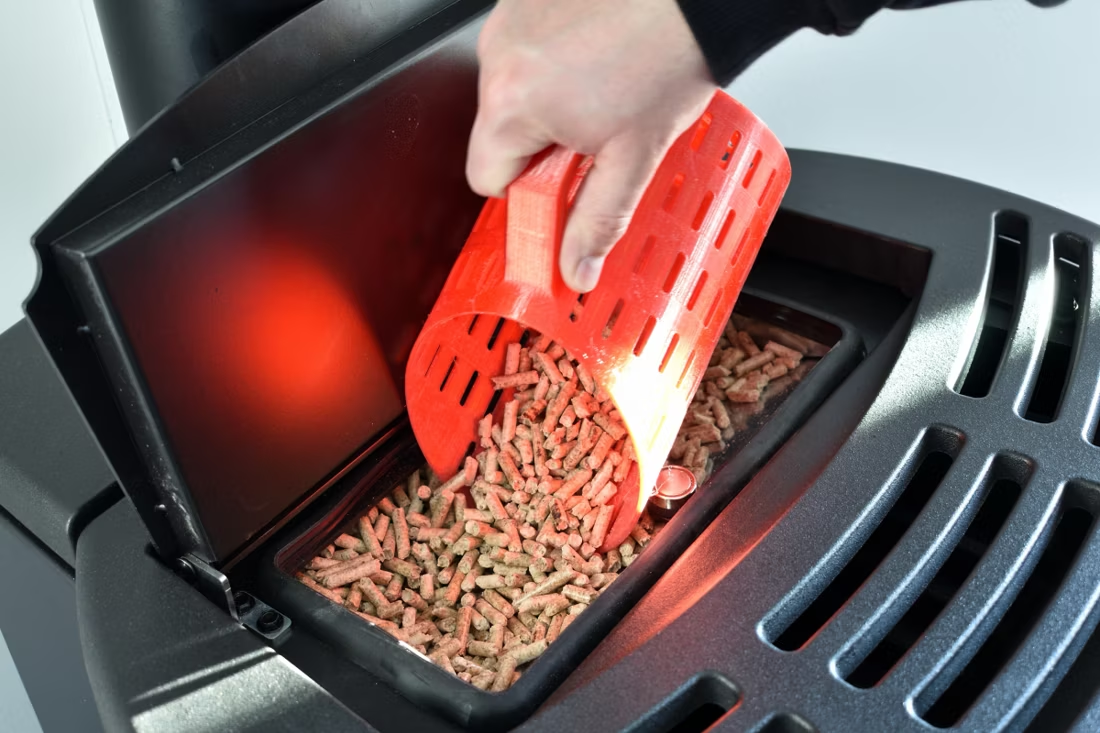
A clean pellet stove is a happy pellet stove. Plan on cleaning the burn pot about once a week when you're burning regularly—ash and clinkers gum up the air holes just like a pellet barbecue. Most pellet stove problems trace back to skipped cleaning that nobody explained up front. Some designs make it easy with a trapdoor burn pot: pull a lever and the gunk drops into the ash pan.
What's the difference between an insert and a zero-clearance fireplace?
An insert is a fireplace that slides into a pre-existing wood-burning fireplace—if you don't have one, there's nothing to insert it into. A zero-clearance fireplace is built into a framed wall, which makes it the answer for remodels and new construction. Simple test: existing masonry fireplace means insert; blank or framed wall means zero-clearance.
What is an in-home preview and do I need one?
It's a visit where a hearth professional measures your space, confirms the model you picked actually works in your home, and walks the specs—framing, gas line, venting, finish work—before anything is ordered. Some details you just can't know until you see the house. Never make a down payment without one; it's the single most-skipped step that burns buyers.
Should the dealer who sells my fireplace also install it?
Ideally, yes. A fireplace project involves vent pipe, gas line, electrical, and often tile or stone. Hire three or four separate trades and you own the liability and the game of telephone between them. One company selling and installing means one accountable party, start to finish—ask about factory training, on-time completion records, and what happens if an inspection fails.
Stove and Fireplace Dealers in Alger County
Pellet Brands Stocked Around Alger County
Manufacturers will point you to the nearest stocking dealer.
Find your pellet stove in Alger County.
Tell us about your home in Munising, Grand Marais, or anywhere else in Alger County, and we'll match you with a trusted local dealer and send over a free Project Guide & Parts List—the exact parts, including the vent kit, for your pellet stove project.
Find Your Fireplace →