
Reliable pellet heat for Alcona County's long Lake Huron winters.
From Harrisville to Lincoln, Mikado, and Barton City, Alcona County's roughly 1,984 residents deal with a cold, snow-heavy stretch of northeast Michigan shoreline. Pellet stoves offer thermostat-simple heat without the wood-splitting—find the right unit and get matched with a trusted local dealer.
Every Project Starts From One of These Five Situations
Consistent warmth without the wood-splitting work.
Alcona County sits in climate zone 6A on the Lake Huron shoreline of Michigan's northeast Lower Peninsula—a rural stretch of small townships (Harrisville, Lincoln, Mikado, Barton City, Glennie) with a population under 2,000 spread across a lot of ground. Winters here run long and cold, with lake-effect snow adding to the load on any heating system. The county's hardwood forests—oak, maple, birch, and ash—have supported wood heat for generations, and that same hardwood base is exactly what fuels the compressed pellets that a growing number of Alcona County homeowners are switching to for convenience and steadier output.
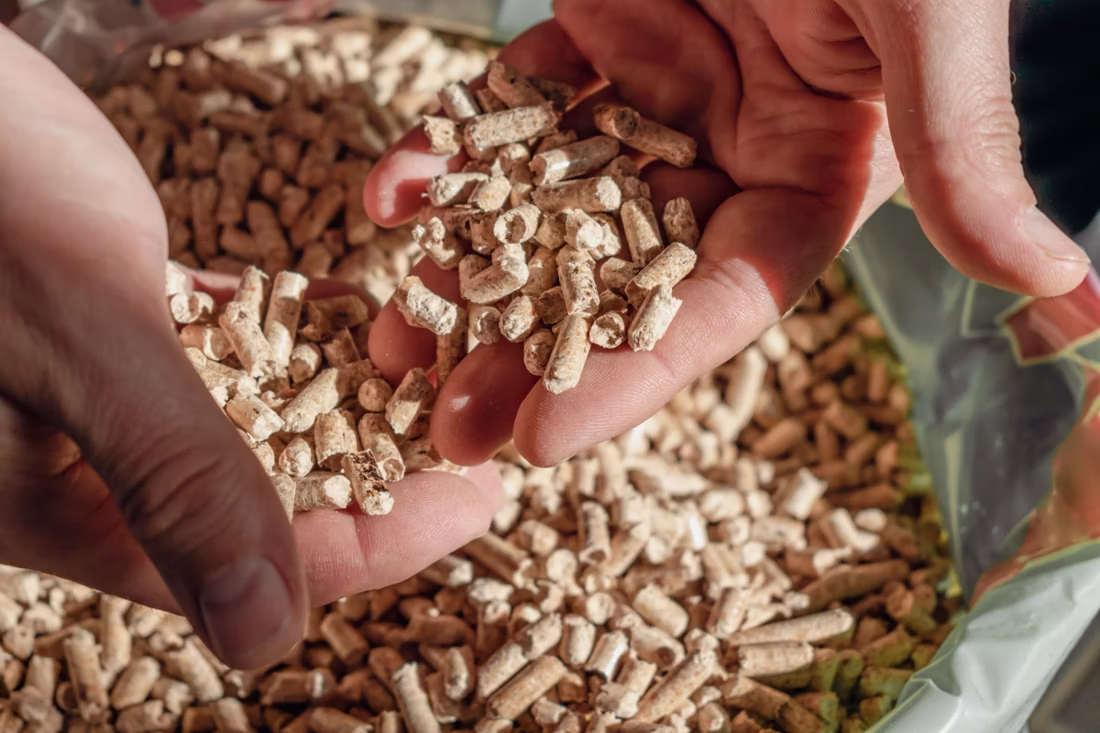
Alcona County has no air quality non-attainment issues and no winter burn curtailment periods, so pellet appliances here run without the seasonal restrictions some Michigan counties impose on solid-fuel heating. Regional pellet brands like Indeck Energy Services, Lignetics, and Somerset Pellet Fuel are produced from Michigan hardwood, which means bags are generally available at farm stores and hearth dealers without long-haul trucking from out of state—a real advantage for a county where the nearest big-box option is often 30-plus minutes away in Alpena or Oscoda.
Three steps. No salesperson until you're ready.
Tell us about your project
Your zip code, your situation, and the fuel you're leaning toward—or let the answers point you to one.
See what's actually available
The brands dealers within 100 miles genuinely carry—real options, never a catalog mirage.
Get your dealer & Project Guide
A trusted local dealer, plus the free Project Guide & Parts List that names every component of the job.
Frequently Asked Questions
How much does a pellet stove installation cost in Alcona County?
Cost depends mainly on hopper size, whether you're installing a freestanding stove or a pellet insert into an existing fireplace, and the venting path a lake-shore cottage or older farmhouse requires. A pellet insert going into an existing masonry fireplace is typically the more affordable route since it reuses the chimney chase; a freestanding stove in a room without an existing hearth usually needs more framing and venting work. A local dealer serving Alcona County can walk your specific home and give you a firm number—that's exactly what's included in the free Project Guide & Parts List we'll connect you with.
What size pellet stove do I need for my Alcona County home?
Zone 6A winters and lake-effect snow mean Alcona County homes generally need more heating capacity than the same square footage would require farther south. Older farmhouses and lake cottages around Harrisville and the Huron shoreline often have less insulation and more drafts than newer construction inland near Lincoln or Mikado, which pushes sizing up further. A small unit can handle a single room or a seasonal cabin; most year-round homes in the county need a mid-size hopper capable of running through an overnight cold stretch without a refill. A local dealer will size this properly during an in-home visit—oversizing wastes pellets, undersizing leaves you cold at 2 a.m.
Where can I find pellet stove installers near me in Alcona County?
Given Alcona County's small population and spread-out townships, most certified hearth installers cover the county from a base in Alpena, Oscoda, or East Tawas, with a travel charge built into quotes for the more remote reaches around Glennie or Barton City. Look for NFI-certified technicians—the credential specifically covers pellet appliance venting and clearance requirements, which differ from wood stove installs. Working with the same company that sells the unit keeps warranty coverage and code compliance straightforward, which matters when the nearest big-box store is a long drive.
What's the difference between a pellet stove and a pellet insert?
A pellet stove is a freestanding cabinet unit that can go almost anywhere with a wall or roof penetration for venting—a common choice for homes without an existing fireplace, including many of the smaller year-round houses and camps scattered through Alcona County. A pellet insert slides into an existing masonry fireplace opening and uses the existing chimney chase (with a proper liner) to vent, converting an old open hearth into a thermostatically controlled heat source. For county homes with an existing fireplace already cut into the wall, the insert route is usually simpler and less invasive.
Do I need a permit to install a pellet stove in Alcona County?
Yes—a building permit through the Alcona County Building Department in Harrisville is required for a new pellet appliance installation, covering the appliance clearances and vent termination. Because Alcona County has no air quality non-attainment designation, there are no seasonal burn curtailment periods to work around, unlike some western Michigan and Pacific Northwest counties. Most local installers pull the permit as part of the job, so it's rarely something homeowners have to handle themselves.
What's the best pellet stove for Alcona County's climate?
For 6A winters with lake-effect snow adding to the cold, look for a unit with a larger hopper capacity so it can run through an overnight cold stretch without a refill, and check the stated heating capacity against your actual square footage and insulation level rather than a generic listing. Because pellet stoves rely on an electric auger and blower to run, it's worth asking your local dealer about battery backup options—power outages during winter storms happen in this part of the county, and a pellet stove without backup power goes cold along with everything else. A local dealer can match a model to your home's specific layout and outage history.
Where can I buy heating pellets in Alcona County?
Michigan-produced brands like Indeck Energy Services, Lignetics, and Somerset Pellet Fuel are the regional standards and are typically stocked at hearth dealers and farm supply stores in and around the county rather than shipped long distances. Because Alcona County's own hardwood forests run heavy to oak, maple, birch, and ash, hardwood pellet blends tend to perform well and are widely available locally. Given the county's rural layout, it's worth asking a dealer about seasonal bulk pricing—buying a full winter's supply in fall, before demand peaks, is common practice here.
How often does a pellet stove need cleaning and maintenance?
Plan on cleaning the ash pan and burn pot weekly during regular winter use, and a full professional service—including the exhaust venting, hopper, and auger mechanism—at least once a year. For a home in Alcona County running a pellet stove as a primary heat source through a full 6A winter, that annual service is worth scheduling in late summer before the heating season and any technician backlog. Skipping the venting inspection is the most common cause of poor performance and error codes on pellet units.
Pellet stove vs. wood stove—which makes more sense for my Alcona County home?
Wood stoves burn the oak, maple, birch, and ash that's abundant throughout the county, work without electricity, and are the more traditional choice for the county's older farmhouses and hunting camps—a real advantage during winter power outages along the Lake Huron shoreline. Pellet stoves are easier to run day to day (fill the hopper, set the thermostat, get consistent heat), produce far less ash, and burn cleaner, but they need electricity for the auger and blower, so they're not a fallback during an outage unless paired with battery backup. For year-round homes near Harrisville or Lincoln where convenience matters most, pellet is often the better daily-use choice; for more remote camps around Glennie or Barton City where power reliability is a bigger concern, wood still has a strong case. Both fuels are genuinely well-suited to this county, and a local dealer can walk you through the tradeoff for your specific property.
What's the difference between an insert and a zero-clearance fireplace?
An insert is a fireplace that slides into a pre-existing wood-burning fireplace—if you don't have one, there's nothing to insert it into. A zero-clearance fireplace is built into a framed wall, which makes it the answer for remodels and new construction. Simple test: existing masonry fireplace means insert; blank or framed wall means zero-clearance.
How often does a pellet stove need cleaning?
A clean pellet stove is a happy pellet stove. Plan on cleaning the burn pot about once a week when you're burning regularly—ash and clinkers gum up the air holes just like a pellet barbecue. Most pellet stove problems trace back to skipped cleaning that nobody explained up front. Some designs make it easy with a trapdoor burn pot: pull a lever and the gunk drops into the ash pan.
How much should I budget for a fireplace?
For an average home—covering the fireplace, the vent pipe, and basic installation—a budget between $3,900 and $5,500 gives you a lot of options across wood, gas, and pellet. By the time you add finish work, gas line, and electrical, the average complete installation lands between $5,000 and $12,000 all-in. In a remodel or new build, a good rule is to put about 2.5% of the total project cost toward the fireplace.
What is an in-home preview and do I need one?
It's a visit where a hearth professional measures your space, confirms the model you picked actually works in your home, and walks the specs—framing, gas line, venting, finish work—before anything is ordered. Some details you just can't know until you see the house. Never make a down payment without one; it's the single most-skipped step that burns buyers.
Pellet Brands Stocked Around Alcona County
Manufacturers will point you to the nearest stocking dealer.
Find your pellet stove in Alcona County.
Tell us a bit about your home and we'll match you with the right pellet stove or insert, plus a free Project Guide & Parts List—the exact equipment, vent kit, and recommended local Alcona County dealer for your project.
Find Your Fireplace →